
Finding insects in your landscaping beds is normal, but spotting the signs of termites in mulch requires immediate action. Subterranean termites rarely eat the wood chips, but they thrive in the deep, moist environment.
Mulch creates an insulated, temperature-controlled highway right up to your home’s foundation. If left unchecked, these destructive pests will use your garden beds as a launching pad to breach your walls.
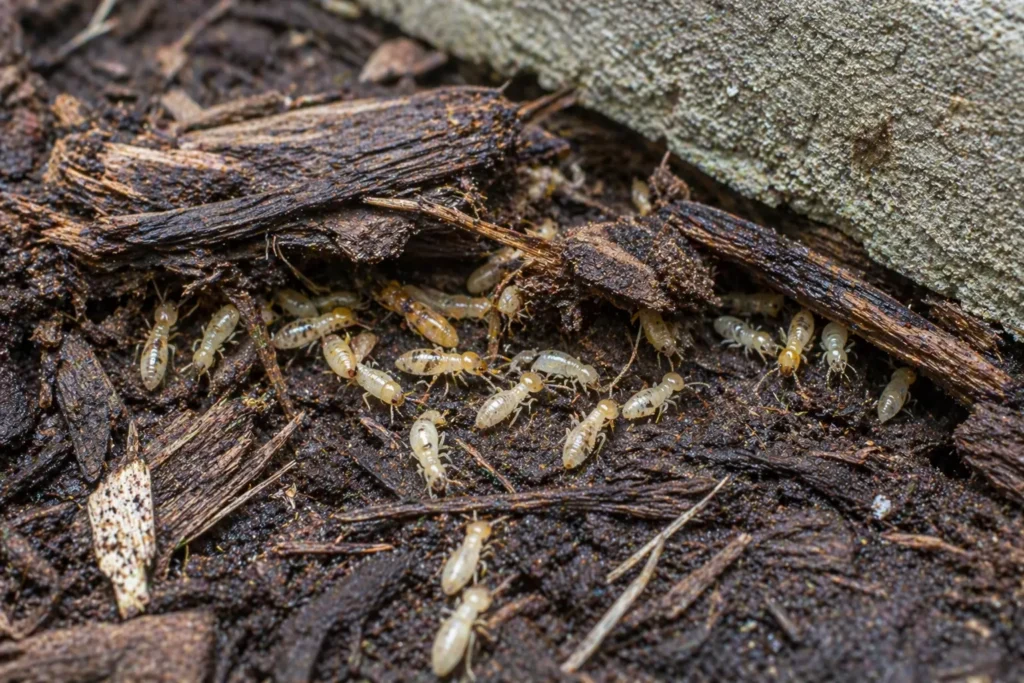
4 Unequivocal Signs of Termites in Mulch
You don’t need to be an entomologist to identify a colony in your yard. Grab a rake, dig gently into the bottom layer of your landscape beds, and look for these four undeniable indicators:
- Mud Tubes: Pencil-sized tunnels made of soil and frass, typically 1/4 inch wide, climbing up your concrete foundation right above the mulch line.
- Live Worker Termites: Pale, cream-colored insects that look like translucent ants scurrying away from the light when you pull back the wood chips.
- Discarded Wings: Piles of identical, silvery wings left behind by reproductive swarmers after a mating flight, often found trapped in the mulch.
- Hollow Wood Near Beds: Wood retaining walls, landscape timbers, or nearby stumps that sound completely hollow when tapped with a heavy screwdriver.
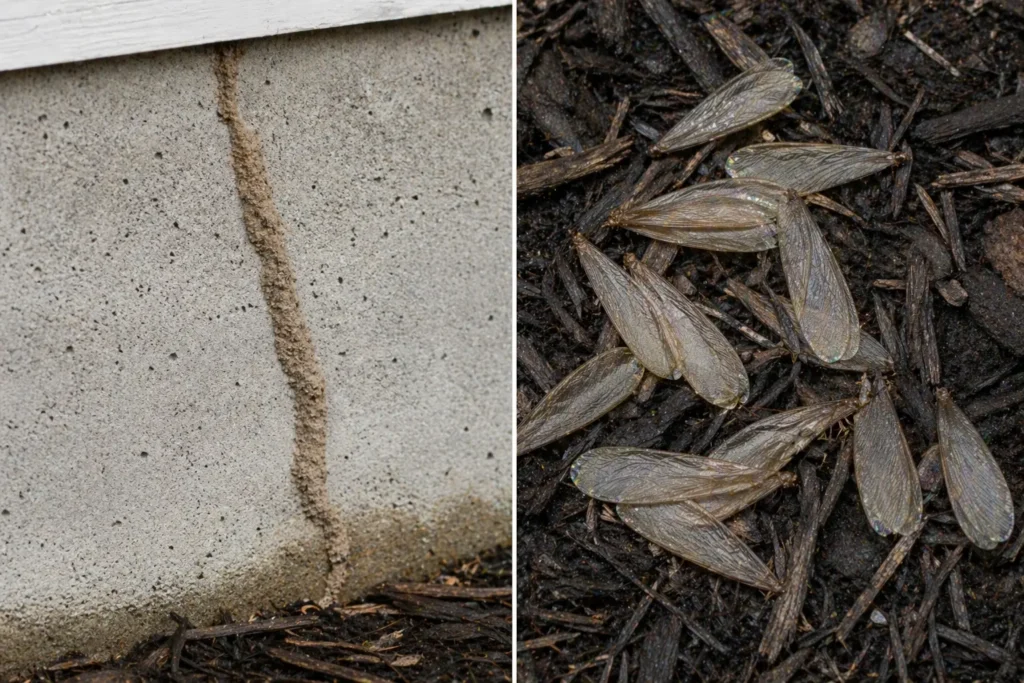
Root Causes: Why Termites Love Your Landscape Beds
Termites are constantly hunting for two things to survive: cellulose and moisture. While they prefer digesting softer woods or your home’s framing, mulch provides the perfect habitat to retain essential water.
When homeowners layer mulch thicker than 3 inches, the bottom layer never dries out. This creates a hyper-humid microclimate that protects subterranean termites from deadly dehydration.
The biggest mistake is bringing the mulch directly in contact with siding or weep holes. This eliminates the required dry barrier, allowing pests to bypass soil treatments entirely.
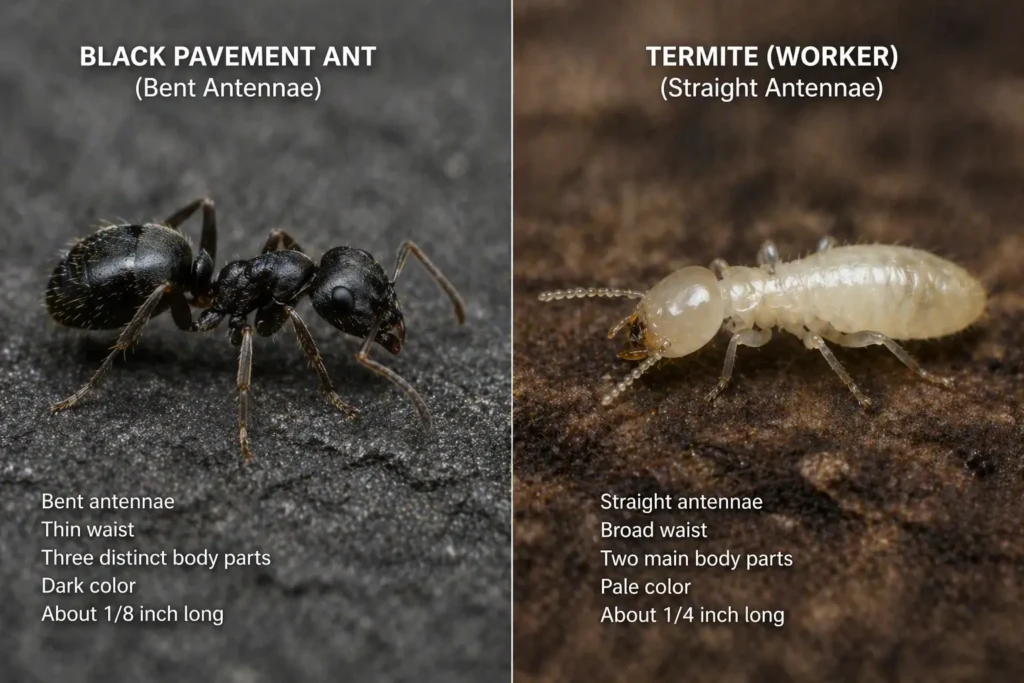
Mulch Ants vs. Termites: A Crucial Comparison
It is incredibly common to mistake harmless yard ants for wood-destroying pests. Knowing the difference saves you from panicking and buying the wrong treatment.
- Body Shape: Ants have a pinched, narrow waist. Termites have a thick, straight body with no distinct waistline.
- Antennae: Ant antennae are distinctly bent or elbowed. Termite antennae are perfectly straight and look like tiny beaded strings.
- Behavior: Ants will build visible mounds of dirt in the mulch and forage openly. Termites remain hidden underground or inside their protective mud tubes.
Step-by-Step Treatment to Eliminate Termites in Mulch
If you confirm active termites in your landscaping, you must break the bridge between the yard and your home. Follow these precise steps to secure your perimeter.
- Step 1: Create a buffer zone. Rake all wood chips, soil, and leaves back to expose at least 6 to 12 inches of bare foundation around your house.
- Step 2: Trench and treat. Dig a trench 6 inches deep and 6 inches wide along the foundation. Apply a professional-grade liquid termiticide like Termidor SC (active ingredient fipronil9.1%).
- Step 3: Mix the chemical correctly. Mix 0.8 fl oz of Termidor SC per 1 gallon of water. Pour 4 gallons of finished solution per 10 linear feet of trench.
- Step 4: Install monitoring baits. Place Advance Termite Bait Stations in the soil every 10 to 15 feet around the yard perimeter to intercept future foraging colonies.
Next Steps
After securing your home’s foundation, ensure your entire landscape remains healthy by mastering how to care for new sod and learning to differentiate between grub damage vs fungus damage to keep your lawn thriving year-round.
People Also Ask (FAQ)
Do cedar and cypress mulch repel termites?
While cedar and cypress heartwood contain natural oils (like thujone) that repel insects, commercially bagged mulch rarely contains enough heartwood to be an effective deterrent. Termites will still use cedar mulch as a moist shelter to travel through, even if they refuse to eat it.
Should I remove all the mulch if I find termites?
You do not need to remove all the mulch from your yard, but you must pull it away from the foundation. Maintaining a strict 12-inch dry zone of bare dirt or crushed gravel between the mulch and your siding forces termites to expose themselves, making them vulnerable to termiticides.
Can bagged mulch bring termites into my yard?
It is highly unlikely to introduce a surviving termite colony to your lawn through bags of mulch bought at the store. The chipping process, bagging, and extreme temperatures inside the plastic bags usually kill any live insects, though the resulting mulch still creates an ideal habitat for native termites already in your yard.