
You should spray weeds before it rains, but you must allow enough time for the herbicide to dry and become “rainfast.” If it rains too soon, the water will wash away chemicals like Glyphosate or 2,4-D, wasting your money. Never spray during or immediately after a heavy downpour when the foliage is soaking wet.
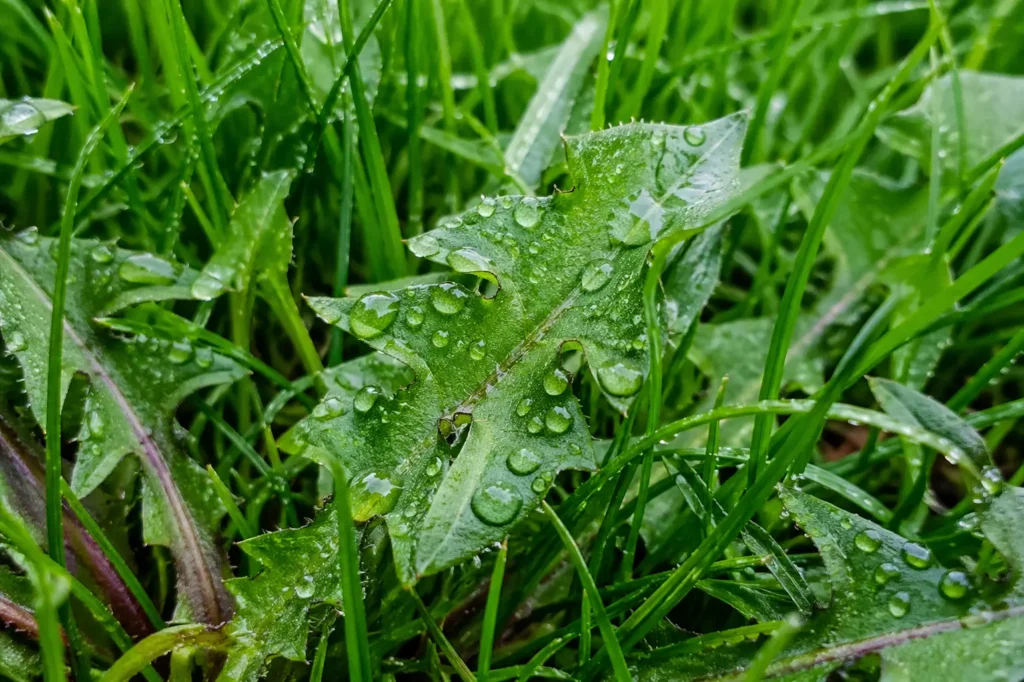
Why Rain Timing Dictates Weed Control Success
Most post-emergent herbicides need direct, undiluted contact with dry leaves to penetrate the plant’s vascular system. If the weed is coated in water, the chemical simply slides off into the soil.
If you spray Ortho WeedClear or Spectracide Weed & Grass Killer on wet leaves, the water acts as a barrier. The active ingredients will not reach the root system, meaning the weed will survive.
Conversely, spraying right before a sudden storm means heavy rain washes the active ingredients into the dirt. This not only fails to kill the weed but can also cause chemical runoff into storm drains.
Spraying Before Rain: The Rainfast Rule
The critical metric for spraying before precipitation is the “rainfast” time. This is the exact drying time required before rainfall won’t wash the product away from the plant leaves.
Always check your specific product label, but here are the general rainfast times for common US lawn chemicals:
- Liquid Glyphosate (Roundup): Typically rainfast in 30 minutes to 3 hours.
- Broadleaf selective sprays (2,4-D, Dicamba): Generally require 1 to 4 hours of dry weather.
- Triclopyr brush killers: Often need 2 to 4 hours to fully bind to woody stems.
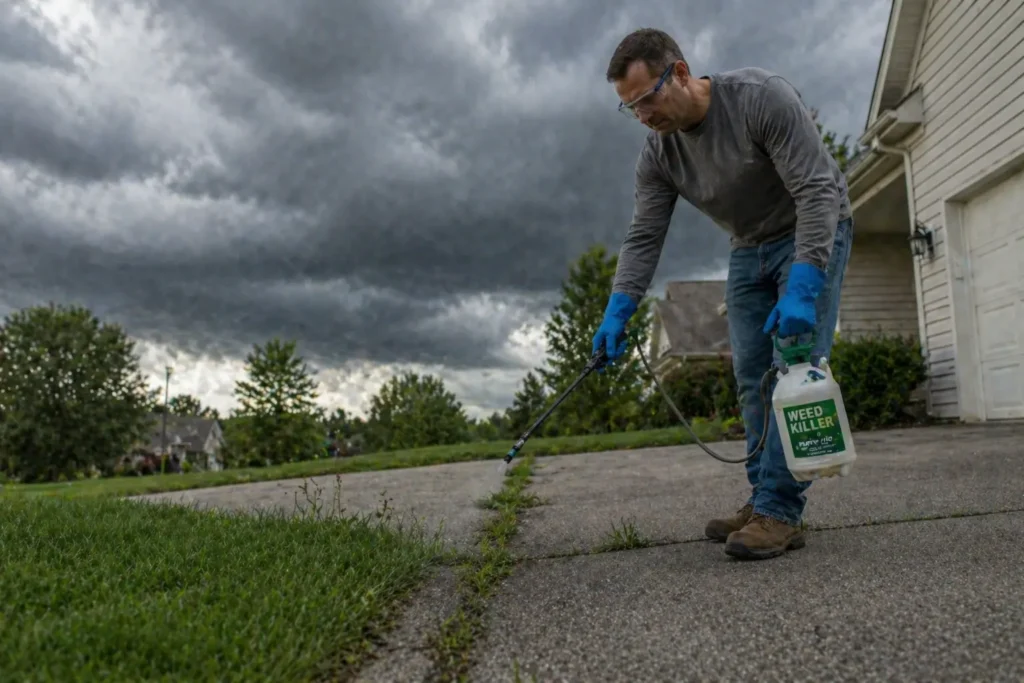
Spraying After Rain: When Is It Safe?
You can absolutely spray after a rainstorm, but only once the weed foliage is completely dry to the touch. Spraying over puddles or morning dew will completely ruin your application rate.
In the Northern US, cool-season lawns like Kentucky Bluegrass or Fescue dry quickly on breezy spring mornings. You should wait at least 2 to 3 hours of direct sunlight before spraying.
In Southern states with warm-season lawns like Bermudagrass or St. Augustine, high humidity can keep leaves damp all morning. Wait until late afternoon, but ensure temperatures are below 85°F to avoid burning your turfgrass.
Pre-Emergent vs. Post-Emergent Rain Rules
The rules for rain flip entirely depending on the type of weed control you are applying to your yard. Mixing these up is the most common DIY lawn care mistake.
- Pre-emergents (Prodiamine, Dithiopyr): These prevent weed seeds from germinating. They require at least 0.5 inches of water to activate into the soil barrier. Rain after application is highly beneficial.
- Post-emergents (Quinclorac, Triclopyr): These kill existing, visible weeds. They require dry foliage to stick to the leaves. Rain after application ruins the treatment.
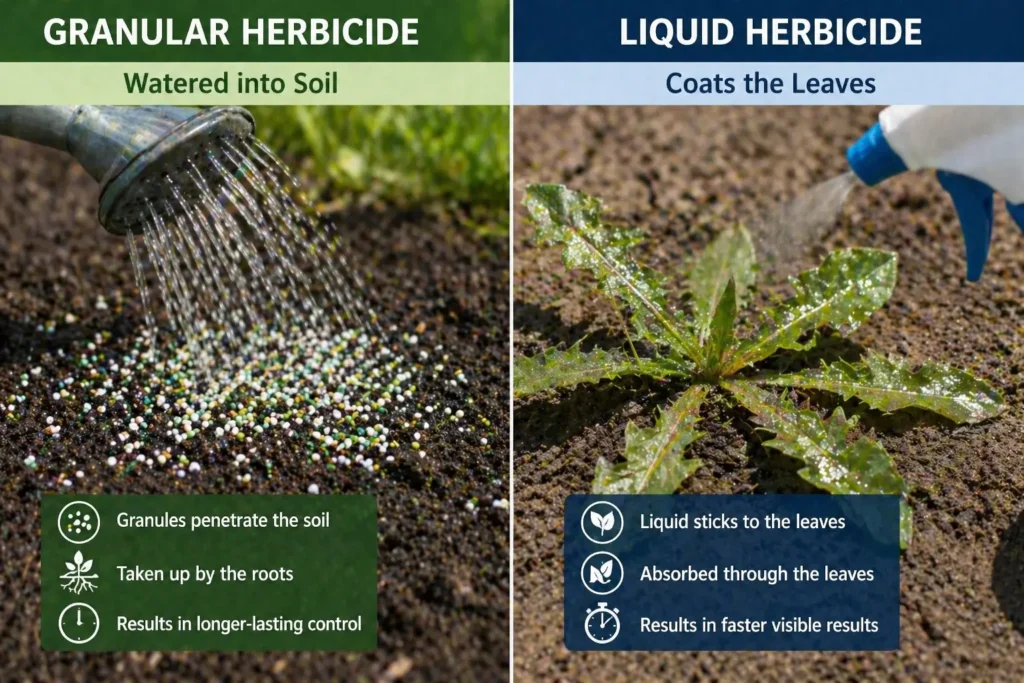
- Granular Weed and Feed (Scotts Turf Builder): Often needs to be applied to a wet lawn so the dust sticks to weed leaves, followed by 24 hours of dry time, and then watered in.
Step-by-Step Solution: How to Time Your Weed Spraying Around Rain
Timing your herbicide application correctly ensures you kill the root system without causing toxic runoff. Follow these steps to maximize your chemical investment.
Step 1: Check the 48-Hour Radar and Dew Point Don’t just look for rain icons on your weather app; check the hourly precipitation percentage and morning dew points. If humidity is above 85%, morning dew will linger on the leaves, acting as a barrier. Wait until the afternoon sun has completely dried the foliage.
Step 2: Identify Your Herbicide’s Specific Rainfast Window Different active ingredients require different drying times. If you are mixing a non-selective herbicide like Roundup Pro Concentrate (using 2 to 2.5 fl. oz. per gallon of water), you need a minimum of 1 to 2 hours of dry weather. For broadleaf selective weed killers like Ortho WeedClear (containing 2,4-D and Dicamba), you must guarantee at least 1 hour of zero precipitation.
Step 3: Perform the Paper Towel Moisture Test Before mixing your chemicals, take a dry paper towel and press it firmly against the weed foliage. If the towel absorbs any moisture from lingering morning dew or recent rain, do not spray. The water droplets will dilute your herbicide, causing the mixture to slide off the waxy leaves and into the soil.
Step 4: Add a Non-Ionic Surfactant to Speed Up Absorption If the forecast is unpredictable and you have a tight weather window, add a high-quality non-ionic surfactant (like Southern Ag Surfactant) to your tank mix. Adding exactly 1 to 2 teaspoons per gallon of water breaks the surface tension of the herbicide. This forces the liquid to spread flat across the leaf, speeding up the drying time and making the chemical rainfast up to 30 minutes faster.
Step 5: Apply with the Correct Droplet Size Adjust your pump sprayer nozzle to a medium-coarse spray pattern. A fine mist will drift in the wind and evaporate too quickly, while massive droplets will run off the leaf before drying. Coat the weed until the leaves are wet, but stop immediately before the chemical starts dripping into the soil.
Professional vs. DIY: Weatherproofing Your Herbicide
Ever wonder how commercial lawn care companies spray your neighbor’s yard just an hour before a storm, yet the weeds still die? The secret isn’t necessarily a stronger herbicide; it is the specific additives in their tank. Professionals use commercial-grade sticking agents and specialized rain-fastening adjuvants that force the chemical to penetrate the plant tissue almost instantly.
Standard big-box store herbicides rely on basic formulations that sit heavily on the leaf surface, requiring several hours of dry weather to fully absorb.
| Feature | Professional Application | DIY Consumer Application |
| Typical Rainfast Time | 15 to 30 minutes | 2 to 4 hours |
| Key Additives | Methylated seed oils (MSO), Organosilicones | Basic water-based carriers |
| Product Format | Tank-mixed concentrates | Pre-mixed “Ready-to-Use” jugs |
| Rain Runoff Risk | Extremely low | High if the weather shifts |
If you want professional-level weather resistance at home, skip the pre-mixed bottles. Buy a concentrated weed killer and mix it yourself with a premium non-ionic surfactant to cut your required rain-free window in half.
Top 3 Signs You Sprayed Too Close to a Rainstorm
If you misjudged the local weather forecast, the herbicide will fail. Look for these undeniable signs in your yard within 5 to 7 days after application:
- No leaf curling: The weeds remain upright and structurally sound instead of twisting and drooping.
- Lack of chlorosis: The center of the weed stays stubbornly green instead of turning yellow or pale white.
- Aggressive new growth: The weed continues to sprout new leaves, proving the root system survived the chemical application.
Next Steps
Once you have mastered the timing for your herbicide applications, ensure your lawn remains healthy by learning how to care for new sod properly or discover how to get rid of slugs in the lawn that often emerge right after a heavy rain.
People Also Ask
Can I spray weed killer on wet grass?
No, you should never spray post-emergent liquid weed killer on wet grass. The existing water droplets on the weed will dilute the herbicide and cause it to run off the leaf, rendering expensive products like Tenacity (Mesotrione) highly ineffective.
What happens if it rains 2 hours after I spray Roundup?
Most standard Roundup (Glyphosate) products are completely rainfast within 30 minutes to 3 hours. If two full hours have passed and the liquid has dried on the leaf surface, the rain will not wash it away and the weed will still die.
Should I water my lawn after applying weed and feed?
It depends entirely on the specific brand. Generally, products like Scotts Turf Builder Weed & Feed require you to apply them to damp grass so the granules stick to broadleaf weeds, followed by watering or rain 24 hours later to wash the nitrogen fertilizer down into the root zone.