
To get rid of slugs in the lawn effectively, you must eliminate their daytime hiding spots, reduce excess soil moisture, and apply granular baits containing iron phosphate or metaldehyde. These nocturnal mollusks thrive in damp thatch layers and can decimate your grass blades overnight if left unchecked.
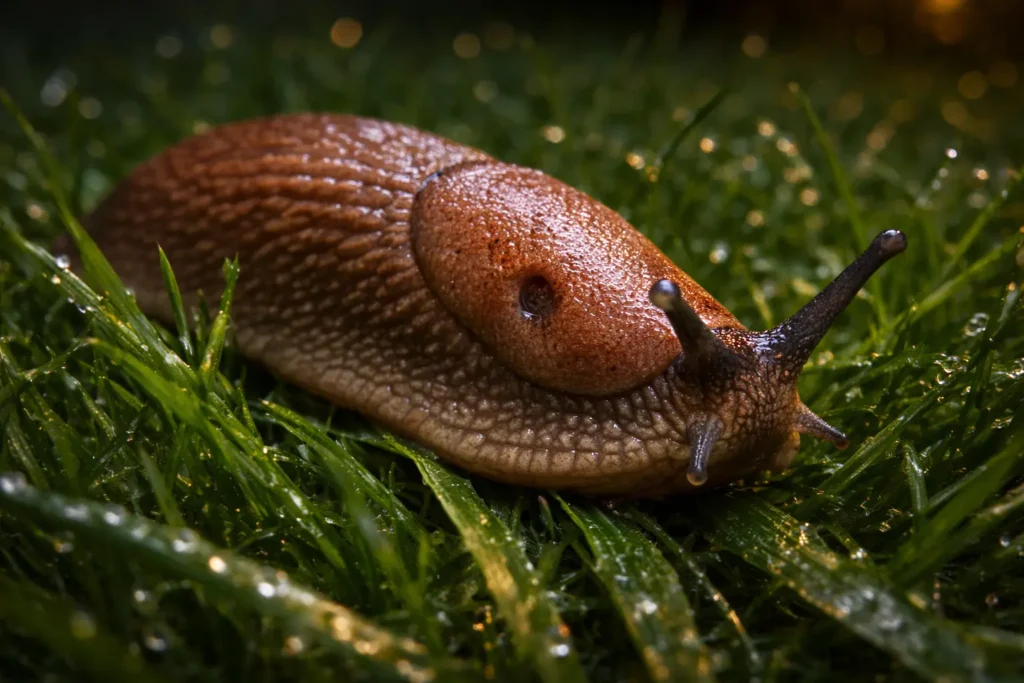
Identifying Slug Damage in Your Yard
Before treating your yard, you must confirm that slugs are the actual culprits destroying your turf. Because they feed strictly at night, homeowners often wake up to mysterious damage without seeing the pests.
Look for these unmistakable signs of a slug infestation in your lawn:
- Silvery, glistening slime trails crisscrossing over grass blades, adjacent patios, and low-hanging plant leaves.
- Irregularly shaped holes chewed straight through the center of the grass blades, not just along the edges.
- Presence of soft-bodied, shell-less mollusks hidden under yard debris, typically measuring 1 to 2 inches long.
- Sudden spikes in lawn damage during wet, overcast weather, especially when temperatures stay between 40°F and 70°F.
Root Causes: Why Slugs Are Invading Your Lawn
Slugs lack a protective shell and require constant, high moisture to survive and reproduce. Overwatering is the number one cause of lawn infestations. Yards receiving more than 1 inch of water per week or suffering from poor soil drainage become prime breeding grounds.
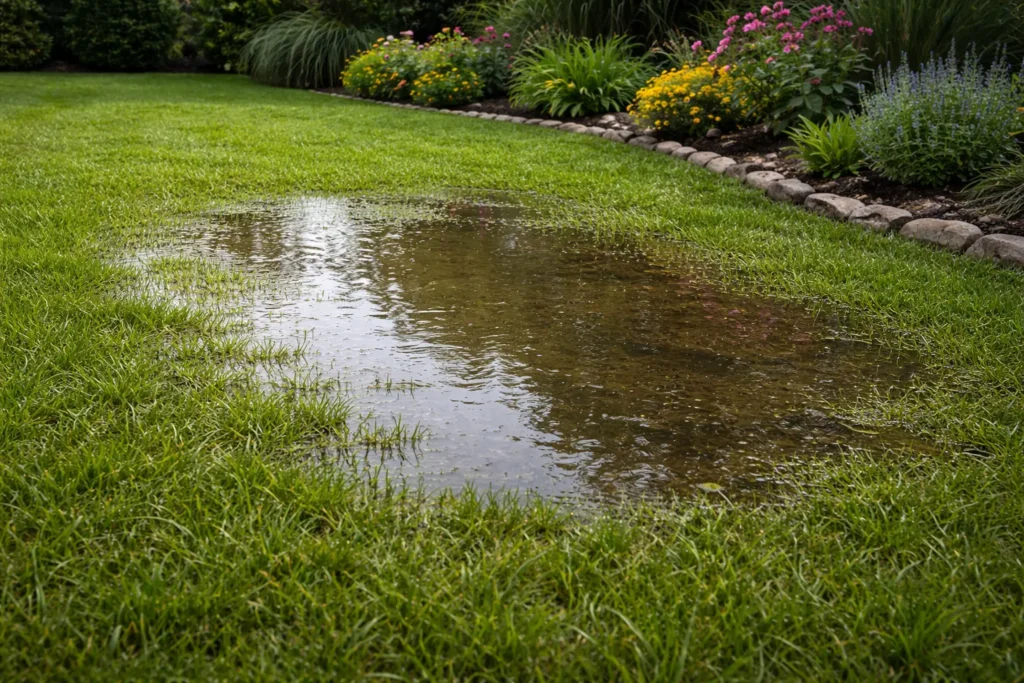
Thatch buildup is the second major factor driving slug populations. A thatch layer thicker than 0.5 inches acts like a sponge, providing a perfectly damp, dark shelter for them during the heat of the day.
Your grass type and climate region also dictate vulnerability. Cool-season grasses in the North, like Kentucky Bluegrass or Tall Fescue, hold moisture in dense canopies that slugs love. In the South, warm-season lawns like St. Augustine are highly vulnerable when heavily shaded and over-irrigated.
Step-by-Step Slug Treatments and Solutions
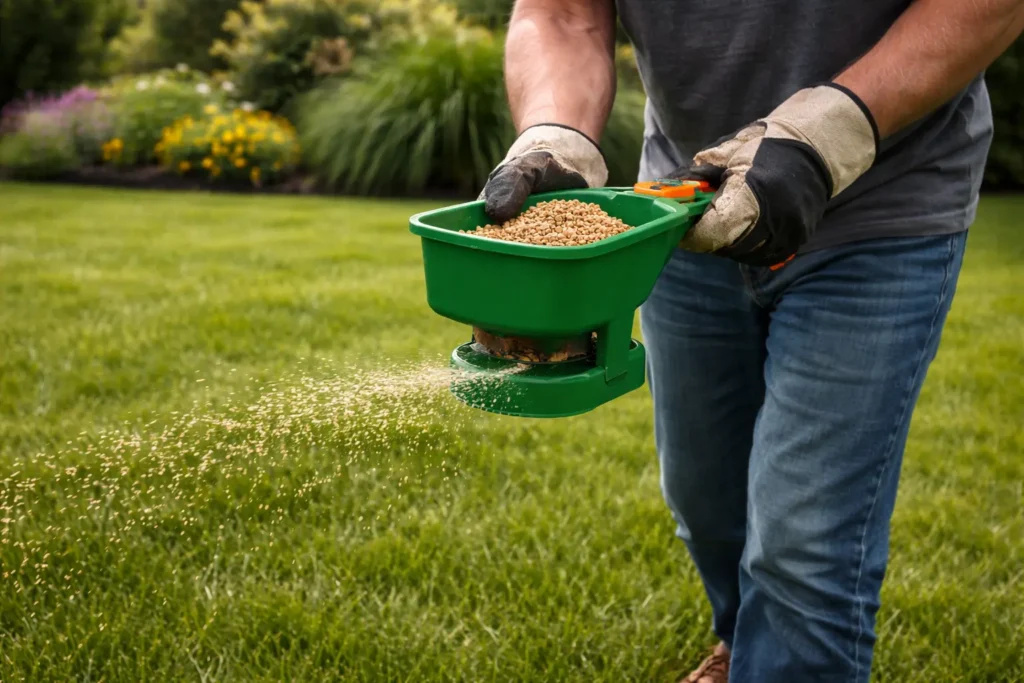
- Step 1: Apply Commercial Baits The fastest way to eliminate active populations is by using a broadcast spreader to apply molluscicides. Look for proven brands like Monterey Sluggo or Corry’s Slug & Snail Killer.
Products containing iron phosphate are safe to use around pets and wildlife, proving highly effective when applied at a rate of 1 lb per 1,000 sq ft. For severe infestations, baits utilizing metaldehyde like Ortho Bug-Geta act much faster, but you must strictly keep dogs and cats off the lawn.
- Step 2: Cultural Control and Moisture Management Chemicals will fail if your yard remains a swamp. Water your lawn deeply but infrequently, and only in the early morning so the grass canopy completely dries by nightfall.
You must also aggressively manage lawn debris. Dethatch your yard if the organic layer exceeds 0.5 inches to strip away their daytime shelters. Prune overgrown shrubs and low-hanging tree branches to increase sunlight and air circulation across shaded turf.
- Step 3: Natural and Organic Remedies If you prefer avoiding synthetic chemicals, create beer traps by sinking shallow plastic containers into the soil so the rim is level with the grass. Fill them with cheap beer; the yeast attracts the slugs, causing them to fall in and drown.
You can also apply a perimeter barrier of diatomaceous earth around vulnerable garden beds or damp lawn edges. For night patrols, spray a direct contact mixture of 1 part household ammonia to 10 parts water directly on visible slugs to instantly dissolve them.
Slugs vs. Cutworms: Know the Difference
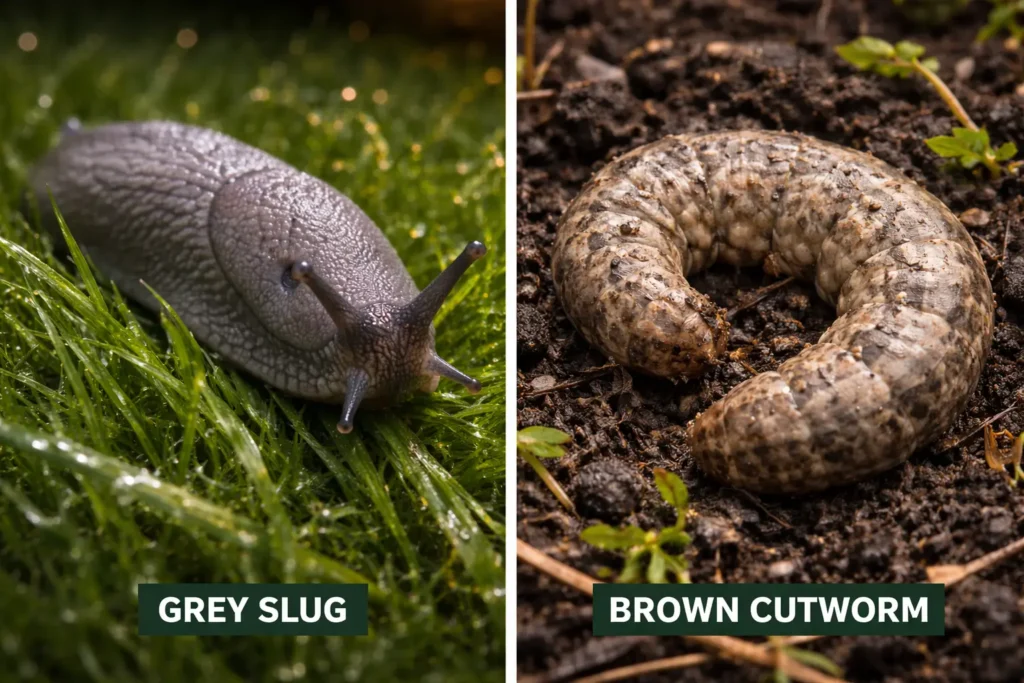
Both of these pests feed at night and chew aggressive holes in grass, leading to frustrating misdiagnoses and wasted money on the wrong treatments.
Slugs leave distinct, shiny slime trails behind them and strongly prefer damp, heavily shaded areas of the yard. They are mollusks, meaning traditional turf insecticides will not harm them at all.
Cutworms, on the other hand, are moth caterpillars that sever grass blades right at the soil line, causing dead patches. They will curl up into a tight “C” shape when disturbed and require broad-spectrum insecticides like bifenthrin for control.
What to Read Next
Once your yard is free of moisture-loving mollusks, you might notice other crawling pests invading the structures at the edge of your property. If tiny foragers have taken over your daily mail delivery, check out our complete guide on how to get rid of ants in a mailbox to protect your letters and packages. Complete perimeter pest control ensures every inch of your outdoor space stays clean and safe.
People Also Ask (FAQ)
Do coffee grounds keep slugs away?
Yes, spreading used coffee grounds creates a mildly abrasive barrier that slugs hesitate to cross, and the residual caffeine is naturally toxic to them. Scatter the grounds lightly over localized problem areas, ensuring you don’t pile them more than 0.25 inches thick to prevent suffocating your grass roots.
Will grass recover from slug damage?
Healthy, well-maintained lawns generally recover from mild slug feeding within two to three weeks once the infestation is stopped. Applying a light application of fast-release nitrogen fertilizer, around 0.5 lbs of nitrogen per 1,000 sq ft, helps push new, healthy blade growth.
What time of year are slugs most active?
Slugs peak during the exceptionally wet, cool months of spring and autumn when nighttime temperatures hover safely around 50°F to 65°F. In Southern states with mild winters, they may remain highly active year-round in well-irrigated, shady lawns.