
The ideal time to aerate your lawn depends entirely on your grass type and region. You must aerate cool-season grasses in early fall, while warm-season grasses require aeration in late spring or early summer.
Aerating at the wrong time stresses the grass canopy and creates an open invitation for aggressive weed invasions. Always match your core aeration schedule to your turf’s peak growing season to guarantee the fastest recovery and root expansion.
5 Unmistakable Signs Your Yard Needs Aeration
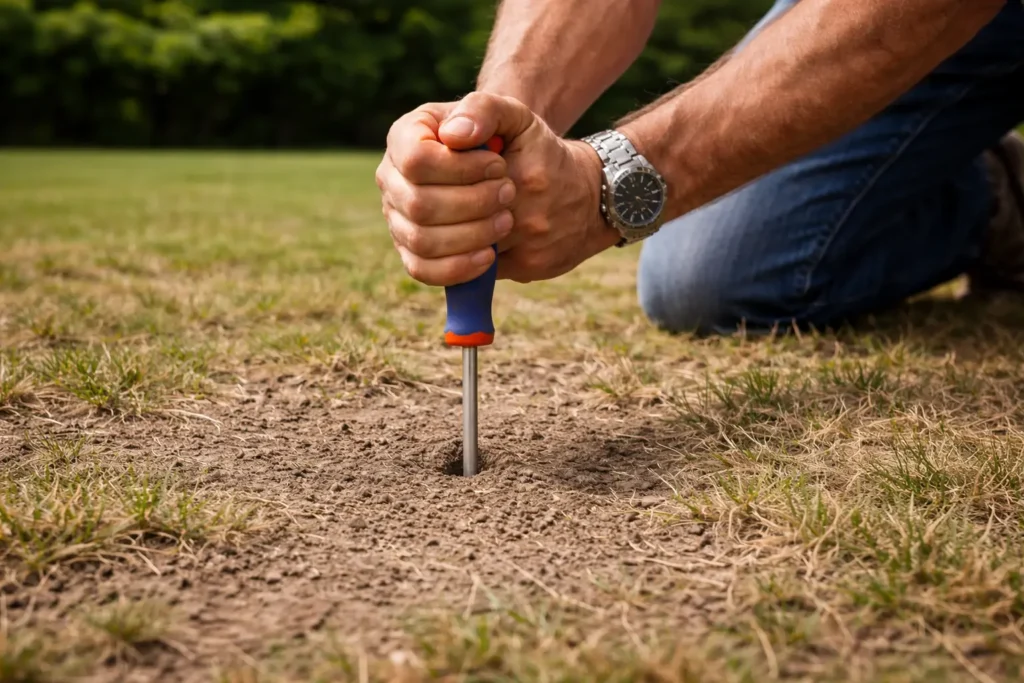
Soil compaction chokes grass roots by completely blocking the flow of oxygen, water, and vital nutrients. Look for these undeniable signs that your yard requires immediate mechanical aeration:
- The Screwdriver Test Fails: You cannot easily push a standard 6-inch metal screwdriver deep into the soil.
- Water Pooling: Rainwater or irrigation runoff creates surface puddles instead of absorbing rapidly into the dirt.
- Excessive Thatch: The spongy layer of dead organic matter between the grass blades and the soil exceeds 0.5 inches in thickness.
- Heavy Traffic: Your yard endures constant foot traffic from kids and pets, or has suffered recent heavy equipment usage.
- Poor Fertilizer Response: Your grass remains thin and faded despite applying premium nitrogen fertilizers at the correct times.
The Root Causes of Soil Compaction
Understanding why your yard compresses helps you prevent future turf decline and costly damage. Heavy clay soils are naturally prone to extreme structural compaction, especially during hot, dry summer months.
Regular foot traffic crushes the soil structure over time, squeezing the air pockets out of the dirt. Furthermore, using heavy riding mowers or parking vehicles on wet ground accelerates deep soil compaction exponentially.
Perfect Timing: Cool-Season vs. Warm-Season Grasses
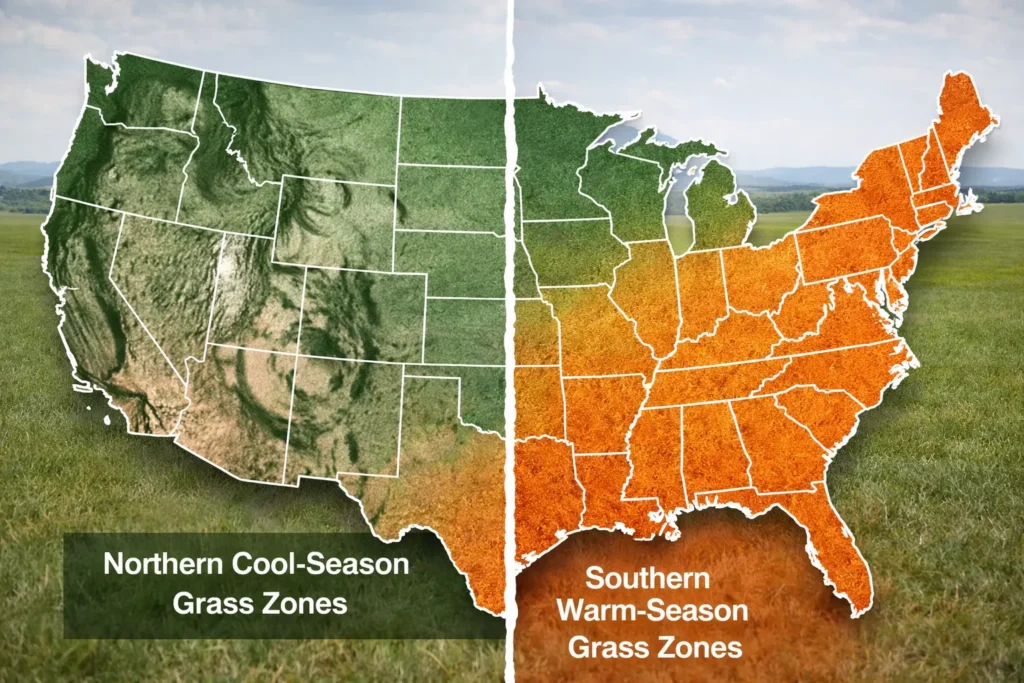
North American lawns are divided into distinct climate zones featuring entirely different grass species. You must correctly identify your region’s grass type to target the perfect aeration window.
- Cool-Season Grasses (North): Includes Kentucky Bluegrass, Tall Fescue, and Perennial Ryegrass.
- Best Time to Aerate: Early fall is the absolute optimal time, right when soil temperatures drop to around 55°F.
- Why: Fall provides cool daytime air and warm soil, creating the perfect environment for rapid root expansion before winter dormancy.
- Warm-Season Grasses (South): Includes Bermuda, Zoysia, Centipede, and St. Augustine.
- Best Time to Aerate: Late spring through early summer.
- Why: These resilient grasses enter their peak vegetative growth phase when daytime temperatures consistently exceed 80°F, allowing them to heal quickly.
How to Properly Aerate Your Yard
Executing the aeration process correctly is crucial for achieving a thick, drought-resistant yard. Follow these exact steps to maximize your soil’s oxygen intake and encourage explosive root depth.
- Deep Watering. Apply exactly 1 inch of water to your yard the day before aerating to soften the ground.
- Flag Utilities. Mark all underground irrigation heads and shallow utility cables to avoid destroying them with the machine.
- Core Aeration. Rent a heavy-duty mechanical core aerator from professional brands like Ryan or Classen.
- Depth Check. Make two perpendicular passes, ensuring the machine pulls hollow dirt cores that are 2 to 3 inches deep.
- Leave the Plugs. Allow the excavated soil plugs to dry completely on the lawn surface where they will naturally decompose.
Post-Aeration Treatments: Seed and Fertilizer
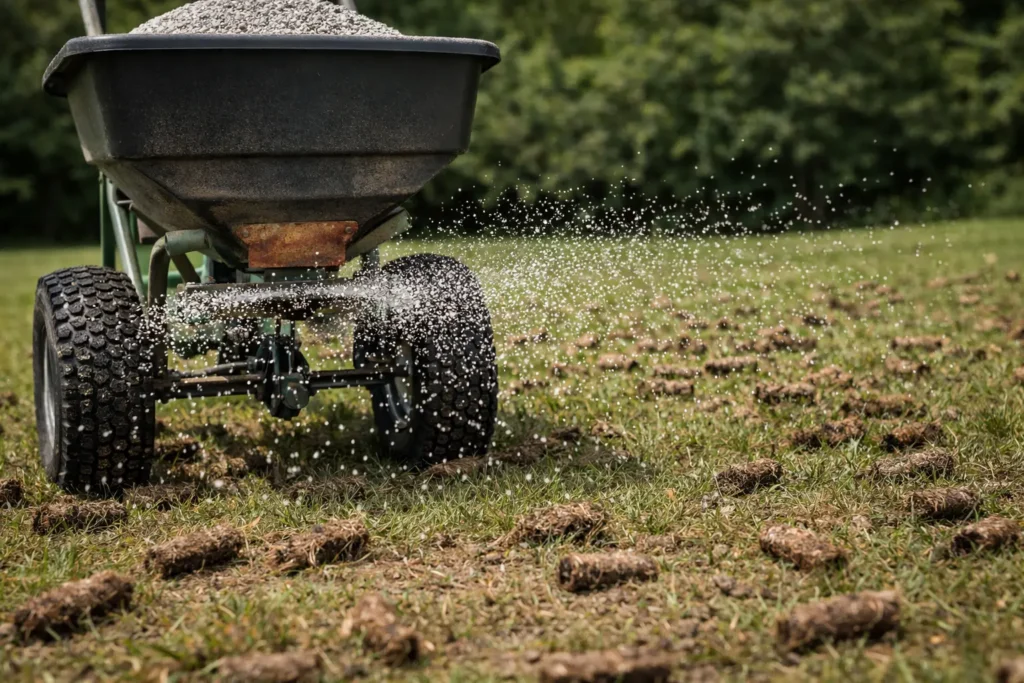
Immediately after aerating is the absolute best time of the year to overseed and feed your lawn. The thousands of open holes act as perfect incubators for grass seed and immediate nutrient absorption.
- Apply Fertilizer: Use a high-quality product like Scotts Turf Builder WinterGuard Fall Lawn Food at a rate of 1 bag per 5,000 sq ft.
- Overseeding: Spread premium grass seed directly over the heavily aerated yard to fill in bare patches and drastically increase turf density.
- Watering: Keep the top 0.25 inches of soil consistently moist for the next 14 to 21 days to guarantee maximum seed germination.
Core Aeration vs. Liquid Aeration vs. Dethatching
Homeowners frequently confuse mechanical aeration methods with chemical treatments and dethatching tools. Understanding the functional differences ensures you apply the correct solution to your yard’s specific problem.
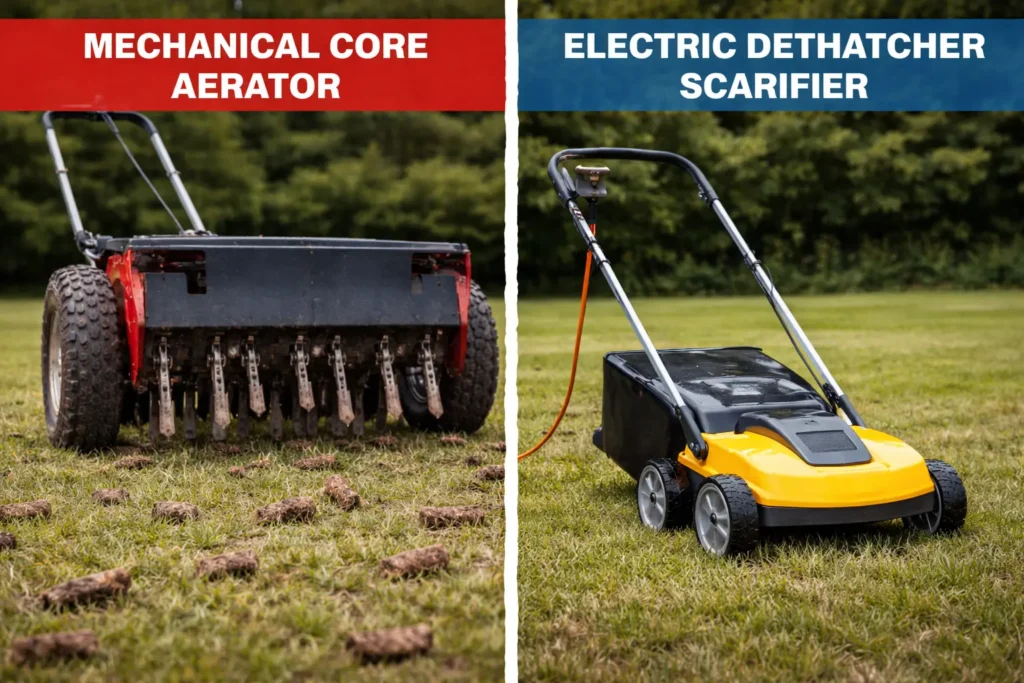
- Core Aeration: Physically extracts 2 to 3-inch plugs of dirt from the ground. This is the undisputed gold standard for relieving severely compacted clay soils.
- Liquid Aeration: Utilizes chemical surfactants like ammonium laureth sulfate (found in Simple Lawn Solutions Liquid Aerator applied at 4 to 8 oz per gallon). Best for mild compaction.
- Dethatching: Uses vertical steel blades (like a Sun Joe electric scarifier) to aggressively slice through the dead surface thatch layer. It does not relieve deep soil compaction.
While you are out in the yard timing your aeration, take a moment to inspect your wooden landscape timbers. If you spot any mysterious sawdust, you might be looking at carpenter ant frass vs termite frass, which requires immediate treatment to protect your property.
People Also Ask (FAQ)
Can I aerate and overseed at the same time?
Yes, combining core aeration and overseeding is highly recommended by turf management professionals across the US. The thousands of holes created by the mechanical aerator provide perfect seed-to-soil contact, protecting the fragile seeds from hungry birds and heavy rain runoff. You should always broadcast your new grass seed immediately after pulling the soil plugs.
Should I pick up the aeration plugs from my yard?
No, you should never pick up, rake, or bag the soil plugs left behind by a core aerator. These muddy plugs contain valuable soil microbes and organic nutrients that will naturally break down and feed your lawn’s root system. Once they dry out completely after a few days, simply running your lawnmower over them will pulverize the dirt right back into the grass canopy.
Can I use spike aeration shoes instead of renting a machine?
No, wearable spike shoes are highly ineffective and can actually worsen your yard’s compaction issues. While pushing solid metal spikes into the dirt does create a visible hole, it simultaneously forces the soil outward, compacting the dirt even more tightly around the edges of that exact hole. Always rely on a hollow-tine core aerator that physically extracts a volume of dirt from the ground.