
The general rule is to wait 24 to 72 hours after fertilizing before letting your dog back on the lawn. For liquid fertilizers, you must wait until the blades of grass are completely dry. For granular products, you must wait for the fertilizer to be watered in and for the soil to dry.
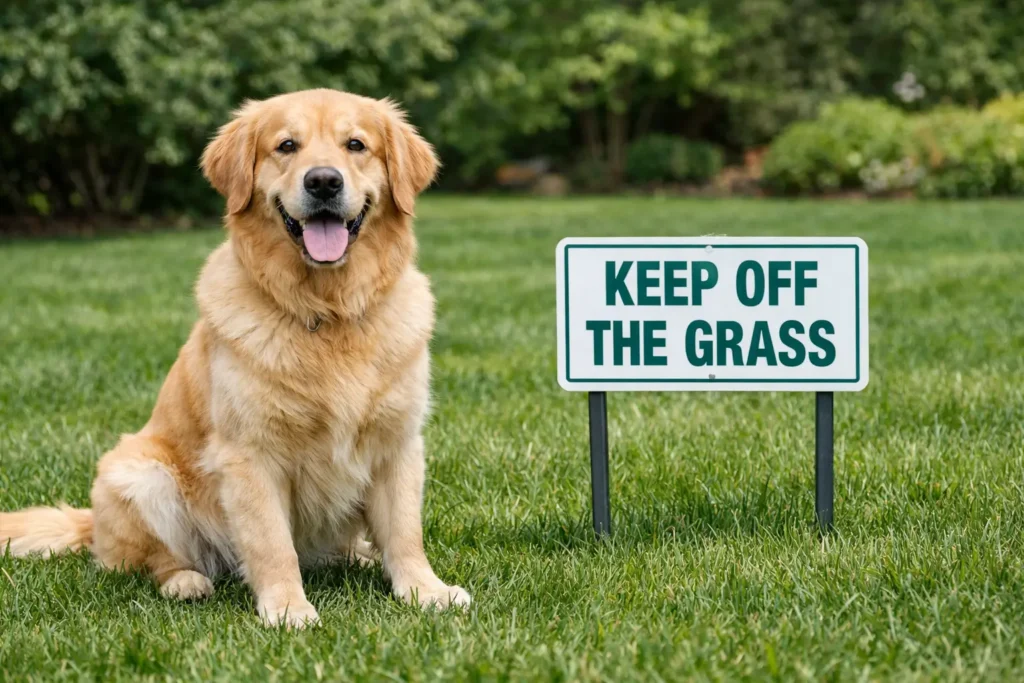
Understanding the “Wait Window”
Safety depends entirely on the type of application used. Walking your dog on wet chemicals can lead to paw pad irritation or ingestion through grooming.
- Liquid Fertilizers: These are high-risk until they bond with the plant. Wait at least 24 hours or until the morning dew has vanished.
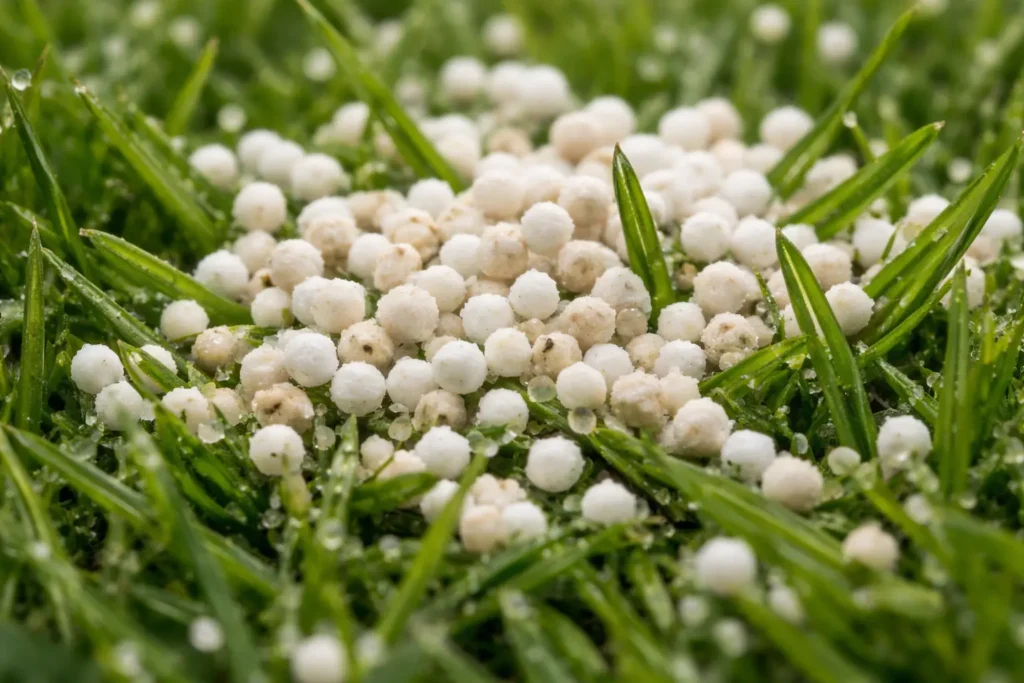
- Granular Fertilizers: These “pebbles” can sit in the thatch for days. You must apply at least 1/4 inch of water and wait 48 to 72 hours for the granules to dissolve and the ground to dry.
- Organic/Pet-Safe Products: Brands like Milorganite or Scotts Natural Lawn Food are safer, but you should still wait until the dust settles (approx. 4 hours).
Root Causes of Fertilizer Toxicity in Pets
Dogs are curious and explore with their mouths and paws. The danger isn’t just the nitrogen; it’s the additives often found in “Weed and Feed” products.
- Chemical Burn: High concentrations of nitrogen can cause redness and irritation on a dog’s soft paw pads.
- Ingestion: Dogs may eat granular pellets, mistaking them for kibble, or lick their paws after walking on treated grass.
- Herbicides: Many fertilizers include 2,4-D or Dicamba for weed control, which are significantly more toxic than simple nutrients.
Step-by-Step Safety Protocol for Dog Owners
To ensure your lawn is a safe “Potty Zone,” follow this protocol every time you treat your yard.
- Read the Label: Check for the “re-entry interval” (REI) specified by the manufacturer.
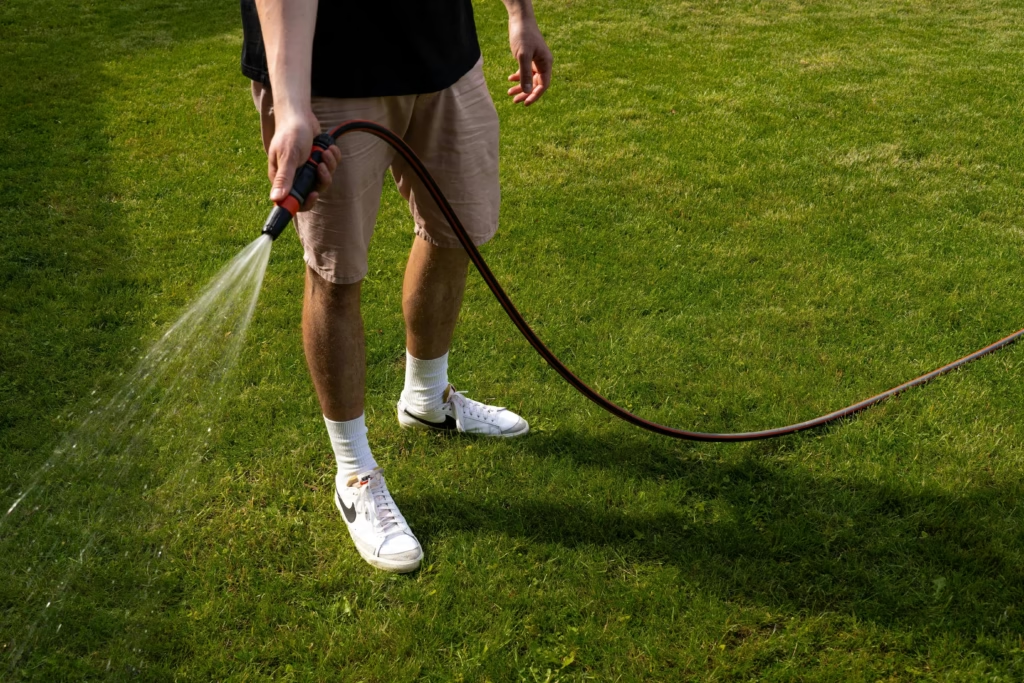
- Water it In: Use a sprinkler to apply roughly 0.5 inches of water to move the nutrients into the root zone.
- The “Touch Test”: Put on a glove and rub the grass. If any residue or moisture transfers to the glove, it is not safe for your dog.
- Designate a Safety Zone: Keep a small 10 ft x 10 ft section of the yard untreated so your dog has a place to go during the waiting period.
Top Recommended Pet-Friendly Fertilizers in the US
If you want to reduce the wait time and the anxiety, consider these specific American brands known for pet-conscious formulas:
- Scotts Turf Builder SafePro: Formulated specifically to be “dog-ready” as soon as it is applied and watered in.
- Espoma Organic Lawn Food: A non-toxic, slow-release fertilizer that uses poultry manure and bone meal.
- Sunday Lawn Care: Offers liquid nutrients shipped to your door that are specifically marketed as safe for pets once dry.
- Purely Organic Lawn Food: Contains no biosolids or harsh chemicals, making it a favorite for homeowners with puppies.
Fertilizer Burn vs. Dog Urine Spots
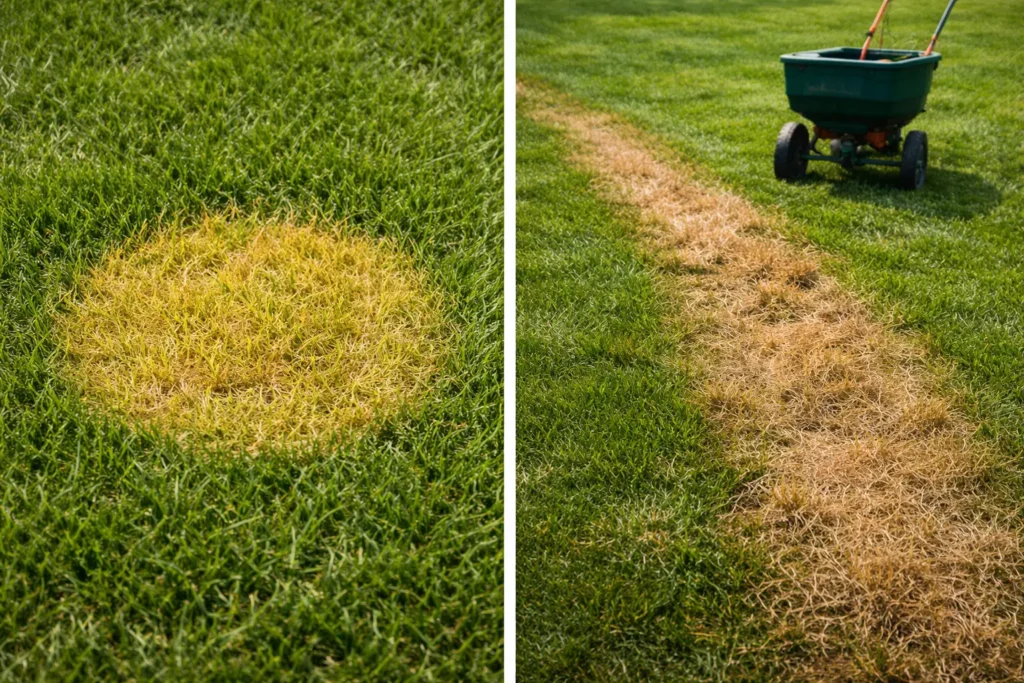
It is common to confuse “lawn burn” from fertilizer with “urine burn” from your dog. Understanding the difference helps you treat the lawn correctly.
| Feature | Fertilizer Burn | Dog Urine Spots |
| Pattern | Streaks or large uniform patches | Small, distinct circular spots |
| Color | Yellow to brown straw-like texture | Brown center with a dark green outer ring |
| Cause | Over-application of Nitrogen | Concentrated Urea and salts |
| Solution | Heavy flushing with 1 inch of water | Training or “Dog Rocks” in water |
Regional Considerations: North vs. South
The type of grass you have in your American yard dictates how the fertilizer is absorbed.
Cool-Season Grasses (North)
In states like Ohio or Pennsylvania, you likely have Kentucky Bluegrass or Fescue. These lawns are thick and can “trap” granules in the thatch. You should wait the full 72 hours because the dense canopy prevents the pellets from reaching the soil quickly.
Warm-Season Grasses (South)
In Florida or Texas, Bermuda or St. Augustine grass grows more horizontally. Fertilizers often reach the soil faster here. However, the high humidity in the South can keep liquid fertilizers wet for much longer, extending the risk window.
Symptoms of Fertilizer Poisoning in Dogs
If your dog accidentally breaks out of the house and runs onto a freshly treated lawn, watch for these signs immediately:
- Excessive drooling or foaming at the mouth.
- Vomiting or diarrhea.
- Muscle tremors or unusual lethargy.
- Red, inflamed skin between the toes.
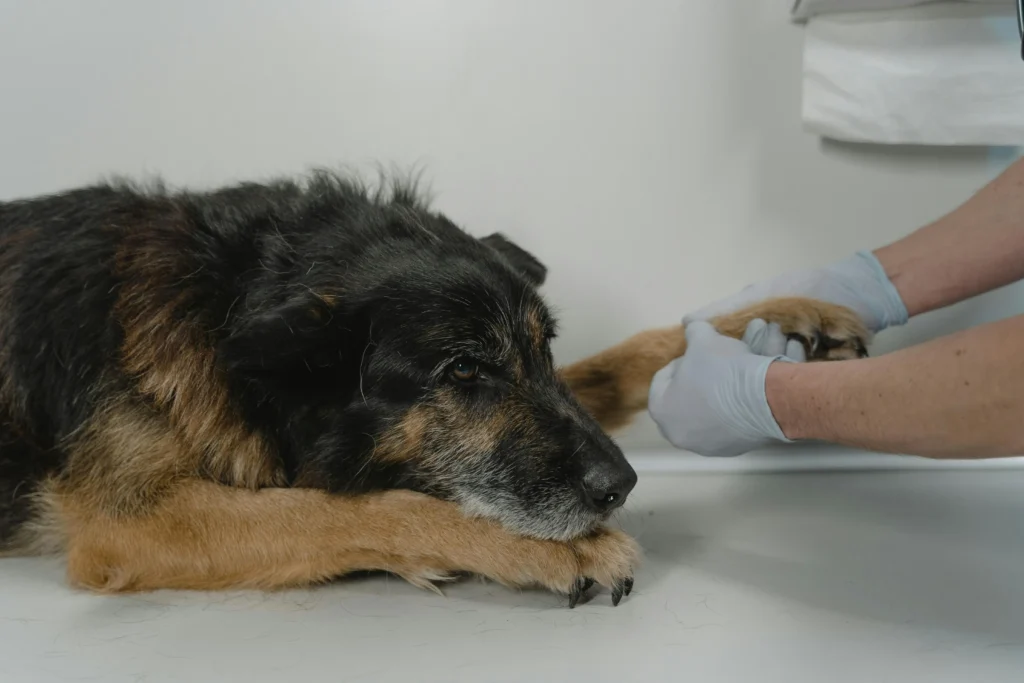
If you notice these symptoms, wash your dog’s paws with mild soap and lukewarm water, then contact your vet or the ASPCA Animal Poison Control Center.
What to Read Next
Now that your yard is safely fertilized and your dog is back to playing, that new flush of green growth can sometimes reveal other hidden issues. If your equipment starts struggling with the thicker turf, check out our quick fix for when your lawn mower leaves uncut grass. Alternatively, if you notice strange fungal circles popping up in the soil despite your hard work, learn how to instantly identify brown patch vs. dollar spot to stop the disease before it spreads.
People Also Ask (FAQ)
Can I walk my dog on the lawn if it rained right after fertilizing?
No, you should actually wait longer. While rain helps dissolve granules, it also creates puddles where concentrated chemicals can collect. These “fertilizer puddles” are highly attractive to dogs but are very dangerous if lapped up. Wait until all puddles have dried and the grass is merely damp before considering re-entry.
Is organic fertilizer 100% safe for dogs to eat?
Not necessarily. While organic fertilizers like bone meal or blood meal are “natural,” they are often highly appetizing to dogs. If a dog ingests a large amount of bone meal, it can form a cement-like ball in their stomach (a bezoar), which may require surgery. Always store bags in a locked garage or shed.
What happens if my dog licks fertilizer off their paws?
Licking a small amount of standard fertilizer may cause mild stomach upset or drooling. However, if the fertilizer contained systemic insecticides or weed killers (like Spectracide), it can lead to more severe neurological issues. Always rinse your dog’s paws with water if you suspect they wandered into a treated area prematurely.