
If your lawn mower leaves uncut grass behind, the problem usually stems from a dull blade, a clogged deck, or improper mowing technique. You don’t need a new mower; you just need a quick diagnostic check to restore your pristine yard.
Leaving behind stragglers or a “mohawk” in the middle of your mowing path ruins your lawn’s curb appeal. Identifying the specific pattern of the uncut grass will tell you exactly which part of your machine is failing.

Identifying the Problem: Is It the Mower or the Operator?
Before buying replacement parts, inspect the freshly mowed areas of your yard. A mower struggling to cut properly will always leave distinct physical evidence behind.
Look for these unmistakable signs in your yard:
- A single, continuous strip of tall grass dead center in your mowing path.
- Frayed, white, or brown tips on the grass blades that were successfully cut.
- Patches of flattened, unbroken grass in the wheel tracks that spring back up the next day.
- Scattered clumps of wet, heavy clippings left on the surface of the lawn.
Root Causes: Why Your Mower is Missing Spots
The most common culprit is a severely worn or damaged mower blade. When blades lose their sharp edge, they rip and tear the grass instead of slicing it cleanly, often missing blades entirely.
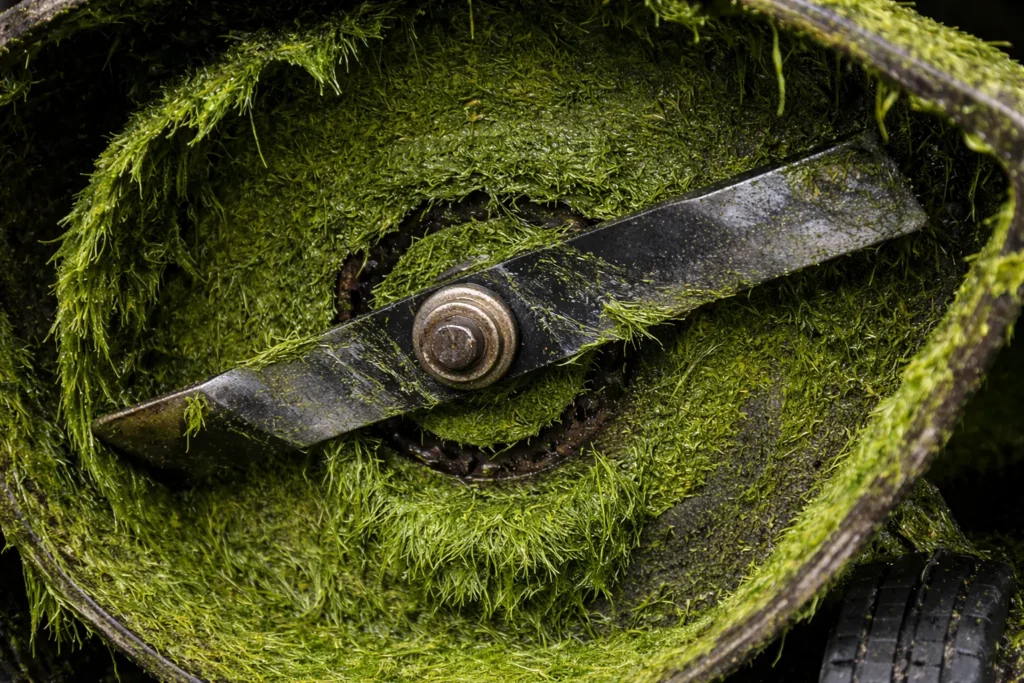
Another major factor is heavy grass buildup under the mower deck. When wet clippings accumulate, they disrupt the critical airflow and vacuum effect required to lift the grass upright before cutting.
Finally, an unbalanced or improperly leveled mower deck will cause uneven cuts. It will leave a step-like pattern or miss the grass completely on one side of the machine.
Engine speed also plays a massive role. If your engine RPMs drop because the grass is too tall or you are walking too fast, the blade cannot spin fast enough to process the volume of your lawn.
Step-by-Step Solutions to Fix Uncut Grass
1. Inspect and Sharpen the Mower Blade
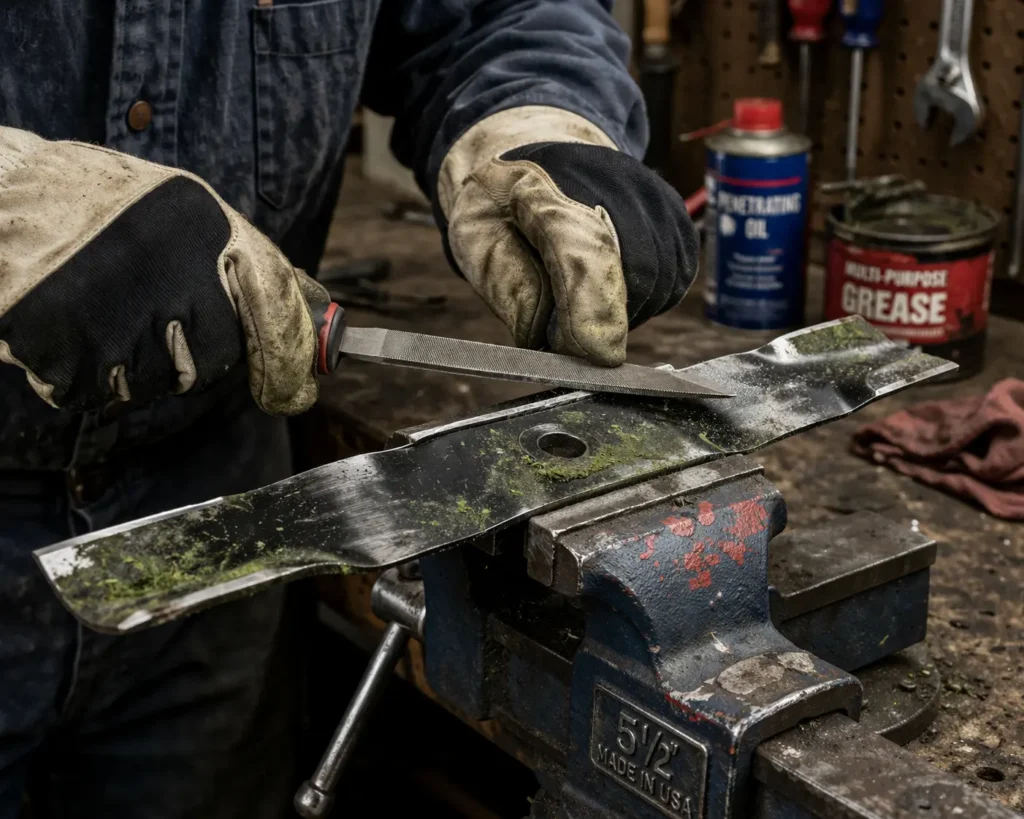
Always disconnect the spark plug boot before reaching under the deck. Remove the blade using a socket wrench (typically 5/8″ or 11/16″) and a block of wood to wedge the blade safely. Inspect the metal for deep gouges or bends. If structurally sound, use a 10-inch bastard mill file or an angle grinder with a 60-grit flap disc to restore the factory 30-degree cutting angle. Never reinstall the blade without balancing it on a nail or an Arnold Mower Blade Balancer. An unbalanced blade vibrates violently, reducing engine RPMs and leaving uncut strips. Reinstall the blade and tighten the center bolt to the manufacturer’s specification (usually 40-50 ft-lbs) using a torque wrench.
2. Deep Clean the Mower Deck
A heavily clogged deck destroys the aerodynamic vacuum required to pull grass upright for a clean cut. Scrape the underside clean using a Hyde Contour Scraper or a stiff plastic putty knife. Once the bare metal is exposed and completely dry, spray the entire underside with a heavy coat of Mo-Deck Non-Stick Spray or WD-40 Specialist Dirt & Dust Resistant Dry Lube PTFE. This silicone-based layer prevents wet clippings from adhering and ruining your suction.
3. Level and Adjust the Mower Deck
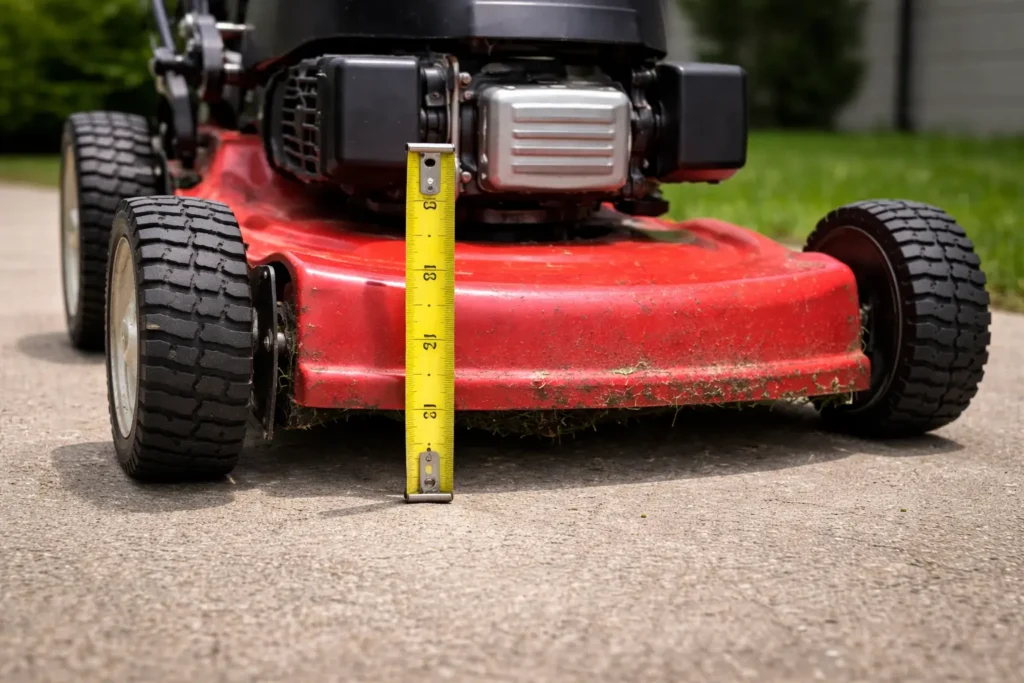
Before adjusting the deck’s leveling nuts, check your tire pressure. A single under-inflated tire is the most misdiagnosed cause of an uneven, stepped cut. Inflate all tires to the manual’s exact specification (typically 12-14 PSI for riding mowers). Park the mower on a flat, concrete surface. Measure the exact distance from the blade tip to the ground on both the left and right sides; they must match exactly.
4. Correct Your Mowing Technique
Overwhelming the engine drops RPMs, preventing the blade from processing the volume of grass. Reduce your walking or driving speed by at least 20% in heavy growth. Aggressively overlap your previous mowing pass by 3 to 4 inches so the wheels do not flatten uncut grass. Finally, strictly follow the one-third rule: never remove more than 1/3 of the grass blade height in a single pass to maintain RPMs and turf health.
Comparing the Damage: Dull Blade vs. Mower Deck Issues
It is crucial to accurately diagnose why your lawn mower leaves uncut grass to avoid wasting money on the wrong parts. Here is how to differentiate the two main hardware failures:
- Dull Blade Damage: The grass is cut, but the tips are jagged, torn, and turning brown or white. Your entire yard looks hazy a few days after mowing.
- Deck Leveling Issues: The cut itself is clean, but there is a distinct, measurable height difference from one side of the mowing stripe to the other.
- Clogged Deck: Leaves random, scattered clumps of clippings and occasional uncut patches where the grass was simply flattened by the heavy deck housing.
Pro Tip for Turf Health: Mowing with a dull blade creates jagged, open wounds on your grass, making your yard highly vulnerable to fast-spreading fungal infections. If you notice strange discolored circles or lesions appearing in your yard after a rough cut, it might not just be mower damage—check out our complete diagnostic guide to Brown Patch vs. Dollar Spot to stop the disease before it destroys your lawn.
People Also Ask (FAQ)
Why does my riding mower leave a strip of grass in the middle?
Riding mowers, especially dual or triple-blade models, leave a middle strip if the blades are out of sync, worn down at the tips, or if the mower deck belt is loose and slipping, causing the center blade to spin slower than the outer blades.
Does mowing wet grass cause the mower to miss spots?
Yes. Wet grass is exceptionally heavy and clumps together easily, sticking to the underside of the deck and completely blocking the aerodynamic vacuum lift required to pull the grass blades upright into the cutting path.
How often should I clean the underside of my mower deck?
You should scrape the underside of your mower deck at least once a month during the peak growing season, or immediately after you are forced to mow damp grass, to maintain optimal airflow and prevent rust.