
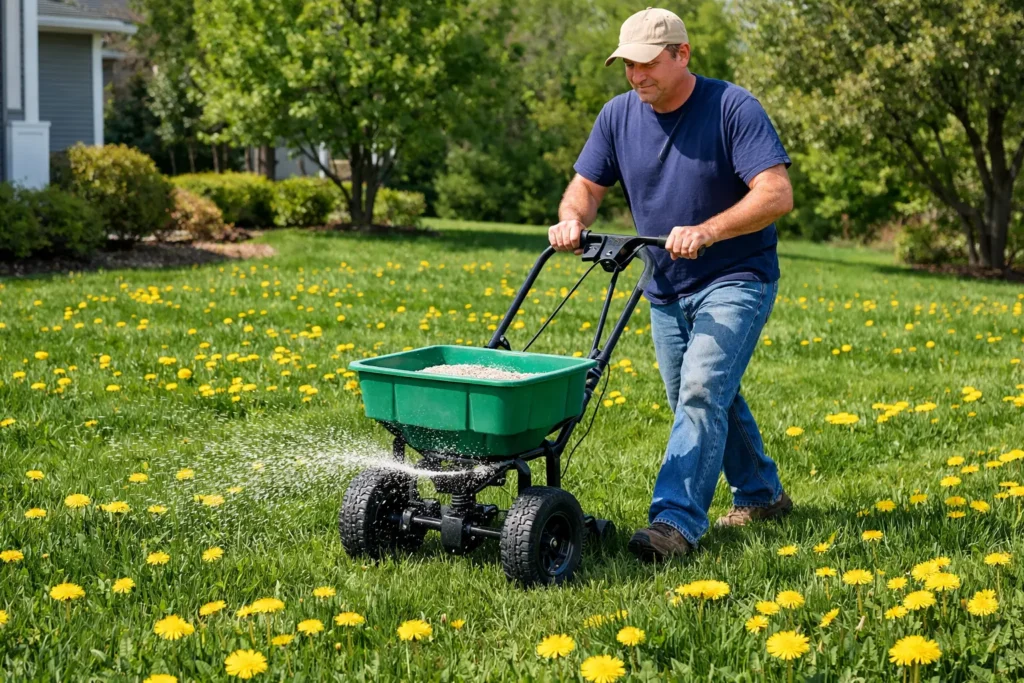
You should mow before applying weed and feed, but you must wait at least two to four days between mowing and spreading the product. Mowing immediately before application removes the weed foliage necessary to absorb post-emergent herbicides.
Products relying on chemicals like 2,4-D, Mecoprop, or Dicamba need surface area to stick and work effectively. If you cut the broadleaf weed canopy down to the stem, the granular dust simply falls to the soil and becomes useless.
The Root Causes: Why Mowing Timing Matters
Granular weed and feed products are designed to adhere to the leaves of existing weeds while feeding the soil. If the weed leaves are freshly chopped, they lack the necessary surface area for chemicals like Atrazine or Trimec to attach.
Furthermore, a freshly mowed lawn is under temporary stress. Hitting recently cut turf with high-nitrogen fertilizers like a 28-0-3 blend can cause tip burn. Allowing the grass to recover for a few days prevents chemical damage.
For pre-emergent weed and feed products targeting crabgrass, the leaf surface doesn’t matter as much. However, mowing first ensures the granules reach the soil barrier without getting caught in excessively tall grass blades.
Step-by-Step Weed and Feed Application Schedule
To achieve maximum efficacy with products like Scotts Turf Builder Weed & Feed or Spectracide Weed & Feed, follow this exact timeline:
- Day 1 (Mowing): Mow your yard at a standard height. Aim for 2.5 to 3 inches for cool-season grasses, or 1.5 to 2 inches for warm-season lawns.
- Day 3 or 4 (Prep): Check the weather. Ensure no heavy rain is expected for 24 to 48 hours. If the label requires a wet leaf, lightly sprinkle the lawn early in the morning.
- Day 4 (Application): Fill your broadcast spreader. Apply at the exact bag rate, typically around 2.85 lbs per 1,000 sq ft.
- Day 6 or 7 (Post-Care): Water the lawn deeply (about 0.5 inches) to push the fertilizer into the root zone after the herbicide has absorbed.
Mowing Before vs. Mowing After Application
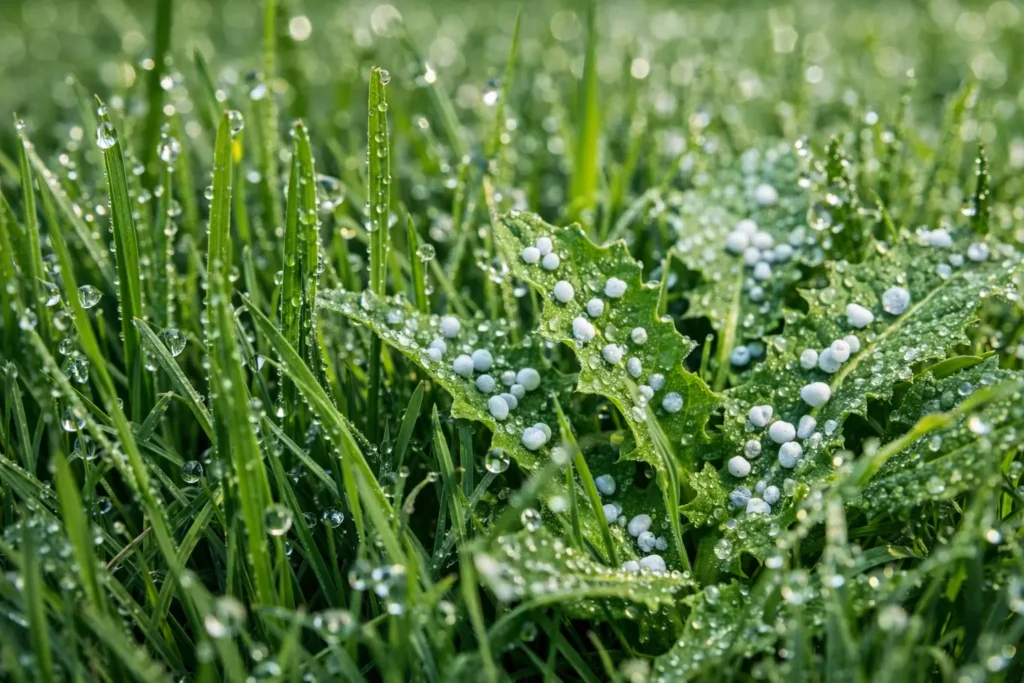
Many homeowners confuse the rules for mowing before versus after treatment. Mowing before (with a buffer of a few days) preps the yard perfectly. Mowing after too soon creates an entirely different set of problems.
If you mow within 48 hours after applying your granular treatment, your mower deck will act like a vacuum. The mower blades will literally suck up and bag the expensive Ortho or TruGreen granules you just put down.
Wait at least two to three days post-application before firing up the mower again. When you do mow, leave the grass clippings on the yard (mulching) to return those active nutrients straight back into the soil.
Cool-Season vs. Warm-Season Grass Considerations
Your location in the US dictates the exact type of weed and feed you should apply. Northern yards consisting of Kentucky Bluegrass, Fescue, or Perennial Ryegrass need treatment in early spring when soil hits 50°F.
Southern yards heavily rely on warm-season grasses like Bermuda, Zoysia, Centipede, or St. Augustine. These grasses are highly sensitive to certain herbicides like 2,4-D during spring green-up.
For Southern lawns, always choose a specialized product like BioAdvanced Southern Weed and Feed. Never apply weed and feed to any lawn when daytime temperatures consistently exceed 85°F, as this guarantees turf burn.
Professional vs. DIY (Missing Section Addition)
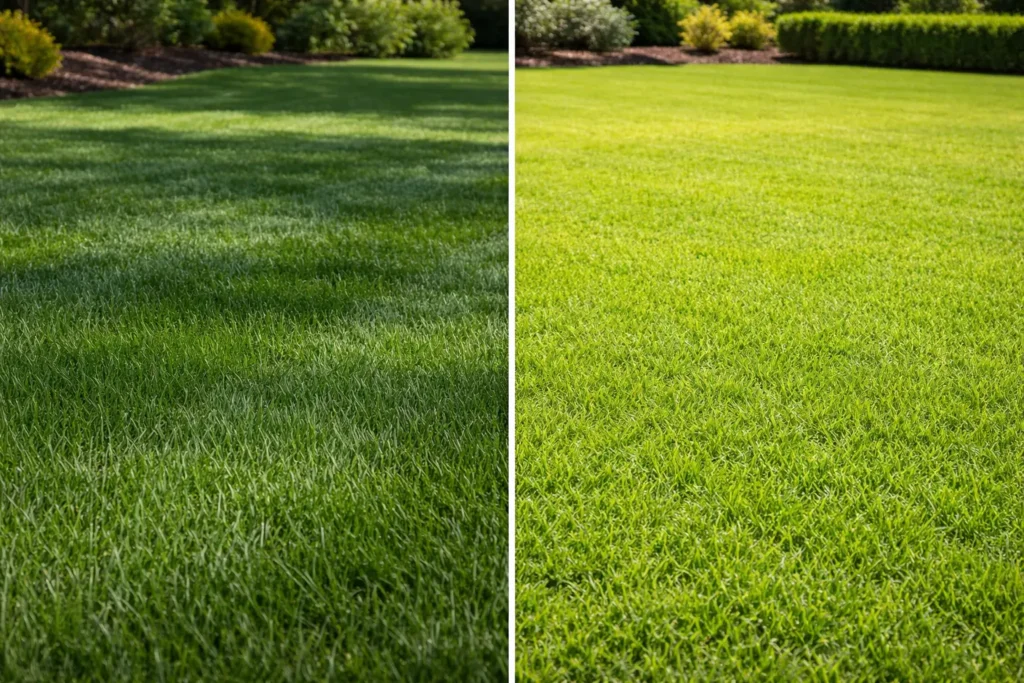
When deciding whether to tackle weed and feed applications yourself or hire a professional turf care service like TruGreen, timing and chemical access are the biggest differentiators. DIY granular applications are cost-effective and perfectly fine for mild broadleaf weed issues using standard products from big-box stores. However, professionals utilize calibrated spray rigs with commercial-grade liquid post-emergents. These liquid solutions absorb much faster and often bypass the rigid three-day mowing restrictions associated with consumer granular dusts.
If your lawn is more than 30% weeds, or if it consists of highly sensitive warm-season grasses like Centipede or St. Augustine, hiring a licensed applicator prevents severe turf burn and costly mistakes. A pro can also perfectly time the application around your mowing schedule without relying on morning dew for product adhesion.
| Feature | DIY Weed & Feed | Professional Service |
| Cost per 1,000 sq ft | $15 – $25 | $45 – $65 |
| Application Type | Usually granular | Usually liquid |
| Mowing Buffer | 3-4 days required | 1-2 days (depending on chemical) |
| Risk of Turf Burn | High (if misapplied) | Low (calibrated equipment) |
Clear Signs You Need a Weed and Feed Treatment
Not every yard requires a combined fertilizer and herbicide approach. Look for these undeniable symptoms before applying heavy chemicals to your property:
- Broadleaf weeds like dandelions, clover, or dollarweed cover more than 10% of your total lawn area.
- The grass blades appear pale yellow or light green, signaling a severe nitrogen deficiency in the soil.
- Weeds are actively growing and in their vegetative state (not yet gone to seed) during the spring or early fall.
Common Misdiagnosis
Many homeowners misdiagnose the damage caused by mowing too close to a weed and feed application, confusing it with standard fertilizer burn. While traditional nitrogen burn presents as uniform yellowing or scorching across the entire lawn due to over-application, herbicide stress from improper mowing timing looks entirely different. If you mow immediately before applying a granular product containing 2,4-D or Dicamba, the freshly cut grass blades absorb the broadleaf chemicals through their open wounds. This causes the turf to twist, curl, and develop a pale, unnatural green or purplish tint, often mimicking a turf disease or extreme drought stress. Always inspect the tips of the grass blades; if they appear jagged or shredded alongside the twisting, your mower blade is dull, which exacerbates the unintended chemical absorption and turf stress.
Pro Tip: Timing your morning dew is just as critical as timing your mower. If you mow three days prior to applying a granular post-emergent like Scotts Turf Builder, spread the product between 6:00 AM and 8:00 AM when dew is heaviest. This natural moisture acts as a crucial adhesive for the broadleaf herbicide dust. If your local forecast is dry, run your irrigation system for exactly five minutes to simulate dew before spreading. Never apply if rain is expected within 24 hours; a downpour will wash the 2,4-D off the weed canopy, rendering it completely useless.
People Also Ask (FAQ)
Do I apply weed and feed to wet or dry grass?
Most granular post-emergent weed and feed products require application to a wet lawn. The moisture from morning dew or a quick sprinkler run acts as an adhesive, allowing the fine herbicide dust to stick directly to the broadleaf weed foliage for maximum absorption.
How long does it take for weed and feed to work?
You will typically see weeds begin to curl, twist, and turn yellow within 7 to 14 days of application. The fertilizer component will start turning your grass a deeper shade of green within 5 to 7 days, provided the yard receives adequate watering after the initial waiting period.
Can I bag my clippings after a weed and feed treatment?
You should avoid bagging your grass clippings for at least the first two or three mowings after application. If you plan to use your clippings as mulch in garden beds, wait at least three to four mowings to ensure residual herbicides like Dicamba don’t damage your ornamental plants or vegetables.
What to Read Next
While you are perfecting your exterior turf with the right weed and feed, do not forget to protect your home’s internal structure from destructive wood-boring pests.
If you notice suspicious sawdust piles near your foundation or baseboards, you need to identify the culprit quickly. Learn how to spot the crucial differences in our comprehensive guide on termite frass vs. carpenter ant frass.
Unexplained bubbling paint or tiny pinholes in your interior walls can also be a major red flag for hidden infestations. Check out our complete checklist for identifying the early signs of termites in drywall before severe structural damage occurs.