
A burnt lawn with fertilizer occurs because high concentrations of nitrogen salts draw essential moisture out of the grass roots. This chemical dehydration turns your yard crispy, yellow, or brown within 24 to 48 hours of application. To save the surviving grass, you must immediately flood the affected area with at least 1 inch of water daily to leach the salts deep into the soil.
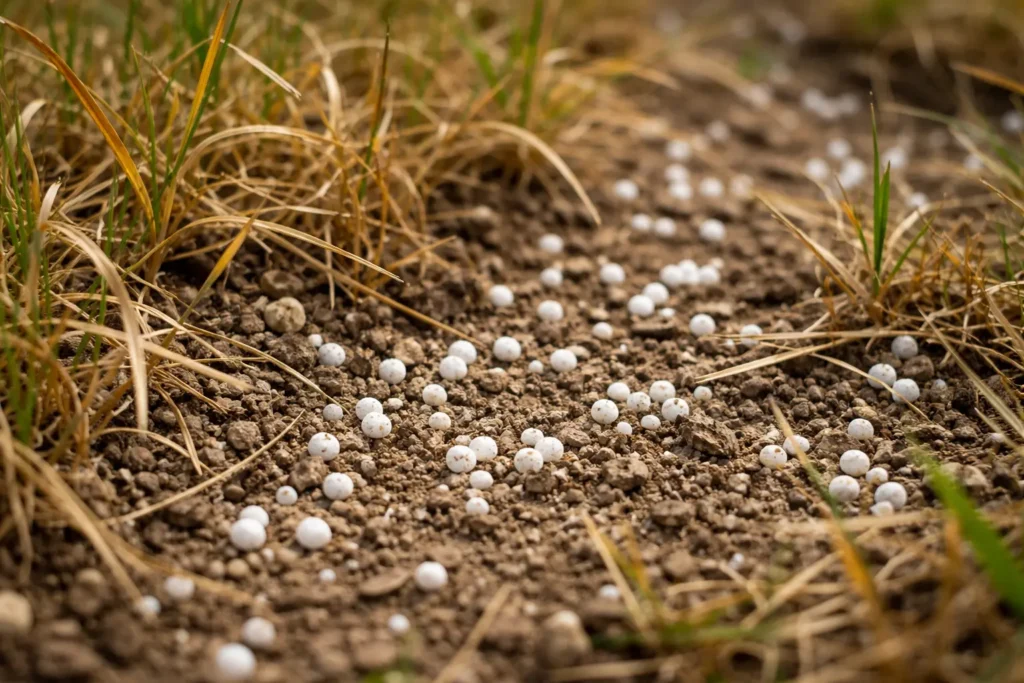
Identification: Is It Fertilizer Burn?
You need to confirm the chemical damage before wasting time and money on the wrong treatment. Fertilizer burn happens fast and leaves undeniable physical signatures in your yard. Look and smell for these exact field signals to diagnose the turf:
- Rapid discoloration: The grass turns neon yellow or bleach-brown within 24 to 48 hours of your spreader application.
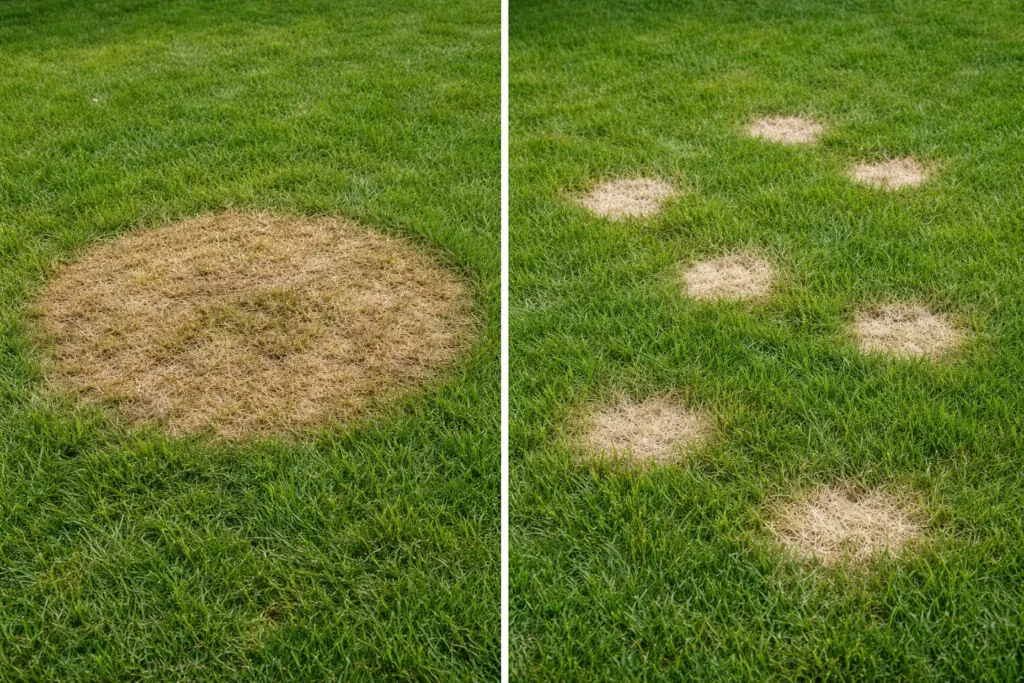
- Geometric patterns: The dead zones show up in perfectly straight lines or grid patterns that match your exact walking path and wheel overlap.
- Spill spots: Look for tight, circular patches of scorched turf where you paused to dump bags into the spreader hopper.
- Crispy texture: Grab a handful of the affected blades. They will feel completely dry, instantly shattering and crumbling into dust between your fingers.
- Ammonia odor: Get down near the soil level in the worst spots. A distinct, sharp smell of volatilizing urea or ammonia indicates heavy synthetic nitrogen off-gassing into the air.
The Root Causes of Fertilizer Burn
Lawn fertilizers contain essential macronutrients like nitrogen, phosphorus, and potassium. However, synthetic fertilizers rely on heavy salt compounds to deliver these nutrients quickly to the roots. When applied incorrectly, these salts act like a moisture vacuum in the soil.
Instead of the grass absorbing water, the heavy salt concentration pulls moisture directly out of the plant tissue. This osmotic stress leads to immediate cellular damage. The most common application mistakes that lead to a burnt lawn with fertilizer include:
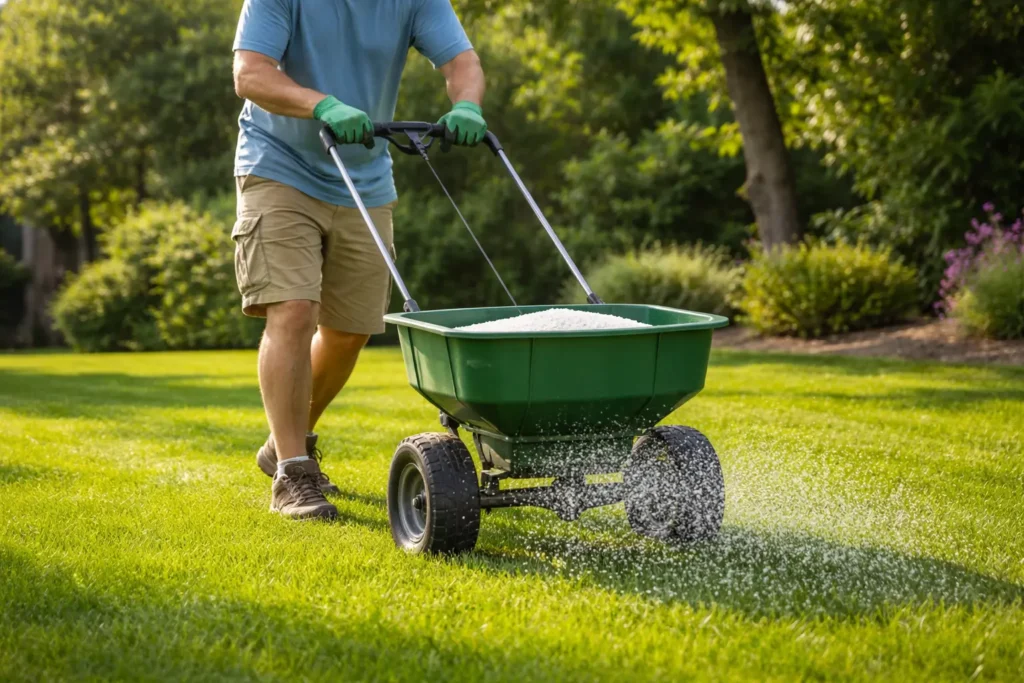
- Over-application: Exceeding the recommended pounds per 1,000 sq ft rate listed on the bag.
- Applying to wet grass: Granules stick to wet blades and chemically burn the leaves directly.
- Ignoring temperature: Fertilizing when summer temperatures exceed 85°F.
- Using fast-release synthetics: Flooding the soil with unprotected urea or ammonium sulfate.
Weed and Feed Complications
The damage escalates significantly if you applied a “weed and feed” granular product. These formulations merge fast-release synthetic nitrogen with broadleaf herbicides like 2,4-D, Dicamba, or Mecoprop (MCPP). Over-application in this scenario doesn’t just inflict osmotic stress; it results in acute herbicidal toxicity to the turfgrass crowns. If you burned a lawn with a weed and feed product, the standard water-flushing protocol is not enough. You must wait out the chemical half-life before attempting any reseeding. For 2,4-D and Dicamba, the soil half-life requires a strict 21 to 28-day waiting period. Any grass seed put down before this window will fail to germinate. For isolated, concentrated spill spots from a dropped spreader, applying horticultural activated charcoal immediately can bind the herbicides and neutralize the soil faster, but widespread over-application simply requires time and heavy irrigation.
Comparisons: Fertilizer Burn vs. Drought vs. Disease
It is extremely common to confuse fertilizer burn with drought stress or summer fungal diseases. Treating the wrong problem will only waste your time and money. Here is how to accurately tell them apart:
- Fertilizer Burn: Appears instantly after feeding. It almost always shows geometric patterns or spreader tire marks. The soil might still be moist underneath the dead brown grass.
- Drought Stress: Progresses slowly over weeks of high heat and low rainfall. The entire yard fades to a dull gray-green before turning brown. The soil is bone dry down to 3 inches.
- Fungal Disease (Brown Patch): Appears as irregular circles with dark, smoky rings at the edges. Strikes when nighttime temperatures stay above 70°F and humidity is high.
Step-by-Step Solutions: How to Fix a Burnt Lawn
If the grass crowns remain green at the soil line, you can salvage the yard. Act immediately to reverse the osmotic stress. Expect to spend $40 to $80 on materials and wait two to three weeks to see real recovery.
1. Dilute and Bind the Salts First, flush the excess nitrogen. Put on an N95 mask and heavy work gloves, as disturbed fertilizer dust causes severe respiratory irritation. Load your broadcast spreader with pelletized gypsum (calcium sulfate), like Jonathan Green Mag-I-Cal Plus, and apply a heavy corrective rate of 50 lbs per 1,000 sq ft. The gypsum binds directly to the toxic sodium and pulls it deep into the subsoil.
2. Flood the Root Zone Immediately after dropping the gypsum, soak the burned patches. You need to apply exactly 1 inch of water per day for seven consecutive days. Drop a standard tuna can in the yard; when it overflows, shut off the sprinkler. Run the water at 6:00 AM to dry the blades by noon, preventing secondary fungal outbreaks like Pythium Blight.
3. Excavate the Dead Biomass Stop watering after a week. Grab a heavy-duty metal thatch rake, like the Groundskeeper II, and physically rip out the crispy, dead plant tissue. You must expose bare topsoil. Leaving dead matter blocks new root establishment and creates a breeding ground for pests.
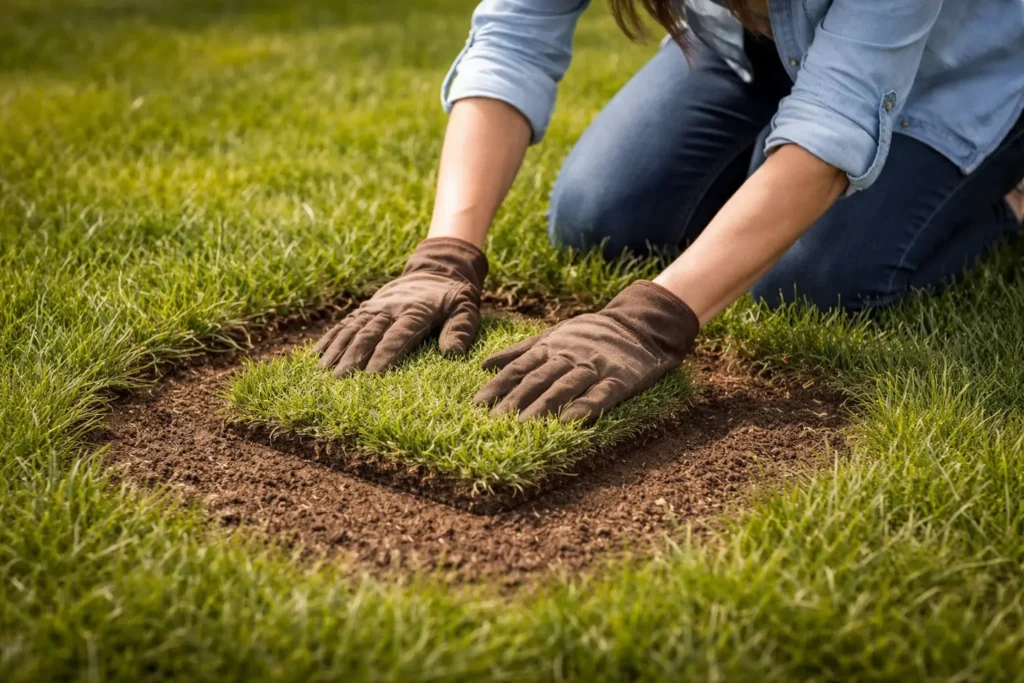
4. Overseed and Topdress For Northern yards, spread a premium seed blend like Scotts Turf Builder Grass Seed at 8 lbs per 1,000 sq ft directly onto the raked soil. Cover the seed with exactly 1/4 inch of sterile peat moss to lock in moisture. Mist the area twice daily until seedlings hit 2 inches tall. You will see fresh germination in 10 to 14 days.
Professional vs. DIY
Deciding whether to flush the salts yourself or hire a professional turf crew comes down to the severity of the spill and the chemicals involved. If you dumped a standard nitrogen fertilizer, DIY flushing is highly effective. If you over-applied a weed-and-feed packed with 2,4-D or Dicamba, hiring a pro with access to commercial-grade activated charcoal is your safest bet to save the yard.
| Metric | DIY Recovery | Professional Service |
| Cost | $40 – $100 (Gypsum, Seed) | $250 – $600+ |
| Speed | 2-3 weeks | 1-2 weeks |
| Effectiveness | Moderate to High | High (Soil testing included) |
| Risk | High (Potential under-watering) | Low (Guaranteed results) |
If the burn covers more than 50% of your yard or involves heavy herbicides, call a local remediation specialist to scrape and replace the topsoil completely.
Preventing Future Fertilizer Burns
The best cure for fertilizer burn is strict prevention. Changing your lawn care habits and choosing the right products will keep your yard completely safe. Always sweep up fertilizer spills on driveways and sidewalks immediately to prevent runoff.
Switch to Slow-Release Organics Organic fertilizers like Milorganite or Espoma Organic Lawn Food rely on natural microbial activity to break down nutrients. They contain almost no salts, making it virtually impossible to burn your lawn, even if you accidentally spill them.
Calibrate Your Spreader Correctly Never guess your application rate. Read the bag instructions carefully to find the correct dial setting for your specific spreader brand, whether it is an Ortho, Scotts, or Agri-Fab model. Always do a header strip around the perimeter first.
Master the Overlap Technique When walking back and forth across the yard, ensure you overlap the wheel tracks correctly. If you overlap the distribution patterns too heavily, you are applying double the nitrogen in those specific strips, leading to the classic tiger-stripe burn.
Water After Application Unless you are applying a weed-and-feed product that specifically states it must stick to wet weed leaves, always water your lawn after fertilizing. A light watering of 1/4 inch washes the harsh granules off the grass blades and safely activates them in the topsoil.
Pro-Tips Box: Stop guessing if you watered enough. Grab a 12-inch metal soil probe and push it into the burn zone after your daily irrigation. The core sample needs to show wet mud down to at least 6 inches to confirm the synthetic salts are flushing past the root zone. Also, completely halt all mowing traffic over the damaged grid. The weight of your mower wheels will crush the chemically weakened grass crowns, turning a reversible mistake into permanent turf death.
People Also Ask (FAQ)
Will a burnt lawn from fertilizer grow back?
It depends entirely on the severity of the burn. If the tips of the grass are yellow but the crown at the soil level is still green, the grass will recover in a few weeks with heavy daily watering. If the entire plant is brown and brittle down to the roots, it is permanently dead and requires reseeding or sodding.
Can I put topsoil over burnt grass?
Yes, adding topsoil is a crucial step for repairing heavily burned patches. You must first rake away the dead grass to prevent future fungal issues, then apply a 1/2 inch layer of fresh, salt-free topsoil to create a healthy bed for new grass seed or sod plugs.
How long does it take to flush fertilizer out of soil?
Flushing excess salts from the root zone usually takes about one to two weeks of aggressive watering. Applying 1 inch of water daily helps push the harsh nitrogen compounds deep into the subsoil, rendering them harmless and keeping them safe from the shallow roots of the turfgrass.