
Yellow spots on your grass are a loud distress signal from your yard. These ugly patches usually mean your lawn is suffering from nitrogen burn, a fungal infection, pest damage, or severe drought stress.
You cannot treat these spots blindly without risking further damage to your turf. To fix the discoloration, you must first accurately identify the root cause before applying chemicals or heavily altering your watering schedule.
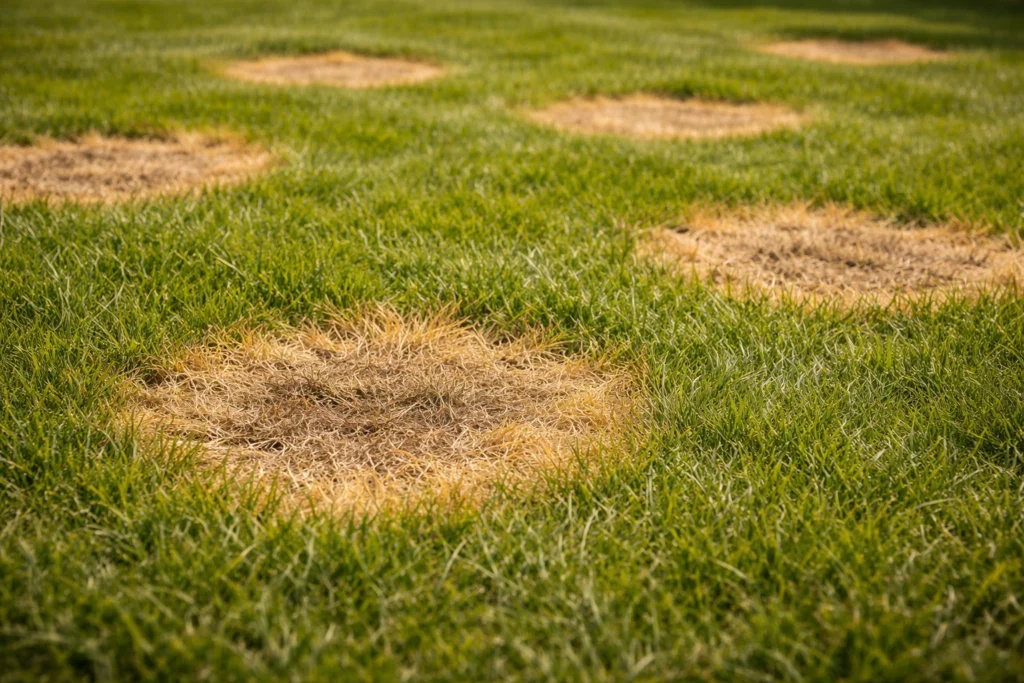
Identifying the Problem: Signs and Symptoms
Before grabbing a bag of fertilizer, closely inspect the affected area. The exact look of the yellow spots gives away the underlying issue. Look for these undeniable signs:
- Distinct, bright yellow or brown circles: Often surrounded by a ring of hyper-green grass.
- Straw-like lesions on grass blades: Individual blades have hourglass-shaped yellow marks.
- Spongy turf: The ground feels unusually soft or bouncy when you walk on it.
- Easily lifted grass: The turf pulls up like a bad carpet, revealing a lack of roots.
- General thinning: Yellowing occurs in large, irregular patches rather than perfect circles.
The Root Causes of Yellow Spots in Your Yard
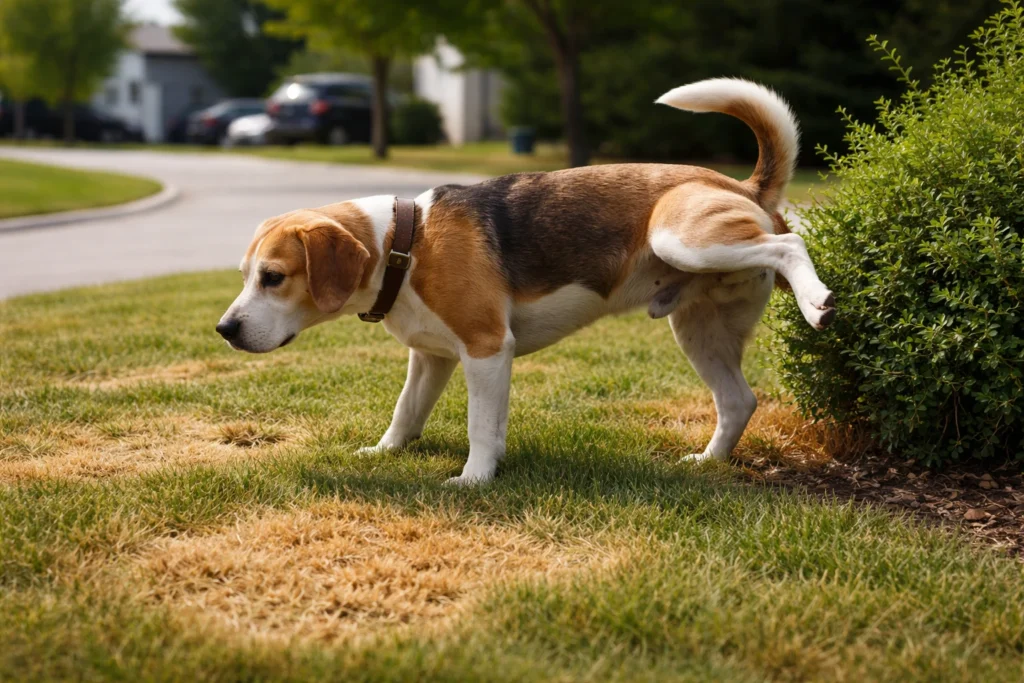
If you have a dog, nitrogen burn from urine is the most common culprit for isolated yellow patches. Dog urine contains highly concentrated nitrogen and salts, which literally scorch the grass roots, acting like a massive chemical overdose.
Another major threat is lawn fungus, particularly Dollar Spot or Brown Patch. These fungi thrive in cool-season grasses like Kentucky Bluegrass and Fescue when nights are cool and days are warm and humid.
Pest infestations, specifically from white grubs, also cause massive yellowing. Grubs live in the soil and systematically chew through the root system of your grass. Without roots, the grass cannot absorb water, causing it to quickly turn yellow and die.
Finally, poor irrigation and soil issues play a major role. Watering your yard too shallowly prevents deep root growth. Furthermore, spilled chemicals, like gasoline from a mower or an accidental overdose of 2,4-D herbicide, will instantly create chemical burns.
Step-by-Step Solutions to Restore Your Lawn
- Fixing Dog Urine Burn: When animal urine scorches your turf, immediate dilution is the only effective defense. The moment you see a dog urinate, flush the specific spot with 3 to 5 gallons of water to push the excess nitrogen and salts below the active root zone. For existing dead, yellow patches, vigorously rake out the necrotic plant tissue down to the bare soil. Apply a premium patch repair mix like Scotts EZ Seed Dog Spot Repair. This specific blend contains a tackifier to hold moisture and soil-neutralizing ingredients to counteract the burn. Apply a 1/4-inch layer over the bare spot and water lightly twice daily until the new grass blades hit 2 inches in height.
- Curing Fungal Infections: If Dollar Spot or Brown Patch is ravaging your yard, your primary chemical defense is a broad-spectrum systemic fungicide. Always wear chemical-resistant gloves, long sleeves, and pants before mixing. Apply a liquid fungicide containing Propiconazole, like BioAdvanced Fungus Control for Lawns. Using a pump sprayer, apply exactly 2.5 fluid ounces of concentrate mixed with 1 gallon of water per 1,000 sq ft. Do not apply when ambient temperatures exceed 85°F, as this will chemically scorch the surviving turf. Keep pets and children off the treated area until the grass has dried completely.
- Eradicating White Grubs: Grub damage requires immediate curative intervention before the root system is entirely consumed. For active, visible infestations, apply an insecticide containing Trichlorfon, such as BioAdvanced 24 Hour Grub Killer Plus. Load your broadcast spreader and apply at a strict rate of 3 lbs per 1,000 sq ft. You must immediately water this application in with at least 0.5 inches of irrigation; if left dry, the chemical will break down in sunlight and fail to penetrate the soil layer where grubs feed. For long-term prevention, switch to a systemic product like Scotts GrubEx (Chlorantraniliprole), applying 2.87 lbs per 1,000 sq ft in mid-to-late May.
Professional vs. DIY Treatment
Being completely objective, deciding whether to treat yellow spots yourself or hire a professional depends entirely on your diagnostic skills. Misidentifying Dollar Spot as grub damage makes DIY treatments a complete waste of money. Here is the realistic breakdown of what to expect:
| Factor | DIY Approach | Professional Service |
| Cost (Per Season) | $40 – $80 (chemicals and seed) | $300 – $500+ (annual contract) |
| Diagnosis Accuracy | Low (trial and error) | High (field experience) |
| Application Risk | High risk of chemical burn | Precise commercial calibration |
| Time Investment | 2–4 hours per weekend | Zero effort |
For isolated dog urine patches or minor fungus, DIY is objectively the most cost-effective route. However, if your lawn is suffering from a massive grub infestation or a recurring disease, paying for professional intervention is the safest way to prevent complete turf collapse and avoid the extreme cost of full-yard overseeding.
Dog Urine Damage vs. Dollar Spot Fungus
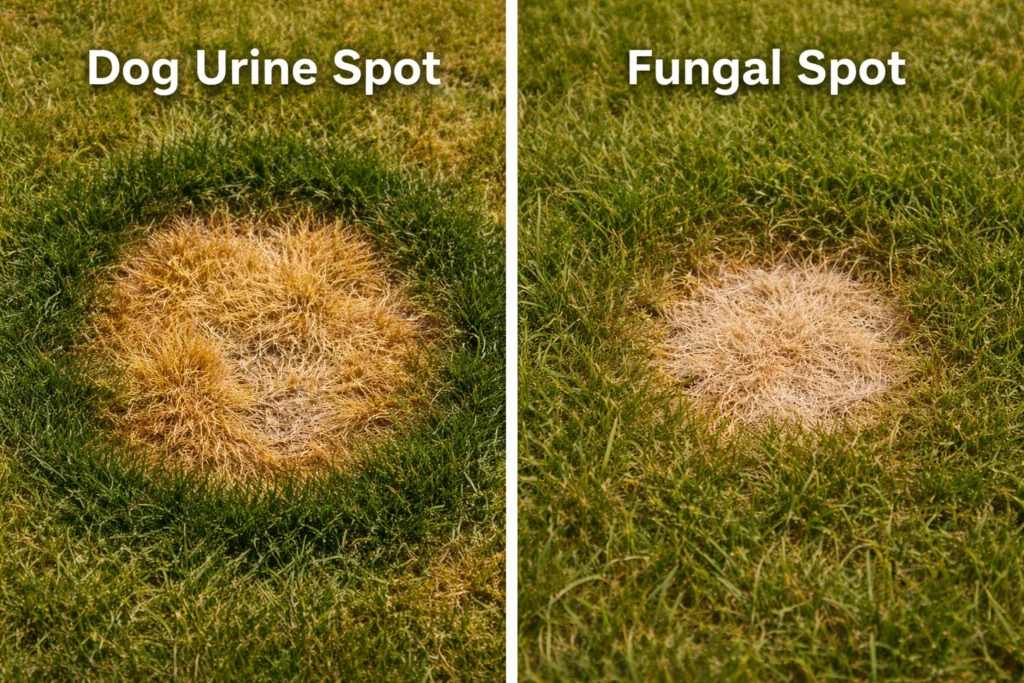
Homeowners frequently confuse nitrogen burn with fungal diseases. Treating a urine spot with expensive fungicide is a waste of money, and putting fertilizer on a fungal infection will make the disease explode.
- Dog Urine Damage: Look for a dead, yellow center surrounded by a ring of incredibly dark green, fast-growing grass. This outer ring is absorbing the diluted nitrogen on the edges of the puddle.
- Dollar Spot Fungus: The spots are roughly the size of a silver dollar (though they can merge). There is no dark green ring. Instead, individual blades will have distinct, tan, hourglass-shaped lesions with reddish-brown borders.
People Also Ask (FAQ)
Will yellow grass turn green again?
If the grass is yellow due to mild drought or temporary heat stress, it will bounce back and turn green once deep watering resumes. However, if the yellow spot is caused by severe dog urine burn or grub damage that destroyed the crown and roots, that grass is fully dead and the spot must be reseeded.
Can over-fertilizing cause yellow spots on my lawn?
Yes, applying excessive synthetic fertilizer causes a chemical reaction known as “fertilizer burn.” The high salt index in cheap fertilizers draws moisture out of the grass blades and roots, effectively dehydrating the plant and leaving large yellow or brown streaks where the spreader overlapped.
Should I dethatch my lawn to fix yellow patches?
Dethatching can help if the yellowing is caused by a thatch layer thicker than 0.5 inches, which blocks water and oxygen from reaching the soil. However, do not dethatch during peak summer heat, as this will severely stress the turf; do it in early fall for cool-season grasses or late spring for warm-season grasses.
I am genuinely pleased to glance at this website posts which
carries tons of useful information, thanks for providing such data.
It’s great that you are getting ideas from this article
as well as from our argument made here.
Hi there, constantly i used to check weblog posts here in the early hours in the dawn, since i love to learn more and more.