
Your string trimmer string keeps breaking because the nylon line has become brittle, you are using the wrong line diameter, or you are repeatedly striking hard landscaping features. Stop fighting your equipment and start fixing the root cause immediately.
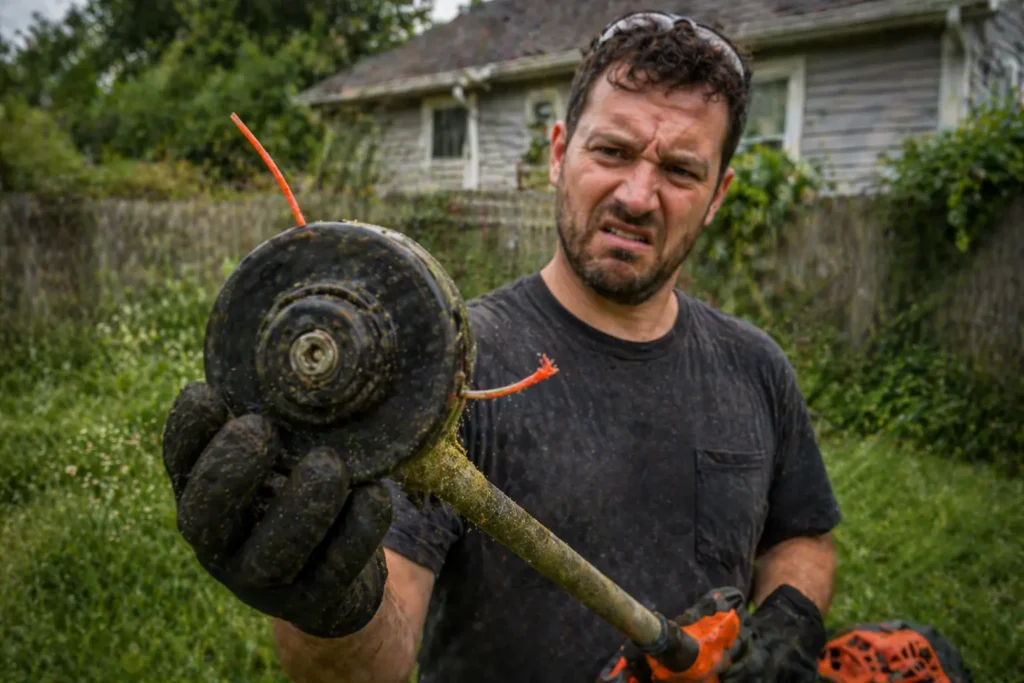
Old trimmer line loses its moisture over time, causing it to snap instantly upon impact. Upgrading to a premium, fresh line and adjusting your trimming technique will resolve this frustrating issue and get your yard looking perfect again.
Identifying the Root Causes
Before replacing parts, you need to know exactly why the line is failing. Most homeowners in the US struggle with one of these specific issues during their peak lawn care season.
Here are the most common culprits for line breakage:
- Brittle, aged nylon: Nylon degrades in high heat and dry storage, a very common issue in hot Southern garages where temperatures exceed 100°F.
- Incorrect line diameter: Using a thin 0.065-inch line for heavy weeds instead of a 0.095-inch or 0.105-inch commercial grade line.
- Improper spool winding: Overlapping or crossing the line inside the trimmer head creates friction, binding, and eventual snapping.
- Hitting hard surfaces: Forcing the spinning line directly against concrete patios, brick walls, or thick wooden fence posts.
Step-by-Step Solutions to Stop Line Breakage
You can stop your trimmer line from snapping today with a few strategic adjustments. First, always buy high-quality replacement line from trusted US brands like Stihl, Echo, Husqvarna, or Black+Decker.
Follow these exact steps to ensure your trimmer runs smoothly:
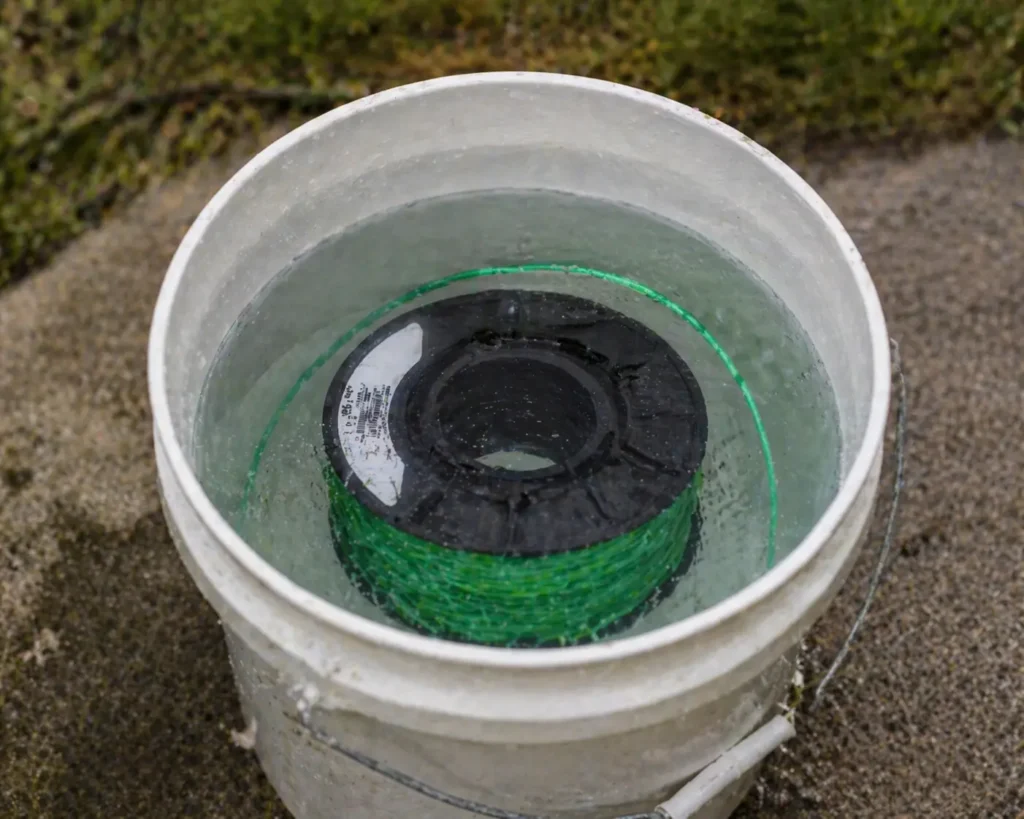
- Hydrate your line: Soak your new spool in a bucket of 1 gallon of water for 24 to 48 hours before use to restore flexibility to the nylon polymers.
- Upgrade your line shape: Switch from a basic round line to a twisted or square-edged line like the Oregon Gatorline or Arnold Maxi-Edge.
- Match the line to the job: Use 0.065 to 0.080-inch for standard residential grass, and 0.085 to 0.110-inch for thick brush.
- Wind it correctly: Always wind the line neatly and tightly in the exact direction indicated by the arrows on your specific trimmer head.
Line Breaking vs. Line Welding
Many homeowners confuse line breaking with line welding. While both completely stop your yard work, the root causes and the solutions for these problems are entirely different.
Line breaking happens at the exposed tip, usually because the string strikes a hard object or is simply too brittle. You will easily see short, frayed ends protruding from the eyelets of the trimmer head.
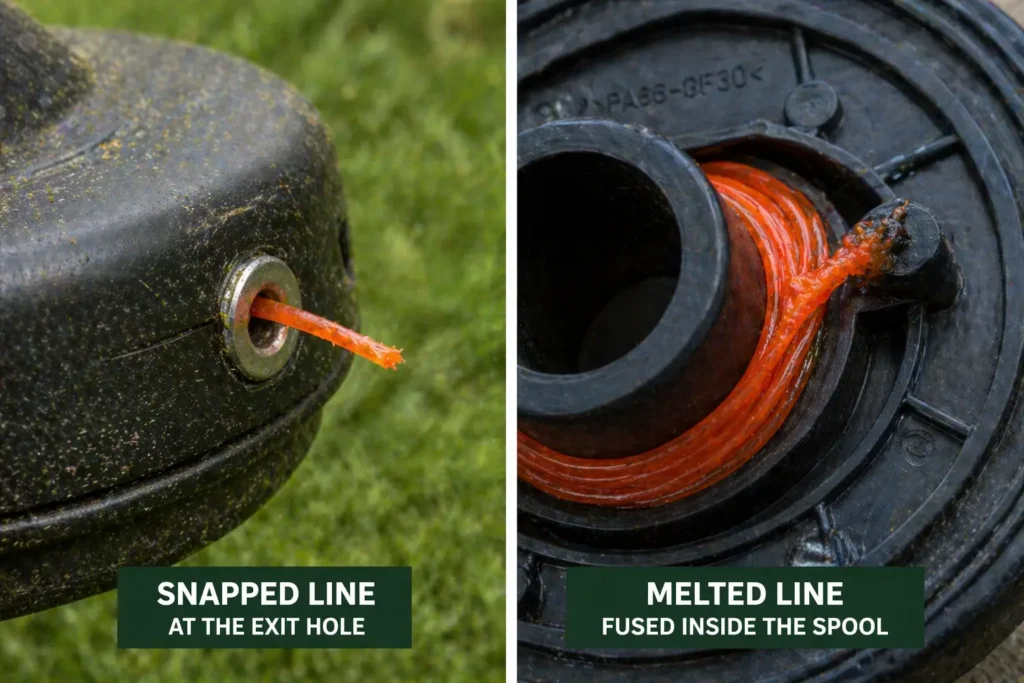
Line welding occurs entirely hidden inside the spool. The high RPMs generate intense heat, causing the nylon to melt and fuse to itself. If your line is stuck inside and you have to pry it apart, it is welding. To fix welding, treat the inside of the empty spool with a dry silicone spray like WD-40 Specialist Dirt & Dust Resistant Dry Lube.
Trimming Techniques for US Lawns
How you handle the trimmer is just as important as the chemical composition of the line you use. Whether you are edging cool-season Kentucky Bluegrass up North or managing thick Bermuda grass down South, technique matters.
Keep the trimmer head parallel to the ground and let the very tip of the line (the fastest moving part) do the cutting. Pushing the trimmer head directly into thick brush forces the line to bend and overwork, causing premature wear and snapping.
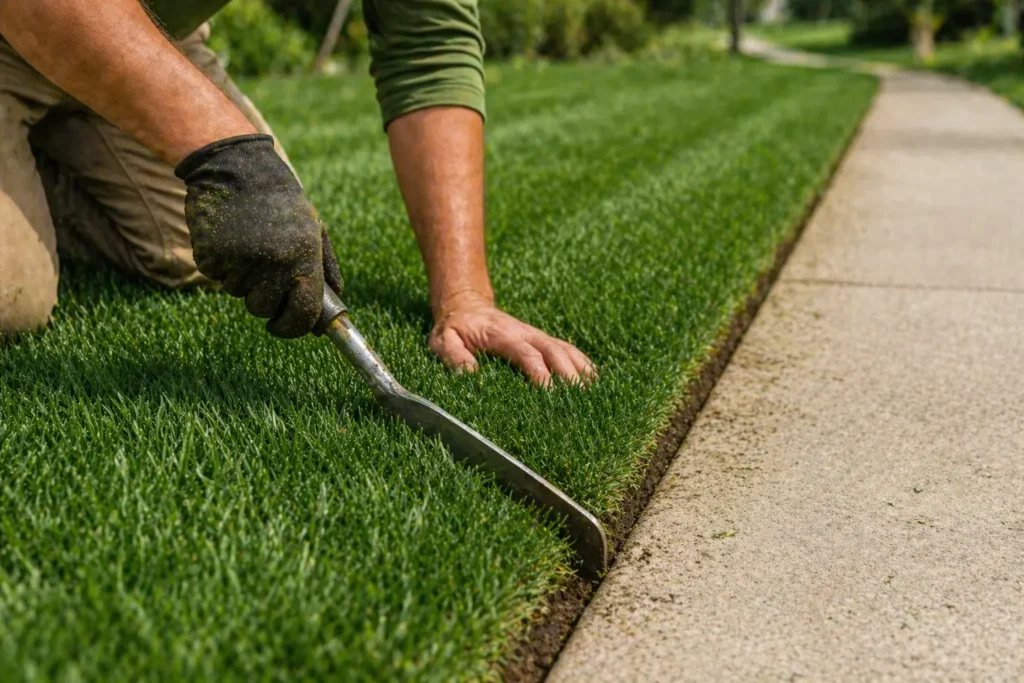
Always keep a safe distance of at least 2 to 3 inches away from chain-link fences, brick walls, and concrete foundations. If you absolutely need to trim against these hard surfaces, ease the throttle down and approach very slowly.
Next Steps
Now that your trimmer is performing at its peak, ensure your entire yard looks professional by troubleshooting why your lawn mower leaves uncut grass or learn the essential recovery steps for a burnt lawn with fertilizer to keep your turf lush and healthy all season long.
People Also Ask (FAQ)
Can I soak old trimmer line to make it work again?
Yes, soaking a brittle, old trimmer line in water for up to 48 hours can help the nylon reabsorb moisture. This simple trick restores its flexibility and significantly reduces the chances of the line snapping under pressure.
What is the toughest string trimmer line on the market?
Brands like Echo Black Diamond and Husqvarna Titanium Force are widely considered top-tier in the US market. They use co-extruded nylon and specialized shapes to cut through heavy brush without easily breaking.
Does leaving my trimmer in a hot garage ruin the string?
Yes, temperatures exceeding 90°F in a typical American garage will rapidly dry out the nylon polymers. Store your extra spools in a cool, dark place or inside a sealed Ziploc bag with a damp sponge to maintain maximum flexibility.