
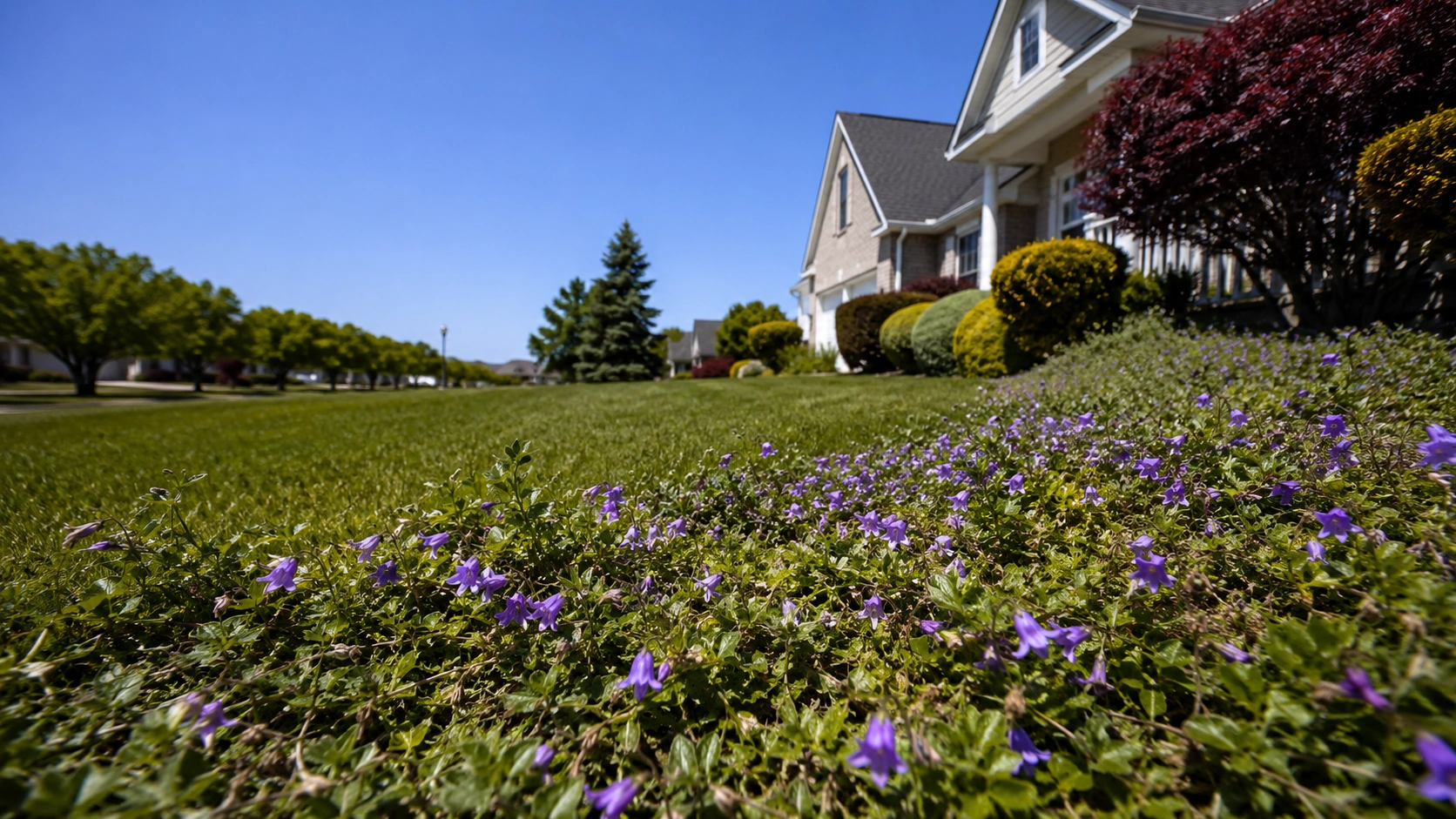
Killing creeping bellflower requires systemic herbicides that travel down to its deep, tuberous root system. The most effective active ingredients are Triclopyr for broadcasting across cool-season lawns without killing the grass, and Glyphosate for targeted spot treatments in mulch beds. Hand-pulling this invasive perennial actually makes the infestation worse by snapping the subterranean rhizomes and triggering multiple new shoots to sprout from the remaining fragments.
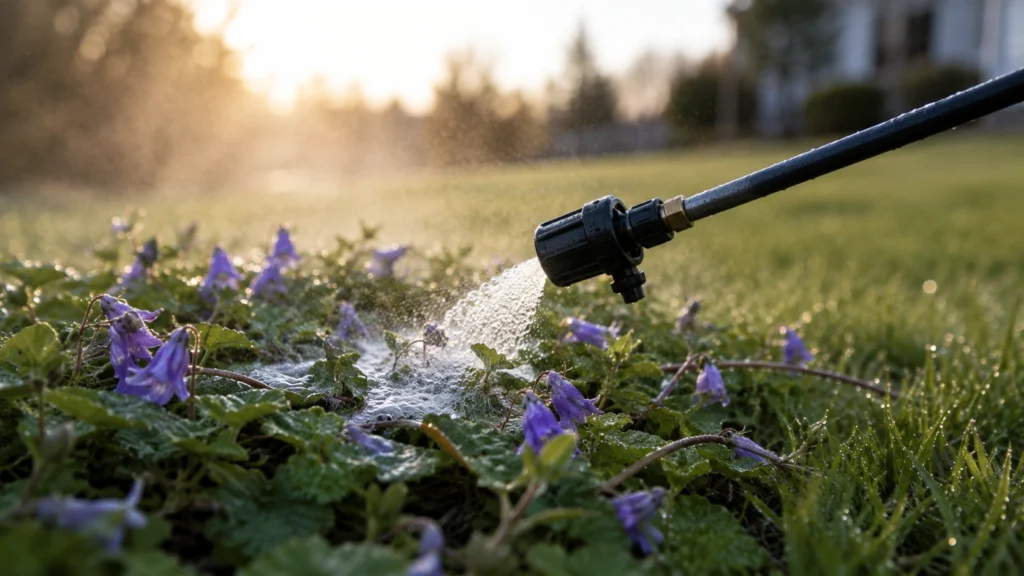
Eradication Plan (Step-by-Step)
1. Select the Right Systemic Chemical
Creeping bellflower stores massive amounts of energy in a carrot-like taproot and a network of horizontal rhizomes. Contact weed killers like vinegar or weak 2,4-D blends only burn off the top foliage. The plant will push up new leaves in a week. You need chemicals that translocate.
- For Lawns (Selective): Use a product with a high concentration of Triclopyr, such as Hi-Yield Triclopyr Ester or Ortho Weed B Gon Chickweed, Clover & Oxalis Killer. This kills broadleaf weeds without harming Kentucky Bluegrass, Tall Fescue, or Perennial Ryegrass.
- For Garden Beds (Non-Selective): Use a 41% Glyphosate concentrate (like Roundup Super Concentrate or Compare-N-Save Weed Killer). This kills everything it touches, including turfgrass, so use it purely for spot treatments.
2. Mix and Apply with Precision
Most homeowners apply the product too early in the spring and wonder why it doesn’t work. The best time to spray creeping bellflower is in late summer or early fall. During this window, the weed is pulling carbohydrates down into its root system to survive the winter. The herbicide gets pulled down right along with those nutrients.
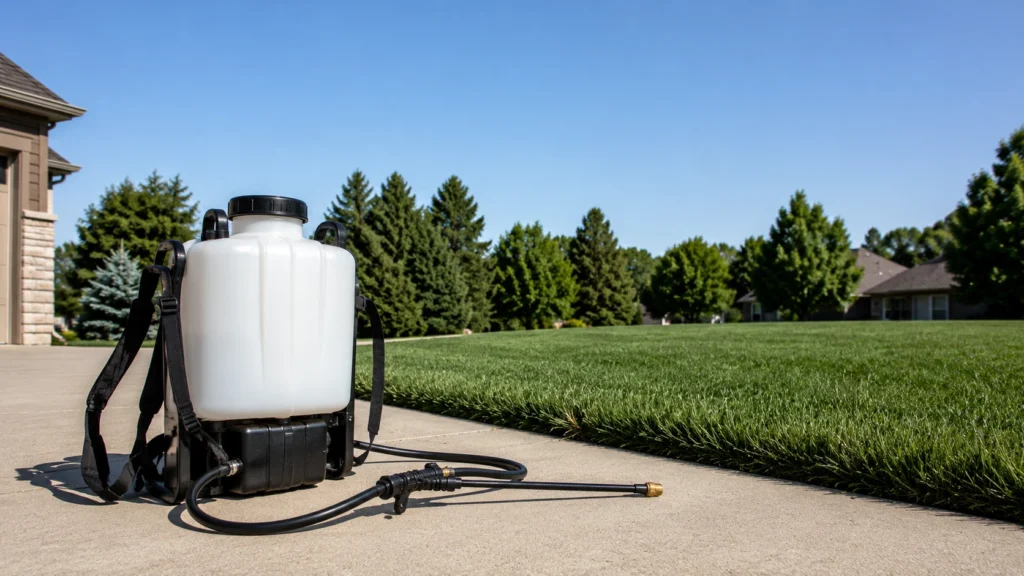
- Triclopyr Dose: Mix 0.5 to 0.75 oz per gallon of water in a pump sprayer.
- Glyphosate Dose: Mix 2 to 2.5 oz of 41% concentrate per gallon of water.
- Application: Spray the foliage until wet, but not to the point of runoff. Do not mow for three days before or three days after application.
- Cost Estimate: A bottle of Triclopyr concentrate costs around $25–$35 and will last a homeowner several seasons.
3. The Follow-Up Attack
Don’t expect overnight results. Triclopyr takes 10–14 days just to show curling leaves, and a complete root kill on an established bellflower patch requires patience. One application weakens the tuber. The second application breaks it. Wait exactly 21 days after your first spray. If you see surviving green tissue or new shoots emerging from the soil, hit it again with the exact same mixing ratio.
Identification & Misdiagnosis
Many homeowners confuse creeping bellflower (Campanula rapunculoides) with native, harmless violets or ornamental bellflowers. Treating the wrong plant wastes time and money.
Look at the base of the plant. Creeping bellflower produces distinctive heart-shaped leaves at the soil level. As the stem grows upward—often reaching 2 to 3 feet in height—the leaves change shape, becoming narrow and lance-like. The purple flowers hang entirely on one side of the stem. If you dig down with a trowel, you won’t just find a normal root ball. You will hit thick, white, fleshy tubers that look almost like small parsnips. Those tubers are the engine of the invasion.
Root Causes & Attractants
Creeping bellflower does not care about your soil pH, compaction levels, or irrigation schedule. It thrives simply because it has an aggressive underground storage system that outcompetes standard turfgrass.
This weed usually enters a yard in one of two ways. First, someone intentionally plants it. Nurseries historically sold it as a hardy ornamental perennial, and it eventually escapes the garden beds to invade the lawn. Second, it sneaks in via contaminated topsoil loads. Because a rhizome fragment as small as half an inch can generate a completely new root system, a single yard of cheap, unsterilized loam can easily seed a permanent bellflower nightmare in your yard.
Pro-Tips Box: Never try to rototill an area infested with creeping bellflower. The machine will chop the rhizomes into hundreds of one-inch pieces, and every single fragment will sprout a brand-new plant in about ten days. I always add a non-ionic surfactant at 0.5 oz per gallon when spraying Triclopyr on this weed; the bellflower leaves have a slightly waxy texture that repels water-based chemicals, and the surfactant breaks that tension to ensure the herbicide actually penetrates the vascular system.
Pet & Child Safety Warnings
Systemic herbicides require strict adherence to dry times. Keep all dogs, cats, and children off the treated lawn areas completely until the chemical has dried.
With Triclopyr or Glyphosate applications, the liquid spray usually dries completely within 2 to 4 hours on a sunny, 75°F day. Once the product binds to the leaf tissue and dries, it will not transfer to paws or bare feet. Do not apply these chemicals if winds exceed 10 mph. Herbicide drift can carry the mist onto your neighbor’s prized ornamental plants or into outdoor pet bowls. Always wash your hands and your application boots immediately after finishing the yard.
Professional vs. DIY
| Feature | Professional Weed Control | DIY Eradication |
| Cost | $60–$120 per visit | $35–$60 total setup |
| Speed | Fast scheduling, standard chemicals | Immediate action possible |
| Effectiveness | High (access to restricted chemicals) | High (if instructions followed) |
| Risk | Low | Medium (misapplication risk) |
Tackling creeping bellflower yourself is entirely feasible if you use the correct systemic chemicals and remain persistent. However, DIY fails miserably when homeowners lose patience, apply weak chemicals, or revert to hand-pulling.
You need to call a professional lawn care service if the bellflower has intertwined deeply into mature, expensive ornamental garden beds where you cannot risk Glyphosate drift. Certified technicians carry licenses that allow them to use specialized products like Quinclorac or specialized tank mixtures that isolate the weed without threatening surrounding high-value landscaping.
Prevention Tips
- Audit New Soil: Inspect any bulk topsoil or compost deliveries for white, fleshy root fragments before spreading it across your yard.
- Establish Dense Turf: Seed bare patches immediately in the fall with a premium Tall Fescue or Kentucky Bluegrass blend. A dense turf canopy shades the soil and blocks bellflower seeds from germinating.
- Create Physical Barriers: Install heavy plastic edging at least 6 inches deep around your property lines. Bellflower rhizomes travel horizontally just beneath the soil surface, and a deep physical barrier blocks neighboring infestations from creeping into your yard.
People Also Ask
Does pulling creeping bellflower work?
No. Pulling creeping bellflower breaks the brittle underground rhizomes. Every piece left in the soil will aggressively sprout a new plant, effectively multiplying your weed problem within a few weeks.
Will 2,4-D kill creeping bellflower?
Standard 2,4-D alone struggles to kill the massive root system of creeping bellflower. It will burn the foliage, but the tuber survives. You need an herbicide containing Triclopyr for a permanent kill.
Can I smother creeping bellflower with cardboard?
Smothering rarely works on established creeping bellflower. The tuber stores enough energy to push shoots laterally for several feet until they find sunlight beyond the edges of the cardboard or tarp.
What to Read Next
Chemical treatments are highly dependent on weather conditions and drying windows. Applying a potent systemic chemical right before a thunderstorm is a guaranteed way to wash your expensive product directly into the storm drain, which is why knowing the best time to spray weeds before or after rain ensures your creeping bellflower herbicide actually locks into the plant tissue.