
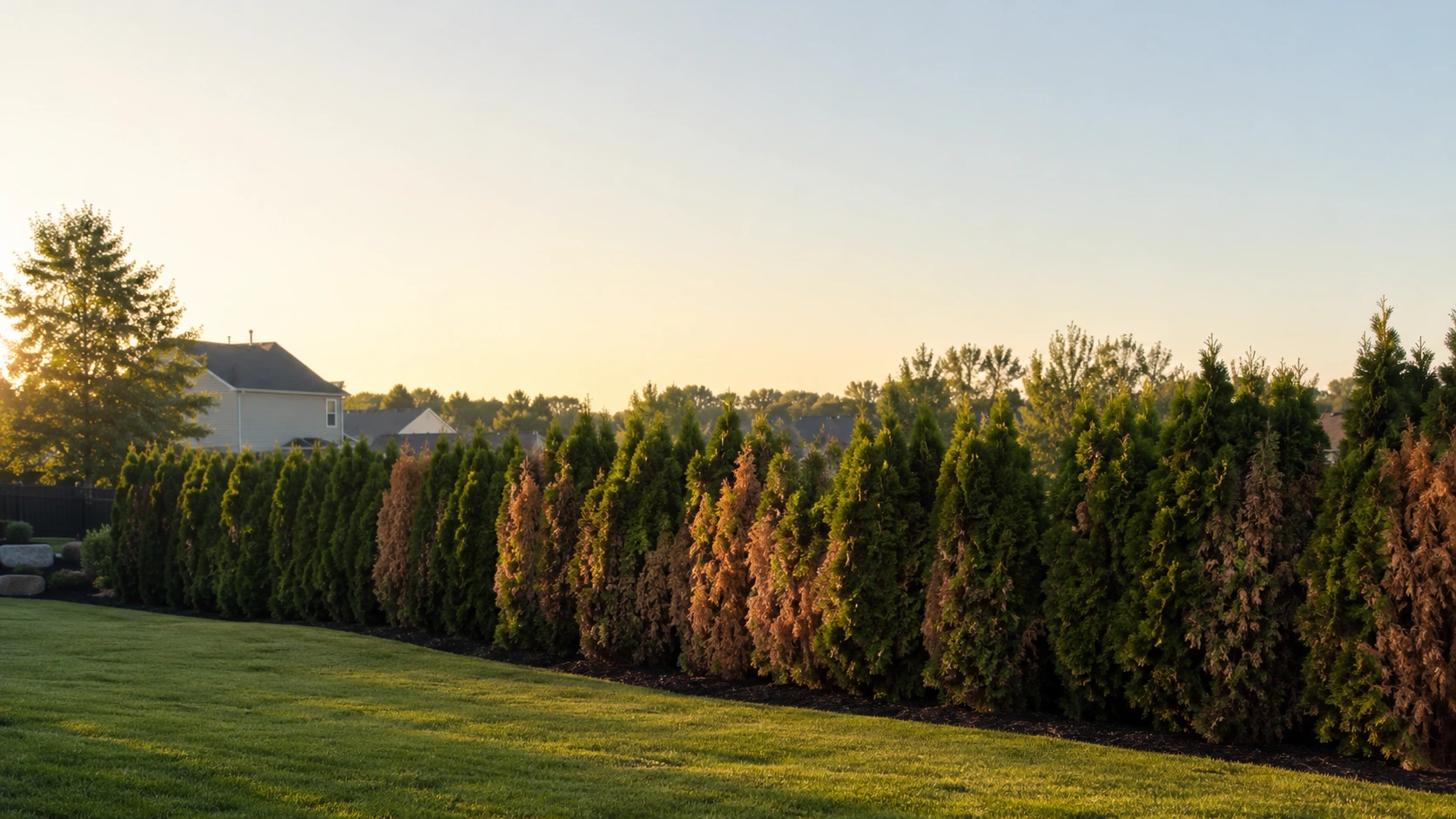
To stop bagworms from destroying your arborvitae, you need to spray the foliage with a biological insecticide like Bacillus thuringiensis (Bt) in late May when the larvae are actively feeding and vulnerable. If you wait until late July when the bags harden and reach 2 inches long, synthetic chemicals fail completely, leaving manual removal as your only viable treatment. In my 15 years in the field, I consistently see homeowners lose entire privacy lines in a matter of weeks because they spray mature bags instead of targeting the early hatch.
Eradication Plan (Step-by-Step)
Treating bagworms effectively demands strict adherence to the insect’s life cycle. You cannot chemical-burn a mature bagworm out of its casing.
Step 1: Early Season Biological Control (Late May – Mid June)
When the larvae first hatch, they measure less than 1/4 inch and crawl actively over the arborvitae foliage. This is your most effective strike window. The caterpillars ingest the bacteria, which crystallizes in their gut, stopping feeding within 24 hours. I routinely use Bt for early infestations because it specifically targets caterpillars without flaring up spider mite populations—a common secondary disaster I see on stressed arborvitae.
- Product: Bacillus thuringiensis (Bt) or Spinosad (e.g., Captain Jack’s Deadbug Brew).
- Mix Rate: 2 fl oz of Bt concentrate per gallon of water.
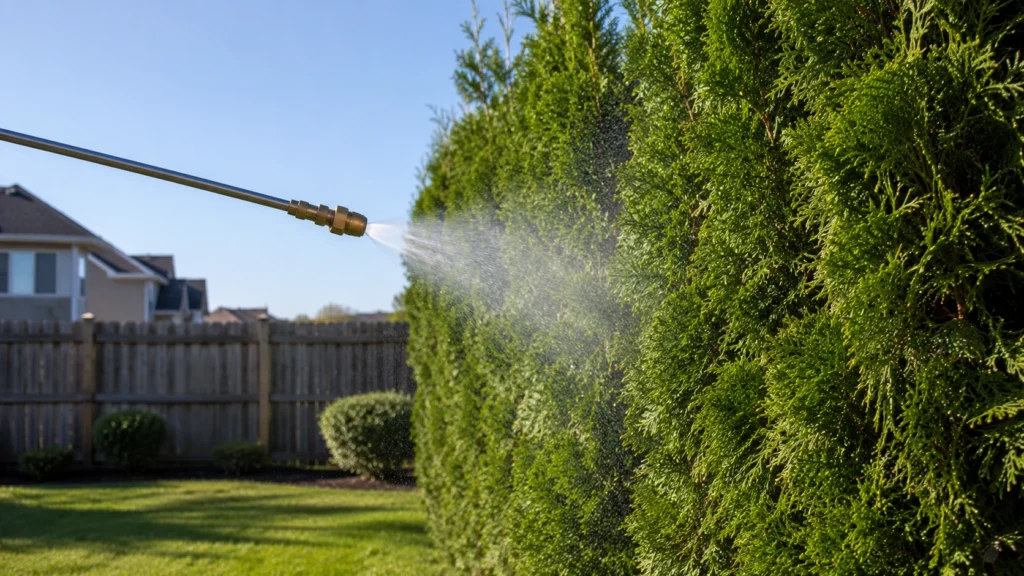
- Application Tool: Pump sprayer for small trees, hose-end sprayer for hedges over 8 feet. Drench the foliage entirely.
- Cost & Results: $15–$20 per bottle. You will see feeding stop in a day, but the bodies take 3–5 days to fall. Reapply every 7–10 days until the crawling stops.
Step 2: Mid-Season Chemical Knockdown (Late June – July)
Once the bags exceed 1/2 inch in length, biologicals lose their punch. You need a fast-acting synthetic pyrethroid to penetrate the expanding silk before they cause severe structural damage to the tree.
- Product: Talstar P (Bifenthrin) or BioAdvanced Cyfluthrin.
- Mix Rate: 0.5 to 1.0 fl oz of Talstar P per gallon of water.
- Application Tool: Saturate the tree from the top down.
- Cost & Results: Around $45 for a pint of professional concentrate. Expect a 90% knockdown within 5–7 days. Wait 30 days before a second application.During July service calls, I frequently see homeowners applying weak Bifenthrin mixes using tiny hand-pump sprayers, completely missing the top five feet of the canopy. The untreated survivors at the top simply drop down on silk threads and rebuild the infestation.
Step 3: Late Season Mechanical Eradication (August – Spring)
By August, the bags reach 1.5 to 2 inches long and the silk hardens into a waterproof shell. Chemicals will not work against sealed pupae or overwintering eggs. You must pull each bag off the branch by hand and drop them directly into a bucket filled with 2 gallons of water and a heavy squirt of Dawn dish soap. Cut the tough silk loop holding the bag to the branch using pruning shears; pulling too hard strips the arborvitae bark. One massive error I constantly fix is homeowners throwing the plucked bags right into their mulch beds. A single female bag contains up to 1,000 eggs that will effortlessly overwinter in your mulch and climb right back up the trunk next May.
Identification & Misdiagnosis
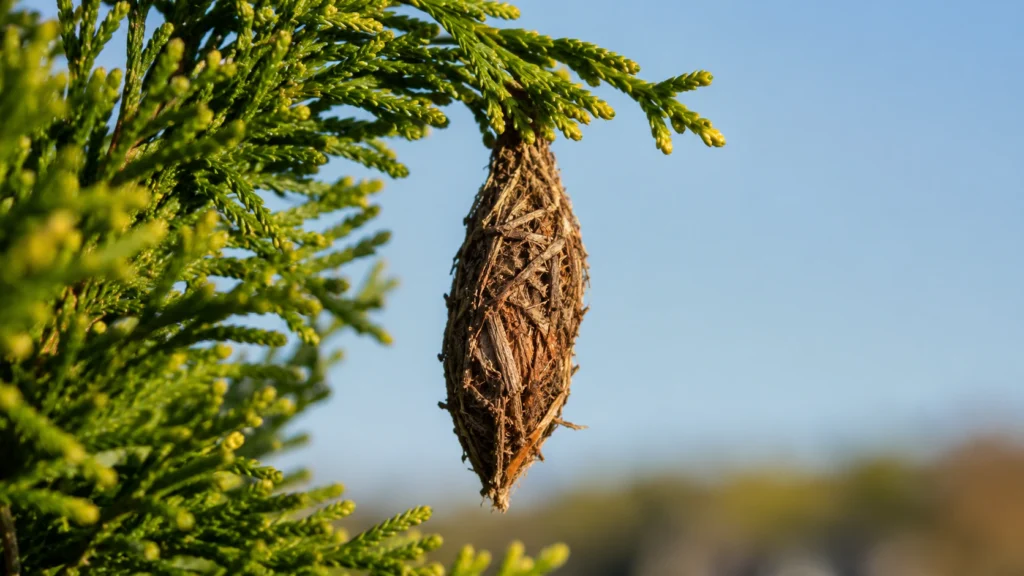
A bagworm infestation starts subtly. The young bags look like tiny, 1/4-inch specks of moving dirt dragging across the green needles. As the caterpillar feeds, it weaves a mobile shelter out of silk and the host tree’s own dead foliage. By late summer, these shelters grow into 2-inch, spindle-shaped brown ornaments hanging tightly from the branches. I have lost count of how many times a client told me their arborvitae was finally producing tiny pine cones, only to realize those “cones” were actively stripping the tree bare. Real arborvitae seed cones are tiny, clustered, and yellowish-green; bagworms are large, brown, solitary, and woven with dead plant material.
Pro-Tips Box: Never spray a heavy pyrethroid like Bifenthrin on your arborvitae if the ambient temperature exceeds 85°F. I’ve accidentally scorched young Thuja Green Giants doing exactly this early in my career. Spray at dawn. Also, add a non-ionic surfactant (about 1 tsp per gallon) to your tank mix. Arborvitae needles are highly waxy, and the chemical will just bead up and roll off into the dirt without a surfactant to bind it.
Root Causes & Attractants
Arborvitae, junipers, and cedars are the preferred host plants for the bagworm moth. These pests do not migrate long distances by flying, as the adult female is completely wingless and never leaves her bag. Instead, newly hatched larvae “balloon” on wind currents, spinning long silk threads that catch the breeze and carry them across neighborhoods. I frequently trace a new infestation back to an overgrown, neglected juniper in a neighbor’s yard directly upwind. Drought-stressed arborvitae are particularly susceptible, as their natural resin defenses drop, allowing the caterpillars to chew through the foliage with zero resistance.
Pet & Child Safety Warnings
Handling concentrated pyrethroids requires strict discipline around your home. Bifenthrin is highly toxic to fish and aquatic life, so you must never apply it near storm drains or decorative koi ponds. When I apply Talstar P on residential routes, I strictly enforce a drying period before anyone steps foot in the yard. Keep dogs, cats, and children indoors during the application and for at least two to three hours afterward. The chemical must dry completely on the foliage to be safe. Once dried, the active ingredient binds tightly to the arborvitae needles and poses virtually no contact risk to pets walking below the hedge.
Professional vs. DIY
Treating a 4-foot foundation shrub is an easy Saturday project. Treating a 150-foot property line of mature 20-foot Thuja Green Giants is a different story entirely.
| Metric | DIY Treatment | Professional Pest Control |
| Cost | $50 – $80 (chemicals + manual sprayer) | $150 – $300 per application |
| Speed | 2–4 hours of manual labor | 30 minutes |
| Effectiveness | Moderate (hard to reach canopy tops) | High (power sprayers saturate 20ft trees) |
| Risk | High chemical exposure during mixing | Low (technicians handle the active ingredients) |
I regularly get called to properties where a DIYer blasted a 15-foot tree with a 1-gallon hand-pump sprayer. Standard homeowner equipment lacks the PSI required to push the chemical through the dense outer shell of an arborvitae into the interior branches where the caterpillars hide. If your trees are taller than 10 feet, or if the infestation covers multiple large trees, hire a certified technician with a truck-mounted power sprayer to ensure complete canopy penetration.
Prevention Tips
You can stop next year’s defoliation entirely with aggressive winter scouting. Once the first hard frost hits and the foliage thins out slightly, the brown bags become incredibly obvious against the green needles. During my winter service calls, I routinely walk the property line and snipe off any residual bags I find on the client’s trees before spring. Check the deep interior branches near the trunk, as females prefer to attach their egg-filled casings in protected areas out of direct winter winds. Maintain deep watering schedules for your arborvitae during dry summer spells; a heavily hydrated tree can often outgrow minor caterpillar feeding damage.
People Also Ask
Will my arborvitae recover from bagworm damage?
Arborvitae cannot regenerate dead needles from brown, bare branches. If the caterpillar only chewed the tips, the tree will recover the following spring. If a branch is completely stripped of green foliage, it will die and must be pruned out.
Do bagworms bite humans or pets?
No. Bagworms are solely interested in chewing plant material. They possess no stingers, do not bite mammals, and are completely harmless to touch, though their tough silk can be abrasive to bare skin.
Can I use Neem oil to kill bagworms?
Neem oil acts as a mild deterrent and can suffocate early-stage larvae, but it degrades rapidly in sunlight. It is entirely ineffective against mature bagworms in mid-to-late summer because it cannot penetrate their thick silk casings.
What to Read Next
Bagworms aren’t the only caterpillars that can devastate your property in a matter of weeks. If you notice large brown patches appearing across your grass, you might be dealing with turf-destroying insects, which is why understanding the difference between armyworms vs grubs in lawn helps you stop a full yard takeover before it happens.