
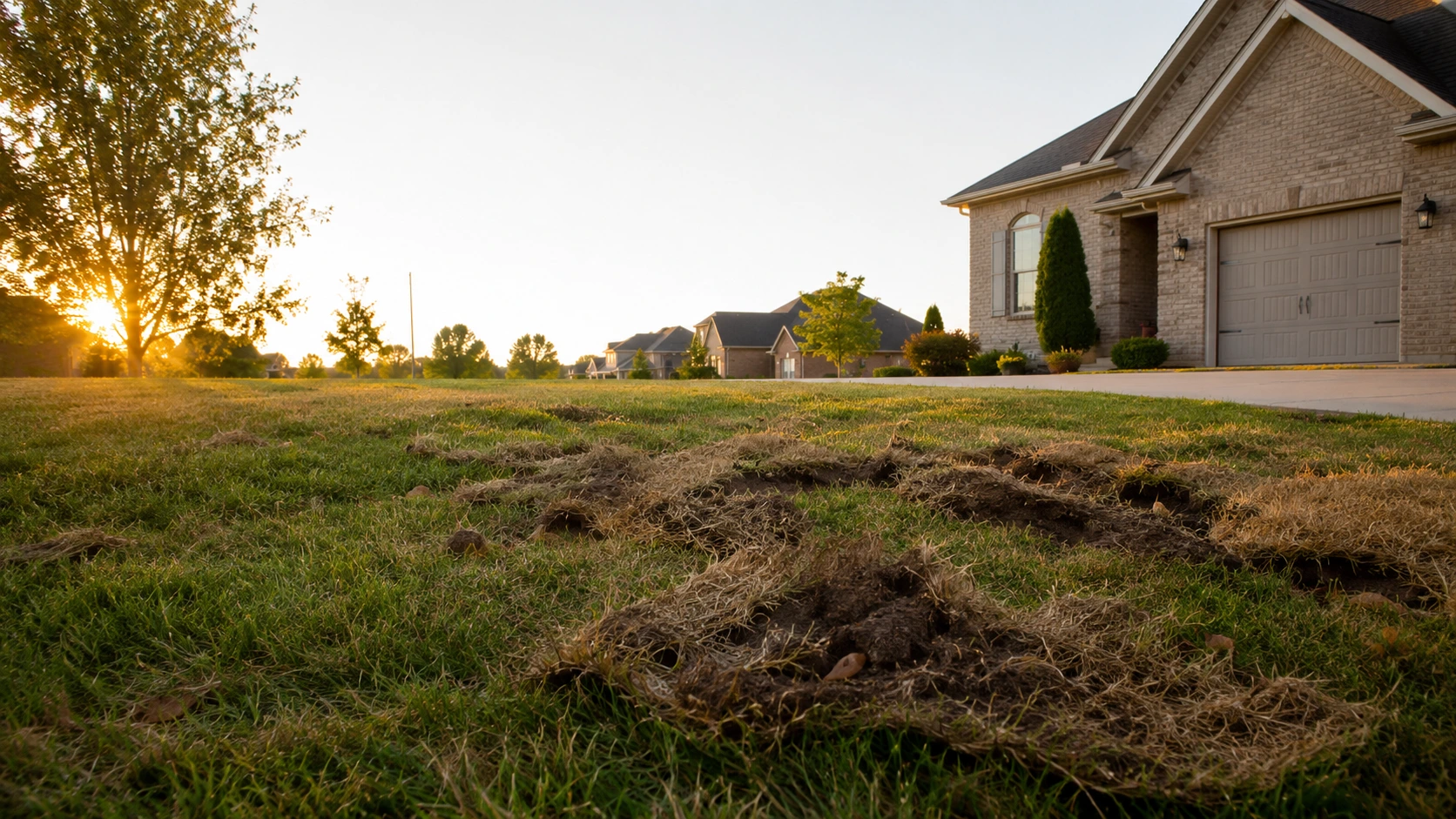
Stop Japanese beetle grubs immediately by applying a curative insecticide containing Trichlorfon at 3 lbs per 1,000 sq ft, watered in with at least 0.5 inches of irrigation. Kill the active infestation within 24 to 48 hours to halt root damage and stop raccoons from digging up your yard. Follow up next spring with a preventative Chlorantraniliprole treatment to break the reproductive cycle entirely.
Eradication Plan (Step-by-Step)
The window to kill active grubs is tight. You need a fast-acting curative product, not a slow-release preventative. Homeowners often rush to buy Scotts GrubEx in September. GrubEx is an excellent preventative, but its active ingredient (Chlorantraniliprole) takes weeks to move through the soil profile. Applying it to an active fall infestation wastes your money while the grubs continue eating.
Step 1: Apply a Fast-Acting Curative (Trichlorfon)
You need Trichlorfon to drop the active grub population immediately. BioAdvanced 24 Hour Grub Killer Plus is the industry standard for this phase.
I constantly see homeowners apply this product onto bone-dry soil during a late August drought. Trichlorfon binds to organic thatch. If you don’t water the lawn heavily before and after application, the chemical never reaches the root zone where the grubs are feeding.
- Product: BioAdvanced 24 Hour Grub Killer Plus (Trichlorfon).
- Application Rate: 3 lbs per 1,000 sq ft.
- Preparation: Run your sprinklers for 15 minutes the night before to soften the soil profile.
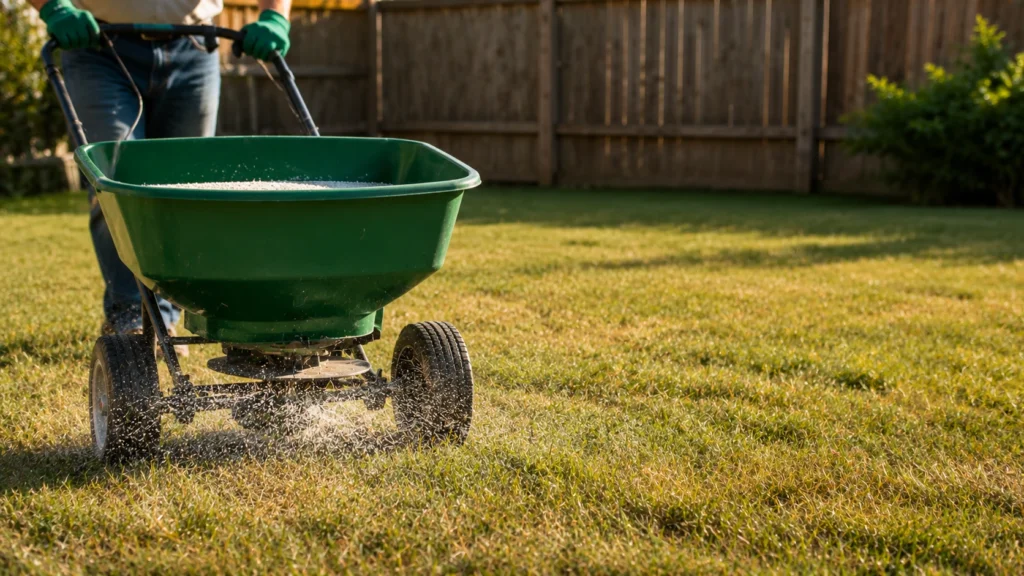
- Application: Use a broadcast spreader. Overlap your wheel tracks by 2 inches to avoid untreated stripes.
- Activation: Water the granules immediately with exactly 0.5 inches of water. Place a tuna can on the lawn; run the sprinklers until it fills halfway.
- Results: Grubs stop feeding within 24 hours and die within 48 to 72 hours.
- Cost: Roughly $25 per 5,000 sq ft bag.
Step 2: Rake and Re-Seed Damaged Areas
Dead grubs do not equal living grass. Once the root system is eaten, that turf is gone. Rake out the dead, detached brown grass immediately after the Trichlorfon treatment has settled. Expose the bare topsoil. Broadcast a premium tall fescue or Kentucky bluegrass seed blend at 8 lbs per 1,000 sq ft for bare patches. Lightly cover the seed with a 1/4-inch layer of peat moss to retain moisture.
Step 3: Implement Long-Term Biological Control
Once the immediate crisis passes, introduce Milky Spore (Paenibacillus popilliae) to the soil. This naturally occurring bacterium exclusively targets Japanese beetle grubs. I have monitored properties in Ohio that remained grub-free for ten years after a properly established Milky Spore inoculation.
- Application Rate: 1 teaspoon of spore powder every 4 feet in a grid pattern.
- Timing: Apply in early fall or spring when soil temperatures range between 60°F and 70°F.
- Watering: Lightly water the powder into the soil for 15 minutes.
- Expectation: Milky Spore takes 1 to 3 years to reach peak effectiveness in your soil profile. Do not rely on it as a quick fix.
Identification & Misdiagnosis
Diagnosing a grub problem based strictly on brown grass leads to expensive mistakes. Heat stress, drought, and turf disease all cause irregular brown patches.
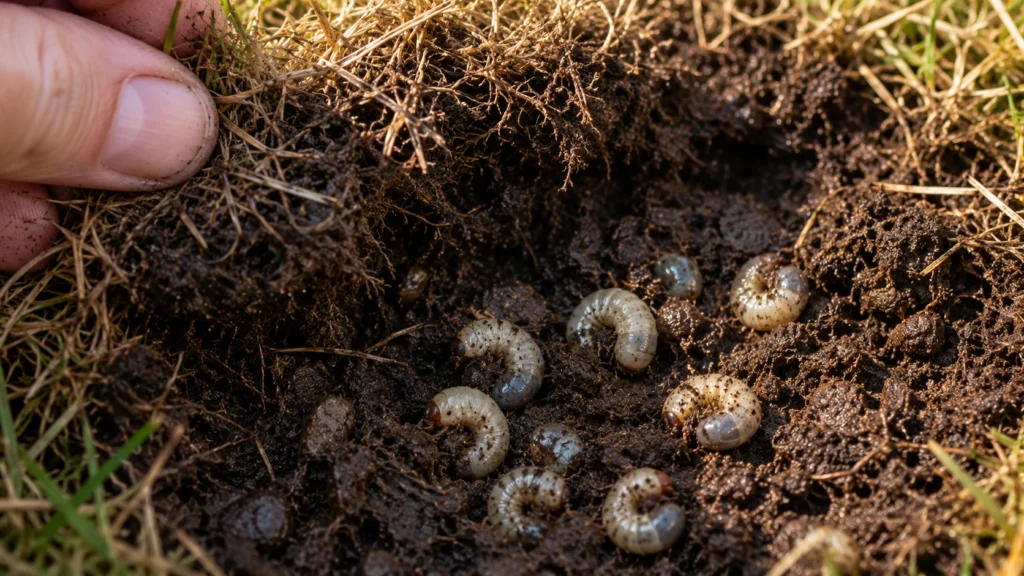
The definitive test takes 30 seconds. Grab a handful of the brown grass and pull upward. If it lifts effortlessly off the soil like a poorly installed carpet, you have a grub issue. The grubs have sheared the root system completely off.
Dig down 2 to 3 inches into the soil under the lifted turf. Japanese beetle grubs are milky-white, plump, and curl into a distinct “C” shape when disturbed. Count the grubs in a 1 sq ft section. Finding 1 to 4 grubs is normal and harmless. Finding 10 or more grubs in a single square foot triggers the need for immediate chemical intervention.
Homeowners frequently misdiagnose the secondary damage as the primary issue. Waking up to turf flipped over in large chunks usually means raccoons, skunks, or armadillos are hunting in your yard. Setting traps for the wildlife ignores the root problem. Kill the grubs, and the wildlife will hunt elsewhere.
Pro-Tips Box: Stop throwing curative granules on your lawn in late October. By the time soil temperatures drop below 50°F, grubs burrow deep into the soil—up to 8 inches down—to overwinter. No surface-applied insecticide will reach them at that depth. You are literally washing chemicals down the drain. If you miss the late summer/early fall window, wait for the grubs to surface again in mid-spring before applying Trichlorfon.
Root Causes & Attractants
Japanese beetles lay their eggs during peak summer, typically July through early August. The females actively seek out highly manicured, heavily irrigated lawns. Ironically, the better you care for your yard during summer droughts, the more attractive it becomes to laying beetles. The eggs require sustained soil moisture to survive and hatch into destructive grubs.
Allowing your cool-season lawn to enter natural dormancy during the hottest weeks of summer drastically reduces egg survival rates. Frequent, shallow watering creates an ideal incubator. Deep, infrequent watering (1 inch per week in a single session) forces grass roots to grow deeper and lets the top inch of soil dry out, desiccating beetle eggs before they hatch.
Pet & Child Safety Warnings
Trichlorfon is a harsh chemical compound. Treat it with respect. A common mistake is allowing dogs back into the yard immediately after spreading the granules, assuming the dry product is safe. The granules stick to paws, get tracked indoors, and are ingested when the dog grooms itself.
Keep all pets and children completely off the treated lawn during application. Once you water the granules in with 0.5 inches of irrigation, the chemical drives into the soil. You must wait until the grass blades are 100% dry to the touch before allowing anyone back onto the turf. In direct afternoon sun, this usually takes 2 to 4 hours. In shaded or humid environments, keep the yard isolated for a full 24 hours.
Professional vs. DIY
| Factor | Professional Service | DIY Approach |
| Cost | $80 – $150 per application | $30 – $60 per treatment |
| Speed | 3–7 days for scheduling | Immediate action |
| Effectiveness | High (Commercial-grade calibration) | Variable (Depends on watering) |
| Risk | Low (Licensed handling) | Moderate (Chemical exposure, misapplication) |
Handling a severe grub infestation DIY is entirely feasible if you strictly follow application rates and watering protocols. The chemicals available at big box stores (like BioAdvanced and Scotts) use the exact same active ingredients we use in the field, just at slightly different concentrations.
Hire a professional if your property exceeds 10,000 sq ft or if the infestation has triggered severe wildlife damage requiring full lawn renovation. Professionals calibrate their heavy-duty spreader equipment to drop exact granular rates, completely avoiding the common DIY error of burning the yard with chemical hot-spots or under-applying and leaving grubs alive.
Prevention Tips
- Apply Preventative at the Right Time: Put down a preventative containing Chlorantraniliprole (like Scotts GrubEx) between late April and early June. The chemical needs 30 to 60 days to settle into the soil profile before the eggs hatch in July.
- Mow High: Keep your mower deck set at 3.5 to 4 inches. Taller grass blades create dense canopies that physically shade the soil, making it harder for adult female beetles to burrow and lay eggs.
- Aerate Annually: Core aerate your lawn every fall. Relieving soil compaction encourages deeper root systems, making the turf resilient enough to survive a minor grub population (under 5 per sq ft) without showing visible damage.
People Also Ask
Will Scotts GrubEx kill the grubs already in my lawn?
No. GrubEx contains Chlorantraniliprole, which is a preventative. It takes weeks to move through the soil profile, so applying it to an active fall infestation lets the grubs keep feeding while you wait. For grubs that are eating your roots right now you need a curative containing Trichlorfon. Save the GrubEx for next spring, before the beetles lay their eggs.
Do I really have to water before and after applying grub killer?
Yes, and skipping it is the most common reason a treatment fails. Trichlorfon binds to organic thatch. Applied to bone-dry soil it never reaches the root zone where the grubs are feeding. Run the sprinklers for 15 minutes the night before to soften the profile, then water in the granules immediately with 0.5 inches. Put a tuna can on the lawn and run the sprinklers until it is half full.
Does Milky Spore actually work?
Yes, but as a long-term measure rather than a rescue. Milky Spore is a naturally occurring bacterium (Paenibacillus popilliae) that targets Japanese beetle grubs specifically and nothing else. It does not stop an active infestation this season. Apply it after the crisis has passed, on top of the curative treatment, to suppress future generations.
What to Read Next
Identifying the exact cause of dying turf saves you from applying the wrong chemicals. If your grass is browning but doesn’t pull up easily, you might be dealing with a moisture issue or a fungal disease, which is why knowing the subtle differences between Grub Damage vs Fungus saves homeowners significant time and money during the late summer months.