
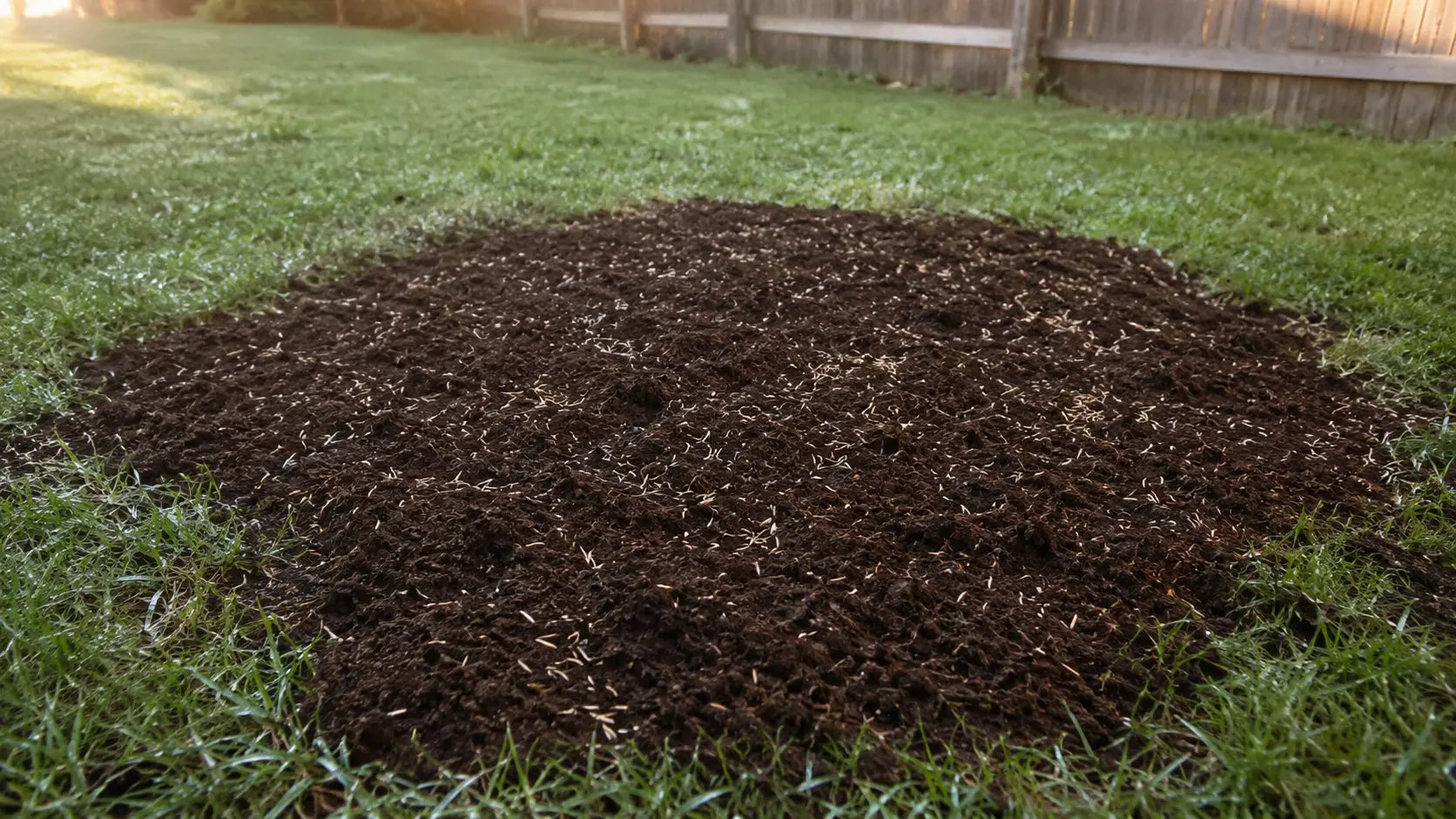
Putting a thin layer of sphagnum peat moss on top of grass seed locks in moisture, hides the seed from hungry birds, and prevents runoff during heavy rain. Apply a 1/8 to 1/4-inch layer evenly over bare dirt patches. If you cover the seed too deep, the new grass shoots won’t be able to push through the soil crust.
Why Your Seed Needs Cover
Walking up to a bare patch you seeded three weeks ago only to find dirt is a frustrating experience. You need a top dressing like peat moss if you are seeing these specific issues in your yard:
- Washed-out seed clumps: Lightweight grass seed easily floats down slopes and driveways during heavy rainstorms, leaving you with dense clumps of grass at the bottom of a hill and bare dirt at the top.
- Aggressive bird activity: Flocks of birds aggressively picking at your freshly seeded bare spots treat exposed seed like a free buffet.
- Rapid surface drying: Dry, cracked soil on the surface within hours of your morning watering indicates poor moisture retention.
- Discolored seed hulls: Existing seed drying out and turning a pale, light tan color instead of swelling dark with water means the germination process has halted.
- Muddy sinkholes: Bare patches where the seed has sunk deep into muddy, uncovered soil and drowned completely.
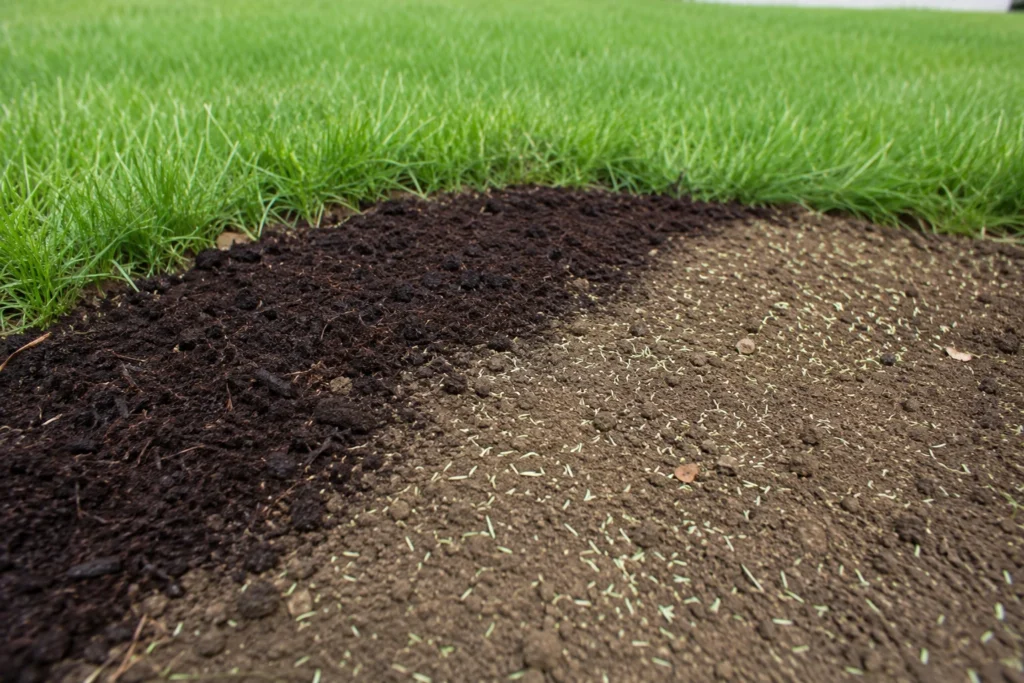
Why Bare Seed Fails
Grass seed requires constant moisture and solid seed-to-soil contact to successfully germinate. Throwing seed directly on top of bare dirt exposes it to harsh environmental elements. The midday sun easily bakes the top 1/2 inch of your yard, completely halting the germination process.
Seed needs soil temperatures around 55°F to 65°F to trigger growth, but unprotected soil fluctuates wildly between freezing nights and scorching afternoons. Bare dirt also lacks a porous structure to hold water. Peat moss acts like a dense organic sponge, holding up to 20 times its dry weight in water. This regulates the microclimate right at the soil surface, acting as a thermal blanket and a moisture reservoir.
I’ve seen too many people throw seed down on a Friday and wonder why it’s dead by Monday. Wind, sun, and hungry wildlife will destroy an unprotected seeding project fast. Without a protective barrier, the fragile root hairs dry out and die before they can even anchor into the topsoil.
How to Apply Peat Moss Over Grass Seed
- Prep the bare soil. Rake the dead patch aggressively with a bow rake to loosen the top inch of dirt. If your soil is heavily compacted, knowing when to aerate your lawn before seeding will drastically improve your germination rate. Seed sitting on hardpan clay won’t survive.
- Spread the seed and starter fertilizer. Apply your grass seed and a quality starter fertilizer (like Scotts Turf Builder Starter Food) at the exact recommended bag rate for your specific square footage. Lightly tamp the seed down with a lawn roller or the back of a rake to ensure firm seed-to-soil contact.
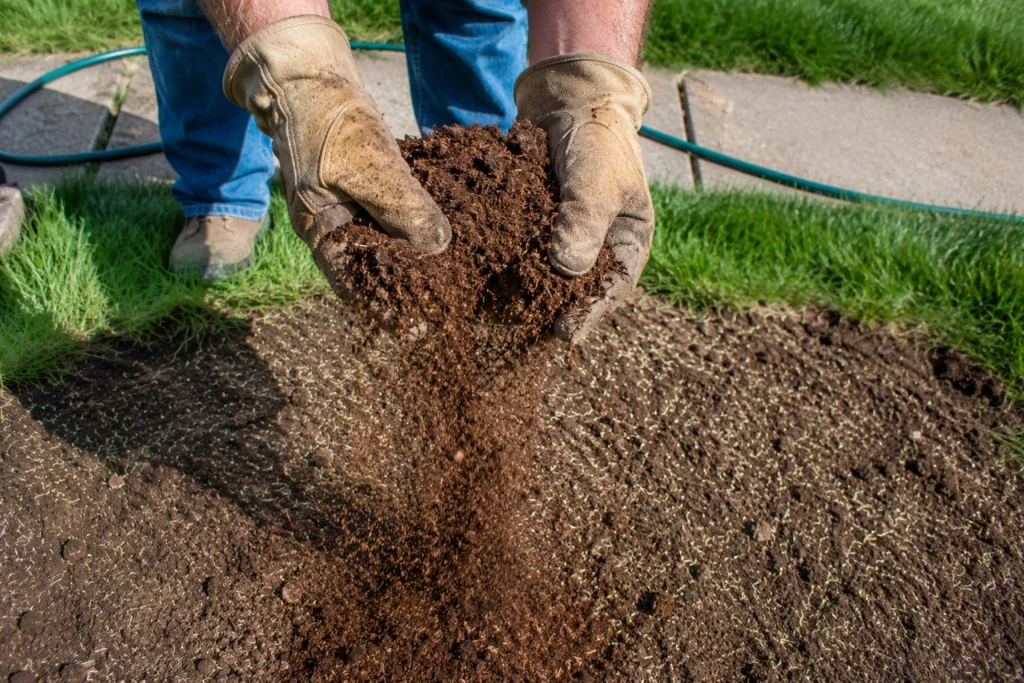
- Break up the peat moss. Sphagnum peat moss comes tightly compressed in heavy 3 cubic feet bales. Open the bag and use leather gloves to crumble the dry chunks inside a wheelbarrow. Never throw large clumps directly onto the yard.
- Apply a 1/8 to 1/4 inch layer. Sprinkle the crumbled peat moss by hand evenly over the seeded area. You should still be able to faintly see the soil underneath. A common mistake I see on service calls is burying the seed under an inch of peat moss. The fragile new grass shoots will suffocate trying to push through that thick layer.
- Water immediately. Soak the area gently using a hose nozzle set to the “shower” setting. Dry peat moss actually repels water at first. Water lightly, wait 5 minutes, and water again until the moss turns dark brown and stays thoroughly moist.
Keep the top layer damp by watering lightly twice a day. You won’t see results overnight. Tall fescue takes 7 to 14 days to pop, while Kentucky Bluegrass can test your patience for up to 21 days.
Should You Hire a Pro for Seeding?
Applying seed and top dressing is a manageable weekend project for spot repairs, but tackling a 10,000 sq ft yard by hand with a rake and a bale of peat moss is exhausting work.
| Factor | DIY | Professional |
| Cost | $ | $$$ |
| Speed | Days | Hours |
| Effectiveness | Moderate | High |
| Risk | Moderate | Low |
DIY is perfect for overseeding small areas or fixing dog spots. If you are renovating your entire yard, dealing with massive slopes that constantly wash out, or need mechanical slit-seeding equipment, hire a certified lawn technician. Professionals have the calibrated broadcast spreaders and wire-mesh peat moss rollers to cover huge areas quickly without burying the seed too deep.
Peat Moss vs. Topsoil vs. Straw
People often grab the wrong bag at the hardware store because they all sit in the same aisle. Don’t confuse peat moss with generic topsoil. Topsoil is incredibly heavy, prone to crusting over when dry, and almost always contains dormant weed seeds that will compete with your new grass.
Straw is another common cover, but cheap straw brings in hundreds of agricultural weed seeds that will rapidly choke out your new turf. I’ve spent hours treating lawns where people bought cheap hay instead of weed-free straw, effectively ruining their renovation. Peat moss is sterile, weed-free, and holds moisture significantly better than both topsoil and straw. It creates the perfect clean bed for expensive grass seed.
Keep Your New Seed Alive
Once you lay the peat moss down, your daily maintenance routine dictates your success rate. Stop mowing the seeded area immediately. If you absolutely need to cut the rest of the yard, avoid rolling the heavy mower tires over the wet, vulnerable peat moss.
Adjust your irrigation clock to run for just 5 to 8 minutes per zone, 2 to 3 times a day depending on the heat. Your daily goal is to keep the peat moss looking very dark brown, exactly like a freshly brewed cup of coffee. If you walk outside and the moss has turned a light, dusty tan color, your seed is actively drying out and you need to get the hose running immediately.
Pro-Tips Box: Dry peat moss is incredibly dusty and highly hydrophobic right out of the bale. Always wear a dust mask when breaking up a compressed bale. To make your initial watering much easier, mix the crumbled peat moss with a tiny splash of water in a wheelbarrow before spreading it over the yard. It adds just enough weight so the wind won’t blow it away, and it breaks the surface tension so your lawn hose won’t blast your expensive seed out of place when you do your first soak.
People Also Ask
Does peat moss make soil too acidic for grass?
Yes, peat moss has a naturally low pH around 4.0. However, a thin 1/4-inch top dressing for seeding won’t significantly alter your yard’s overall soil pH. You only need to worry about acidity if you are tilling massive volumes deep into your existing soil.
Can I use a fertilizer spreader for peat moss?
A standard broadcast fertilizer spreader will clog immediately. To spread peat moss over a large yard, rent a specialized compost and peat moss spreader—a large wire mesh drum barrel that rolls over the yard and drops fine material evenly.
Do I need to remove peat moss after the grass grows?
No, leave it alone. The thin layer of peat moss will naturally break down and incorporate into the thatch layer and topsoil as the new grass establishes and you resume your normal mowing routines.
What to Read Next
If you’re establishing a new lawn and have pets running around, laying down seed and starter fertilizer requires a bit of yard traffic control, which is why understanding exactly how long after fertilizing is it safe for dogs is the next step to keeping your family safe while the new grass takes root.