
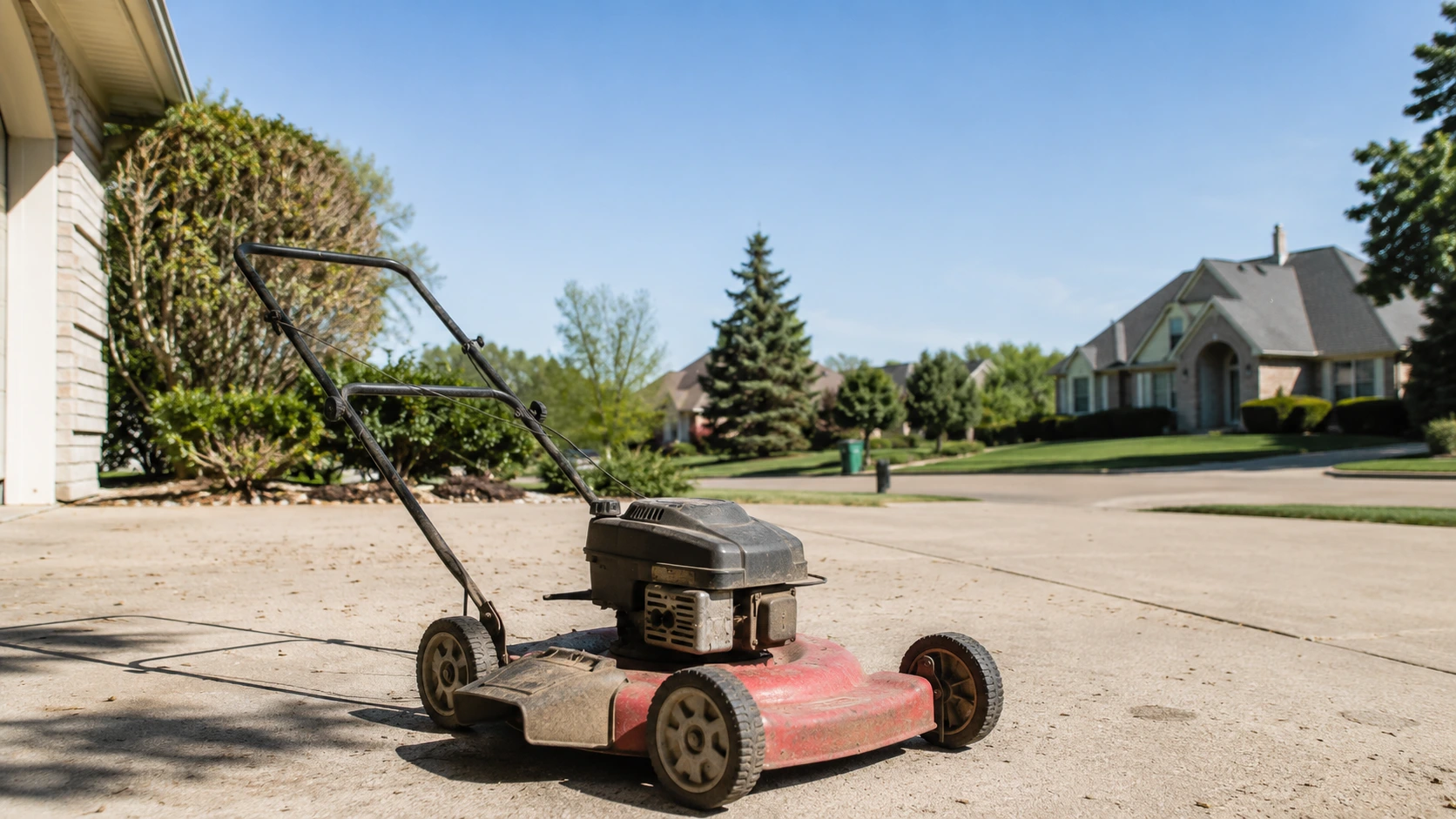
You can get rid of an old lawn mower by taking it to a local scrap metal yard, a municipal recycling center, or a small engine repair shop. If the machine still works, consider donating it or selling it online for parts. Always drain the gas and oil before transport, as waste facilities reject equipment containing hazardous fluids.
Identification Guide
Before you haul your machine to the dump, verify that it is actually beyond repair. Look for these specific visual and mechanical cues:
- Cracked Deck: A severe crack in the steel or aluminum housing makes the machine dangerous. Vibration will widen the crack, throwing debris at your legs. This is unrepairable.
- Seized Engine Block: If you remove the spark plug and still cannot pull the starter cord or turn the blade by hand, the piston is rusted to the cylinder.
- Bent Crankshaft: If you hit a stump and the machine now shakes violently when running, the main shaft is bent. The repair costs more than a brand-new machine.
- Blue Smoke and Oil Leaks: Continuous thick blue smoke blowing from the exhaust means the piston rings are completely shot. If the block is also dripping dark oil from the gaskets onto your driveway, the engine is done.
Root Causes
The main reason getting rid of a lawn mower feels complicated is strict environmental regulations. Municipalities strictly prohibit dumping small gas engines in standard landfills due to the hazardous fluids they contain. Even a few ounces of leftover gasoline, synthetic oil, or battery acid will quickly contaminate soil and groundwater. Scrap yards are heavily fined if they process machines that still contain combustible materials.
Furthermore, a lot of usable equipment is thrown away prematurely because of poor maintenance habits. I’ve seen countless mowers dragged to the curb because the owner didn’t realize that dull blades are often why a lawn mower leaves uncut grass, assuming the engine was losing power. Leaving the machine uncovered outdoors also accelerates rust on the deck and water intrusion in the gas tank, turning a 10-year investment into a pile of scrap in just two seasons.
Step-by-Step Solution
Here is exactly how to safely prepare and dispose of a gas-powered push or riding mower. Electric models follow a similar path but skip the fluid draining.
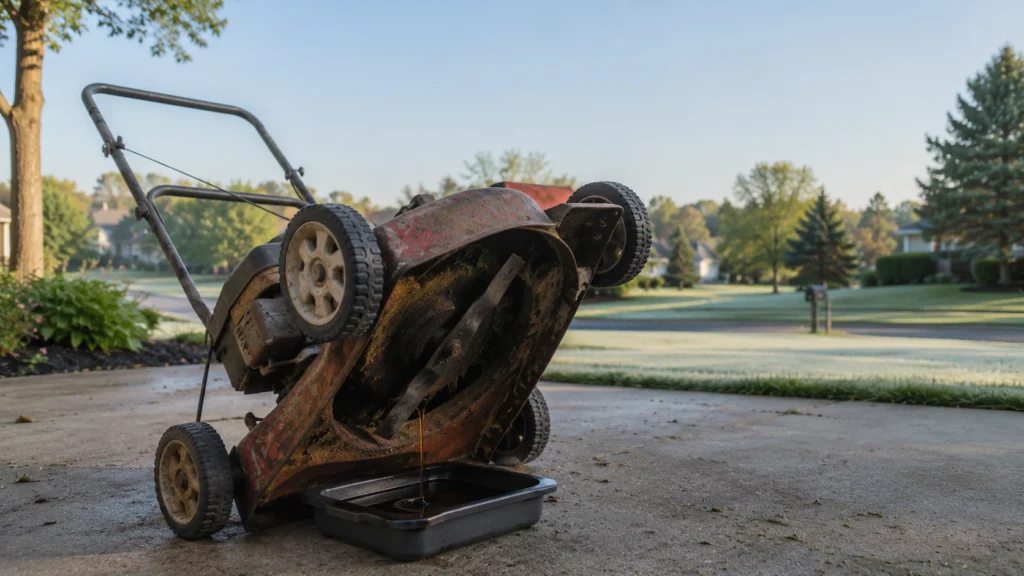
- Drain the Fuel System: Place a wide plastic drain pan under the machine. Disconnect the rubber fuel line directly from the carburetor and let the gasoline drain out completely. Alternatively, use a cheap manual siphon pump to extract the gas from the top of the tank. Pour this old fuel into an approved red gas can.
- Drain the Crankcase Oil: Locate the oil drain plug, usually positioned under the deck or at the bottom edge of the engine block. Place your pan underneath and remove the plug with a socket wrench. Let it drain entirely. A standard push mower holds about 18 to 20 oz of oil. Pour this into a sealed plastic jug. Your local auto parts store will usually accept and recycle this used oil for free.
- Remove the Spark Plug: Pull the rubber boot off and use a spark plug socket to remove the plug itself. This is a critical safety measure to ensure no accidental compression or ignition occurs while the machine is handled, tossed, or crushed at a scrap yard.
- Choose Your Disposal Route:
- Scrap Metal Yards: They will weigh your machine and pay you by the pound for the aluminum and steel. Expect a payout of $5 to $15 for a push mower.
- Small Engine Repair Shops: Local mechanics often take broken mowers for free to harvest carburetors, wheels, and control cables.
- Municipal Bulk Pickup: Check your local waste management website. Many cities allow curb placement on designated bulk pickup days, provided you attach a visible tag proving all fluids are drained.
- Handle Electric Batteries: If you are scrapping a cordless electric mower, pull the lithium-ion or lead-acid battery out first. These batteries cause severe fires in standard recycling compactors and must be taken to specialized battery recycling drop-off bins.
Professional vs. DIY
Getting rid of yard equipment yourself takes time, a truck, and physical effort. Hiring a junk removal service is fast but expensive.
| Factor | DIY Disposal | Professional Junk Removal |
| Cost | Free (or make $5-$15) | $50 to $100 fee |
| Speed | Requires planning (Days) | Same-Day or Next-Day |
| Effort | High (Lifting, draining fluids) | Low (They do the heavy lifting) |
| Risk | Moderate (Spills, strains) | Low |
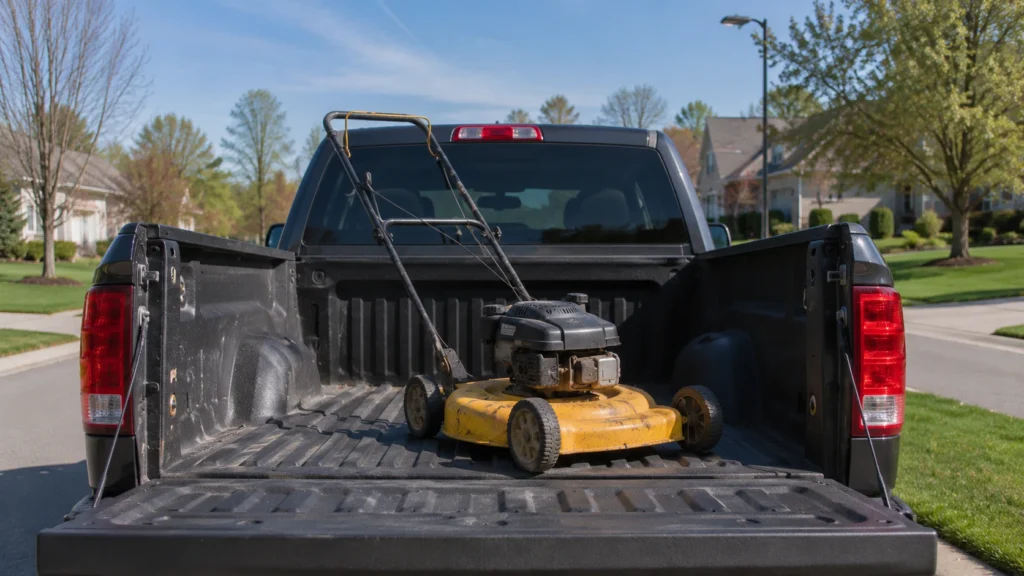
If you own a small truck and can lift 60 pounds, draining the fluids and driving to the scrap yard is the smartest financial move. However, if you are trying to dispose of a 500-pound riding tractor with flat tires that has been sitting behind your shed for a decade, call a junk removal professional. You will easily injure your back trying to winch a dead tractor onto a trailer by yourself.
Common Misdiagnosis
Do not mistake a dirty carburetor for a dead, useless engine. People frequently leave untreated ethanol gasoline in their tanks over the winter. When spring arrives, the machine refuses to start, sputters, or immediately dies. The owner assumes the internal engine components are ruined and decides to junk it. In reality, ethanol attracts moisture from the air and turns into a thick, gummy varnish that clogs the microscopic jets inside the carburetor. A $15 can of spray carburetor cleaner, a wire brush, and 30 minutes of simple teardown will often bring that “dead” machine right back to life. Always check for spark and clean the carb before giving up.
Prevention Tips
To keep your next expensive piece of equipment out of the scrap heap, fundamentally change your winter storage routine. The absolute best thing you can do for a 4-cycle gas engine is to run the fuel tank completely dry at the end of the fall season. Start the engine and let it idle in your driveway until it starves of fuel and dies. This prevents the carburetor from varnishing. For electric models, always bring the batteries inside your house during the winter months. Storing lithium-ion power packs in a freezing, uninsulated garage will permanently destroy their cells and cut their overall lifespan in half.
Pro-Tips Box: If you are hauling a heavy riding mower to the scrap yard, do not waste time trying to dead-lift it. Inflate the tires with a portable compressor and use a come-along winch to drag it up the ramps of a utility trailer. Scrap yards price your payout based on weight, so leave the heavy cast-iron mower deck attached, but pull the battery and the seat cushions first. Many yards will flat-out refuse the load if they see a lead-acid battery still hooked up under the hood.
People Also Ask
Can I put a lawn mower in the trash?
No. Most municipal waste management services will not collect mowers in regular residential trash bins due to hazardous fluid leaks and heavy metals. You must use designated bulk pickup days and clearly prove that all oil and gas have been drained.
Does Home Depot recycle old lawn mowers?
Home Depot does not accept whole lawn mowers for recycling or disposal. However, they do provide designated drop-off bins at the front of the store specifically for recycling the lithium-ion batteries used in cordless electric mowers.
Who buys broken lawn mowers?
Local scrap metal yards will pay you for the scrap weight of the steel and aluminum. Additionally, independent small engine repair shops will sometimes buy broken machines for $10 to $20 just to strip them for discontinued, usable parts.
What to Read Next
If you are upgrading to new yard equipment and want to avoid another trip to the scrap yard, understanding the mechanical quirks of your tools is essential. Regular maintenance prevents catastrophic failure, which is exactly why knowing what to do when your string trimmer string keeps breaking will save you a massive headache next spring.