
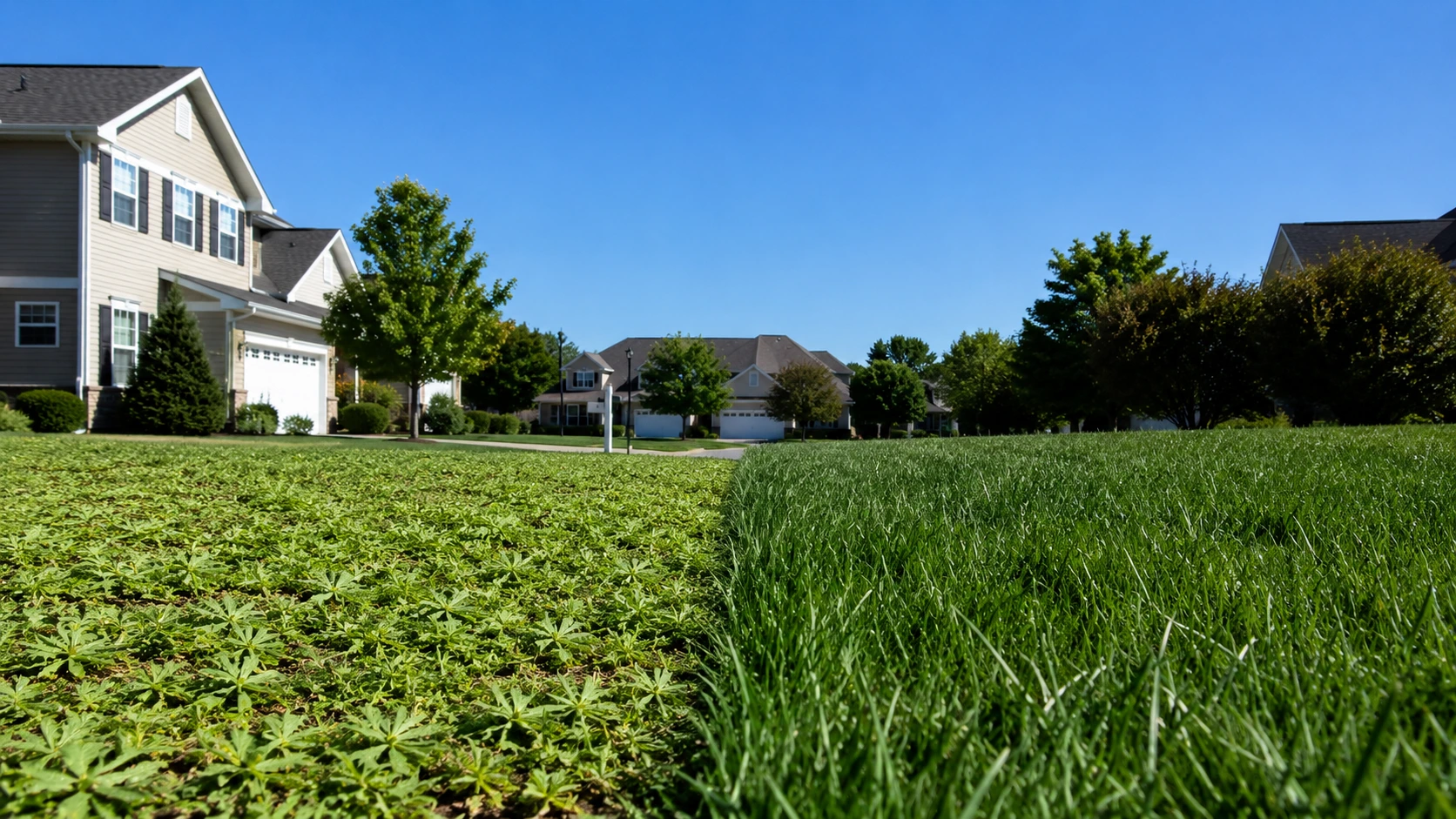
Crabgrass is a sprawling, low-growing annual summer weed with light green, hairy leaves that spread laterally like a starfish. Tall fescue is a perennial turfgrass that grows upright in thick, dark green clumps with wide, ribbed blades. Broadleaf and crabgrass killers containing Quinclorac will destroy crabgrass, but they will not harm tall fescue clumps.
Identification Guide
You need to know exactly what you are dealing with before pulling out the sprayer. Using the wrong chemical wastes time and money. I see yards every July where folks have scorched their good grass trying to kill tall fescue clumps with crabgrass killer. It never works.
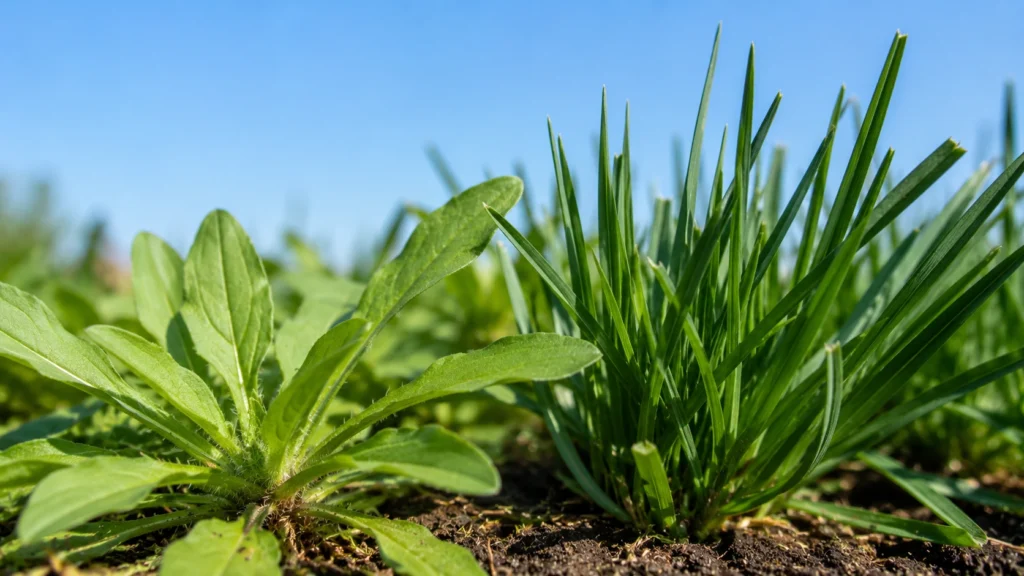
Look for these physical differences in your yard:
- Growth habit: Crabgrass stems grow outward, hugging the ground in a flat circle. Tall fescue grows straight up in a dense, tight bunch.
- Blade texture and color: Crabgrass blades are light yellow-green, relatively smooth, and feature tiny, fine hairs near the collar (where the leaf meets the stem). Tall fescue blades are dark green, lack hairs, and have prominent vertical ridges running down the leaf that you can feel with your thumbnail.
- Root structure: Pull up a sample. Crabgrass has a shallow, fibrous root system that pulls out easily. Clumping fescue has a deep, dense root mass that fights back and usually requires a shovel.
- Seasonal timing: If the clump was green and visible in January or February, it is fescue. Crabgrass dies entirely after the first winter frost and does not return until soil temperatures hit 55°F in late spring.
Root Causes
Both of these plants thrive when your desirable turf is weak, but they exploit different vulnerabilities in your lawn’s ecosystem.
Crabgrass is an opportunist. It invades thin spots where the sun hits bare dirt, especially along concrete driveways and sidewalks where the soil heats up faster. If you scalp your lawn by mowing too low—under 2.5 inches for most cool-season grasses—you invite crabgrass seed to germinate. Missing your spring pre-emergent window is the primary reason you see this weed exploding by mid-July.
Tall fescue clumps, often called K-31 or forage fescue, usually get into your yard through cheap grass seed. Many budget seed bags at hardware stores contain “weed seed” or “other crop” percentages. You patch a bare spot in the fall, and by next spring, you have massive, ugly clumps of rough fescue ruining the texture of your Kentucky Bluegrass or fine fescue lawn. It also sneaks in via bird droppings or contaminated topsoil used during grading. Once established, fescue outcompetes finer grasses for water and nutrients.
Step-by-Step Solution
Your approach depends entirely on which plant you properly identified. Crabgrass requires a selective herbicide. Tall fescue requires a non-selective approach or manual labor.
Treating Crabgrass
- Select the right active ingredient: Buy a liquid herbicide containing Quinclorac. Products like BioAdvanced All-In-One Lawn Weed & Crabgrass Killer or Ortho Weed B Gon plus Crabgrass Control work extremely well.
- Mix the solution: If using a concentrate, mix exactly 3.2 oz of product per 1 gallon of water in a pump sprayer. Do not eyeball this. Over-mixing will stress your good grass.
- Check the weather: Apply only when temperatures are below 90°F. Ensure you understand timing your herbicide application right before or after rain so the chemical does not wash off the leaf. It needs 24 hours of dry time.
- Target the weed: Spray the crabgrass leaves until they are wet, but not dripping.
- Wait for results: You will see the crabgrass turn purple or white within 5 to 7 days before curling up and dying.
Eradicating Tall Fescue Clumps
- The digging method: For just a few clumps, grab a heavy-duty shovel. Dig down at least 4 inches to get the entire root mass. Fill the hole with topsoil and re-seed.
- The chemical method: There is no selective herbicide that kills tall fescue without killing your surrounding Kentucky Bluegrass or Perennial Ryegrass. You must use a non-selective herbicide containing Glyphosate (like standard Roundup).
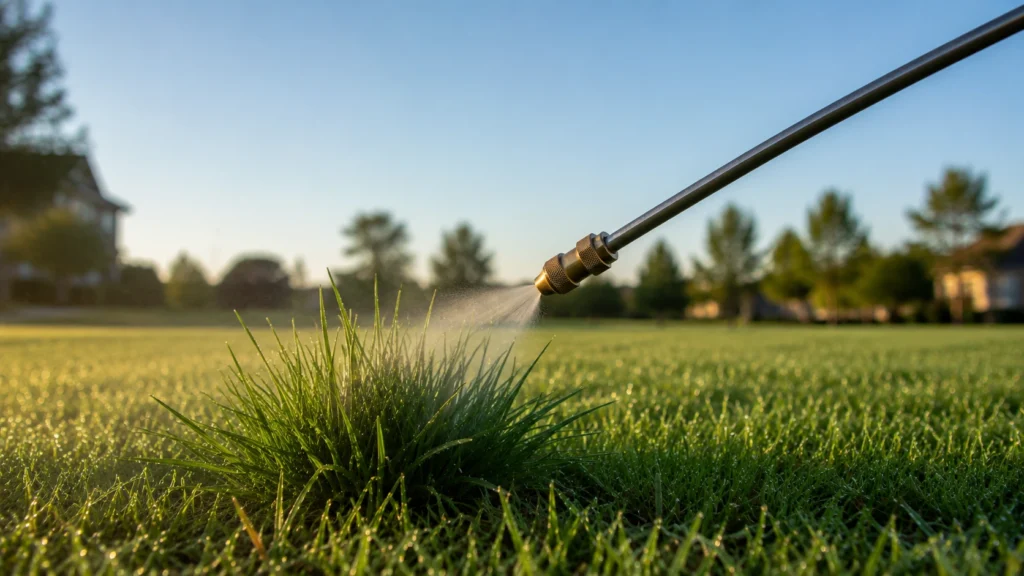
- Apply carefully: Mix 2.5 oz of 41% Glyphosate concentrate per gallon of water. Use a piece of cardboard as a shield to protect your good grass. Spray the fescue clump directly.
- Replant: The clump will turn yellow and die in 10 to 14 days. Dig out the dead material and re-seed the area, keeping it moist until germination.
Professional vs. DIY
Tackling grassy weeds is highly dependent on your lawn’s current state and your own patience. Most homeowners can handle spot treatments, but severe infestations warrant a call to the pros.
| Factor | DIY | Professional |
| Cost | $ ($30–$60 per season) | $$$ ($400–$700 annually) |
| Speed | 1 to 2 weeks | 1 to 3 days |
| Effectiveness | Moderate | High |
| Risk of Turf Damage | Moderate | Low |
DIY fails most often because homeowners miss the pre-emergent window for crabgrass. If your yard is over 30% crabgrass by August, do not waste money on post-emergent sprays. Hire a professional service like TruGreen or a local operator to map out a commercial-grade pre-emergent program (using active ingredients like Prodiamine or Pendimethalin) for the following spring. Pros cannot selectively spray out fescue clumps either, but they have the proper licenses to handle heavy renovations.
Common Misdiagnosis
The biggest mistake I see in the field is confusing crabgrass with Goosegrass.
Goosegrass looks almost identical to crabgrass from a distance. It grows in a flat, wagon-wheel pattern and thrives in the exact same hot, compacted summer conditions. You differentiate them by looking at the center core. Goosegrass has a distinct, bright silvery-white center where the stems meet the soil. Crabgrass centers are green or slightly purple.
Why does this distinction matter? Because Quinclorac, the gold standard for crabgrass control, barely touches goosegrass. If you spray Quinclorac on goosegrass, you will simply waste your product. You need an active ingredient like Sulfentrazone or Topramezone to successfully kill goosegrass. Always check the center stem before buying chemicals.
Prevention Tips
Stop these ugly grasses before they take over. Your first line of defense is a thick, healthy lawn.
Apply a pre-emergent herbicide every spring right when soil temperatures reach 50°F to 55°F. This creates a chemical barrier that stops crabgrass seed from germinating. For fescue prevention, strictly avoid buying bargain-bin grass seed. Look at the label on the back of the bag. If it lists anything above 0.0% for “weed seed” or “other crop,” leave it on the shelf.
Adjust your mowing habits. Keep your mower deck set to at least 3 inches, or up to 4 inches during peak summer heat. Taller grass shades the soil, dropping the ground temperature and blocking sunlight from crabgrass seeds. Make sure to read up on mowing your lawn correctly before applying weed and feed to keep your chemical barriers intact.
Pro-Tips Box: I’ve watched countless homeowners drench dark green clumps of grass with Ortho Weed B Gon, frustrated that nothing dies. If the weed stays completely green after your first hard frost, you are absolutely dealing with tall fescue, not crabgrass. Stop spraying Quinclorac. To kill fescue without spraying Glyphosate, use a shovel and dig down at least 4 inches to extract the entire crown. If you just pull the top blades by hand, the deep root system will push up new growth in exactly seven days.
People Also Ask
Does crabgrass killer work on tall fescue?
No. Most crabgrass killers rely on Quinclorac, which targets annual grassy weeds. Tall fescue is a perennial turfgrass and is highly tolerant to Quinclorac. Spraying it will only stress your surrounding lawn without harming the fescue.
Will tall fescue choke out crabgrass?
Yes, a dense, healthy stand of desirable turf-type tall fescue can choke out crabgrass. By mowing high and fertilizing properly, the fescue develops a deep root system and thick canopy that blocks the sunlight crabgrass seeds need to germinate.
What happens if you leave crabgrass over winter?
The physical crabgrass plant dies completely after a hard frost. However, a single plant can drop up to 150,000 seeds into your soil before dying. Leaving the dead plant isn’t the problem; failing to apply a pre-emergent next spring is what causes the infestation to return.
What to Read Next
Grass identification can feel like a guessing game, and clumpy tall fescue isn’t the only stubborn intruder you’ll face. If you are struggling with grassy weeds that seem to grow twice as fast as your lawn, learn the structural differences in our nutsedge vs quackgrass guide to ensure you are buying the right treatment.