
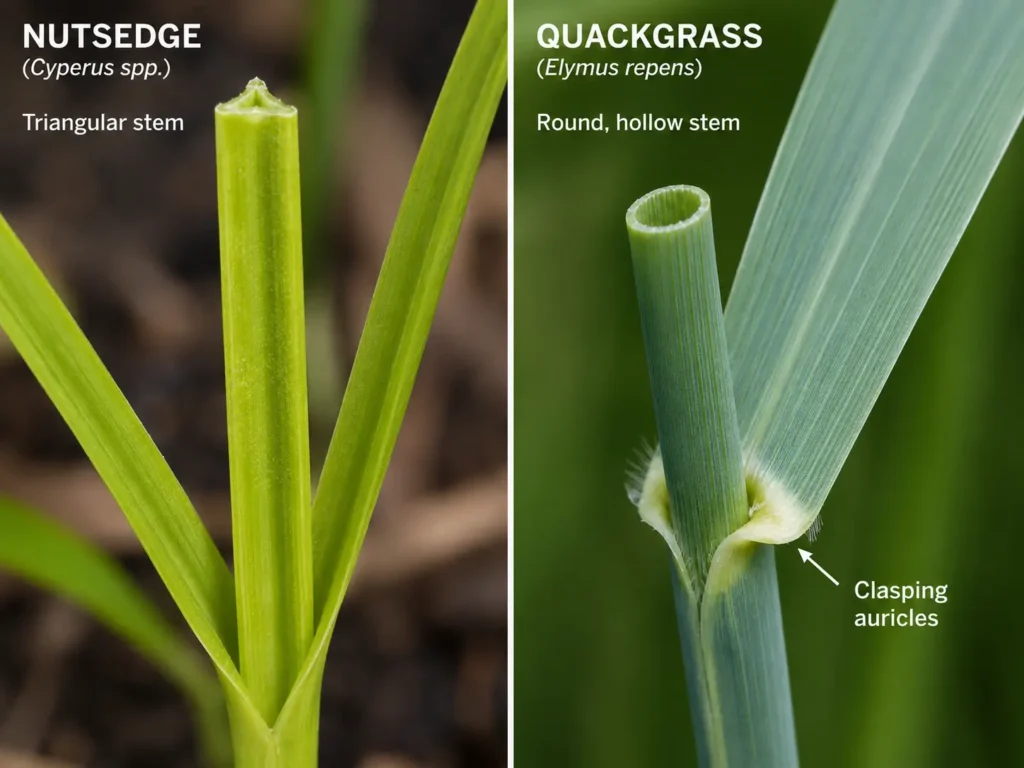
To tell nutsedge from quackgrass, roll the stem between your fingers: nutsedge has a triangular stem (“sedges have edges”), while quackgrass has a round, hollow stem. Both are aggressive perennial weeds, but nutsedge requires specific sedge-control herbicides like Halosulfuron, whereas quackgrass generally requires non-selective treatments like Glyphosate or targeted wiping.
Identification Guide: Tell Them Apart Before You Spray
Misidentifying these weeds guarantees wasted money on chemicals. They belong to completely different botanical families and respond to different active ingredients.
Nutsedge (Yellow and Purple):
- Stem Shape: Distinctly triangular. You can feel the sharp edges when rolling it between your thumb and index finger.
- Color and Growth: Bright, waxy yellow-green color. It grows significantly faster than your standard turfgrass, sticking up 2 to 3 inches above the canopy just days after mowing.
- Root System: Spreads via underground tubers (nutlets) that can survive in the soil for years.
- Leaf Tips: Taper to a sharp, needle-like point.
Quackgrass:
- Stem Shape: Round and hollow, exactly like traditional turfgrass.
- Color and Growth: A dull, blue-green hue with wider, rougher blades.
- Distinctive Feature: Look for “clasping auricles”—small, claw-like appendages that wrap around the stem where the leaf blade meets the stalk.
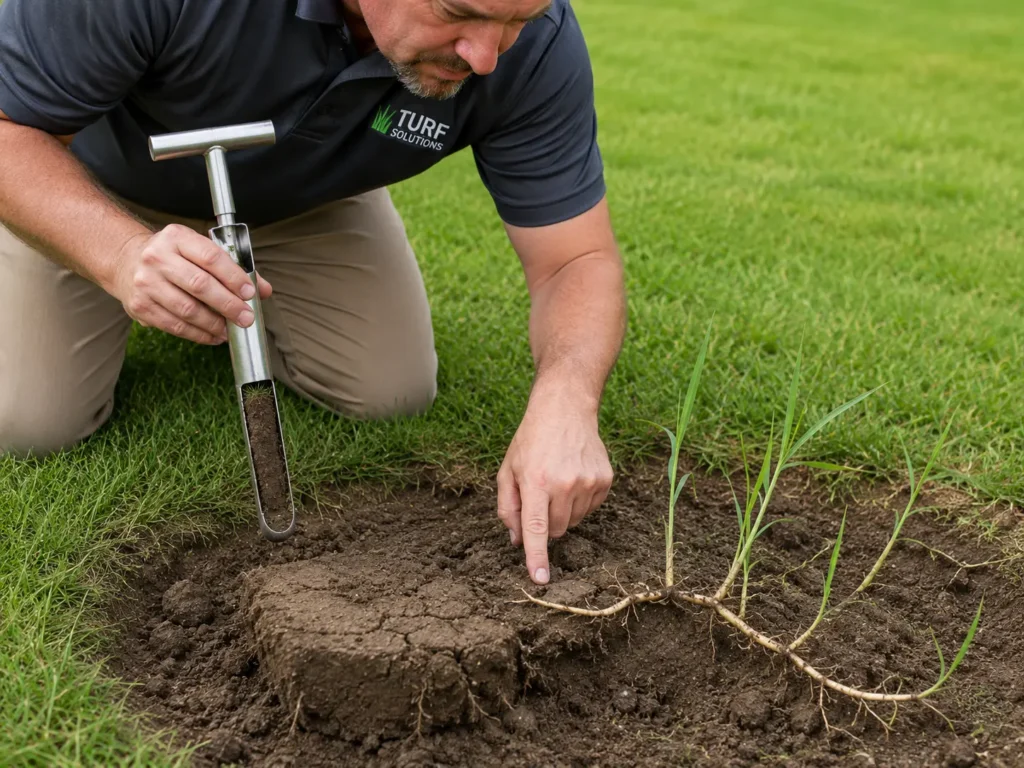
- Root System: Spreads relentlessly through thick, sharp, white underground rhizomes.
Root Causes: Why Is Your Yard Infested?
Weeds are symptoms of underlying soil and turf conditions. Fixing the environment is just as critical as spraying to prevent a recurrence.
Nutsedge Root Causes: Nutsedge thrives in poorly draining, constantly wet soils. If you have low spots in your yard holding water, or if you are overwatering your lawn (more than 1 to 1.5 inches of water per week), nutsedge will dominate. It also aggressively invades thin, weak turf in both warm-season (Bermuda, Zoysia) and cool-season (Kentucky Bluegrass, Fescue) lawns.
Quackgrass Root Causes: Quackgrass is highly opportunistic and targets highly compacted soils. It easily pushes its sharp rhizomes through hard clay that normal grass roots cannot penetrate. If your yard suffers from heavy foot traffic or equipment weight, quackgrass takes over. Addressing soil density is critical, just as we explained in our guide on when should you aerate your lawn.
Step-by-Step Solution: Professional Chemical Eradication
Do not hand-pull nutsedge. Pulling it triggers the underground nutlets to sprout, multiplying your problem. Quackgrass rhizomes also snap when pulled, leaving root segments that regenerate. Here is how to actually kill them.
Nutsedge Protocol:
- Select the Chemical: Use a product containing Halosulfuron-methyl (like SedgeHammer) or Sulfentrazone.
- Mixing: Mix 0.9 oz of SedgeHammer per 1 gallon of water in a pump sprayer. Add a non-ionic surfactant (2 teaspoons per gallon) so the chemical cuts through the waxy leaves.
- Application: Spray evenly over the nutsedge until the leaves are wet but not dripping. Do not mow for 2 days before or 2 days after application.
- Patience: The weed will stop growing immediately but may take 10 to 14 days to fully yellow and collapse.
Quackgrass Protocol: Quackgrass is a true grass, meaning selective herbicides that kill it will usually kill your good grass, too.
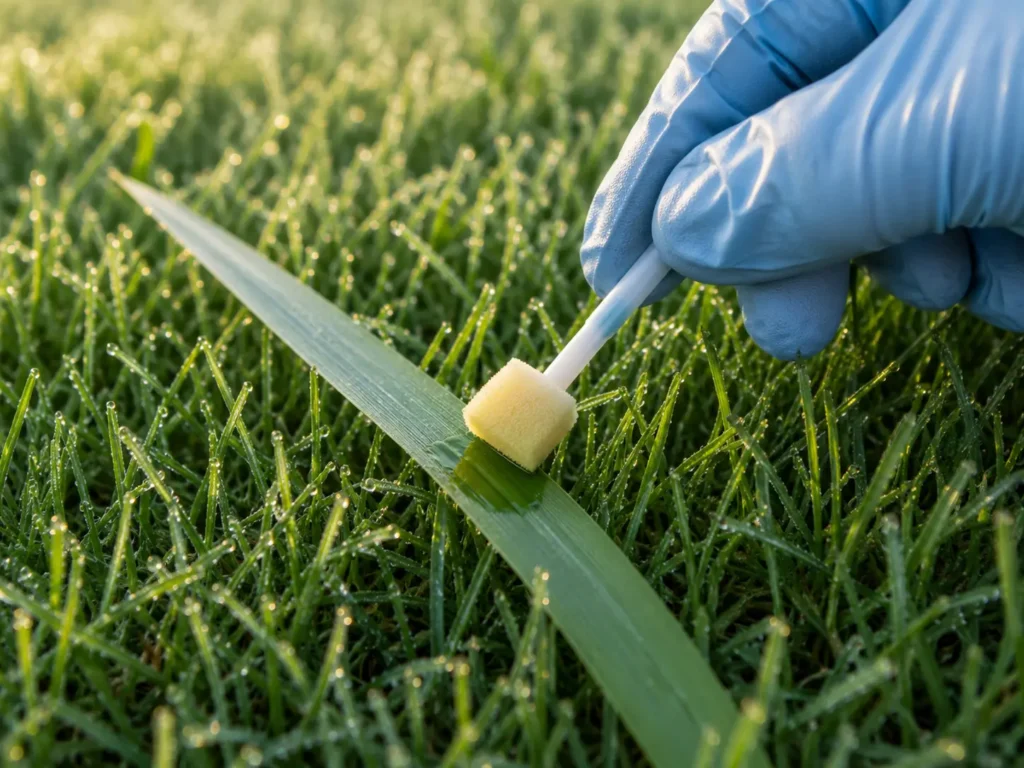
- The Wipe Method: Put on a heavy rubber glove, then slip a cheap cotton glove over it. Dip the cotton fingers into a 41% Glyphosate solution (like Roundup).
- Targeted Application: Carefully wipe the Glyphosate directly onto the quackgrass blades, avoiding your good turfgrass.
- Complete Renovation (Severe Infestations): If quackgrass has taken over completely, you must spray the entire area with Glyphosate, wait 7 days, and reseed. Keep in mind that killing large patches leaves dead zones, similar to diagnosing yellow spots on grass.
Expert Comparison: Nutsedge vs Quackgrass vs Crabgrass
Homeowners frequently confuse both of these invaders with crabgrass. Here is the objective breakdown.
- Growth Habit: Crabgrass grows flat to the ground in a starburst pattern radiating from a central crown. Nutsedge shoots straight up in single stalks. Quackgrass grows upright but spreads laterally via rhizomes underground.
- Life Cycle: Crabgrass is a summer annual; it dies at the first frost. Nutsedge and Quackgrass are perennials; their foliage dies back in winter, but their root systems survive underground to return next spring.
- Treatment Window: Crabgrass is best prevented in early spring using a pre-emergent like Prodiamine. Nutsedge and quackgrass must be treated post-emergence when actively growing in the summer. Once you apply any heavy chemical treatments, be sure to wait the proper time before letting pets out, as detailed in our guidelines on how long after fertilizing is it safe for dogs.
PRO-TIPS BOX From the Professional: Never apply Glyphosate or Halosulfuron when temperatures exceed 85°F. The chemicals evaporate too quickly, and the heat stress will severely damage your surrounding healthy grass. Always spray in the early morning when the yard is dry.
What to Read Next
Now that you know exactly which chemical targets your specific weed, execution is everything. Applying herbicides at the wrong time of day or right before a storm will wash your expensive chemicals down the drain. Learn exactly how to time your applications flawlessly by reading our guide on the best time to spray weeds before or after rain.
People Also Ask (FAQ)
Can I choke out quackgrass by mowing high?
Mowing high (around 3.5 to 4 inches) helps your healthy turfgrass shade the soil, which prevents new weed seeds from germinating. However, because quackgrass is highly aggressive and spreads through underground rhizomes, mowing high alone will not eradicate an existing infestation. It requires chemical intervention.
Does Tenacity kill nutsedge or quackgrass?
Mesotrione (brand name Tenacity) is highly effective at suppressing yellow nutsedge in cool-season lawns, usually requiring two applications spaced two weeks apart. Unfortunately, Tenacity does not effectively control quackgrass, which is why non-selective herbicides like Glyphosate remain the industry standard.
Will winter freezing kill nutsedge tubers?
No, nutsedge tubers are incredibly resilient. While the visible green growth will die back when temperatures drop below freezing, the tubers burrowed deep in the soil go dormant. They will easily survive the winter and sprout new shoots as soon as soil temperatures warm back up in late spring.