
The most common animals digging holes in your yard are skunks, raccoons, moles, and voles. If you wake up to find shallow, cone-shaped holes across your turf, it’s almost certainly a skunk or raccoon hunting for grubs, whereas raised ridges and volcano-shaped dirt mounds point directly to underground mole activity.
Identification Guide: Who Is Wrecking Your Lawn?
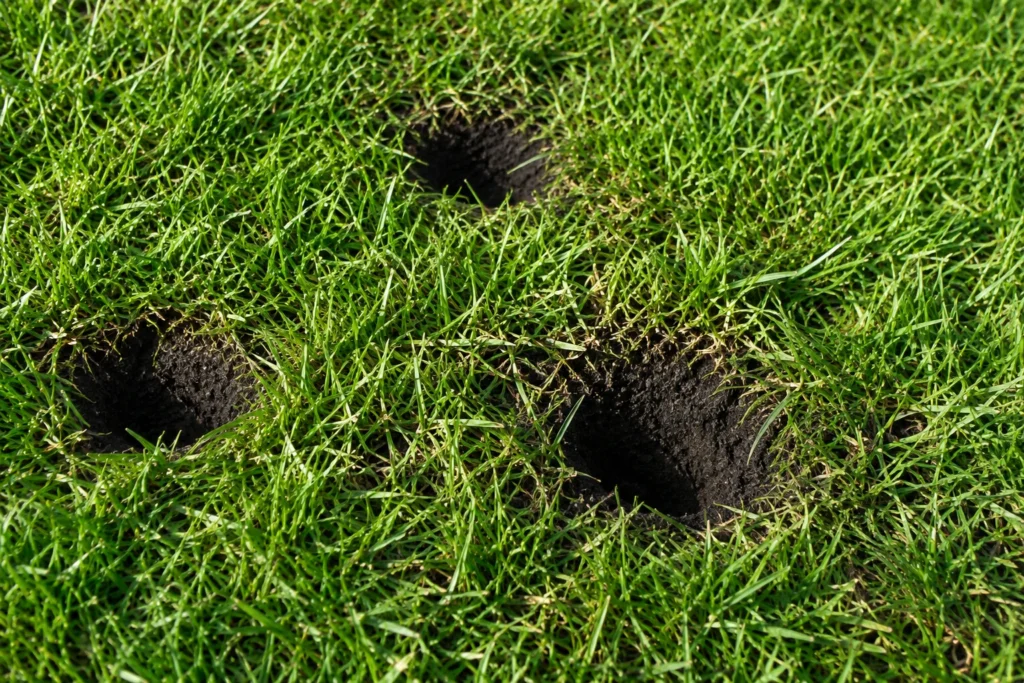
To stop the destruction, you first need to identify the exact culprit. Look closely at the size and shape of the damage across your property:
- Skunks: They create shallow, cone-shaped holes roughly 3 to 4 inches wide. They peel back small sections of turf precisely to extract grubs from the root zone.
- Raccoons: Their damage is violent and aggressive. Raccoons will literally flip over large chunks of sod, rolling it back like a carpet to feast on the insects beneath.
- Moles: Moles do not create open, excavated holes; instead, they create raised, spongy tunnels across your yard and push up 6-inch volcano-shaped mounds of excavated dirt.
- Voles: These surface-dwelling rodents create narrow, 2-inch wide surface runways through the grass, chewing the blades and roots, which can cause yellow spots on your grass as the turf dies.
Root Causes: Why Are They Targeting Your Property?
Wild animals do not dig up your lawn for fun; they are strictly looking for food or shelter. The primary reason skunks, raccoons, and armadillos tear up your turf is a severe white grub infestation lurking just beneath the soil surface.
Grubs are the destructive larvae of Japanese beetles and June bugs. When your soil temperatures hit 65°F to 70°F in late spring or late summer, grubs move into the top layer of soil to feed on grass roots. This turns your lawn into an all-you-can-eat buffet for local wildlife. Secondary causes include a high population of earthworms (which moles exclusively eat) or poor drainage that makes the soil exceptionally soft and easy to excavate.
Step-by-Step Solution: Stop the Digging
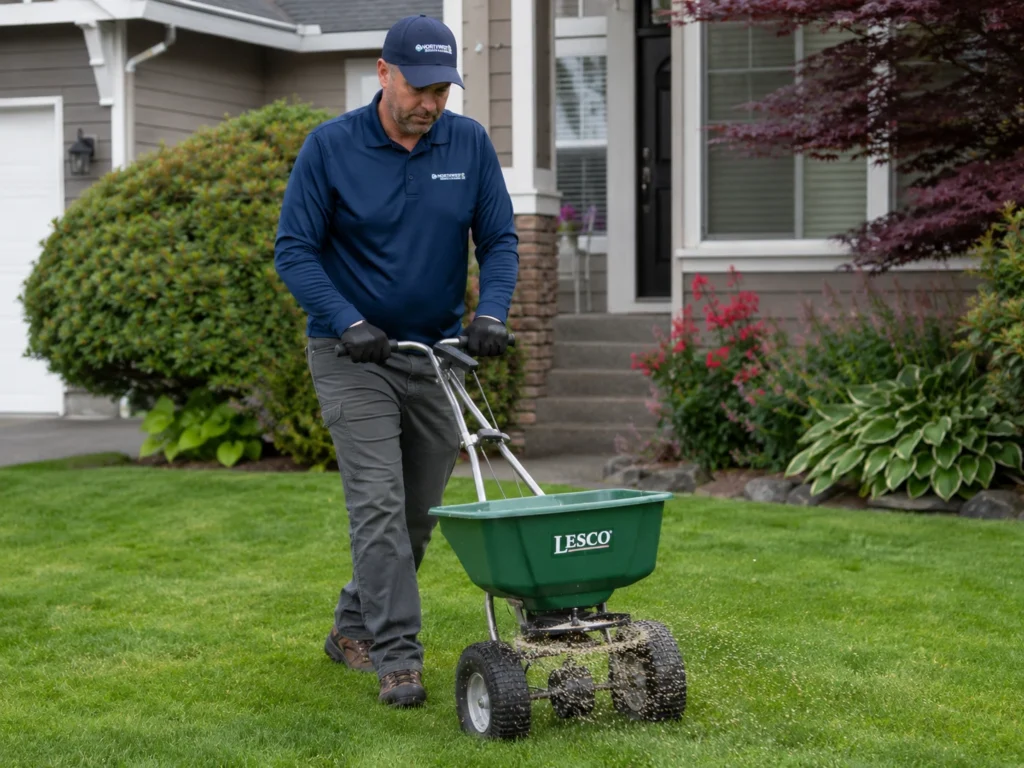
To stop the digging permanently, you must eliminate their primary food source. Spray-on repellents only offer temporary, unreliable relief. Follow this professional protocol to secure your lawn:
- Step 1: Test for Grubs. Dig up a 1 sq ft section of turf, about 2 inches deep. If you count more than 5 grubs per square foot, you have a treatable infestation that is attracting wildlife.
- Step 2: Apply a Curative Insecticide. If the damage is actively happening right now (late summer or fall), apply a fast-acting product containing Trichlorfon (such as BioAdvanced 24 Hour Grub Killer Plus). Water it in immediately with at least 0.5 inches of water.
- Step 3: Apply a Preventative. The following spring, apply a systemic product containing Imidacloprid or Chlorantraniliprole (like Scotts GrubEx) to stop the next generation of beetles from hatching.
- Step 4: Repair the Turf. Tamp down raised mole tunnels with your boots. For skunk and raccoon damage, flip the ripped sod back into place, water heavily, and consider when you should aerate your lawn to relieve soil compaction and overseed the bare dirt patches.
Expert Comparison: Grub Hunting vs. Mating/Nesting Tunnels
Homeowners often confuse a surface food search with structural nesting behavior. If an animal is digging for grubs, the holes will be numerous, completely random, and strictly limited to the top 2 to 3 inches of soil in the middle of your yard.
If you find a singular, deep burrow with a 6 to 8-inch opening near your foundation, under a shed, or beneath a concrete patio, this is a nesting den. Groundhogs (woodchucks) and foxes dig these deep structural dens to raise their young. You will need live traps or professional wildlife removal services, not an insecticide, to solve a denning problem.
Pro-Tip: Never apply a granular grub killer without watering it in heavily. The active chemical will sit harmlessly on the dry grass blades, rendering it completely useless against soil-dwelling insects. Always run your sprinklers for 20-30 minutes after using a broadcast spreader so the granules dissolve and penetrate the root zone.
What to Read Next
Since the vast majority of lawn-digging issues are tied directly to an underlying insect problem, your next crucial step is determining if your dying grass is actually from grub feeding or a secondary issue. Check out our detailed diagnostic guide on Grub Damage vs Fungus to pinpoint exactly what is destroying your turf’s root system so you can apply the right treatment.
People Also Ask (FAQ)
Will cayenne pepper stop animals from digging in my yard?
Cayenne pepper can temporarily deter animals like skunks and stray dogs due to its strong scent and irritation to their mucous membranes. However, it washes away completely after the first rain or sprinkler cycle, meaning it is not a permanent or reliable professional solution for serious wildlife damage.
Do ultrasonic repellents work for moles and skunks?
No. Professional field testing consistently shows that ultrasonic solar spikes and noise-makers are highly ineffective in real-world scenarios. Animals quickly habituate to the sound, and these devices will not stop a hungry raccoon or mole from accessing a food-rich lawn.
How do I safely fill animal holes in my lawn?
Clear any debris from the hole and pack it tightly with a 50/50 mix of topsoil and fine sand to ensure proper drainage. Tamp the dirt down so it is perfectly level with the surrounding grade, then apply high-quality grass seed (like Kentucky Bluegrass for Cool-season lawns or Bermudagrass for Warm-season lawns) and keep the soil consistently moist until germination.