
If you have an ants nest in wall voids, do not spray contact killers; instead, use slow-acting bait like Terro Liquid Ant Baits or apply an insecticidal dust such as Delta Dust into the wall gaps. This ensures the worker ants carry the poison back to the queen, effectively destroying the entire colony hidden behind your drywall.
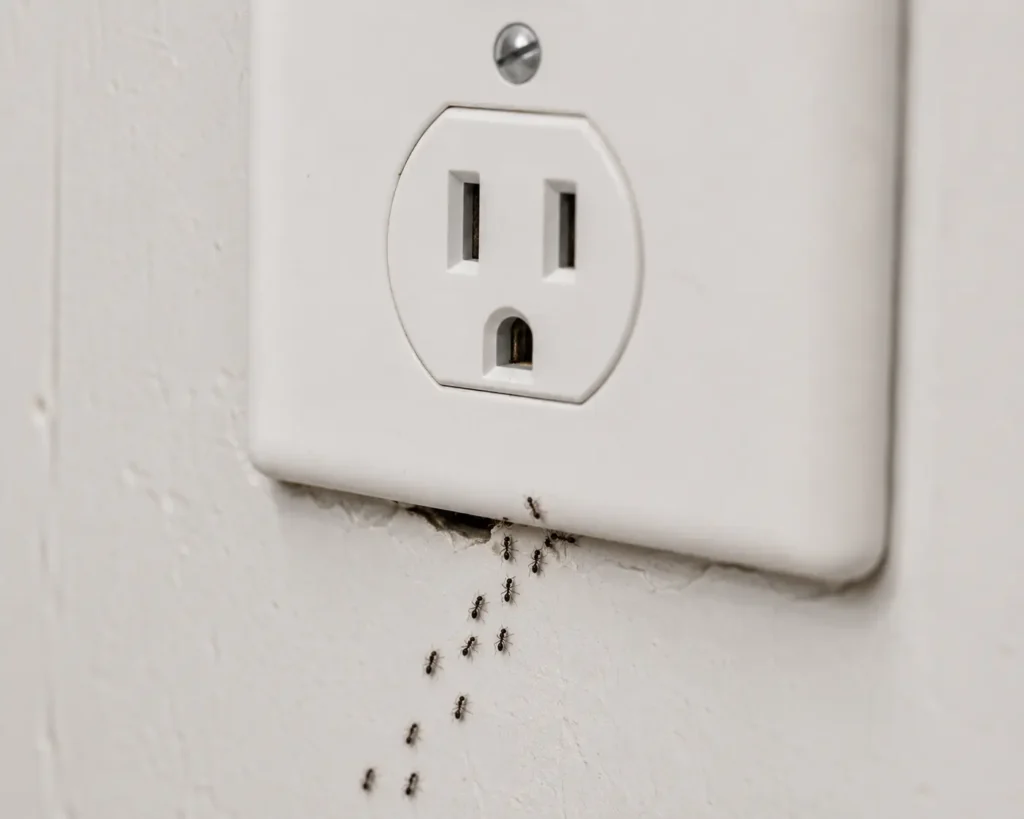
Identification Guide: Signs of Wall-Dwelling Ants
Finding the exact location of the nest requires objective observation. Look for these undeniable signs:
- Trailing pathways: A steady line of ants marching in and out of baseboards, window frames, or electrical outlets.
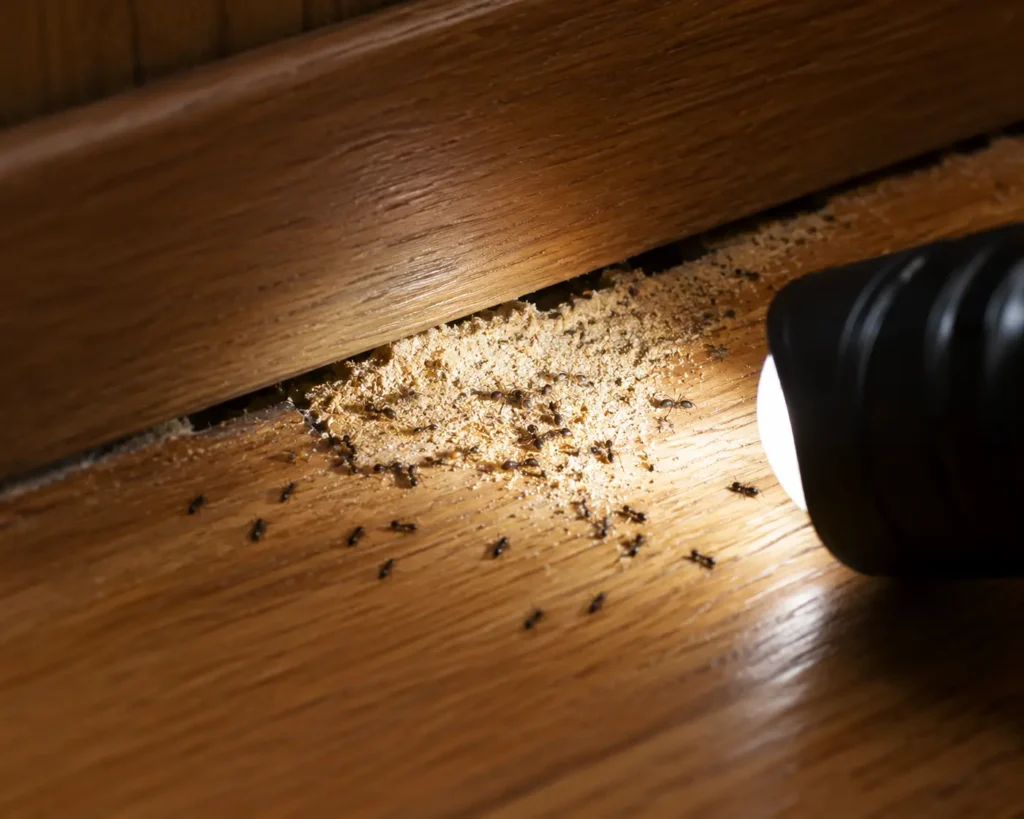
- Unexplained debris: Piles of sawdust-like shavings, known as frass, appearing below window sills or behind furniture.
- Hollow sounds: Tapping the drywall reveals a hollow, damaged sound, indicating potential tunneling inside the wood framing.
- Rustling noises: A faint crinkling sound coming from behind the wall at night when the house is completely quiet.
Root Causes: Why Are Ants Inside Your Walls?
Ants enter structures seeking three biological necessities: food, water, and shelter. Wall voids provide a protected environment with stable temperatures. Moisture is the primary trigger; leaking pipes or poor ventilation in a bathroom creates damp wood, which actively attracts species like carpenter ants.
Additionally, foundation cracks and poorly sealed exterior siding give them a direct highway indoors. If you have vegetation touching your roof or siding, ants will use those branches as bridges. Once inside, they will exploit the insulation and framing to establish their colony.
If you suspect the problem involves structural timber, you might need to determine if you are looking at termite frass vs carpenter ant frass to apply the correct chemical treatment.
Step-by-Step Solution: Professional Eradication
Eradicating a hidden colony requires patience and the right chemical formulations. Follow these exact steps to clear the wall void:
- Do not spray repellents: Avoid using standard aerosol sprays like Raid on the visible trail. This causes “budding,” where the colony panics and splits into multiple smaller nests inside your walls.
- Apply slow-acting baits: Place Terro Liquid Ant Baits (Borax-based) near their entry points. Let them feed. They will carry the active ingredient back to the queen.
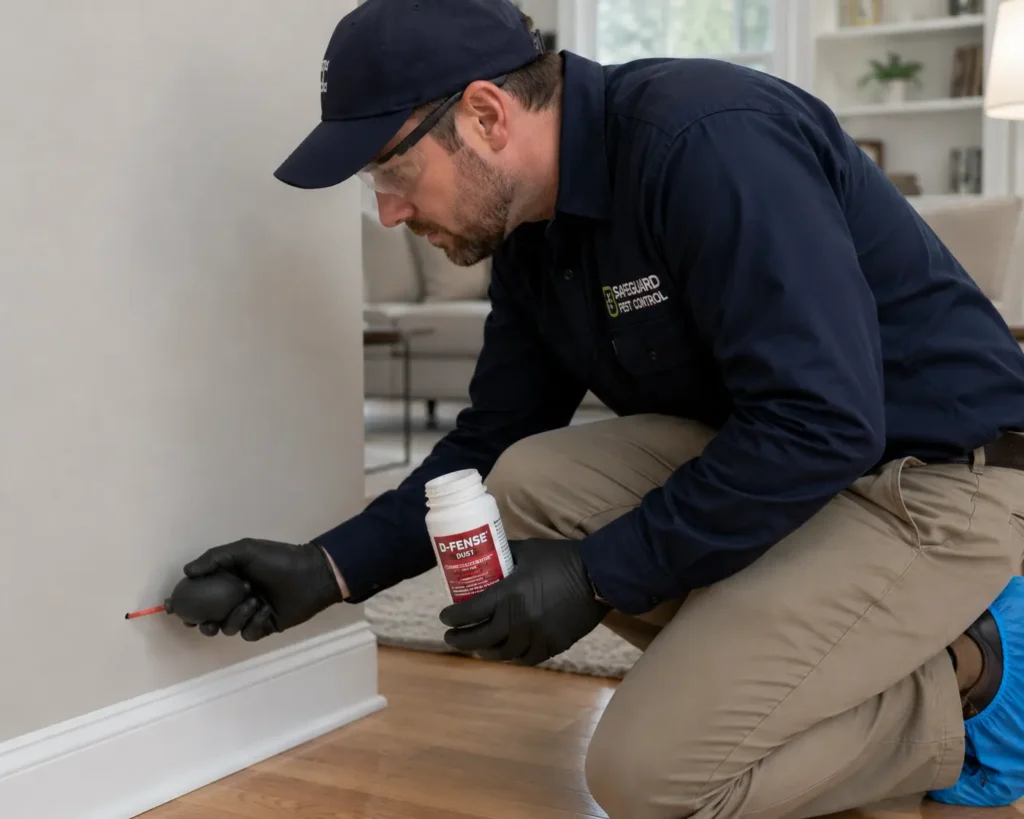
- Use insecticidal dust: If you know the exact void, drill a tiny 1/8-inch hole in the drywall. Use a bulb duster to puff 1 to 2 oz of Delta Dust (Deltamethrin) or Drione Dust into the cavity.
- Seal the entry points: Wait 7 to 10 days until activity completely stops. Then, seal baseboards, exterior foundation cracks, and electrical penetrations using high-quality silicone caulk.
For severe infestations specifically involving large black ants, you can also explore creating a custom bait matrix. Check our technical guide on how to use boric acid for carpenter ants for highly targeted indoor applications.
Expert Comparison: Ants vs. Termites in Walls
Many homeowners confuse an ants nest in wall structures with a termite infestation. Both damage wood, but their biology dictates entirely different treatments. Ants do not eat wood; they excavate it to build galleries, leaving behind clean, sand-like frass.
Termites, however, actually consume the cellulose. They seal their tunnels with mud and leave behind ridged, soil-packed galleries. If you see bubbling paint alongside mud tubes, you should immediately check for signs of termites in drywall rather than treating for ants.
Pro-Tips Box
- Track the trail at night: Ants are highly active after dusk. Use a red-lens flashlight to follow their trails without startling them.
- Check the yard perimeter: Always walk the perimeter of your yard. Apply a non-repellent barrier like Taurus SC (Fipronil) 1 foot up and 1 foot out from the foundation to stop the invasion at the source.
- Fix the moisture: No chemical will provide a permanent fix if a slow plumbing leak is keeping the wall interior damp. Fix the pipe first.
What to Read Next
Now that you have eradicated the nest behind your drywall, you need to ensure they aren’t establishing satellite colonies around the perimeter of your property. Carpenter ants and other moisture-loving species often build secondary nests in outdoor structures. Learn how to protect your exterior spaces in our guide on how to get rid of ants in mailbox.
People Also Ask (FAQ)
How long does it take to kill an ants nest in a wall?
Using slow-acting liquid baits or insecticidal dust typically takes between 3 to 7 days to collapse the entire colony. It requires patience, as the worker ants must transport the active ingredient deep into the wall void to kill the queen.
Should I rip open the drywall to remove the ant nest?
No, tearing open the wall is rarely necessary and causes expensive, unnecessary damage. Professional pest control relies on drilling small 1/8-inch holes to inject dry insecticidal dusts like CimeXa or Delta Dust, which coat the void and eliminate the nest intact.
Can ants chew through electrical wires inside walls?
Yes. Certain species are attracted to the electromagnetic fields around electrical boxes and can strip the insulation from wires, causing shorts or fire hazards. If you see ants trailing from outlets, cut the power to that room immediately and apply a dry dust treatment.