
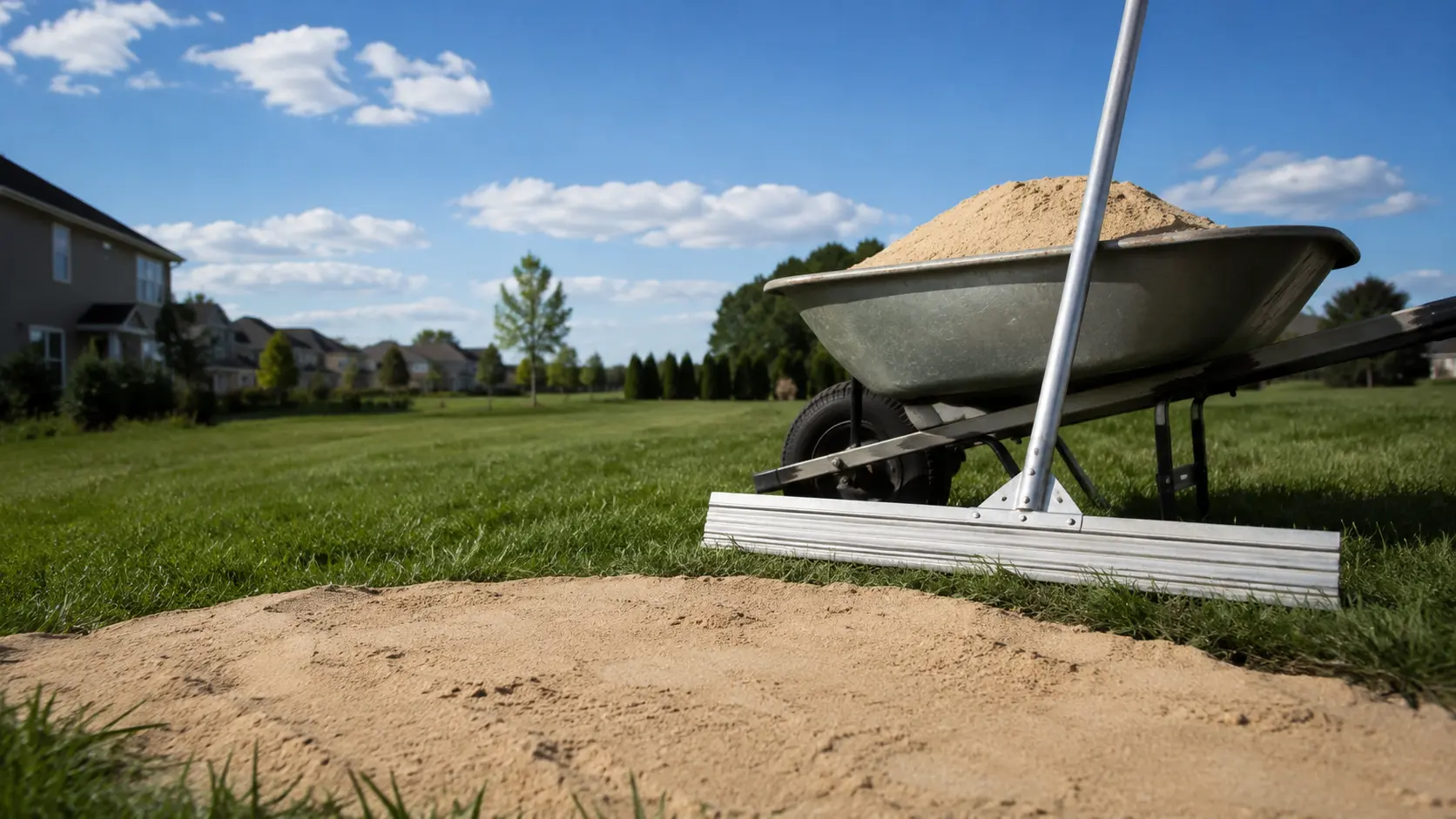
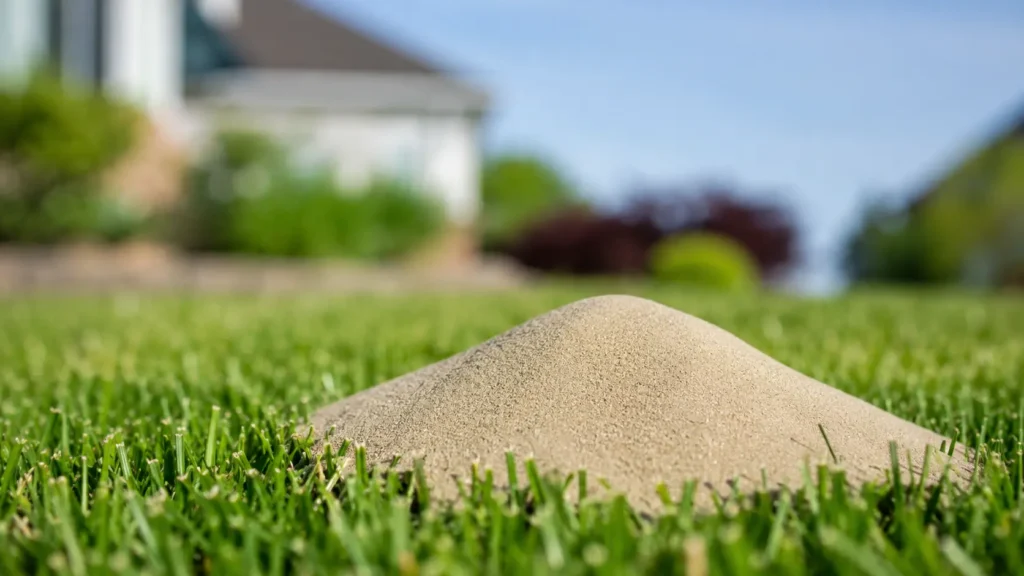
Yes, mason sand is an excellent material for lawn leveling. It is finely screened, uniform, and free of coarse pebbles, allowing it to drop quickly down into the grass canopy without sitting on the surface to dull your mower blades. Warm-season lawns thrive on a 100% mason sand topdressing application. Cool-season grasses require a 70/30 blend of mason sand and high-quality topsoil to maintain adequate moisture retention in the root zone.
Required Tools & Materials
Do not attempt a yard leveling project with just a push broom and bags of sand from a big-box store. You need specific equipment to get a professional, flat grade.
- Mason Sand (Bulk): Purchase this by the cubic yard from a local landscape supplier. You need approximately 1 cubic yard per 1,000 sq ft for a light leveling job.
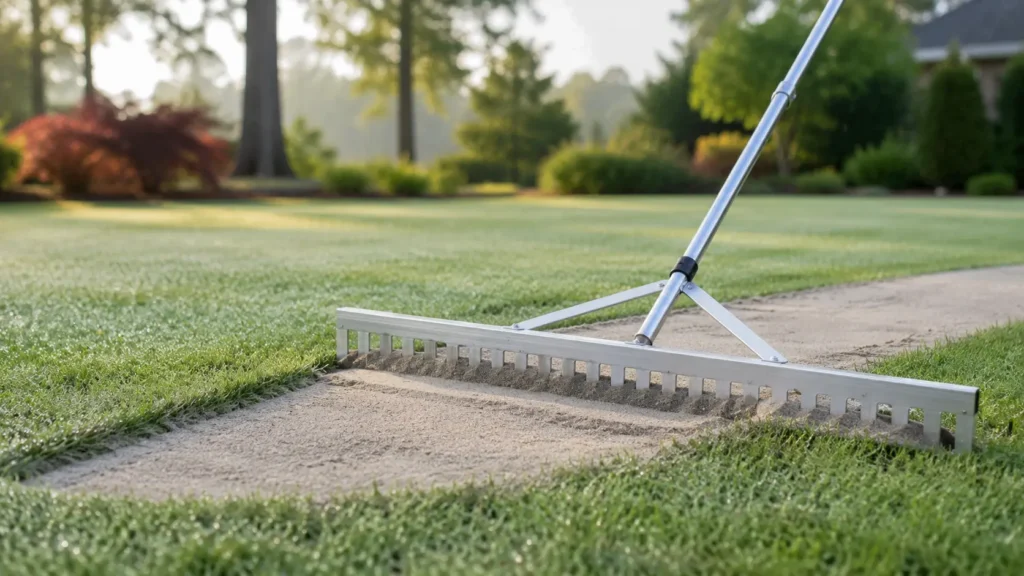
- Aluminum Lawn Leveling Rake: A 30-inch or 36-inch wide model (like those from Rocklin Industry) is non-negotiable for shearing off high spots and filling lows.
- Core Aerator: Rent a gas-powered mechanical aerator for prep work.
- Heavy-Duty Wheelbarrow & Flat Shovel: For transporting wet, heavy sand from the driveway to the yard.
- Stiff-Bristle Push Broom: Used for the final pass to work the sand deep into the turf canopy.
Pro-Tips Box: I see homeowners try to level an un-mowed yard every spring. You will waste expensive sand and ruin the grass. Always drop your mower deck and scalp the yard down to about 1 inch before throwing any material. If you manage a Bermuda yard in peak summer, drop a light application of a fast-acting nitrogen fertilizer (like ammonium sulfate) two days before you level. The grass will push through the fresh sand layer twice as fast.
The Execution (Step-by-Step)
Phase 1: Surface Preparation
Mow your yard as low as your mower allows without digging into the dirt. Bag the clippings. Run a core aerator over the entire lawn, making two passes in opposite directions. The aeration holes provide a channel for the fresh mason sand to integrate directly into the heavy clay or native soil profile, improving drainage instantly.
Phase 2: Distribution and Leveling
Dump small piles of sand across the yard using your wheelbarrow and flat shovel. Space the piles about 4 feet apart. Grab your 30-inch leveling rake and start pushing the sand back and forth. The weight of the rake forces the fine mason sand into the low depressions while gliding over the high spots. Never bury the grass canopy completely. You want the tips of the grass blades sticking out through the sand layer to catch sunlight.
Phase 3: The Watering In
Once the yard looks flat, run your irrigation system or use a hose to heavily water the lawn. Water acts as a settling agent. You will literally watch the mason sand disappear down to the soil line. If you notice any deep ruts still showing after the first watering, apply a second dusting of sand specifically to those spots and sweep it in with a push broom.
Seasonal Timing & Conditions
Timing dictates your success. You must apply mason sand when the grass is in its most aggressive growth phase so it can recover quickly.
For warm-season grasses (Bermuda, Zoysia, Centipede), wait until early to mid-summer. Soil temperatures should consistently hold above 65°F. For cool-season grasses (Kentucky Bluegrass, Tall Fescue), tackle this project in early fall when the fierce summer heat breaks but the grass is still actively growing. Never level dormant grass; the sand will suffocate it before it wakes up.
Common Mistakes & Wasted Money
The fastest way to destroy your yard’s drainage is buying bags of play sand. Play sand contains coarse, irregular, and jagged particles that lock together and clump violently when wet. It creates a concrete-like hardpan layer in your yard that suffocates roots. Mason sand is washed and screened to be perfectly uniform, allowing water to pass through effortlessly.
Another frequent failure is attempting to fix a massive 4-inch deep trench with one application. Grass cannot survive being buried under 4 inches of sand. Fix severe ruts progressively. Fill the rut with 1 inch of sand, let the grass grow through it for three weeks, and repeat until flat.
Professional vs. DIY
| Factor | DIY Leveling | Professional Service |
| Cost | $150 – $300 (bulk sand & rake) | $800 – $1,500 (avg 5,000 sq ft yard) |
| Speed | 1–2 full weekends of hard labor | 4–6 hours |
| Effectiveness | Excellent, if using a proper leveling rake | Perfect, often utilizing motorized topdressers |
| Risk | Burying the grass too deep | Very low |
Leveling your own yard is extremely labor-intensive. Moving three cubic yards of wet sand in a wheelbarrow in the middle of July will test your physical limits. If your lawn is heavily rutted from heavy equipment, or you have water pooling against your foundation due to a grading issue, hire a professional.
If you are just dealing with mild lumpiness causing your mower to scalp the turf in a few spots, the DIY route will save you a massive amount of money. Buy the right rake, order a truckload of bulk mason sand, and take your time.
Prevention Tips
Uneven yards rarely happen overnight. They develop through specific habits that you can correct.
- Aerate Annually: Compacted soil suffers from freeze-thaw heaving in the winter, which creates micro-bumps across the yard. Aerating every fall relieves this pressure.
- Stop Mowing Wet Turf: Riding a heavy zero-turn mower over a soaked lawn after a thunderstorm creates deep tire ruts that permanently alter the grade. Wait 24 hours after heavy rain before firing up the mower.
- Manage Earthworm Castings: In many regions, severe lumpiness comes directly from heavy earthworm activity in the spring. Raking or sweeping these mud piles out before they dry hard prevents the lawn from becoming bumpy.
People Also Ask
How much mason sand do I need for my lawn?
For a standard light topdressing and leveling job, you will need approximately 1 cubic yard of mason sand per 1,000 square feet of lawn space. For deeper ruts, order an extra half-yard for spot treatments.
Will pure sand burn or kill my grass?
Pure sand will not burn your grass, but burying the turf completely will kill it by blocking sunlight. Ensure the green tips of your grass blades are visibly poking through the sand layer after application.
Can I use play sand instead of mason sand?
Avoid play sand entirely for lawn care. Its coarse, jagged particles bind together when wet and create an impermeable, hard layer that stops water and nutrients from reaching your grass roots.
What to Read Next
Addressing soil compaction is just as critical as fixing the surface grade, which is why knowing when should you aerate your lawn guarantees your grassroots can breathe after a heavy sand application.