
The short answer is: avoid it if you can. Mowing wet grass tears the grass blades, clogs your mower deck, and acts as a super-spreader for fungal diseases. However, if relentless spring storms have pushed your turf past 4 inches high, cutting it wet is occasionally a necessary evil to prevent your yard from turning into an unmanageable jungle.
When water weighs down the blades of grass, your mower’s vacuum effect cannot lift them properly for a clean cut. Instead of slicing, the blade shreds the grass, leaving ragged edges that turn yellow and invite infection.
Professional lawn care crews face this dilemma daily. Below, we will break down exactly what happens to your turf, the definitive pros and cons, and how to execute a wet mow without destroying your lawn.
Identifying the Damage: What Wet Mowing Does to Your Yard
If you or your landscaper have been cutting while the morning dew is still heavy or right after a rainstorm, your lawn will quickly show signs of stress. Look for these undeniable symptoms:
- Ragged, white turf tips: Dull mower blades smashing wet grass rather than cutting it, leaving jagged edges that bleach in the sun.
- Heavy grass clumps: Thick wads of clippings dropped across the yard, which will smother and kill the grass underneath within 48 hours.
- Wheel ruts in the soil: Deep tracks from the heavy mower sinking into muddy, saturated topsoil, leading to permanent soil compaction.
- Rapid disease outbreaks: Sudden patches of brown or yellow, typically indicating Brown Patch or Pythium Blight, spread by the mower tires.
Root Causes: Why Wet Grass Fights Back
The core issue lies in physics and biology. Mowers are designed to create an updraft, standing dry blades of grass straight up before the steel blade slices them at speeds exceeding 200 MPH. Water neutralizes this updraft. The sheer weight of the moisture keeps the grass bent over, resulting in an uneven, choppy cut.
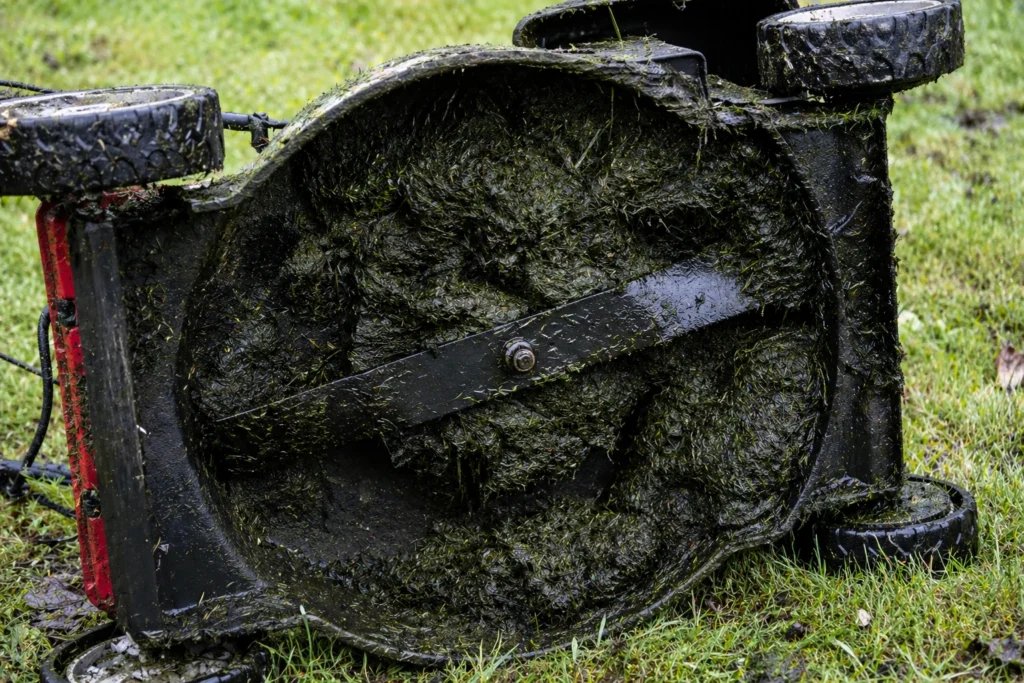
Furthermore, moisture acts as an adhesive. Grass clippings stick together and bind to the underside of the mower deck. This restricts airflow, stalls the engine, and forces you to constantly stop and scrape the deck. Biologically, wet conditions are the perfect breeding ground for fungal spores. Running a mower through a wet, infected area instantly broadcasts those pathogens across every square foot of your property.
Expert Comparison: The Pros and Cons of Mowing Wet Grass
Is it ever actually beneficial? Let’s look at the hard facts.
The Pros:
- Prevents extreme overgrowth: Sticking to the “One-Third Rule” (never cutting more than 1/3 of the blade length at once) is critical. If waiting for the yard to dry means the grass will reach 6 inches, cutting it wet prevents you from scalping it later.
- Maintains scheduling: In regions like the Pacific Northwest or Deep South during monsoon season, waiting for dry turf means never mowing at all.
- Weed seed suppression: Frequent mowing, even when damp, prevents rapid-growing weeds like crabgrass or dandelions from dropping new seeds into the soil.
The Cons:
- Severe turf damage: Tearing the grass stresses the plant, forcing it to expend energy healing rather than growing deep roots.
- Equipment wear and tear: Wet grass corrodes unprotected metal, dulls blades twice as fast, and puts intense strain on belts and engines, especially on standard push mowers.
- Compaction: Pushing a heavy Honda or Toro machine over soggy ground compresses the soil, suffocating the root zone and requiring aggressive core aeration in the fall.
Step-by-Step Solution: How to Mow Wet Grass Safely
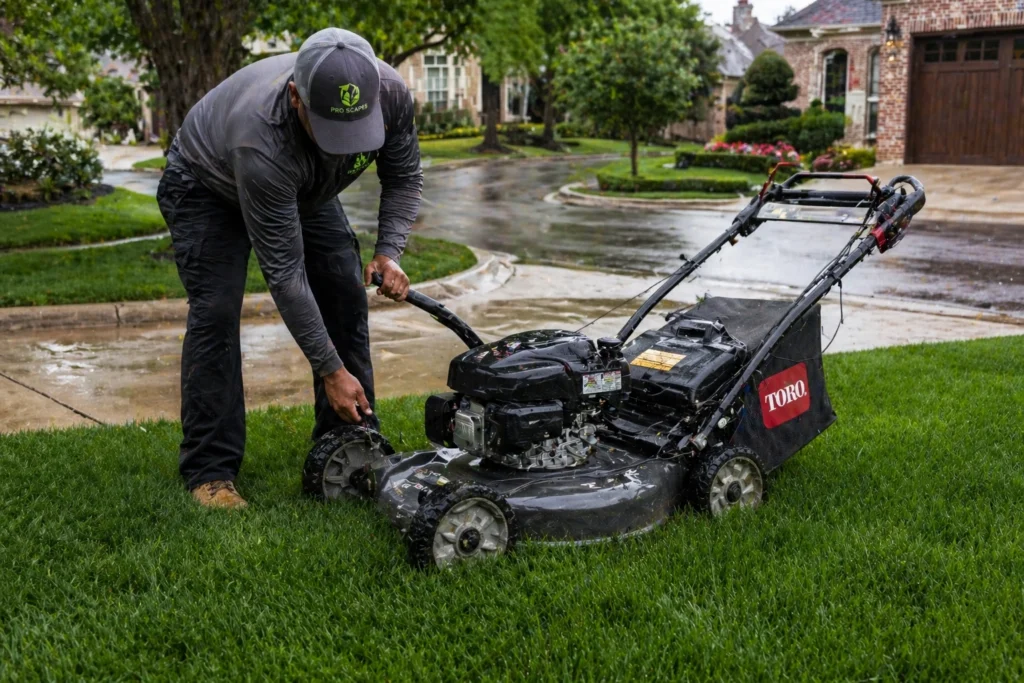
If you must mow wet grass, you have to alter your standard operating procedure. Follow these professional steps to mitigate the damage.
- Step 1: Raise the Mower Deck. Set your wheels one or two notches higher than normal, targeting a cut height of 3 to 3.5 inches. This reduces the load on the engine and limits the amount of wet material processed at once.
- Step 2: Install a Razor-Sharp Blade. Do not attempt a wet mow with a dull blade. Swap in a freshly sharpened blade to ensure the cleanest slice possible through the heavy, water-logged cellulose.
- Step 3: Spray the Deck. Turn off the mower, disconnect the spark plug, and spray the underside of a clean mower deck with WD-40 or a silicone-based lubricant. This creates a slick surface that helps prevent severe clumping.
- Step 4: Switch to Side Discharge. Remove your mulching plug or bagging attachment. Bagging wet grass will instantly clog the chute. Side discharging allows the heavy clippings to exit the deck immediately.
- Step 5: Cut Half-Swaths. Overlap your mowing lines by 50%. Instead of taking a full mower-width of grass with each pass, you are only cutting half a width, keeping the engine RPMs high and reducing clumping.
- Step 6: Rake the Clumps. Once finished, grab a leaf rake and immediately break up any heavy clumps of clippings left on the yard to prevent turf suffocation.
PRO-TIP: If you must apply fungicides like Propiconazole or Azoxystrobin after a wet period, wait until the grass blades themselves are dry to the touch, even if the soil is damp. Foliar-absorbed chemicals will wash right off wet leaves.
What to Read Next
Mowing wet grass leaves behind heavy, damp clumps that create the perfect breeding ground for fungal pathogens, so if you are already noticing dark patches, you need to objectively address the issue and fix black mold on your lawn immediately. Additionally, the same rainy conditions that delay your normal mowing schedule will inevitably accelerate aggressive weed growth along your property edges, making it essential to keep a reliable natural poison ivy killer on hand before invasive vines take over your yard.
People Also Ask (FAQ)
How long should I wait to mow after it rains?
Ideally, wait until the grass blades are completely dry to the touch and the soil is firm enough to walk on without leaving deep footprints. Depending on sunlight, wind, and drainage, this typically takes between 24 to 48 hours after a heavy rainfall.
Can I use an electric mower on wet grass?
It is highly discouraged. While modern battery-powered mowers (like EGO or Greenworks) have sealed components, operating electrical equipment in standing water poses a safety hazard. Furthermore, electric mowers often lack the extreme torque required to power through heavy, wet clumps, leading to frequent stalling.
Does mowing wet grass ruin the blades?
It doesn’t immediately ruin them, but it dulls them much faster. Wet grass is tougher to slice, and the moisture mixed with topsoil creates an abrasive, sandpaper-like slurry inside the deck that quickly grinds away the sharp edge of the blade.