
Standard Roundup products require a strict drying window of 30 minutes to 3 hours before rain hits, depending on the specific formula. If precipitation occurs before the product is fully rainfast, the glyphosate will wash off the foliage and fail to kill the weed down to the root.
If you are dealing with aggressive weeds in your lawn, timing your herbicide application with the local weather forecast is non-negotiable. Applying chemicals when a storm is brewing wastes your time, wastes your money, and risks hazardous runoff into areas of your yard where you didn’t want it. Always check your specific bottle’s label to confirm its exact rainfast guarantee before pulling the trigger.
Identification Guide: Did the Rain Wash Away Your Herbicide?
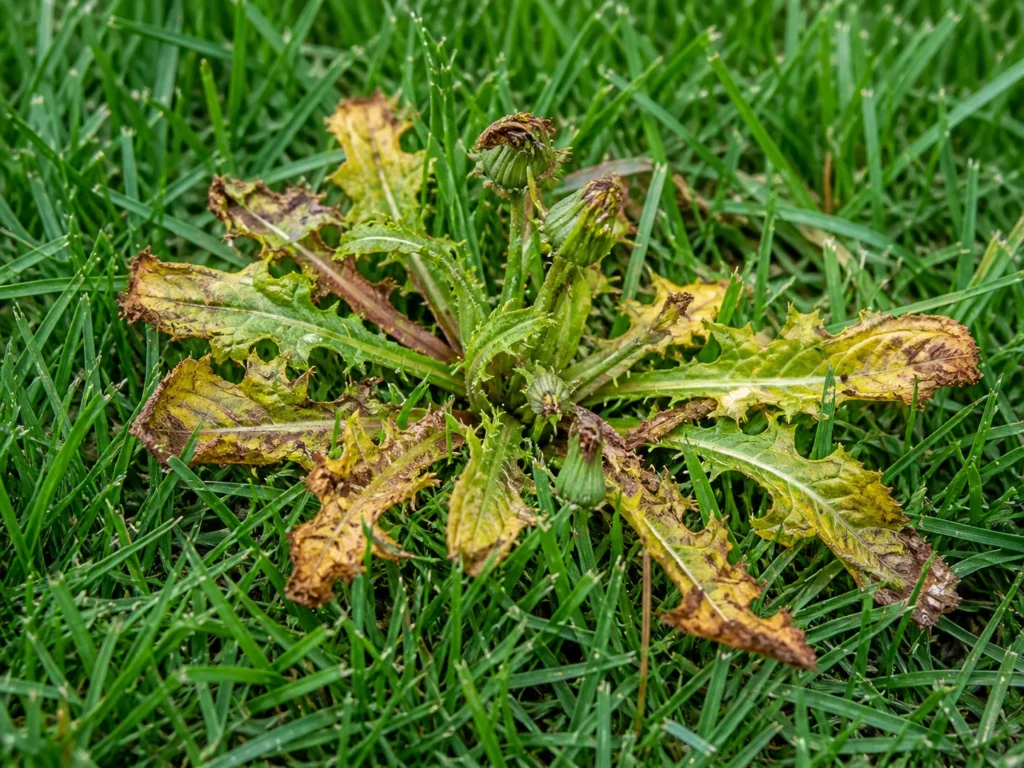
If unexpected rain hit your yard shortly after spraying, you need to know if you should reapply. Do not spray the area again immediately. Wait 48 to 72 hours and look for these visual indicators:
- Wilting and Yellowing: If the glyphosate absorbed properly, you will see the weed’s leaves turning yellow or drooping heavily toward the ground.
- Browning at the Edges: The perimeter of the foliage will begin to crisp up and turn brown as the plant’s internal system shuts down.
- Halted Growth: The target weed stops growing taller compared to the surrounding untreated lawn or healthy weeds.
- Continued Vigor: If the weed remains bright green, stands upright, and continues growing after 3 days, the rain washed away the chemical. You must reapply.
Root Causes: How Moisture Disrupts Glyphosate Absorption
To understand why rain ruins your weed control efforts, you have to look at how systemic herbicides work. Roundup relies on its active ingredient, glyphosate, to penetrate the waxy outer layer of the leaf cuticle and travel down into the root system.
When rain falls before the chemical is fully dry, it severely dilutes the concentration. For example, if you mixed a standard dose of 2.5 oz of concentrate per gallon of water, adding sudden rainfall completely alters that ratio. The diluted mixture beads up and rolls right off the plant.
Furthermore, heavy rain can create dangerous chemical runoff. This means the product doesn’t just fail to kill the target weed; it travels across the surface of your yard. This runoff can severely damage your highly prized Bermudagrass or Tall Fescue turf. If you are dealing with poor drainage, a heavy storm can cause pooling that moves the chemical feet away.
Step-by-Step Solution: Applying Weed Killer Around the Forecast
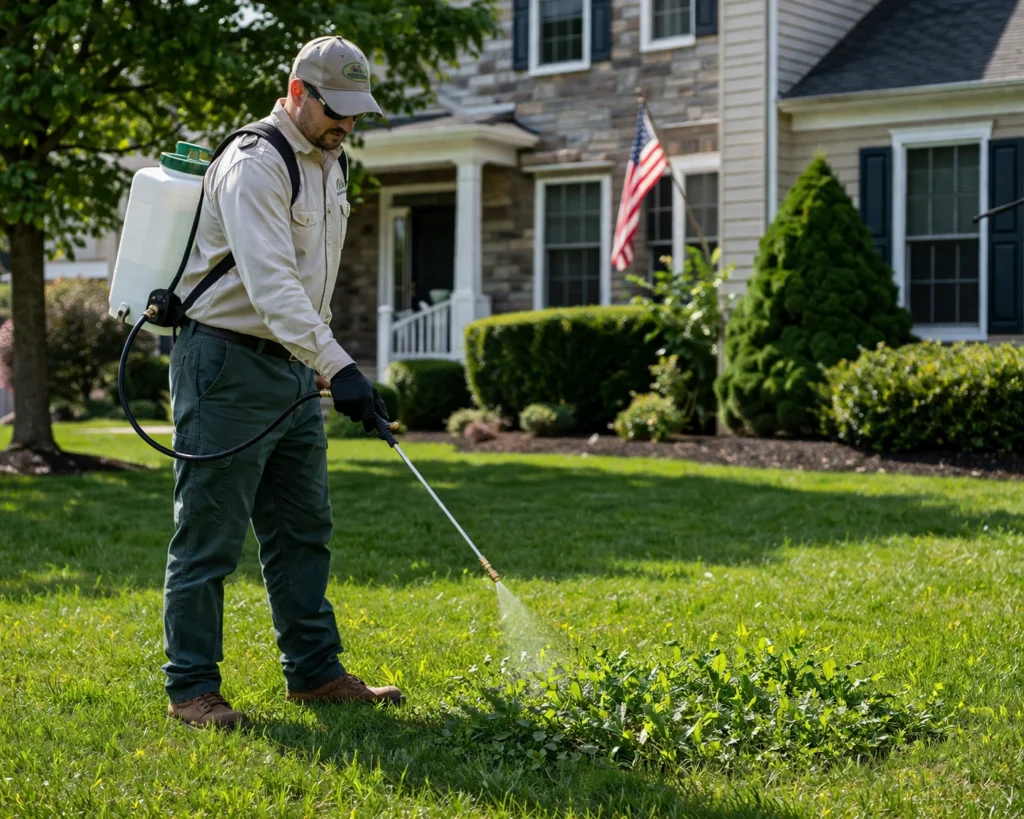
As a professional, I never trust the weather app blindly. You need a strict protocol when applying non-selective herbicides to protect your yard and get results on the first try. Follow these execution steps:
- Step 1: Check the Hourly Forecast: Look for a clear, dry window of at least 3 to 4 hours. The temperature should ideally be between 60°F and 85°F for optimal chemical absorption.
- Step 2: Assess Dew Levels: Do not spray early in the morning if the lawn is coated in dew. The existing moisture acts just like a light rain, diluting the glyphosate. Wait until mid-morning.
- Step 3: Mix the Correct Dosage: If using a concentrate, mix precisely. A standard rate is 2 to 3 oz per gallon of water. Do not over-mix thinking it will speed up the kill time; it just wastes product.
- Step 4: Target the Foliage: Apply the spray directly to the leaves of the weed until thoroughly wet, but stop before it begins dripping off. Dripping indicates saturation, and excess will fall into the soil.
- Step 5: Enforce the Drying Period: Keep kids and pets off the treated area until the spray has completely dried. This takes 1 to 2 hours, similar to the wait times we enforce when evaluating how long after fertilizing is it safe for dogs.
Expert Comparison: FastAct vs. Standard Roundup Products
Not all Roundup products are formulated the same. Homeowners often grab whatever is on the shelf, not realizing the rainfast times vary wildly. Here is the professional breakdown:
- Roundup Weed & Grass Killer Ready-To-Use Plus: This standard consumer product is rainfast in just 10 minutes. It contains glyphosate and pelargonic acid to speed up visual wilting.
- Roundup Concentrate Plus: When mixing your own gallons, this formula typically requires a minimum of 30 minutes of dry time before it can handle a light shower.
- Roundup Poison Ivy Plus Tough Brush Killer: Designed for woody brush with thick cuticles, this requires a full 30 minutes to become thoroughly rainfast.
- Standard Agricultural Glyphosate (Generic): If you buy a generic 41% glyphosate concentrate, you need a minimum of 2 to 3 hours of dry time.
Never assume a generic herbicide has the same fast-drying agents as premium name brands. If you are also applying pre-emergents or fertilizers, you should be mindful of your mowing schedule, just as you would when planning to mow before weed and feed to maximize chemical contact with the foliage.
Pro-Tip: If you are using a generic 41% glyphosate concentrate, you can significantly reduce the rainfast time and improve weed kill by adding a non-ionic surfactant. Mix in 0.5 oz of surfactant per gallon of water. This breaks the surface tension, forcing the chemical to stick to the weed like glue rather than rolling off if a light drizzle hits.
What to Read Next
You’ve mastered the timing of your herbicide applications, but a healthy yard requires regular maintenance and proper equipment care. If you are dealing with ragged, torn grass blades that invite disease into your lawn, it might not be a chemical issue at all. Check out our technical guide on why your lawn mower leaves uncut grass to properly diagnose blade sharpness, mower deck leveling, and speed issues so your turf stays thick, healthy, and pristine.
People Also Ask (FAQ)
Can I spray Roundup on wet grass?
No. Spraying Roundup on wet weeds or dew-covered grass dilutes the active ingredient. The water already on the leaves prevents the glyphosate from fully adhering and absorbing, drastically reducing its effectiveness.
Will morning dew affect Roundup if I sprayed it the night before?
If you sprayed the Roundup late in the afternoon and it had several hours to dry before the sun went down, the morning dew will not negatively affect it. Once the product is dry and absorbed into the leaf tissue, it is permanent.
Do I need to reapply if it rained after 1 hour?
It depends on the exact product. If you used Roundup Ready-To-Use Plus, which is rainfast in 10 minutes, you are fine. If you used a generic concentrate that requires 2 to 3 hours, the rain likely washed it off, and you should wait 48 hours to check for wilting before reapplying.