
You must apply Scotts GrubEx between mid-spring and early summer (April to late June) before beetle eggs hatch. The active ingredient, Chlorantraniliprole, requires several weeks to break down in the soil and protect your lawn. Applying it once grubs are fully grown in the fall is a waste of time and money.
Identification Guide: Signs You Need Grub Control
Look for these immediate warning signs before investing in chemical treatments:
- Spongy Turf: Your lawn feels like a loose carpet when walking, indicating severed root systems beneath the surface.
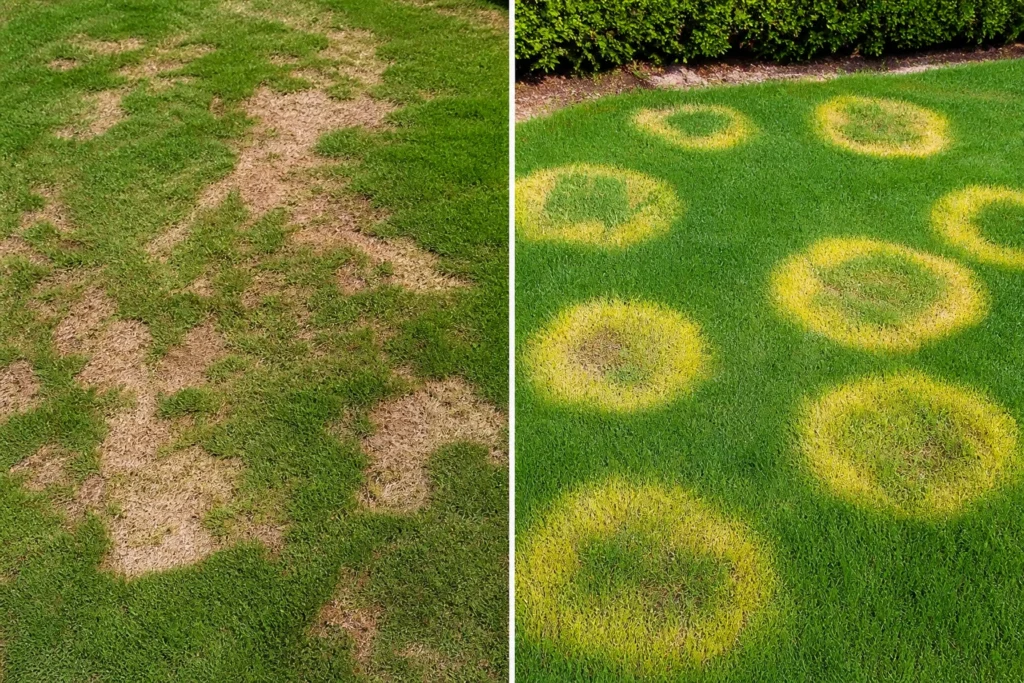
- Brown Irregular Patches: Turf begins to yellow and die in localized patches that expand quickly during late summer.
- Increased Animal Activity: Skunks, raccoons, and flocks of birds continuously dig up your yard looking for a protein-rich meal.
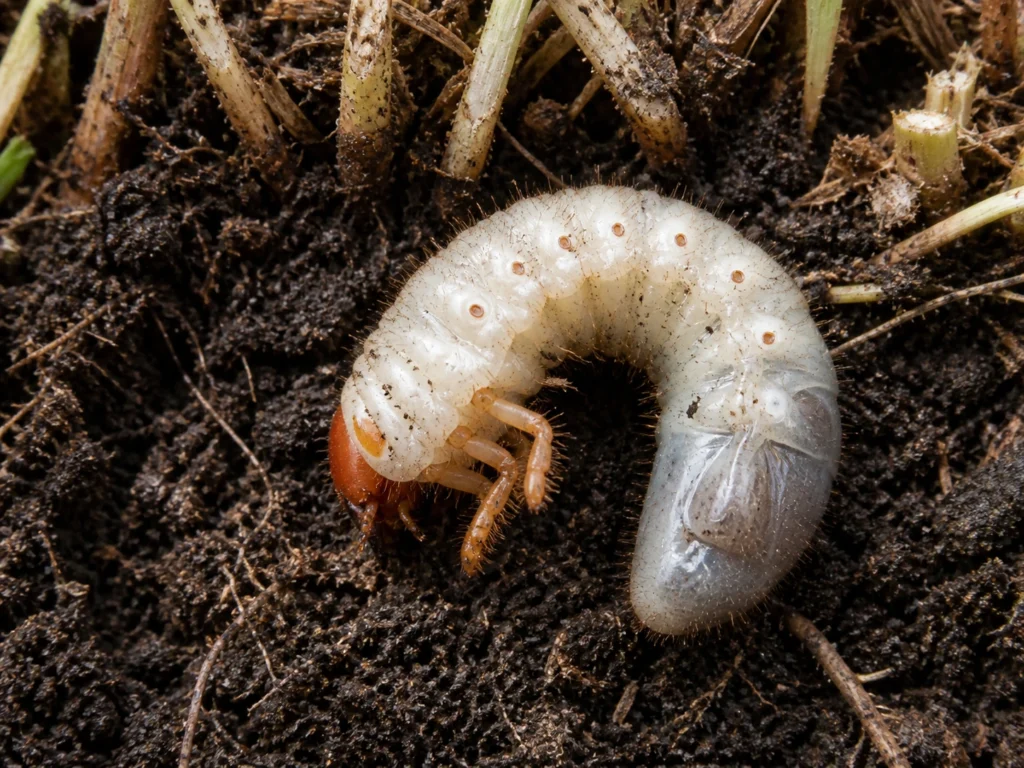
- The Pull Test: You can easily peel back the dead grass like a toupee, revealing white, C-shaped grubs in the topsoil.
Root Causes: Why Grubs Target Your Lawn
Understanding why your yard is infested prevents future outbreaks:
- High Soil Moisture: Japanese beetles and European chafers prefer laying eggs in well-irrigated, moist turf during summer.
- Thatch Buildup: A thatch layer thicker than 0.5 inches creates a perfect harbor for insect breeding and protects eggs from heat.
- Improper Mowing: Cutting grass too short weakens the root system, making the yard highly vulnerable to minimal grub feeding.
Step-by-Step Solution: Applying GrubEx Like a Pro
Applying preventative pest control requires precision. Follow these steps to ensure total root zone coverage:
- Mow the Lawn: Cut your turf to its standard height and bag the clippings to ensure granular contact with the soil.
- Calibrate Your Spreader: Set your broadcast spreader to the correct setting. For most residential properties, apply exactly 2.87 lbs per 1,000 sq ft.
- Apply Evenly: Walk at a steady pace, applying the granules in parallel lines across the entire yard to ensure no missed spots.
- Water it In: Immediately irrigate the treated area with 0.5 to 1 inch of water to push the Chlorantraniliprole deep into the root zone.
- Secure the Area: Keep off the wet turf until it dries completely. If you have pets, follow standard protocols like knowing how long after fertilizing is it safe for dogs to prevent accidental ingestion.
PRO-TIP: Scotts GrubEx is a preventative product, not a fast-acting killer. If you already have mature grubs actively destroying your yard in September, you need a curative product containing Trichlorfon (like BioAdvanced 24-Hour Grub Killer). Never use preventative chemistry for a curative problem. Wait for soil temperatures to reach 50°F to 60°F before spring application.
Expert Comparison: Grub Damage vs. Turf Disease
Homeowners often misdiagnose dead patches, wasting money on the wrong treatments. If the grass pulls up easily with no roots, you have an insect problem. If the blades are spotted, covered in mycelium, or the roots are intact but brown, you are likely dealing with disease.
To correctly identify the root cause before applying any harsh chemicals, review our comparative guide on grub damage vs fungus damage.
What to Read Next
Grub management often requires addressing compacted soil and repairing bare patches left behind by destructive pests. To ensure your yard’s root system recovers and thrives next season, check out our complete guide on when should you aerate your lawn. Timing this mechanical process correctly will drastically improve your soil health and resilience.
People Also Ask (FAQ)
Can I apply GrubEx in the fall?
No, fall applications are highly inefficient. By autumn, grubs are mature, heavily armored, and preparing to burrow deep into the soil for winter. Preventative treatments are completely ineffective against adult grubs.
Does GrubEx kill beneficial insects like earthworms?
When applied at the labeled rate of 2.87 lbs per 1,000 sq ft, Chlorantraniliprole has an incredibly low toxicity to earthworms, bees, and other beneficial soil organisms. It specifically targets the muscle receptors of turf-destroying grubs.
Do I need to apply a preventative every single year?
If your neighborhood has a history of Japanese beetle infestations, or if your yard sustained high populations (more than 5 to 10 grubs per square foot) last season, annual preventative application is strictly recommended to protect your turf investment.