
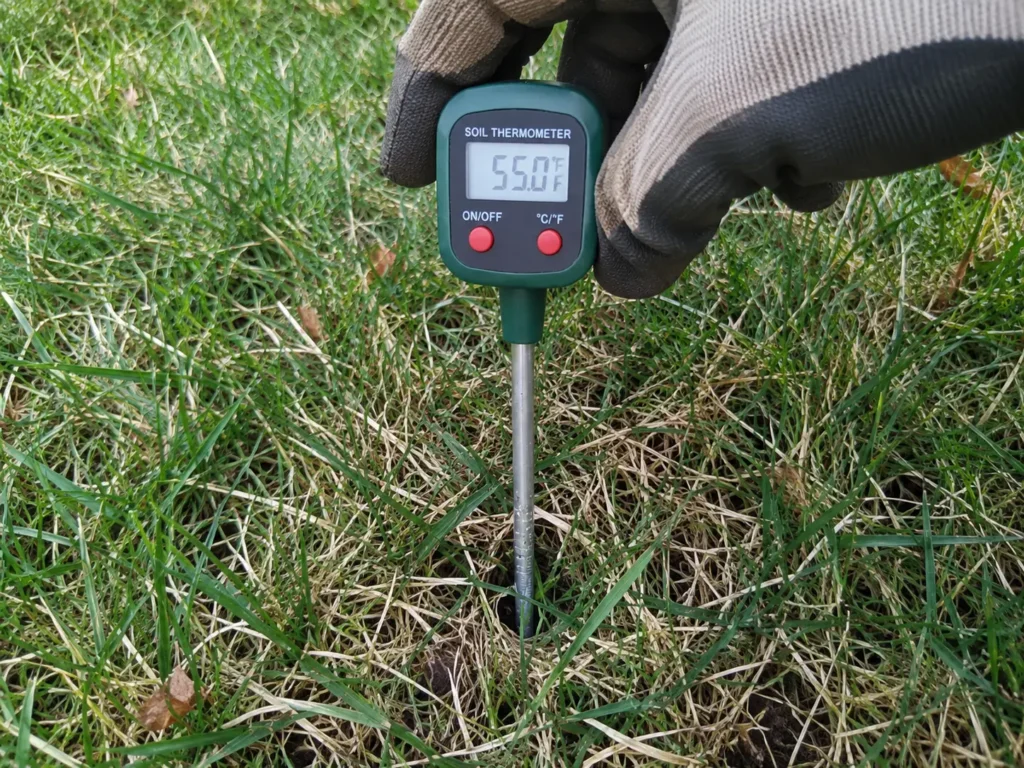
The exact time to weed and feed the lawn depends entirely on your soil temperature and grass type. To get straight to the point: apply spring weed and feed when soil temperatures consistently hit 55°F for a few days, and apply fall treatments when daytime temperatures drop back below 85°F. Applying these chemicals at the wrong time wastes money, burns your yard, or simply fails to kill weeds.
Timing is a science, not a guessing game. Granular weed and feed products combine fertilizer (nitrogen, phosphorus, potassium) with herbicides like 2,4-D or Dicamba for broadleaf weeds, and sometimes Prodiamine or Dithiopyr for crabgrass prevention.
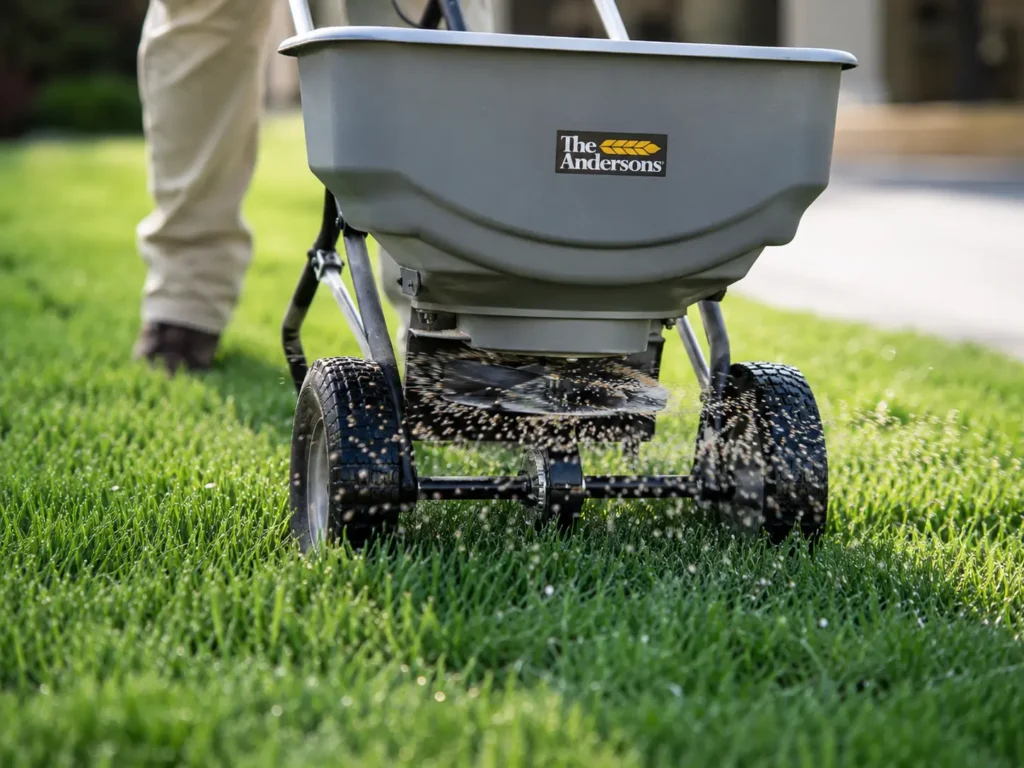
Identification Guide: Signs It is Time to Apply
Do not rely on the calendar. Rely on environmental cues to determine when your yard is ready to absorb the treatment. Look for these specific indicators:
- Soil Temperature: Buy a soil thermometer and insert it 2 inches deep. When it reads 55°F for three consecutive days, weed seeds are germinating.
- Active Grass Growth: You should have already mowed your lawn at least twice in the season. The grass must be actively growing to take up the nutrients.
- The Forsythia Bloom: In cooler northern states, the blooming of bright yellow Forsythia bushes is the classic, reliable sign that soil temps have reached the critical 55°F mark.
- Weed Emergence: If you see young Dandelions or Clover actively sprouting but they have not yet flowered, it is the perfect window for a post-emergent weed and feed.
Root Causes: Why Timing Dictates Success or Failure
Applying weed and feed haphazardly leads to specific, preventable failures. The herbicides in products like Scotts Turf Builder Weed & Feed or BioAdvanced formulas are highly sensitive to environmental stressors.
First, heat destroys the yard if treated incorrectly. If you apply a post-emergent weed and feed when air temperatures exceed 85°F, the chemical will scorch the grass blades. The stress of the heat combined with the herbicide is too much for the lawn to recover from quickly.
Second, drought stress makes the weed and feed useless. Weeds must be actively growing to absorb herbicides like 2,4-D. If the yard is dry and dormant, the weeds stop pulling nutrients from the surface, rendering the chemicals completely ineffective.
Third, applying before a heavy downpour washes the active ingredients right past the root zone and away from the weed leaves. The granules need to stick to wet weed leaves to work, but heavy rain within 24 hours of application ruins the investment.
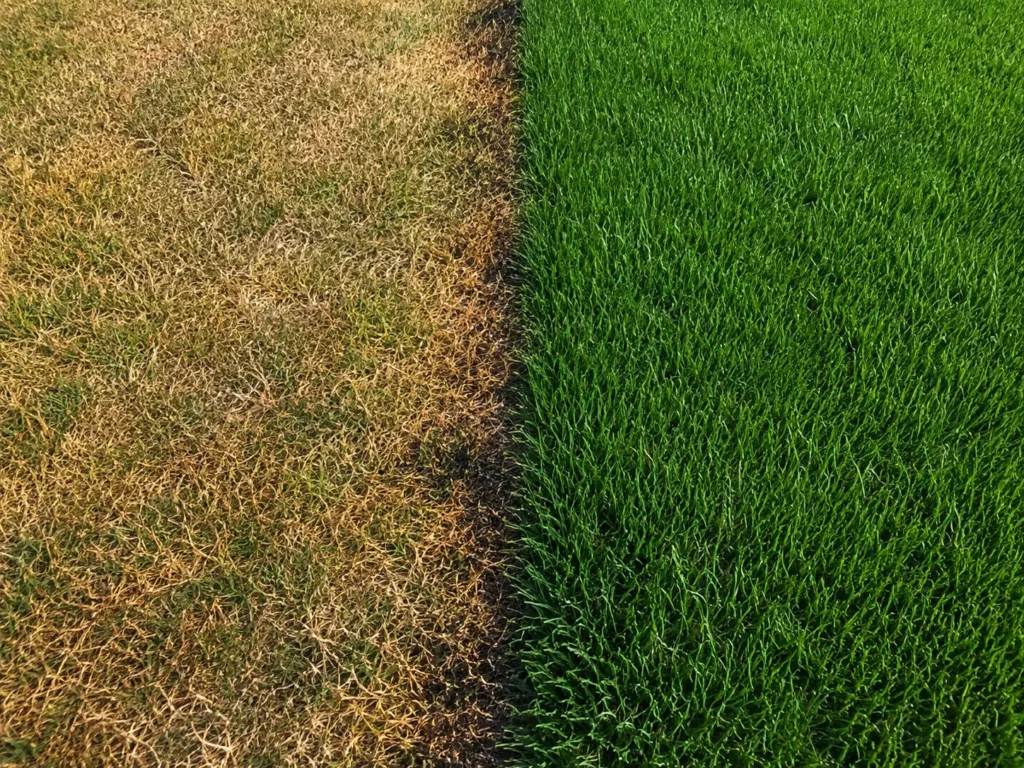
Step-by-Step Solution: How to Apply Weed and Feed Like a Pro
Applying granular products requires strict adherence to the label to avoid damaging your yard. Here is the exact protocol to follow:
- Step 1: Check the Forecast. Ensure temperatures will stay between 60°F and 80°F. You need a window of 24 to 48 hours with zero rain in the forecast.
- Step 2: Time your Mowing. Never apply on freshly cut grass. To understand the exact timing and reasons behind this, check our strict rules on whether you should mow before weed and feed so you don’t ruin the herbicide’s effectiveness.
- Step 3: Wet the Lawn. Most post-emergent weed and feeds require you to apply them to a wet yard. Apply early in the morning when dew is heavy, or run your sprinklers for 10 minutes beforehand. The granules must stick to the broadleaf weeds to kill them.
- Step 4: Calibrate the Spreader. Set your rotary or drop spreader to the exact setting listed on the bag. A standard application rate is usually around 3 to 4 lbs per 1,000 sq ft, but always defer to the specific product label.
- Step 5: Apply in a Grid. Walk at a steady pace. Apply half the product walking North to South, and the other half walking East to West to prevent striping.
Expert Comparison: Pre-Emergent vs. Post-Emergent Weed and Feed
The biggest mistake homeowners make is buying the wrong type of weed and feed for their current season.
Pre-Emergent Weed and Feed (often called crabgrass preventer) is designed to be applied in early spring. It contains chemicals like Pendimethalin that create a chemical barrier in the top inch of the soil. It stops seeds from sprouting. It will not kill weeds that are already visible in the yard.
Post-Emergent Weed and Feed is used in late spring or early fall. It contains broadleaf herbicides that must come into direct physical contact with the leaves of existing, visible weeds like Dandelions, Plantain, and Thistle. It does absolutely nothing to prevent new seeds from germinating.
Pro-Tips Box: From Professional to Homeowner Never apply weed and feed to newly seeded grass. You must wait until new grass has been mowed at least four times before applying any herbicide. Also, always prioritize safety; if you have pets, make sure you know exactly how long after fertilizing it is safe for dogs to re-enter the yard. Usually, this means waiting until the product has been watered in and completely dried.
What to Read Next
Once your weed and feed schedule is locked in, the next crucial step in your yard’s maintenance calendar is managing soil compaction. To ensure those nutrients actually reach the roots, read our guide on when should you aerate your lawn. Knowing the right season to pull cores will drastically improve your fertilizer’s performance.
People Also Ask (FAQ)
Can I put down weed and feed before it rains?
No, if you are using a post-emergent weed and feed, heavy rain will wash the granules off the weed leaves before the herbicide can be absorbed. You need at least 24 hours of dry weather after application. However, pre-emergent weed and feed does require watering in, so a light rain (less than 0.5 inches) immediately after application can be beneficial.
Should I water my lawn after weed and feed?
It depends entirely on the product. Post-emergent granular weed and feeds must sit undisturbed on the weed leaves for 24 to 48 hours to kill the weed, so do not water immediately. After the 48-hour window, you should resume normal watering (about 1 to 1.5 inches per week) to activate the fertilizer portion into the soil.
Is it too late to put down weed and feed in the summer?
Generally, yes. Applying weed and feed during peak summer when temperatures are consistently over 85°F will severely stress or burn your lawn. The grass is usually battling heat and drought, and adding nitrogen and herbicides will damage the turf. Wait until temperatures cool down in early fall.
I am generally looking for new data about this
significant issue, and am especially ecstatic when I locate
sites that are well-written and well-researched.
I want to thank you for featuring this kind
of exceptional data, and I glimpse ahead to learning much more right from
the blog page in the future.
Hello very cool web site!! Guy .. Beautiful .. Amazing ..
I’ll bookmark your website and take the feeds also?
I’m happy to find numerous useful info right here in the submit, we’d like develop
more strategies on this regard, thank you for sharing.
. . . . .