
Finding ants in an electrical outlet means they are either foraging for warmth or using the wall void as a secure nesting site. Never spray liquid pesticides into receptacles, as it risks electrocution and structural fires. Instead, you must shut off the breaker, apply professional gel baits like Advion Ant Gel around the exterior plate, and use dry insecticidal dust behind the walls to wipe out the colony at its source.
Ignoring this issue can lead to costly electrical failures in your home. As ants pile up inside the junction box, their bodies can bridge electrical contacts, causing a short circuit that trips your breaker or damages your wiring. Taking immediate, calculated action is essential to protect both your home’s electrical grid and your family’s safety.
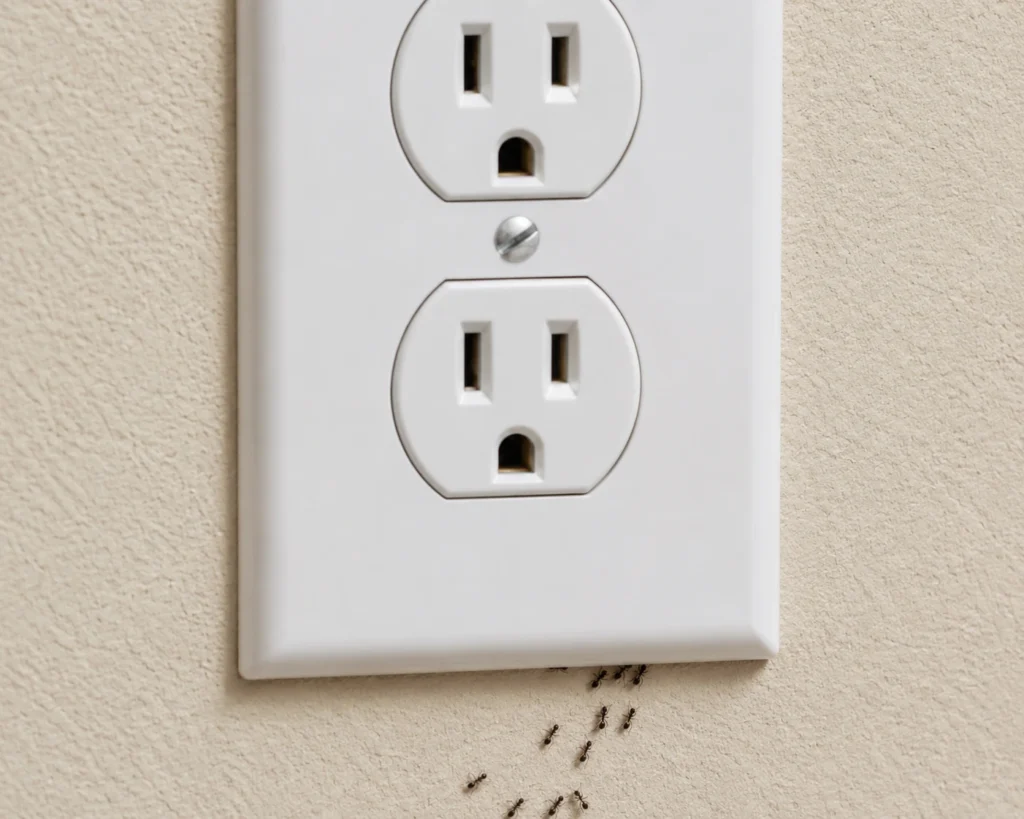
Identification Guide: Signs You Have Ants Behind the Walls
Before you open any live electrical boxes, you need to confirm exactly what you are dealing with. Ants are stealthy, but they leave distinct physical evidence when invading structural voids. Look for these warning signs:
- Dead ant accumulation: You might find a growing pile of dead workers on the baseboard directly below the outlet cover.
- Debris and frass: Look for tiny mounds of dirt, insulation bits, or insect parts pushed out from the outlet seams, which is similar to what you’d look for if checking for termite frass vs carpenter ant frass.
- Electrical malfunctions: Outlets that suddenly spark, trip the breaker, or stop working entirely often indicate a short circuit.
- Active trailing: A clear, continuous line of ants marching in and out of the tiny gaps between the plastic wall plate and the drywall.
Root Causes: Why Are Ants Drawn to Electricity?
It might seem strange that pests would choose a junction box over your kitchen pantry, but an electrical outlet provides a perfect micro-environment. Understanding their motivation is key to keeping them out of your yard and home permanently.
Warmth and Nesting Space Electrical wiring generates a mild, continuous heat. During cooler months or rapid temperature drops, the 15 to 20-degree temperature difference inside a wall void becomes an irresistible incubator for ant larvae. The junction box itself acts as a pre-built, protected cave for the colony.
Electromagnetic Attraction Certain invasive species, particularly Tawny Crazy Ants, have an intense biological reaction to electromagnetic fields. When one ant gets shocked and dies inside the outlet, it releases an alarm pheromone. This chemical signal forces hundreds of other workers to rush into the box to attack the perceived threat, creating a massive pile of electrocuted bodies.
Moisture and Structural Access If your outlet is located on an exterior wall, ants likely breached the home through failing window caulking or foundation cracks. Once inside the wall, the wiring simply serves as a convenient highway system allowing them to travel freely without exposing themselves to the open rooms of your house.
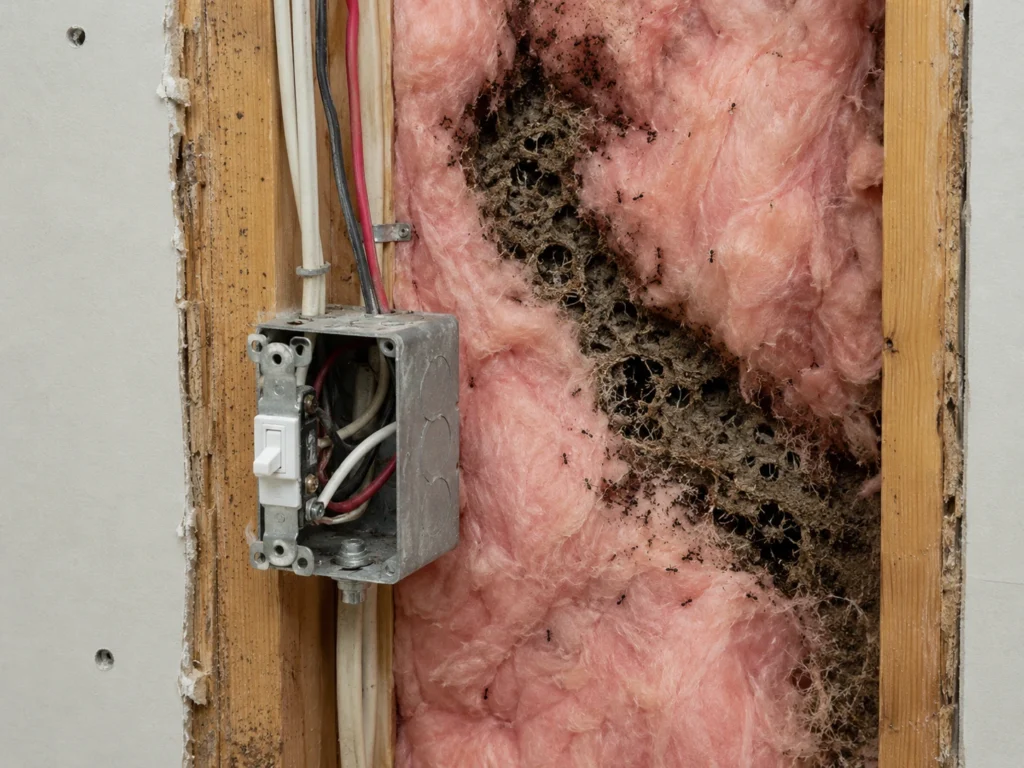
Step-by-Step Solution: Eradicating the Colony Safely
Liquid sprays are the absolute worst choice for this problem. Combining water-based insecticides with 120-volt wiring is a massive safety hazard. Follow these strict professional protocols to handle the infestation.
Step 1: Cut the Power and Inspect Go to your breaker box and flip the switch for the affected room. Use a voltage tester pen on the outlet to ensure the power is completely dead. Only then should you use a flathead screwdriver to carefully remove the plastic faceplate to inspect the void.
Step 2: Bait the Exterior Work Area Before disturbing the nest, place professional baits near the opening. While boric acid for carpenter ants is a staple for structural pests, gel baits like Advion Ant Gel (containing Indoxacarb) are superior here. Squeeze pea-sized drops of gel onto small pieces of cardboard and place them 2 to 3 inches below the outlet, letting them feed for 48 hours.
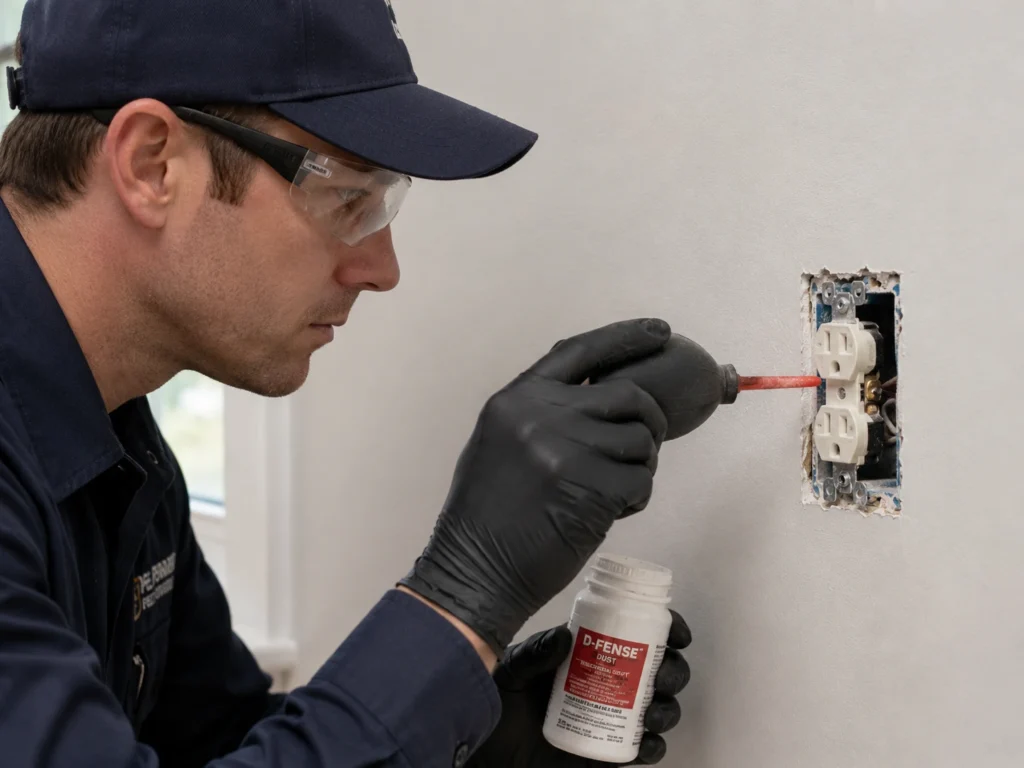
Step 3: Apply Insecticidal Dust Inside the Void Once feeding slows down, it is time to treat the void. Use a hand bellows duster to puff a dry insecticidal dust like DeltaDust (active ingredient: Deltamethrin) directly into the gaps between the junction box and the drywall. Apply roughly 0.5 oz of dust per wall void to coat the cavity and eliminate the queen.
Step 4: Clean and Seal the Junction Box After 72 hours, vacuum out any dead ants inside the electrical box using a shop vac with a narrow crevice tool. Once clear, seal the perimeter of the electrical box with a high-quality silicone caulk. Finally, replace the wall plate to physically lock out future invaders.
Step 5: Establish an Outdoor Perimeter Barrier To stop the reinforcements, go out to your yard and apply a granular insecticide containing Bifenthrin (like Ortho Bug B Gon). Broadcast the granules at a rate of 1.2 to 2.4 lbs per 1,000 sq ft across your lawn, and spray a liquid perimeter treatment 3 feet up the foundation and 3 feet out.
Expert Comparison: Tawny Crazy Ants vs. Pavement Ants
Knowing exactly what species you are dealing with dictates your treatment strategy. Not all ants behave the same way around electrical currents, and misidentification can lead to failed treatments.
Tawny Crazy Ants These reddish-brown ants are notorious for destroying electrical equipment. They do not trail in straight lines; instead, they move erratically. They are heavily attracted to electrical fields and will rapidly accumulate inside breaker boxes. They often require professional exterior perimeter treatments with Fipronil (like Termidor SC) applied 1 foot up and 1 foot out from the foundation.
Common Pavement Ants These small, dark brown or black ants occasionally end up in outlets simply because they are following a moisture gradient or searching for heat. They move in highly organized, straight lines and will readily accept sugar-based liquid baits like Terro Liquid Ant Baits. If you see a neat line of ants marching to your outlet, they are likely pavement ants utilizing the wall void.
Pro-Tips Box: From the Professional to the Homeowner
- Never Use Foam: Expanding pest control foams are fantastic for plumbing penetrations, but they can insulate wires, trap heat, and violate fire codes if sprayed into electrical boxes.
- Seal Exterior Penetrations: Check the exterior of your home where the main power lines enter the siding. Use copper mesh and heavy-duty sealant to plug gaps larger than 1/8 of an inch.
- Monitor Humidity: Keep indoor humidity below 50%. Ants in wall voids often indicate a hidden pipe leak or poor ventilation in the surrounding framing.
What to Read Next
If ants are invading your home’s exterior features and moving inward, the fight doesn’t stop in the living room. Securing the perimeter is essential for long-term control. Check out our comprehensive guide on how to get rid of ants in mailbox to learn how to keep these pests off your property boundaries securely.
People Also Ask (FAQ)
Can ants cause an electrical fire?
Yes, severe ant infestations can absolutely cause electrical fires. When hundreds of ants pack into a junction box, their bodies can bridge the gap between the hot and neutral wires, causing a short circuit. If the breaker fails to trip quickly, the resulting sparks can ignite the dead insect bodies or surrounding wall insulation.
Is it safe to spray Raid in an electrical outlet?
No, you should never spray Raid, water-based aerosols, or any liquid pesticide into an electrical outlet. The liquids can conduct electricity, putting you at severe risk of electrocution, and the propellants in many aerosols are highly flammable and can ignite when exposed to a spark.
How do I clean dead ants out of a wall outlet?
To clean dead ants from an outlet, first shut off the main breaker for that room and verify the power is off with a voltage tester pen. Remove the faceplate and use a dry shop vacuum with a plastic crevice tool to carefully suck out the debris. Never use wet rags or metal tools inside the junction box.