
Never seal the wall entry hole. To get yellow jackets out of a wall, apply an insecticidal dust like DeltaDust or Drione directly into the exterior entrance at night. Sealing the hole will force them to chew through your drywall and enter your living space.
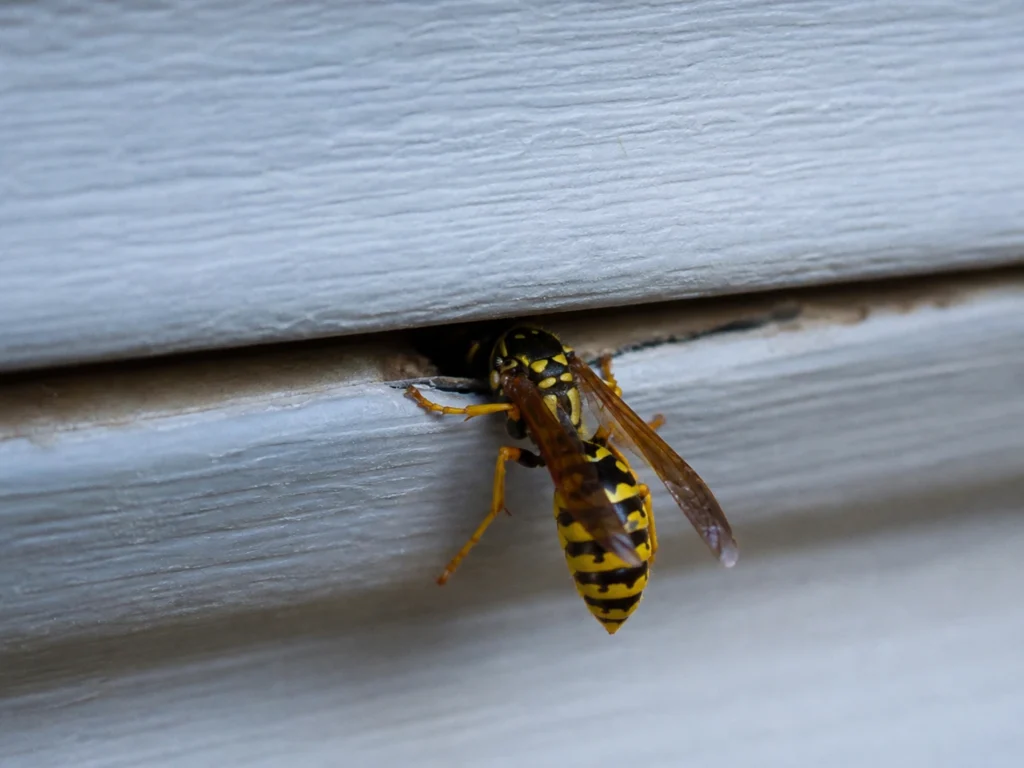
Identification Guide: Are They Really Yellow Jackets?
Before treating the void, confirm your target. Yellow jackets are aggressive, void-nesting wasps that look and behave very differently from beneficial pollinators.
- Appearance: Hairless, vivid yellow and black banded abdomen. About 1/2 inch long.
- Flight Pattern: Rapid, side-to-side darting before landing.
- Activity Level: Steady stream of traffic (dozens per minute) entering and exiting a single small gap.
- Noise: A distinct, vibrating hum originating from behind your drywall or siding.
If you hear scratching but no buzzing, you might be dealing with structural insects or rodents. You can rule out other destructive pests by checking our guide on signs of termites in drywall.
Root Causes: Why Did They Choose Your Wall?
Yellow jackets don’t build nests inside your living room; they seek sheltered, dark voids to protect their queens and larvae from the elements.
- Unsealed Exteriors: Gaps larger than 1/8 inch around plumbing pipes, HVAC lines, or loose siding.
- Deteriorated Mortar: Weep holes in brick facades that lack proper metal insect screens.
- Insulation Type: Soft fiberglass insulation inside the wall provides an ideal, easy-to-excavate nesting material.
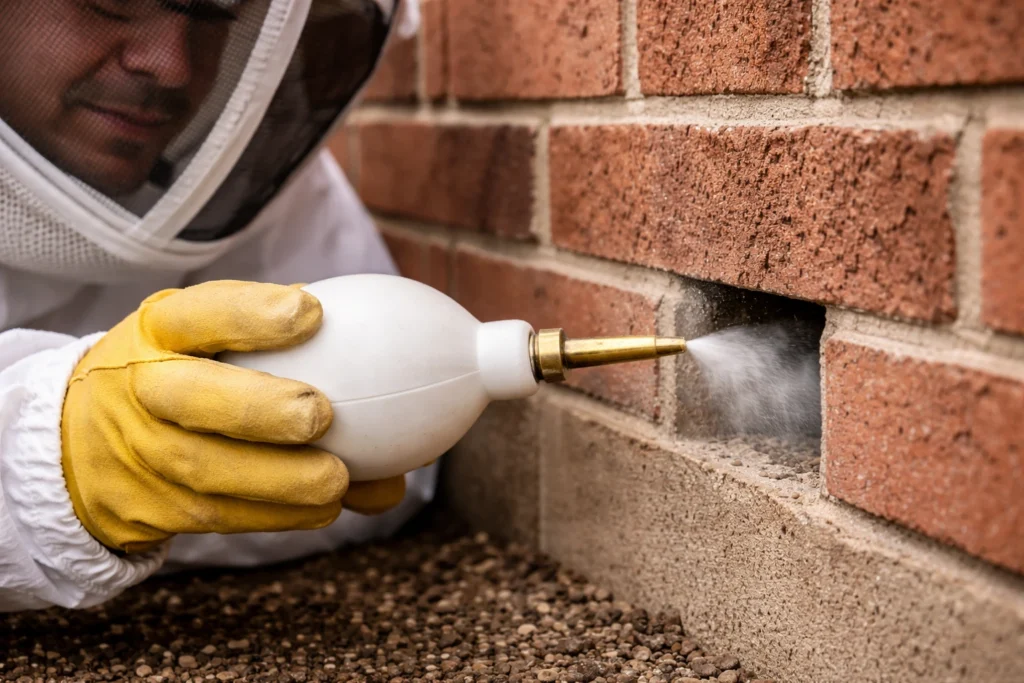
Step-by-Step Solution: Eradicating the Wall Nest
Forget the foam sprays and liquids from the hardware store; they won’t reach deep enough into the wall void. You need a dry insecticidal dust that clings to their bodies.
- Step 1: Locate and Observe (Daytime) Observe the traffic pattern during the hottest part of the day, usually between 2 PM and 4 PM. Pinpoint the exact main entrance on the exterior of your house. Do not approach.
- Step 2: Prepare the Treatment (Nighttime) Wait until at least 2 hours after sunset when temperatures drop below 60°F. The colony is dormant inside the wall at this time. Wear thick protective clothing, heavy leather gloves, and a bee veil.
- Step 3: Apply Insecticidal Dust Fill a handheld bulb duster halfway with a professional-grade dust like DeltaDust (Deltamethrin) or Tempo 1% Dust. Insert the tip of the duster just inside the entry hole and give 3 to 4 solid puffs.
- Step 4: The Waiting Game Leave the hole completely open. The workers must use the contaminated entrance to pass the active ingredient (like Deltamethrin or Fipronil) to the queen. The colony will usually collapse within 48 to 72 hours.
Expert Comparison: Yellow Jackets vs. Honeybees in Walls
Misidentifying the pest can lead to property disaster. Killing a honeybee hive inside a wall is a massive mistake.
- Yellow Jackets: Nests are made of chewed wood fibers (paper). When the wasps die, the dry nest simply breaks down without damaging the structure.
- Honeybees: Nests are made of wax combs often filled with 20 to 50 lbs of honey. If you kill the bees, the honey will melt, rot your drywall, and attract massive ant colonies.
Pro-Tips Box: From Professional to Homeowner Never use liquid or aerosol sprays in wall voids for yellow jackets. Liquids force the wasps into a panic response. To escape the fumes, they will chew straight through your drywall, easily breaking through 1/2-inch sheetrock in minutes and flooding your living space with angry wasps. Always stick to dry dusts.
What to Read Next
If you’ve noticed strange debris falling from your wall voids, you might be dealing with structural wood-destroying insects rather than wasps. Before treating the area, learn to properly identify the threat with our complete breakdown of termite frass vs carpenter ant frass.
People Also Ask (FAQ)
Should I caulk the yellow jacket hole in my wall?
Absolutely not. If you seal their primary exit, they will excavate a new one. In a wall void, the path of least resistance is often through your interior drywall, driving the entire colony straight into your house.
How much does an exterminator charge for yellow jackets in a wall?
In the US, professional removal typically ranges from $200 to $500, depending on the nest’s location and accessibility. If the extraction requires drywall cutting, the overall cost will increase.
Will yellow jackets die off in the winter?
Yes. In areas with freezing temperatures, the worker wasps and the old queen will die when temperatures drop below 45°F consistently. Only newly mated queens survive by overwintering elsewhere, and the old nest is never reused.