
Here is the bottom line: mouse droppings are about 1/4 inch long, smooth, and have pointed ends, while bat droppings (guano) are similar in size but crumble into dust when crushed and contain shiny insect parts. If you find droppings piled up under an overhang or attic beam, you have bats. If the droppings are scattered along baseboards or inside kitchen cabinets, you have mice.
Telling the difference quickly is critical. Misidentifying the pest means applying the wrong treatment, wasting time, and potentially exposing your family to hazardous diseases.
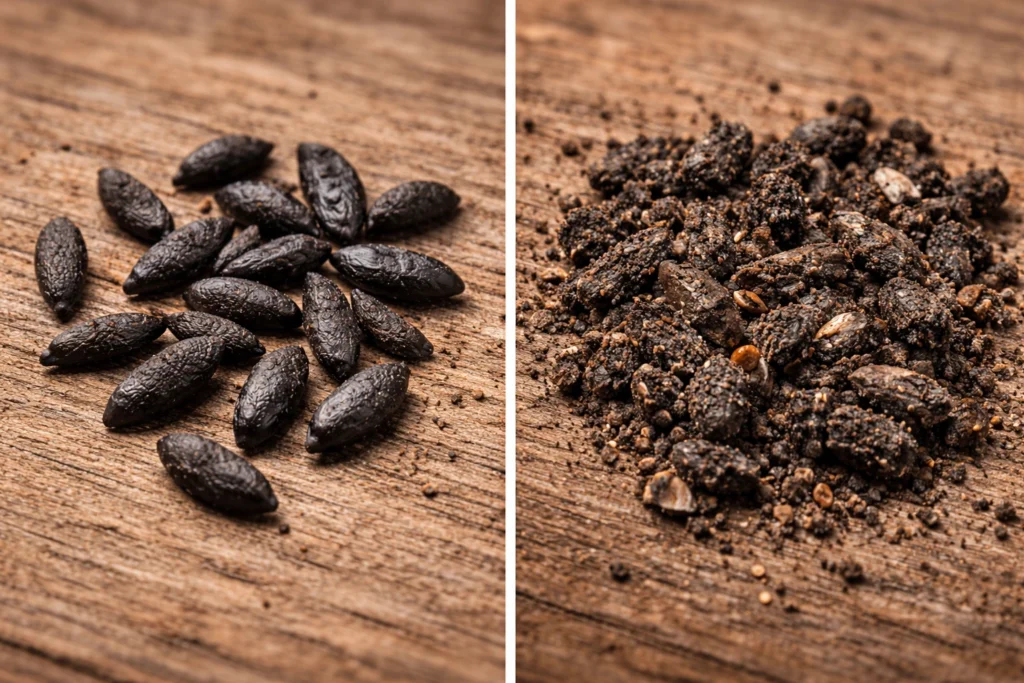
Identification Guide: 4 Key Differences
Accurate identification saves you from buying the wrong traps or baits. Before you start cleaning or buying products, look for these visual and physical clues:
- The “Crush” Test: Bat droppings are mostly composed of digested insects. If you crush them (wearing gloves and a mask), they crumble into a fine, dusty powder. Mouse droppings dry out but remain hard and solid.
- Appearance and Shape: Mouse poop looks like dark grains of rice with sharply pointed ends. Bat guano is slightly thicker, more cylindrical, and often sparkles under a flashlight due to undigested insect wings and shells.
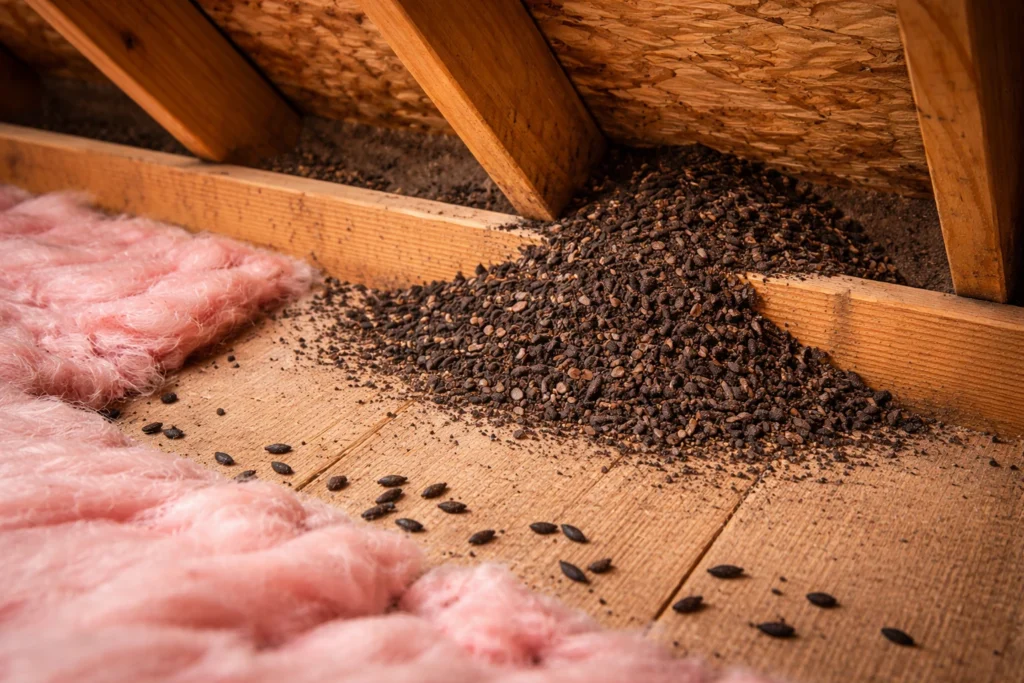
- Location Strategy: Mice scatter their droppings as they run. You will find them strung out along walls, near food sources, or behind appliances. Bats roost in one spot. Their droppings accumulate directly below their roosting site in a concentrated pile.
- The Smell Factor: A heavy bat infestation produces a strong, pungent ammonia odor as their urine soaks into your attic insulation or yard structures. Mice also leave urine odors, but usually in enclosed, tight spaces rather than large, open areas.
Root Causes: Why Are They Here?
Pests do not invade your property by accident. They are looking for three things: food, water, and shelter. If your home provides these, you will face an infestation.
Mice are scavengers that move indoors when the temperature drops outside. They can squeeze through a hole the size of a dime (about 0.75 inches). Dropped crumbs, unsecured pet food in the yard, and gaps around plumbing pipes invite them straight into your living space.
Bats are strictly insectivores. If your property has outdoor lights that attract moths and beetles, bats will follow. They roost in attics, soffits, and behind shutters, accessing your home through gaps as small as 3/8 of an inch. A heavy accumulation of guano usually means a colony has decided your attic is the perfect, undisturbed maternity ward.
Step-by-Step Solution: Exclusion and Cleanup
Getting rid of the droppings means getting rid of the pest. Never sweep or vacuum dry droppings of either type, as this kicks dangerous fungal spores into the air.
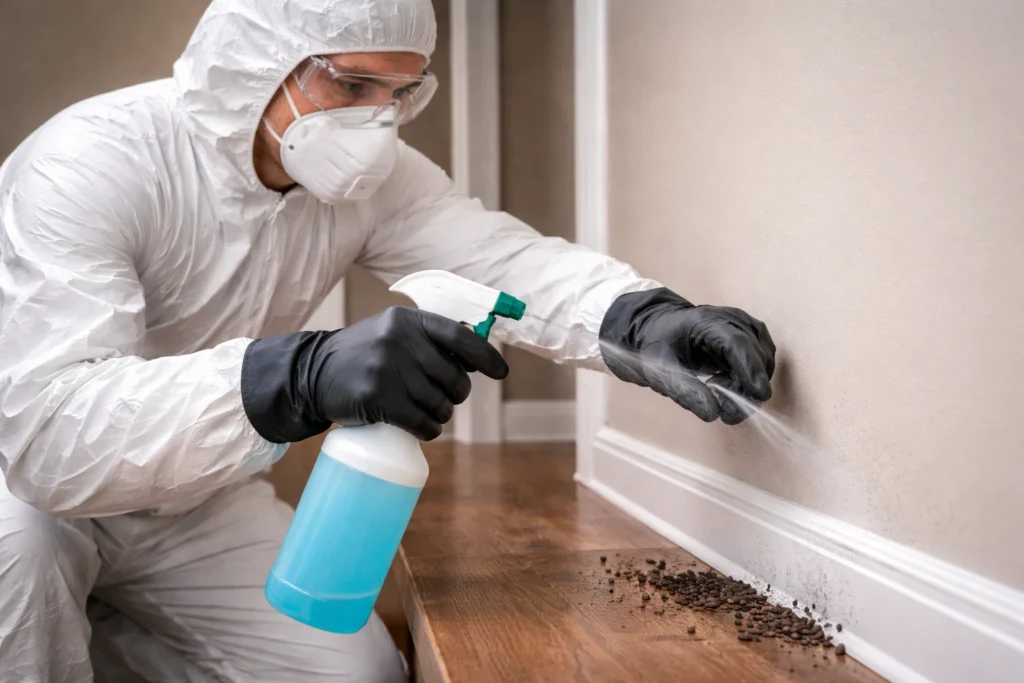
- Step 1: PPE First. Wear a respirator (N95 or higher), heavy-duty rubber gloves, and eye protection. Both pests carry serious pathogens: Hantavirus (mice) and Histoplasmosis (bats).
- Step 2: Disinfect the Area. Spray the droppings heavily with a 10% bleach solution (1.5 cups of bleach per 1 gallon of water). Let the mixture sit for 5 to 10 minutes to kill viruses and fungal spores.
- Step 3: Safe Removal. Carefully wipe up the soaked droppings with paper towels and seal them tightly in heavy-duty trash bags. Dispose of them immediately in your outdoor garbage bin.
- Step 4: Eradicate Mice. Set snap traps like Tomcat or Victor along baseboards. Bait them with a pea-sized amount of peanut butter. Check and reset traps daily until the activity stops.
- Step 5: Evict Bats Safely. Bats are federally protected in many US regions. You cannot use poisons. Install a one-way exclusion tube over their entry point so they can leave at night but cannot return. Seal all other gaps with heavy-duty exterior silicone caulk.
Expert Comparison: Wood Dust vs Pest Droppings
Homeowners sometimes find piles of debris and immediately panic about rodents. However, you need to rule out structural insects.
If the pile looks like tiny, uniform, six-sided wood pellets rather than dark, organic waste, you are not dealing with rodents at all. This is exactly what we discussed in our guide to termite frass vs carpenter ant frass. Knowing the difference between wood-destroying insect debris and mammal droppings dictates whether you need Ortho Home Defense or a structural fumigation.
PRO-TIP: When sealing gaps to keep mice and bats out, never use expanding foam by itself. Pests chew right through it. Instead, stuff the hole tightly with copper mesh or steel wool first, then seal over it with a high-quality weatherproof caulk or expanding foam.
What to Read Next
Once you have identified the droppings and sealed the entry points, you must inspect the structural integrity of your walls. Pests often exploit existing damage to get inside. Check out our detailed guide on the signs of termites in drywall to ensure your home’s foundation and interior walls are fully protected from further infestations.
People Also Ask (FAQ)
Can bat guano ruin my attic insulation?
Yes. Bat guano and urine act like an acid. Over time, a heavy accumulation will compress and ruin the R-value of your fiberglass or cellulose insulation, cause drywall to sag, and create overwhelming odors that seep into your living spaces.
Will mouse repellent pouches work to keep bats away?
No. Essential oil pouches and ultrasonic plug-ins are notoriously ineffective for both mice and bats. The only proven, permanent way to keep these pests out of your home or yard structures is physical exclusion—sealing every gap and crack.
Are bat droppings dangerous to dogs?
Absolutely. If your dog ingests bat guano from the yard, they risk contracting Histoplasmosis. It is a fungal infection that attacks the lungs and intestines. Keep your pets away from affected areas until you have cleaned the space and evicted the bats.