

Yes, garden lime is safe for dogs, provided you use the correct type. Pelletized agricultural lime (calcium carbonate) or dolomitic lime will not harm your pets. However, hydrated or “burn” lime (calcium hydroxide) is highly caustic and will cause severe chemical burns to paws and skin. Always water the yard heavily and keep dogs off the treated area until the grass dries completely.
Identification Guide
You need to know exactly what is sitting in those bags before you drop it on your yard. The difference between safe and dangerous lime is chemical, but the packaging and appearance tell the story.
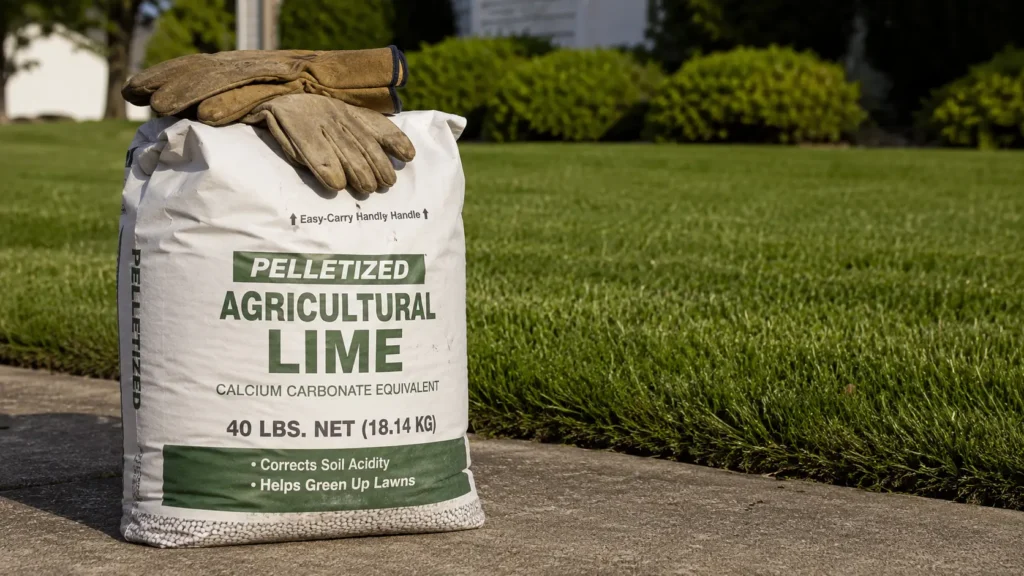
- Check the bag label: Look for “agricultural lime,” “calcite,” or “dolomitic lime.” These contain calcium carbonate. If you see “hydrated lime,” “slaked lime,” “builders lime,” or “calcium hydroxide,” return it immediately.
- Granule shape: Safe yard lime is almost always sold as small, uniform pellets (pelletized). It looks like tiny gray or tan BBs. Hydrated lime is usually a highly fine, flour-like white powder that blows easily in the wind.
- Water reaction: Pelletized agricultural lime dissolves slowly and harmlessly in water. Caustic hydrated lime reacts violently with moisture, generating intense heat.
- Bag weight: Standard yard lime usually comes in 40-pound bags meant for heavy application via a broadcast spreader. Hydrated lime is often sold in smaller, 10 to 50-pound paper sacks.Do not trust the front marketing text alone. Flip the bag over and read the active ingredients.
Root Causes
Soil naturally becomes acidic over time. Heavy rainfall, organic matter breakdown, and synthetic nitrogen fertilizers all drop your soil’s pH below the ideal 6.0 to 7.0 range. When the pH drops, your grass roots physically cannot pull nutrients out of the earth. We apply lime to raise that pH.
The danger to dogs stems entirely from the chemical composition of the lime you choose. Calcium carbonate (agricultural lime) simply rests in the soil and neutralizes acid over months. It is basically crushed limestone. It poses no threat.
Calcium hydroxide (hydrated lime) goes through a kiln-heating process that changes its chemical structure. When this powder contacts moisture—like the wet bottom of a dog’s paw, or a dog’s sweaty nose—it triggers an immediate, highly caustic reaction. It quite literally burns the skin. I have seen homeowners permanently scar their dog’s paw pads because they grabbed the cheapest, fastest-acting powder at the hardware store without understanding the chemistry. If you apply lawn treatments frequently, you face similar safety overlaps with other products, which is why knowing how long after fertilizing it is safe for dogs is equally vital for pet owners.
Step-by-Step Solution
Applying lime safely requires timing the application and watering it in correctly to eliminate any risk of ingestion or physical irritation.
- Test your soil first. Never drop lime blindly. Buy a soil test kit. You need to know your exact pH and how many pounds per 1,000 sq ft you actually need. Most yards require between 20 and 50 pounds of pelletized lime per 1,000 sq ft to raise the pH by half a point.
- Purchase pelletized agricultural or dolomitic lime. Brands like Pennington, Scotts, or Encap are safe bets. Check the label for “calcium carbonate.”
- Mow the yard low. Cut the grass to about 2.5 inches. This helps the pellets reach the soil surface rather than getting trapped up in the grass canopy where your dog’s paws will hit them.
- Fill your broadcast spreader on a hard surface. Never fill the hopper on the lawn. Spills happen. A 5-pound pile of concentrated lime will smother your grass. Sweep up any driveway spills immediately.
- Apply the product evenly. Walk at a steady pace, overlapping your wheel marks by a few inches to avoid striping the yard.
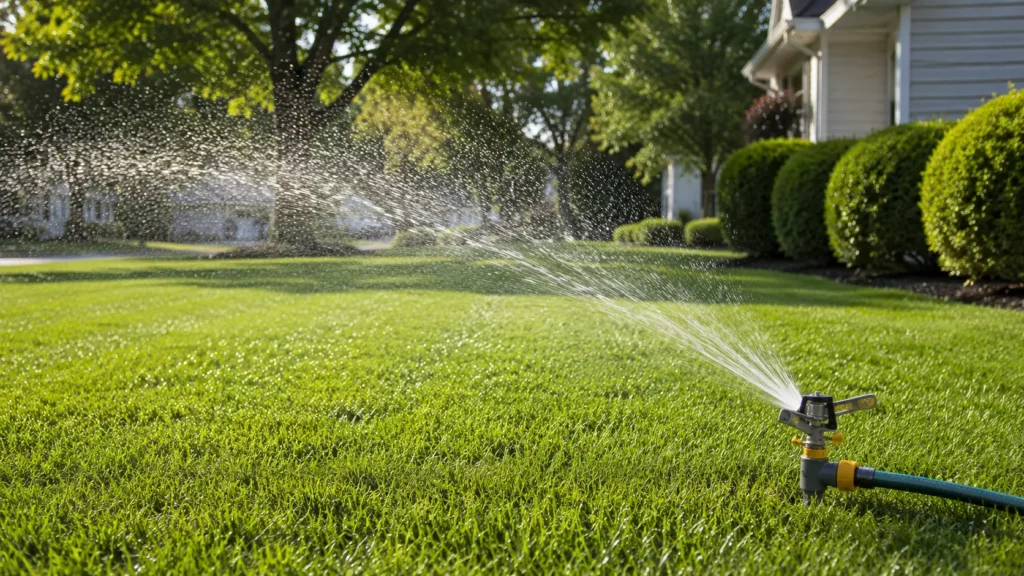
- Water it in aggressively. This step separates the pros from the DIYers. Run your sprinklers for at least 20 to 30 minutes, applying about 0.5 inches of water. The water breaks down the binder in the pellets, melting the lime into the topsoil.
- Enforce the waiting period. Keep your dogs completely off the yard until the grass is 100% dry. This usually takes 2 to 4 hours depending on the sun and wind. Once the blades are dry, the lime is safely in the soil, and your pets can run free.
Professional vs. DIY
Spreading lime is fundamentally a DIY-friendly task, provided you buy the right bags.
| Factor | DIY | Professional |
| Cost | $ | $$$ |
| Speed | 1-2 Days | Hours |
| Effectiveness | High | High |
| Pet Risk | Low (if pelletized) | Zero |
Hiring a company like TruGreen or a local operator makes sense if your yard is massive or if the soil test indicates you need a massive pH correction (like jumping from 4.5 to 6.5). Professionals have ride-on spreader/sprayer combos that can put down hundreds of pounds of lime in minutes. If you have a standard quarter-acre lot, you can absolutely do this yourself for under $60 in materials.
Common Misdiagnosis
Homeowners often panic when they see yellow, burned patches on the grass a few days after applying lime, assuming the lime is burning the turf and posing a toxic threat to their dog.
You cannot burn grass with agricultural lime. It does not contain nitrogen. If you see scorched, straw-colored patches showing up exactly where your dog normally goes to the bathroom, you are looking at nitrogen burn from dog urine. Urine contains highly concentrated urea. During hot, dry weather, this burns the grass crowns. You can learn more about differentiating chemical burns from pet damage in our guide on diagnosing yellow spots on grass. Treat urine spots by flushing the area with a hose for three straight minutes to dilute the salts.
Prevention Tips
The easiest way to avoid stressing over yard applications and pet safety is to fix the underlying soil compaction and drainage. Poor drainage accelerates soil acidification. Aerate your yard once a year in the early fall. Core aeration pulls 3-inch plugs of dirt out of the ground, letting oxygen and water flow freely.
When you do apply lime, do it in the late fall or early spring. The ground will experience heavy rain and freeze-thaw cycles that naturally pull the calcium carbonate deep into the root zone. Avoid applying lime during the dead of summer when the yard is dormant and dry. The pellets will simply sit on the surface, increasing the chance your dog tracks the gray dust back into the house.
Pro-Tips Box: Most homeowners apply lime and fertilizer on the exact same day to save time. Stop doing this. The calcium in the lime reacts heavily with the nitrogen in synthetic fertilizers, causing the nitrogen to volatilize and gas off into the atmosphere as ammonia. You are literally throwing money into the air. Apply your lime, water it in thoroughly, and wait at least two weeks before putting down any Scotts Turf Builder or similar nitrogen products. This gives the soil pH time to adjust so your grass can actually absorb the expensive fertilizer you just bought.
People Also Ask
Will garden lime hurt my dog’s paws?
Pelletized agricultural lime (calcium carbonate) will not hurt your dog’s paws. Hydrated lime (calcium hydroxide) is highly caustic and will cause severe chemical burns to paw pads if they walk on it.
How long should dogs stay off lime?
Keep dogs off the yard until the grass is completely dry after watering the lime in. This typically takes 2 to 4 hours. Once the blades are dry, the product is in the soil and safe.
What happens if a dog eats pelletized lime?
If a dog ingests a small amount of pelletized agricultural lime, it may cause mild stomach upset, vomiting, or diarrhea. It is essentially chalk. Consult your vet immediately if they consume large amounts.
What to Read Next
If you are currently treating your soil and planning your spring applications, timing is everything, which is why knowing exactly when should you aerate your lawn makes a massive difference in how well your lime actually penetrates the root zone.