
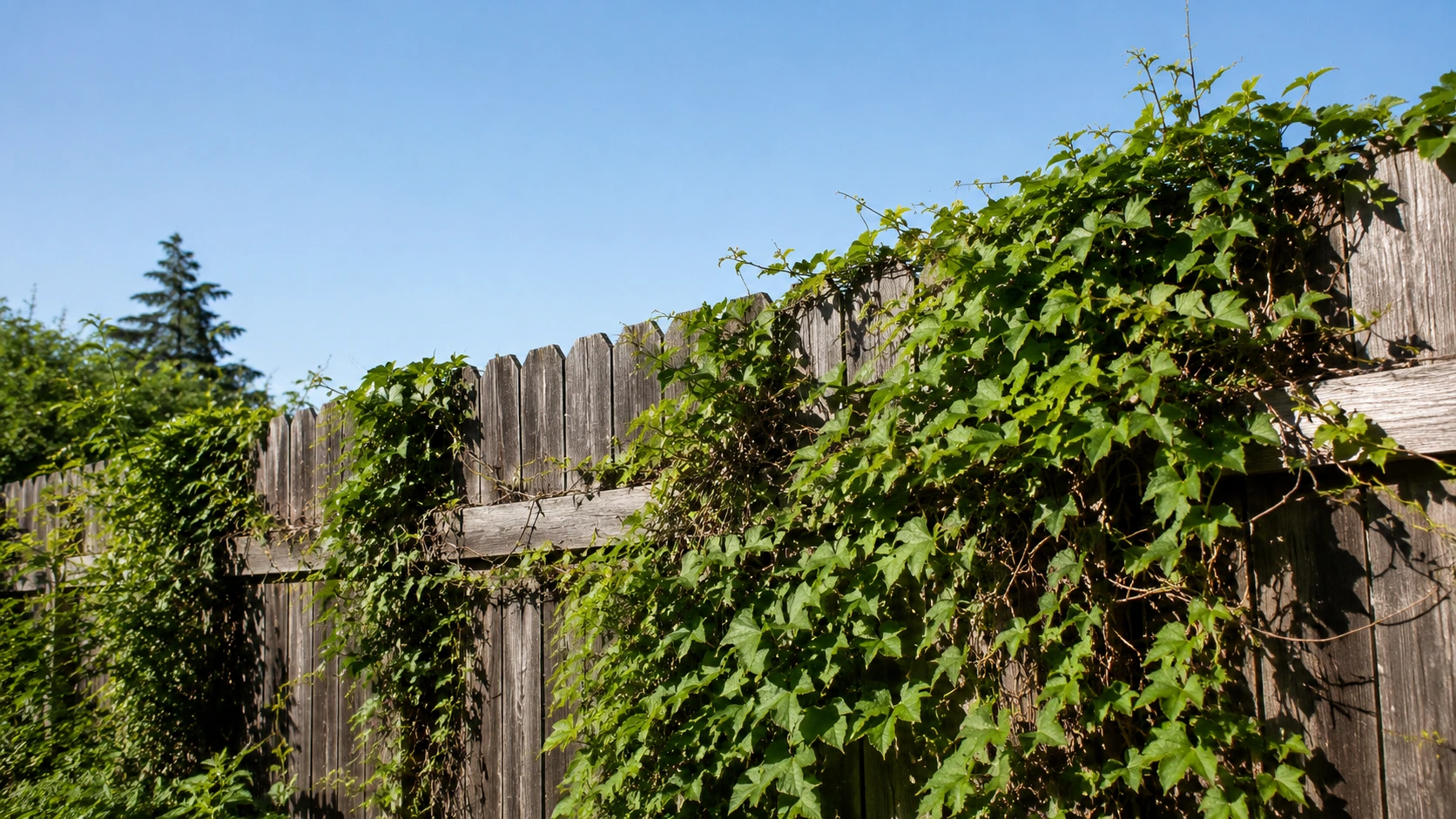
Virginia creeper has five distinct leaflets radiating from a central point and attaches to surfaces using small adhesive pads. Poison ivy always has three leaves and climbs tree trunks using thick, hairy aerial roots. While Virginia creeper is a harmless native vine, poison ivy contains urushiol, an oil that causes severe allergic reactions upon contact.
Identification Guide
Telling these two vines apart requires looking at the leaf count, the stems, and how the plant anchors itself.
- Leaf Count: Poison ivy always grows in clusters of three leaflets. The middle leaf sits on a slightly longer stem than the two side leaves. Virginia creeper features five leaflets spreading out like the fingers of a hand.
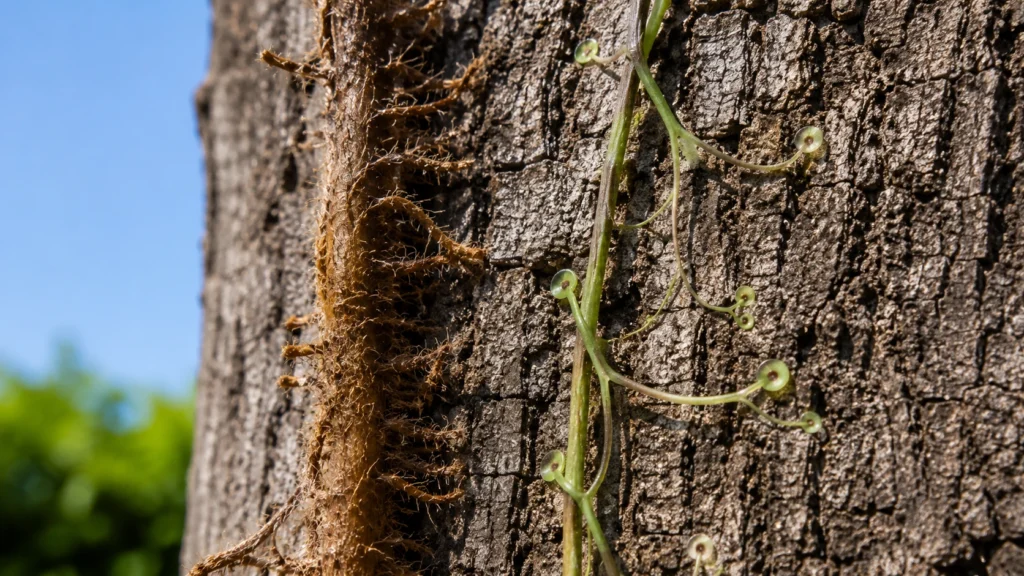
- Vine Texture: Look at how the vine climbs a tree or fence. Poison ivy produces thick, hairy aerial roots that look like a frayed, fuzzy rope clinging directly to the bark. Virginia creeper uses slender tendrils tipped with small, round adhesive discs that act like microscopic suction cups.
- Edge Shape: Poison ivy leaves can be smooth-edged or lightly notched, and they often look glossy or oily under sunlight. Virginia creeper leaves have distinct, jagged, saw-like edges.
- Berries: In late summer, mature poison ivy produces clusters of hard, white or pale yellow berries. Virginia creeper produces dark blue or black berries that resemble tiny grapes.
- Fall Color: Both plants turn a brilliant red in the fall, making visual identification by color alone impossible late in the season. Count the leaves before clearing autumn brush.
Root Causes
Neither of these plants are invasive weeds; both are native species that naturally thrive in “edge habitats.” An edge habitat is the transition zone where a manicured yard meets a wooded area, fence line, or unmaintained lot. Birds eat the berries of both poison ivy and Virginia creeper, digesting the pulp and dropping the intact seeds along fence lines, under utility wires, and at the base of large trees.
Once a seed germinates in your yard, the plant aggressively seeks sunlight. In heavily shaded areas, poison ivy acts as a ground cover, creeping along the soil until it finds a vertical structure to climb. If you notice a sudden explosion of either vine, it usually means a mature plant in a nearby unmanaged property has been dropping seeds into your yard for seasons. Neglected fence lines and yard debris piles provide the perfect undisturbed environment for these vines to establish deep, woody root systems before they become highly visible.
Step-by-Step Solution
Handling Virginia creeper only requires a pair of thick gloves and heavy shears, as it poses no toxic threat. Eradicating poison ivy requires strict chemical control and personal protective equipment.
- Gear up properly: Put on a long-sleeved shirt, long pants, closed-toe shoes, and thick disposable nitrile gloves. Do not use your regular leather gardening gloves; urushiol oil can linger on them for years and cause an allergic reaction months later.
- Cut the climbing vines: If the poison ivy is climbing a tree, do not rip it down. The hairy roots hold tight, and pulling forcefully will snap the vine, splashing toxic sap onto you. Use loppers to cut the vine at the base, about 2 inches from the soil. Leave the upper vine attached to the tree; it will die and dry out harmlessly.
- Treat the stump: Within five minutes of making the cut, apply a concentrated brush killer containing Triclopyr (like BioAdvanced Brush Killer or Ortho MAX Poison Ivy) directly to the freshly cut stump. You can use a disposable foam brush to paint the chemical on the wound. This pulls the herbicide straight into the root system without harming the host tree.
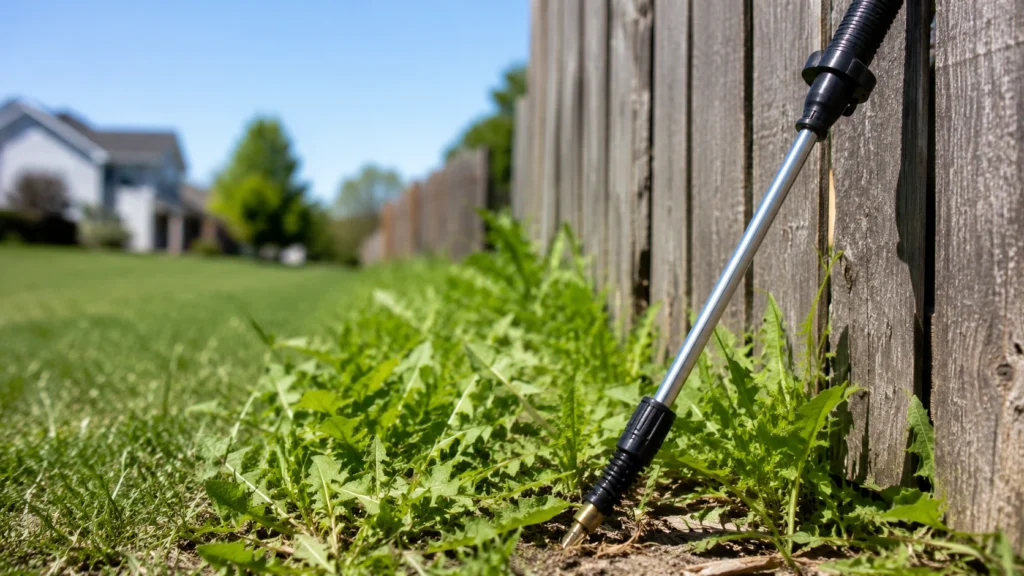
- Spray the ground foliage: For poison ivy growing on the ground or along a fence, mix a liquid herbicide containing Glyphosate (41% concentration) or Triclopyr (8% concentration). Apply at a rate of 2 to 4 oz per gallon of water in a pump sprayer. Coat the leaves evenly until wet, but not dripping. To maximize effectiveness, ensure you check the weather and know the best time to spray weeds before or after rain so the chemical does not wash off before drying.
- Wait and remove: Triclopyr works slowly. Expect the leaves to curl within 3 to 5 days, but complete root death takes 2 to 3 weeks. Once the plant is completely brown and brittle, bag the remains in heavy plastic. Never burn poison ivy debris; inhaling the smoke carries vaporized urushiol and causes severe, life-threatening respiratory distress.
Professional vs. DIY
Tackling a small patch of poison ivy creeping under a fence is a manageable Saturday project for most people. Clearing half an acre of deeply entrenched woody vines climbing fifty-foot pines is a completely different story.
| Factor | DIY | Professional |
| Cost | $ | $$$ |
| Speed | 2-3 Weeks | 1-3 Days |
| Effectiveness | Moderate | High |
| Risk | High (Exposure) | Low |
If you are highly allergic to urushiol, DIY removal simply does not justify the medical bills. I have seen homeowners attempt to weed-whack a patch of poison ivy, resulting in a fine mist of toxic sap covering their legs and face. Call a certified pesticide applicator if the vines have grown into an active play area, if they are deeply entangled in valuable ornamental shrubs where spraying is dangerous, or if the main vine is thicker than your wrist. Professionals carry specialized systemic herbicides and wear commercial-grade PPE to clear massive infestations safely.
Common Misdiagnosis
Homeowners frequently confuse poison ivy with Boxelder (Acer negundo) saplings. Both display three green leaves, turn red in the fall, and thrive in similar shaded, edge-habitat environments around your property line.
To tell them apart without risking contact, look closely at the stems. Poison ivy leaves alternate along the main vine. If you trace the main stem, one leaf node will appear on the left, and the next leaf node will appear higher up on the right. Boxelder leaves are strictly opposite; they sprout from the exact same node on the stem, directly facing each other. Furthermore, Boxelder is a tree species that will eventually develop a woody, free-standing trunk, while poison ivy will permanently remain a creeping ground cover or climbing vine reliant on support.
Prevention Tips
Standard lawn weed-and-feed products and pre-emergent herbicides like Pendimethalin will not stop poison ivy or Virginia creeper seeds from germinating. The most effective prevention is establishing a dense, healthy turf boundary and remaining vigilant in the unmaintained areas of your yard.
Walk your fence lines and wooded property edges every month from early spring through late summer. Small, newly sprouted vines are highly susceptible to a quick spot-spray of 2% Glyphosate. Pulling young plants manually is a viable option for Virginia creeper, but never attempt to hand-pull poison ivy, even young shoots. If you notice birds dropping berry seeds near a specific birdbath or feeder along the tree line, aggressively treating the ground directly below it every few months will catch vines before they establish deep taproots.
Pro Tips Box
Pro-Tips Box: When finding mature poison ivy climbing a valuable tree, never rip it off the bark. The thick hairy roots will snap, spraying microscopic urushiol sap everywhere. Instead, use long-handled loppers to sever the vine two inches above the soil line. Within five minutes, use a disposable foam brush to paint an 8% Triclopyr brush killer directly onto the exposed stump. This pulls the chemical straight into the root system without harming your tree. Always wipe down your lopper blades with Tecnu or heavy-duty dish soap before storing them.
People Also Ask
Is Virginia creeper poisonous to dogs?
Virginia creeper leaves are non-toxic, but the dark blue berries contain high levels of oxalates. If your dog eats a large quantity of these berries, it can cause severe drooling, vomiting, and potential kidney issues. It is best to clear fruiting vines along your fence line if you have curious pets.
Will vinegar kill poison ivy?
Horticultural vinegar (20% acetic acid) only burns the visible foliage of poison ivy. It does not translocate into the deep woody root system. The vine will appear dead within days but will aggressively regrow from the surviving underground roots a week later. Rely on systemic herbicides like Glyphosate or Triclopyr for permanent removal.
Does Virginia creeper damage brick walls?
Virginia creeper climbs using small adhesive suction pads rather than destructive aerial roots. While it won’t bore into mortar like English ivy, ripping the vine down forcefully will leave those hardened pads permanently cemented to your brickwork. Removing them requires a stiff wire brush and specialized acidic masonry cleaners.
What to Read Next
If you are looking to manage overgrown areas without reaching for harsh synthetic chemicals, learning how to formulate a poison ivy killer natural approach is a great next step for clearing vines around environmentally sensitive zones in your yard.