
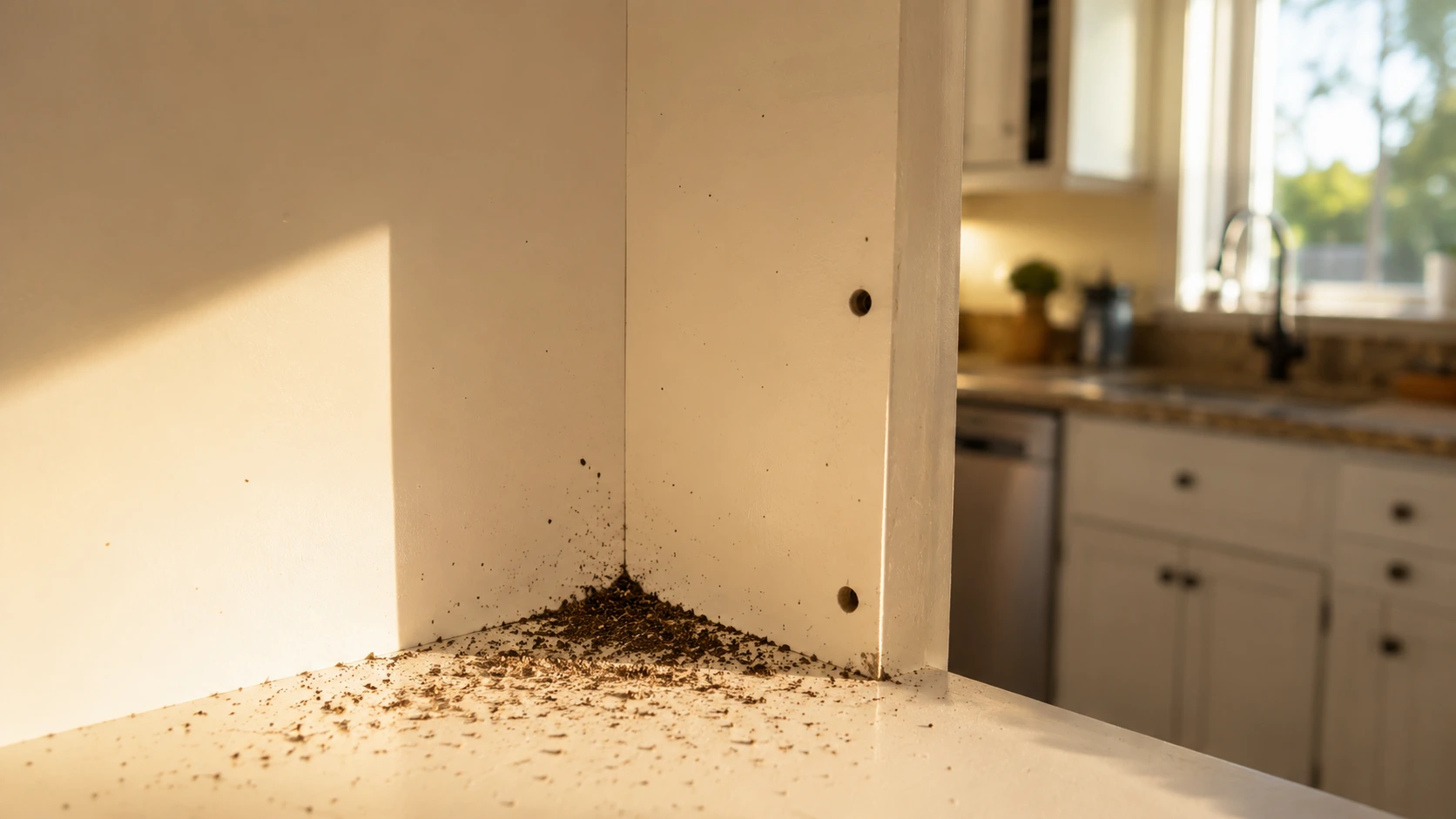
Yes, cockroach poop is highly toxic. It carries dangerous pathogens, including Salmonella and E. coli, which frequently lead to food poisoning and dysentery. Furthermore, the droppings contain specific proteins that act as potent allergens, directly triggering acute asthma attacks and severe allergic reactions. You must handle and clean these droppings with extreme caution.
Identification Guide
Identifying the feces correctly saves you time and money.
- Coffee ground appearance: German cockroaches leave tiny, dark specks that look exactly like spilled black pepper or coffee grounds scattered across clean surfaces. You will typically spot these clustered in the corners of drawers.
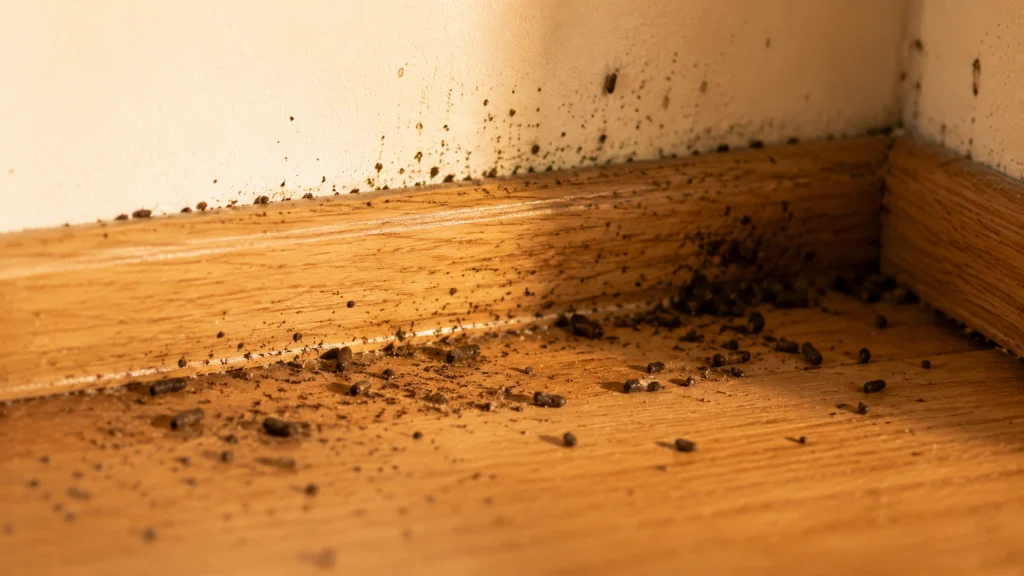
- Dark smear marks: In areas with high moisture, such as under the kitchen sink, you will see irregular, dark brown or black smears along baseboards, wall corners, and cabinet hinges. They look like dried dirt but are nearly impossible to wipe off with just water.
- Cylindrical pellets: Larger species, like American and Oriental cockroaches, leave solid, cylindrical droppings with blunt ends, usually about 0.25 inches long. They feature distinctive ridges running down the sides.
- Musty odor: A significant accumulation of feces produces a distinct, heavy, oily, musty smell that lingers in the room. If a cabinet smells heavily of dirty gym socks, inspect the back corners with a flashlight.
Root Causes
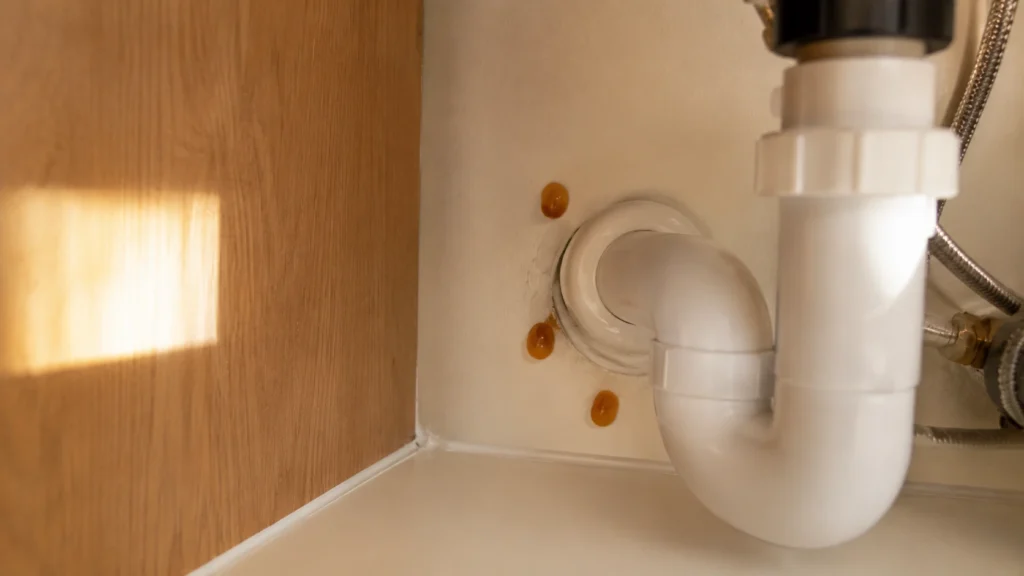
Cockroaches leave droppings exactly where they eat, sleep, and travel. If you find toxic poop in your kitchen cabinets or behind appliances, it means roaches have secured a highly reliable food and water source nearby. A leaking pipe under the sink providing just a few drops of water a day is enough to sustain a massive, hidden colony.
They strongly prefer tight, dark spaces with high humidity, usually nesting near appliance motors that generate constant heat, like the back of your refrigerator or the void under your dishwasher. Poor household sanitation, such as leaving pet food bowls out overnight or failing to clean heavy grease spills behind the stove, rapidly accelerates the infestation. The droppings accumulate fastest in these hidden harborages, effectively marking the territory for other roaches through chemical pheromones. In most cases I’ve seen in older suburban homes, a slow drip behind a washing machine creates the perfect humid breeding ground, leading to massive fecal buildup before anyone ever spots a live bug.
Step-by-Step Solution
Handling toxic droppings requires rigorous sanitation followed by an aggressive pest control strategy.
- Protect yourself completely: Put on an N95 mask and non-porous rubber gloves before touching anything. Agitating dry roach poop releases airborne allergens that you absolutely do not want to inhale into your lungs.
- Vacuum the droppings: Use a heavy-duty shop vacuum equipped with a HEPA filter to extract the loose feces from deep cracks. Never sweep them with a standard broom, as this just flings the toxic dust particles directly into the air you breathe. Dispose of the vacuum bag immediately in an outdoor trash can.
- Sanitize the contaminated surface: Spray the affected area with a commercial enzymatic cleaner or a harsh mix of 1 cup of bleach per 1 gallon of hot water. Let it sit visibly wet for 10 minutes to kill the pathogens before wiping it up with disposable paper towels.
- Apply professional-grade gel bait: Stop relying on cheap aerosol sprays. Apply a professional gel bait containing Fipronil or Indoxacarb (such as Advion or Maxforce) in tiny, pea-sized drops every 12 to 18 inches along cabinet hinges, under sinks, and behind major appliances.
- Disrupt the breeding cycle: Pair your baiting strategy with an Insect Growth Regulator (IGR) like Gentrol. Buy point-source discs, snap them open, and place one disc every 75 sq ft. This prevents juvenile roaches from maturing and reproducing.
Wait 7 to 14 days to see a massive drop in the population. If you see roaches walking right past the bait, stop immediately. Applying more product at this point will just contaminate your kitchen; you need to switch to a different active ingredient to combat bait aversion. Expect to spend around $50 to $80 for professional-grade DIY products to treat an average kitchen.
Professional vs. DIY
| Factor | DIY | Professional |
| Cost | $$ | $$$$ |
| Speed | Weeks | Days |
| Effectiveness | Moderate | High |
| Risk | Moderate | Low |
You can tackle a mild German roach problem with patience and the right gel baits. However, if you are finding large piles of droppings inside your HVAC ducts, inside food packaging, or if someone in your house is suffering from severe asthma attacks, DIY is no longer sufficient. Call a licensed exterminator immediately. A professional technician has access to restricted-use non-repellent sprays like Termidor (for exterior perimeter applications) and specialized flushing agents that completely clear out deep wall voids where the main nest is hiding.
Common Misdiagnosis
Homeowners frequently misidentify pest droppings, leading to completely failed treatments and wasted money. Mouse droppings are the most common mix-up. Mice leave pellets that are about 0.25 inches long, but unlike blunt-ended roach poop, mouse feces feature distinctly pointed ends and often contain visible hairs embedded inside.
Termite frass is another major point of confusion. While roach feces look like random black pepper, drywood termite droppings are hard, six-sided, barrel-shaped pellets that pile up neatly like a tiny mound of fine sawdust. If you are dealing with structural wood damage, identifying the difference between termite frass vs carpenter ant frass is absolutely critical to choosing the correct eradication method. Treating roaches when you actually have termites leaves your home vulnerable to collapse.
Prevention Tips
Keep your home’s environment incredibly hostile to pests. Fix any minor plumbing leaks immediately; German roaches can survive for weeks without a food source, but only a few days without water. Store all pantry items, especially open bags of sugar, grains, and cereals, in heavy-duty airtight plastic or glass containers.
Take your kitchen trash out every single night, and rigorously wipe down your counters with a strong degreaser to eliminate invisible food trails. Run a dehumidifier in your basement and crawlspace to keep the relative humidity strictly below 50%. A bone-dry, meticulously clean house naturally forces foraging scouts to look elsewhere for resources. Seal entry points using 100% silicone caulk around where utility pipes penetrate your walls. This one weekend project permanently cuts off their favorite highway between apartments or rooms.
Pro-Tips Box: Most homeowners make the mistake of spraying repellent chemicals like Ortho Home Defense directly over the gel baits they just applied. Repellents contaminate the bait, making it completely repulsive to roaches. Keep your liquid sprays like Bifenthrin (mixed at 0.5 oz per gallon of water) strictly for exterior perimeter foundation treatments. Inside, rely solely on baits and IGRs. If you find hardened, crusty roach droppings in your cabinets, mist them lightly with a household disinfectant spray before wiping to prevent the toxic dust from going airborne while you clean.
People Also Ask
Can you get sick from breathing in cockroach poop?
Yes, inhaling dust from dried cockroach feces exposes you to potent proteins that trigger severe allergic reactions and asthma. Moving or sweeping dry droppings sends these toxic particles airborne, which is especially dangerous for children and individuals with pre-existing respiratory issues.
Does bleach dissolve cockroach poop?
Bleach does not dissolve the physical droppings, but it effectively sanitizes the area by neutralizing the bacteria and pathogens left behind. You must physically remove the feces using a HEPA vacuum or damp paper towels before applying a bleach solution to fully disinfect the surface.
Will cockroach droppings attract other cockroaches?
Yes, cockroach feces contain aggregation pheromones. These chemical signals communicate to other roaches that the area is a safe harborage with nearby food and water. Failing to thoroughly clean and disinfect the area will continually attract new pests to the exact same spot.
What to Read Next
Dealing with heavy indoor pest infestations often forces you to reevaluate the chemicals you use around your kitchen and living spaces. If you are looking to expand your pest control arsenal with traditional dusts, understanding how to use boric acid for carpenter ants provides a solid foundation for safely applying similar barrier treatments deep inside wall voids and cabinet crevices where pests hide.