
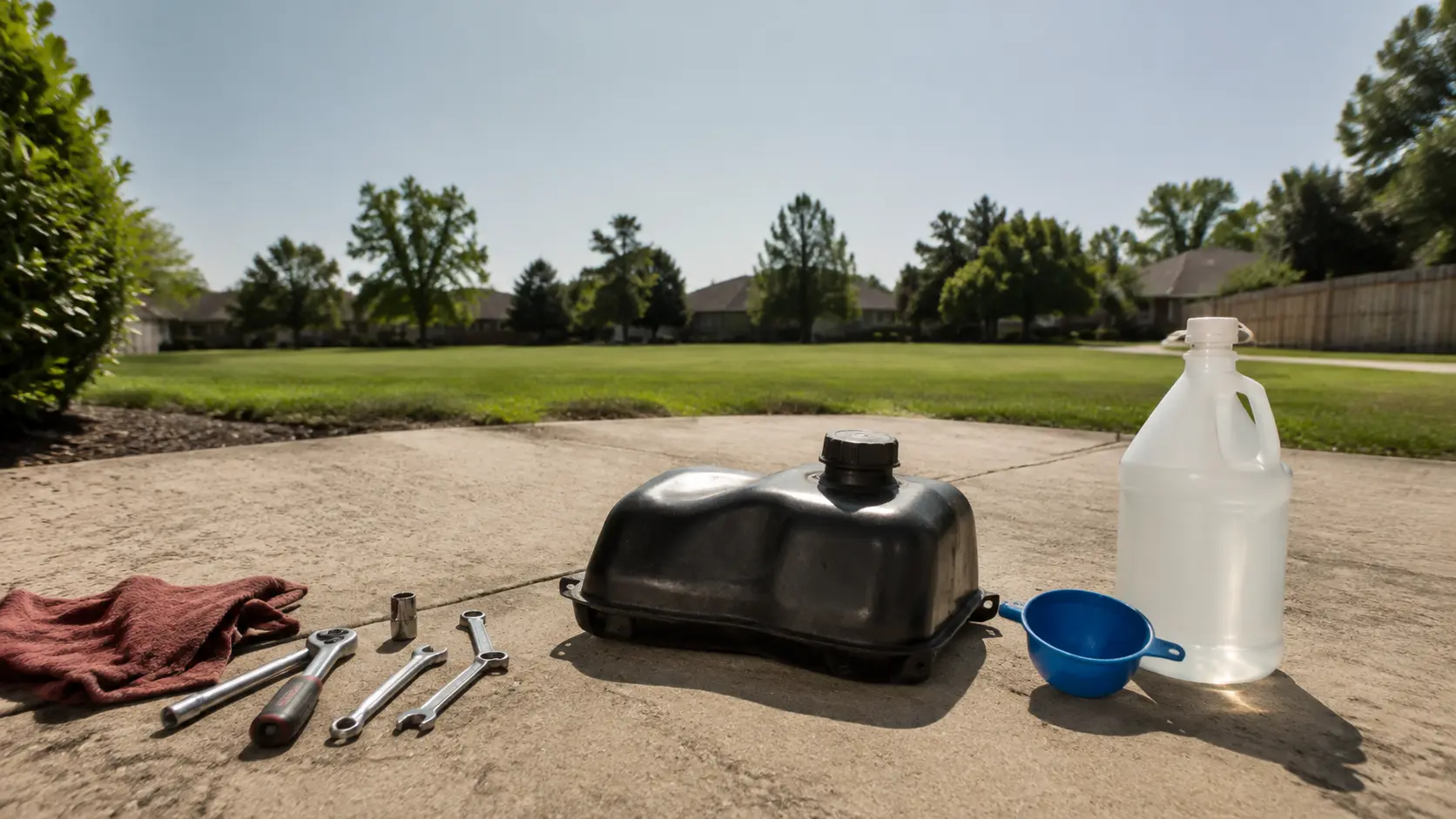
You clean a rusty fuel tank by detaching it from your lawn equipment, filling it with undiluted white vinegar, and letting it soak for 24 to 48 hours to dissolve the iron oxide. Adding a handful of small steel nuts and shaking the tank vigorously provides mechanical agitation to knock loose heavy, stubborn scale before you flush the tank with a baking soda and water solution to neutralize the acid.
Required Tools & Materials
You don’t need harsh industrial acids to strip rust from a thin metal mower tank. Grab these items before you start tearing down your equipment:
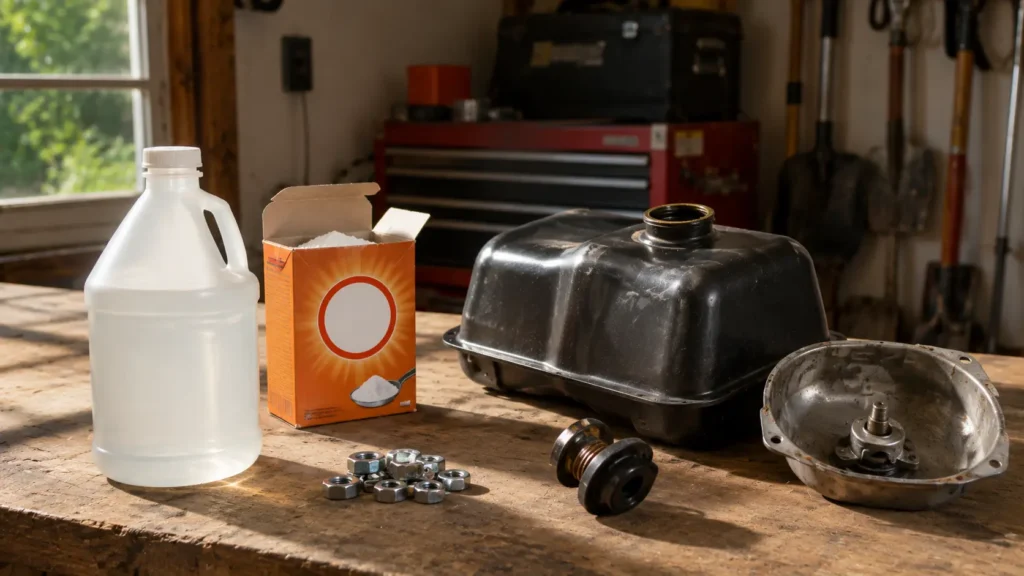
- White vinegar (5% acidity): 1 to 2 gallons depending on your tank size.
- Steel nuts or bolts: 15–20 small, sharp-edged pieces (never use rocks or gravel).
- Baking soda: 1 cup to neutralize the vinegar.
- WD-40 or 2-cycle engine oil: For coating the bare metal post-cleaning.
- Compressed air: An air compressor with a blow gun attachment.
- Inline fuel filters: Buy a 3-pack. You will need to replace your current one.
- Catch pan: To safely capture old fuel and rusty vinegar.
The Execution (Step-by-Step)
I’ve pulled apart hundreds of riding mowers in early spring that refuse to start. Nine times out of ten, ethanol-blended gasoline absorbed moisture over the winter, rusted the tank, and sent tiny orange flakes straight into the carburetor bowl. Fixing it requires stripping the tank down to bare metal.
1. Drain and Detach
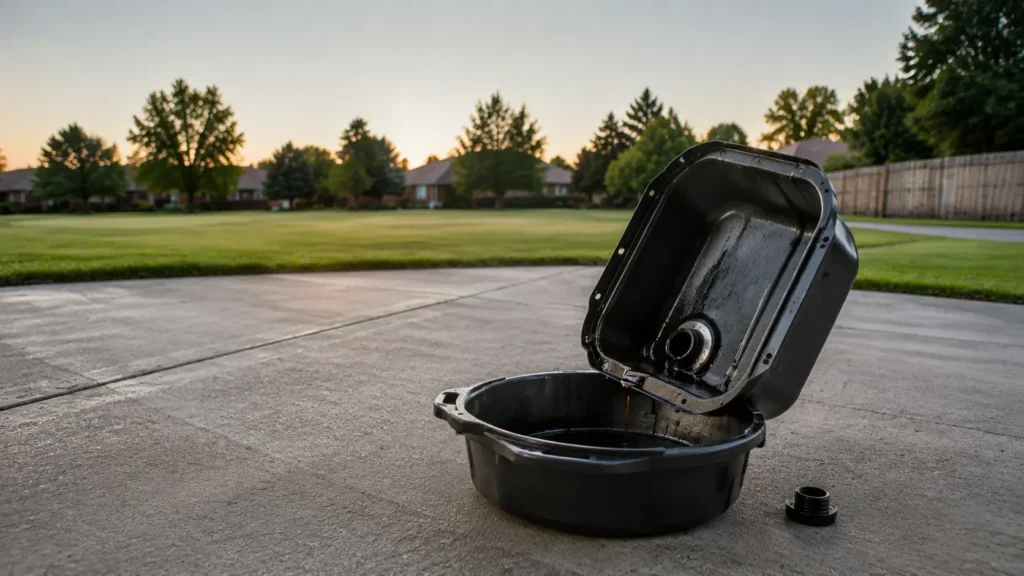
Turn off your fuel shut-off valve. Disconnect the fuel line from the base of the tank and drain the old, stale gas into an approved catch pan. Unbolt the tank from the mower or tractor chassis. Trying to clean a tank while it is still mounted to your equipment guarantees you will spill corrosive acid onto your paint, deck, and drive belts.
2. The Mechanical Agitation
Drop 15 to 20 small steel nuts or bolts into the empty tank. Spray a quick burst of WD-40 inside for slight lubrication. Cap the tank securely and shake it violently in all directions for 3 to 5 minutes. The sharp edges of the steel nuts will break off the thick, flaky rust scaling that chemicals alone struggle to penetrate. Dump the nuts out and use an air compressor to blow out the dry rust dust.
3. The Vinegar Soak
Plug the fuel outlet hole at the bottom of the tank. You can use a small piece of fuel line folded over and zip-tied shut. Fill the tank completely to the brim with straight white vinegar. Leave no air gaps. Let it sit for 24 to 48 hours. The acetic acid will eat away the remaining rust without eating through the thin metal of your tank.
4. Neutralize and Flash-Dry
Drain the brown, rusty vinegar into your catch pan. Immediately mix 1 cup of baking soda with a gallon of warm water and pour it into the tank. Swish it around for two minutes to completely neutralize the acid. If you skip this step, the residual vinegar will continue eating the metal. Dump the solution out and immediately blast the inside of the tank with compressed air until it is bone dry.
Pro-Tips Box: Bare steel rusts in minutes when exposed to oxygen and moisture. The second your tank is blown dry with compressed air, pour two ounces of 2-cycle engine oil or heavily spray WD-40 into the tank. Swish it around to coat the interior walls. This creates a temporary barrier against flash rusting until you can mount the tank and fill it with fresh gasoline.
Seasonal Timing & Conditions
Late fall is the critical time to think about fuel systems. The temperature swings in winter create heavy condensation inside empty or half-full metal tanks, accelerating rust formation. If you are reading this in early spring because your engine surges or dies after idling, the damage is already done. Clean the tank on a warm, dry afternoon. High humidity during the drying phase invites flash rusting before you even have a chance to coat the inside with oil.
Getting your equipment running smoothly in early spring is essential before your lawn care schedule ramps up. A mower that won’t start due to a rusted fuel tank will ruin your maintenance timing, especially when you are trying to perfectly time your schedule and deciding whether to mow before weed and feed applications to maximize the herbicide’s contact with broadleaf weeds.
Common Mistakes & Wasted Money
Most homeowners grab muriatic acid from the hardware store because it works fast. Muriatic acid is far too aggressive for the thin-gauge metal used on standard push mowers and residential riding tractors. It will strip the rust in 10 minutes, but if you leave it in for 20, it will eat pinholes straight through the bottom of the tank. You just turned a $5 DIY cleaning job into a $150 replacement tank.
Another massive error is cleaning the tank but ignoring the fuel lines. If your tank was rusting, your fuel lines and inline filter are packed with abrasive iron oxide. Always replace the rubber fuel line and install a brand-new inline filter before hooking the clean tank back up to the carburetor.
A clean fuel system ensures your engine runs at peak RPMs, which is critical for maintaining maximum blade speed under heavy loads. If a clogged carburetor makes your engine bog down, your blades will slow down, and suddenly you’ll notice your lawn mower leaves uncut grass in uneven patches across your yard.
Professional vs. DIY
| Feature | DIY Vinegar Cleaning | Professional Shop Repair |
| Cost | $5 – $10 | $100 – $250 |
| Speed | 24–48 hours | 1–3 weeks (in peak season) |
| Effectiveness | High (if dried properly) | High (they usually just replace the tank) |
| Risk | Flash rusting if not oiled | Low |
For standard yard equipment, cleaning a rusty fuel tank is a highly rewarding DIY project. It takes patience during the soaking phase, but the actual labor is under an hour. However, if your tank has visible exterior pitting, smells like a varnish factory, or has existing pinhole leaks, don’t waste time cleaning it. Bring the machine to a small engine mechanic. At that stage, the structural integrity of the metal is compromised, and the tank must be entirely replaced to prevent a dangerous fuel leak on a hot engine block.
Prevention Tips
Stop the rust cycle before it starts. Modern gasoline is blended with up to 10% ethanol (E10), which is highly hygroscopic—meaning it pulls moisture directly out of the air.
- Store it full: At the end of the mowing season, fill your tank 100% to the top. A full tank leaves no room for air, which means no room for condensation to form on the metal walls.
- Use a stabilizer: Add a marine-grade fuel stabilizer like STA-BIL or Sea Foam to that final tank of gas and run the engine for 5 minutes to pull the treated fuel through the carburetor.
- Switch to ethanol-free: If you have a local gas station that sells recreational or ethanol-free gasoline, run it exclusively in your yard equipment. It costs slightly more per gallon but eliminates 90% of fuel system failures.
People Also Ask
Can I use bleach to clean a rusty fuel tank?
No. Bleach is highly corrosive to thin metal and contains sodium hypochlorite, which accelerates oxidation. Instead of cleaning the tank, it will cause aggressive, deep flash-rusting inside the fuel system that can permanently destroy the metal.
Will Coca-Cola remove rust from a gas tank?
Yes, Coca-Cola contains phosphoric acid, which acts as a mild rust converter. However, it leaves behind a thick, sticky sugary residue that is incredibly difficult to flush out completely and will instantly clog your carburetor jets if left behind.
How long do I leave vinegar in a rusty gas tank?
Let undiluted 5% white vinegar sit in the tank for 24 to 48 hours. If the rust scaling is severe, you can empty the tank, rinse out the loose debris, and refill it with a fresh batch of vinegar for an additional 24 hours.
What to Read Next
Maintaining your equipment goes beyond fuel management; ensuring your deck and blades are operating properly keeps your grass healthy and limits engine strain, which is why fixing mechanical issues early, like when your lawn mower leaves uncut grass, saves you from expensive breakdowns mid-season.