
You must water new sod until the soil beneath it is completely moist to a depth of 3 to 4 inches. For the first week, this requires watering your yard 2 to 3 times a day for about 15 to 20 minutes per sprinkler zone. Do not let the sod dry out, but avoid turning your lawn into a muddy swamp.
Getting the moisture level right is the single most critical factor in successful sod installation. If you fail to water correctly in the first 14 days, the shallow roots will quickly die off, wasting your entire investment.
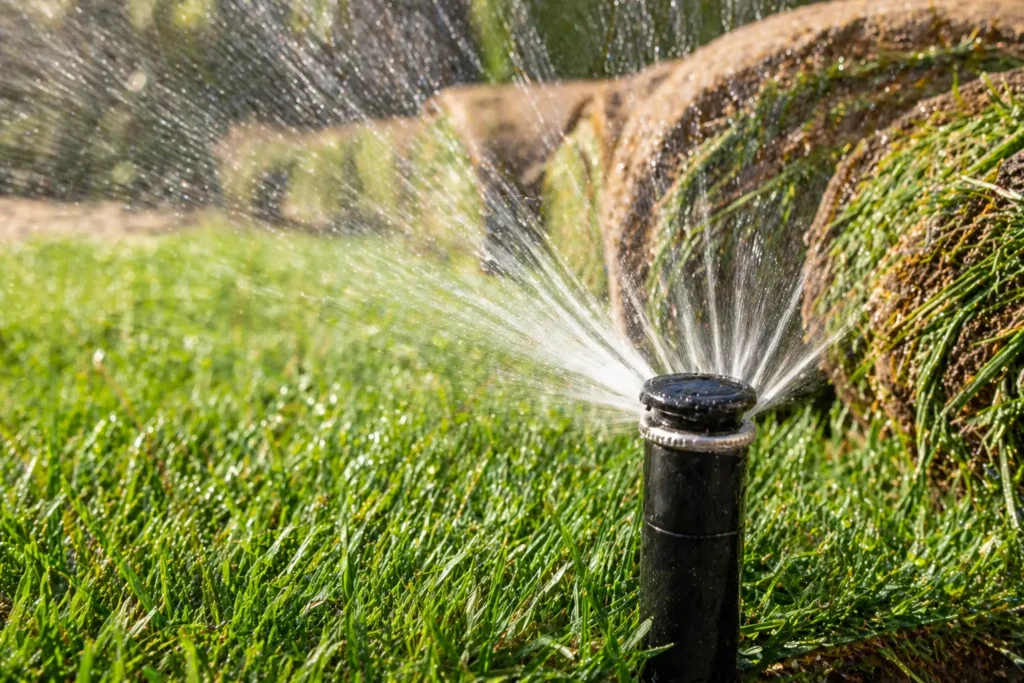
The Ultimate Watering Schedule (Weeks 1 to 4)
Your new grass needs a strict transition period to push roots into the topsoil. Follow this exact schedule using a reliable smart controller, like a Rain Bird or Orbit B-hyve, to automate the process.
- Week 1 (Days 1-7): Water 2 to 3 times daily (morning, noon, and early afternoon). Apply about 0.25 inches of water per cycle. Keep the sod and top 2 inches of soil continuously wet.
- Week 2 (Days 8-14): Reduce watering to once a day in the early morning. Increase the duration to soak the soil to a depth of 3 inches.
- Week 3 (Days 15-21): Cut back to watering every other day. You want to encourage roots to dive deeper searching for moisture.
- Week 4 (Days 22+): Transition to standard lawn care. Water deeply 1 to 2 times a week, aiming for 1 inch of total water per week.
Cool-Season vs. Warm-Season Grass Needs
Depending on where you live in the US, temperatures and turf types drastically change your watering requirements.
If you live in the South, warm-season grasses like Bermuda, Zoysia, or St. Augustine are laid during hot weather. If daytime temperatures exceed 85°F, you may need up to 4 short watering cycles daily to combat rapid evaporation.
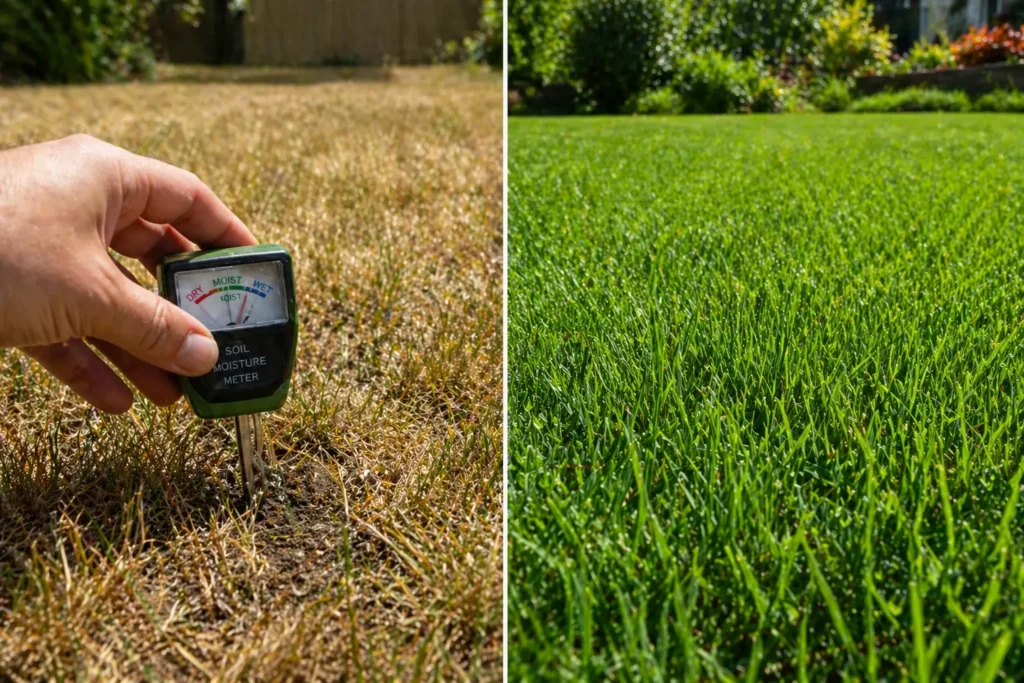
In northern states, cool-season grasses like Kentucky Bluegrass or Tall Fescue are usually installed in the cooler spring or fall. At temperatures around 65°F to 75°F, 2 cycles a day is plenty. Overwatering cool-season grass in wet weather quickly leads to fungal diseases like Rhizoctonia brown patch.
4 Signs You Are Watering Incorrectly
It is incredibly easy to overwater or underwater your new lawn. Look closely at the edges of the sod rolls to diagnose moisture problems before the grass dies.
- Shrinking gaps: If the seams between the sod rolls pull apart and expose the soil, the sod is severely under-watered and shrinking.
- Crispy gray/blue blades: Grass blades that look dull, fold in half, or turn a grayish-blue tint are screaming for water.
- Squishy, sinking soil: If your foot leaves a deep imprint or water pools on the surface after the sprinklers shut off, you are overwatering.
- Rotten smell: Lift a corner of the sod. If it smells like a swamp or the roots are black and slimy, back off the water immediately to stop root rot.
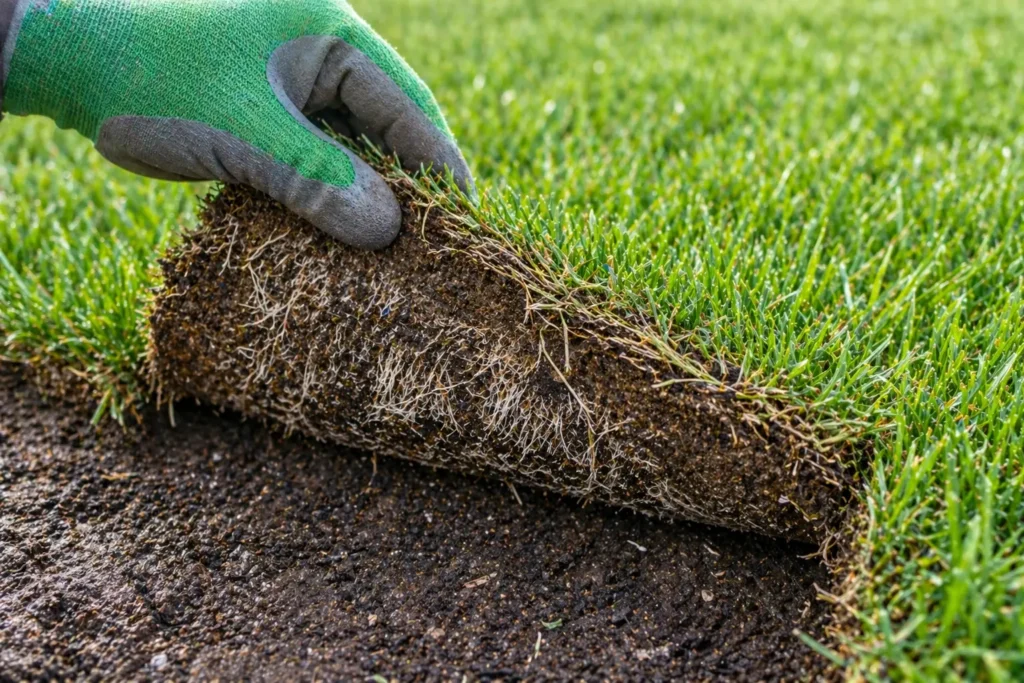
Comparison: New Sod vs. Established Lawn Watering
Understanding the difference between establishing turf and maintaining an old lawn is crucial. They require completely opposite watering strategies.
- Root Depth: New sod has zero root structure and relies entirely on the top 1 inch of soil. Established lawns have roots extending 6 to 8 inches deep.
- Watering Frequency: New sod needs daily, shallow watering. Established lawns need infrequent, deep watering (every 3-5 days).
- Fertilizer Needs: New turf needs a phosphorus-rich starter fertilizer like Scotts Turf Builder Starter to push roots. Established lawns rely more on heavy nitrogen for top growth.
What to Read Next
Once your new sod is fully established, protecting your yard from invasive threats is the next step to maintaining a flawless landscape. Learn how to spot signs of termites in mulch near your foundation, and discover the best time to spray weeds before or after rain to keep your fresh grass perfectly pristine.
People Also Ask (FAQ)
Can you overwater new sod?
Yes, overwatering is a common mistake that drowns developing roots by depriving them of oxygen. If the ground feels like a wet sponge, water pools on the surface, or you notice a foul odor, you are applying too many gallons per cycle and risking devastating fungal diseases.
What time of day is best to water new sod?
The optimal time for your first heavy watering cycle is early morning, between 4:00 AM and 8:00 AM. This reduces wind drift and evaporation while giving the grass blades time to dry before nightfall, which prevents lawn diseases.
When should I first mow my new sod?
Wait until the roots have firmly attached to the soil, which usually takes about 14 to 21 days. Gently tug on the grass blades; if the sod lifts, it’s not ready. When you do mow, set your deck to 3 inches or higher and never cut more than one-third of the blade length.