
Finding bat guano in the attic is a serious biological hazard that requires immediate attention, not just a nuisance. Bat droppings harbor Histoplasma capsulatum, a fungus that causes severe respiratory disease when airborne spores are inhaled. You must seal entry points, safely remove the waste using a HEPA-filter vacuum, and sanitize the insulation to prevent health risks and structural damage.
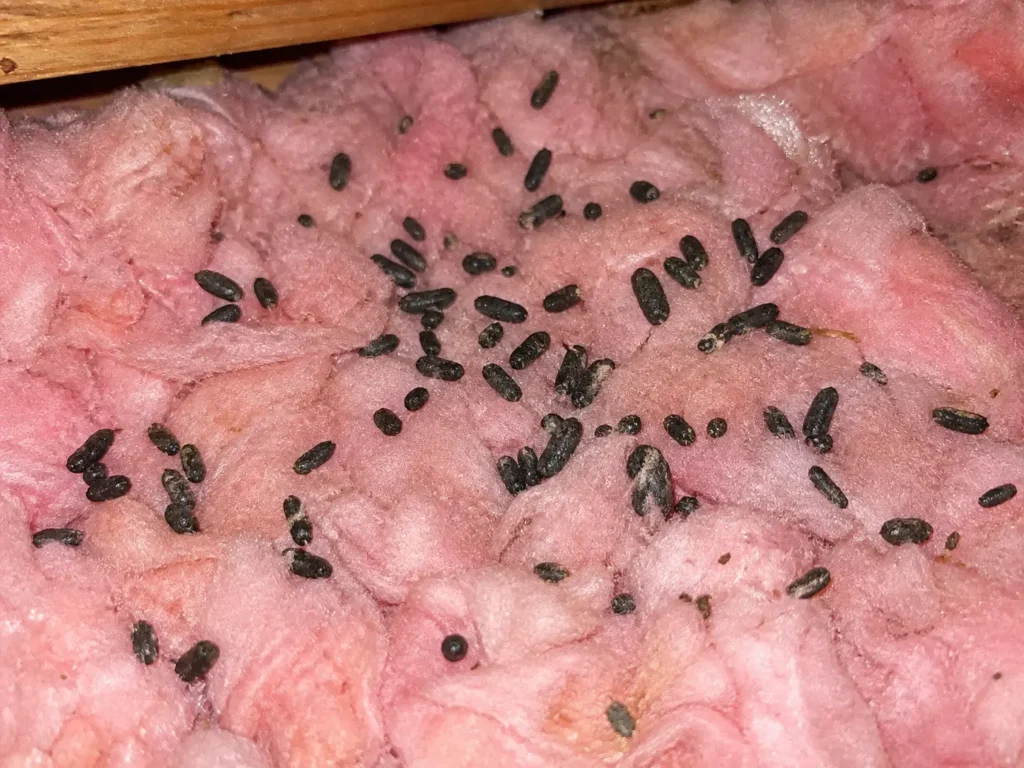
Is it Really Bat Guano? Identification Guide
Bat guano looks strikingly similar to mouse droppings to the untrained eye, but misidentifying the pest will lead to failed exclusion attempts. If you suspect a bat colony is roosting in your home, grab a bright flashlight and look for these specific visual and textural signs:
- Size and Shape: The pellets are typically 1/4 to 3/8 inches long. They are slightly larger, thicker, and more uniform than common rodent waste.
- Texture and Sparkle: Bat guano is highly crumbly and porous. Because North American bats are insectivores, their droppings are packed with shiny, undigested insect exoskeletons (wings, legs). When you shine a light on the pile, it will glitter.
- Location and Clumping: Unlike solitary mice that scatter droppings along baseboards or runways, bats defecate while hanging. This causes the guano to pile up vertically directly under their roosting spots, often creating large mounds near attic ridges, chimney flashing, or gable vents.
- Odor: Large accumulations produce a potent, sharp ammonia smell. As the urea breaks down in the poorly ventilated, enclosed space of an attic, the stench can easily seep into your living quarters below.
Root Causes: Why Are Bats in Your Attic?
Bats are not trying to invade your home; they are simply seeking high, dry, and warm locations to give birth and raise their flightless pups during the summer months. Your dark attic perfectly mimics the stable, protected environment of a natural cave.
They access the space through structural vulnerabilities. A bat can squeeze through a gap as small as 3/8 of an inch wide. Common entry points include deteriorated fascia boards, loose soffit panels, unprotected gable vents, and gaps where rooflines intersect.
Furthermore, attic temperatures routinely hovering between 80°F and 100°F provide the exact incubation environment needed for maternity colonies. Common US species like the Little Brown Bat and the Big Brown Bat will return to the exact same attic year after year if the entry points are not professionally sealed.
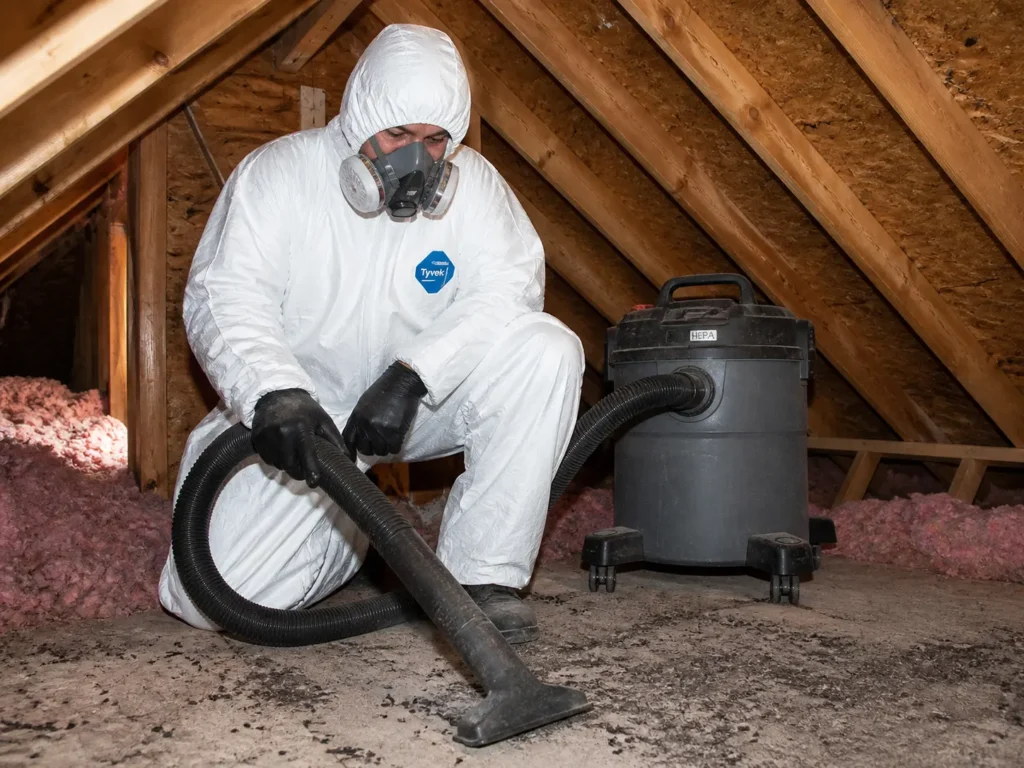
Step-by-Step Solution: How to Remove Bat Guano Safely
Never sweep, shovel dry, or use a standard shop vacuum on bat guano. Disturbing the dry dust releases microscopic Histoplasma spores directly into your breathing zone. Follow this strict professional protocol to ensure safety:
- Step 1: Don the Proper PPE. Equip a full Tyvek protective suit with a hood, disposable heavy-duty gloves, and a NIOSH-approved N95 or P100 half-face respirator. Standard paper dust masks will not stop fungal spores.
- Step 2: Evict and Exclude. You must verify the bats are gone. Install one-way exclusion tubes over the main exit points, allowing bats to drop out but not re-enter. Seal all secondary gaps larger than 1/4 inch using 1/4-inch galvanized hardware cloth and a professional expanding foam like Great Stuff Pestblock.
- Step 3: Dampen the Droppings. To suppress hazardous dust, lightly mist the bat guano in the attic with a 10% bleach solution or a professional-grade biocide like Nisus DSV (mixed at 1 oz per gallon of water). Let the solution sit for 10 to 15 minutes.
- Step 4: Vacuum and Bag. Use a commercial industrial vacuum equipped with a true HEPA filter to suck up the damp droppings. For massive mounds, carefully scoop the material into double-bagged, heavy-duty 3-mil contractor trash bags. Seal the bags tightly before moving them through your home.
- Step 5: Sanitize and Replace Insulation. Remove and discard any heavily soiled fiberglass or blown-in cellulose insulation, as it cannot be salvaged. Spray the exposed wood decking and joists with a professional enzymatic cleaner like Bac-A-Zap to break down the remaining organic matter, neutralize the ammonia odor, and kill lingering pathogens.
Expert Comparison: Bat Guano vs. Mouse Droppings
Treating a bat infestation like a mouse problem is a massive waste of time and money. Setting snap traps loaded with peanut butter will do absolutely nothing to solve a bat colony roosting in your rafters.
- Mouse Droppings: Smooth, hard, and pointed at the ends. They are scattered randomly, often near food sources in the kitchen, along baseboards, or near the attic hatch. They do not sparkle under a flashlight and turn rock-hard over time.
- Bat Guano: Blunt at both ends, easily crushed into a fine dust, and piles up in concentrated mounds directly beneath the roof peak. They contain visible insect parts that reflect light.
PRO-TIP: Check your state and federal wildlife laws before performing any exclusion work. Bats are federally protected, and the Endangered Species Act mandates strict “blackout dates” (typically May through mid-August in the US). It is illegal to block bats from your attic during maternity season, as flightless pups will be trapped inside to die, creating an unbearable odor and severe maggot infestation in your ceiling.
What to Read Next
Once you have secured your attic and safely removed the bat guano, it is critical to address the crawling insects exploiting those exact same structural gaps in your home’s exterior. If you noticed chewed wood near the roofline entry points during your inspection, learn how to use boric acid for carpenter ants to stop further framing damage. Finally, since dark attics are prime real estate for arachnids, follow our professional guide to get rid of spiders permanently to keep your newly sanitized space entirely pest-free.
People Also Ask (FAQ)
Is bat guano in the attic dangerous?
Yes, it is highly dangerous. Inhaling airborne spores from dried bat guano can cause Histoplasmosis, a severe, sometimes fatal lung infection. Additionally, the highly acidic nature of the guano and urine can rot structural wood, deteriorate drywall, and completely ruin your attic insulation over time.
Will homeowners insurance cover bat guano removal?
Most standard US home insurance policies consider bat infestations to be a preventative maintenance issue and will not cover removal or remediation. However, if the sudden weight of the guano accumulation collapses a ceiling or causes secondary water damage, the resulting structural repairs might be partially covered.
How much does it cost to clean up bat guano?
Professional attic remediation and exclusion usually ranges from $500 to $3,000. The final bill depends heavily on the square footage (sq ft) of the attic, the depth of the guano accumulation, how many entry points need sealing, and how much contaminated insulation requires replacement.