
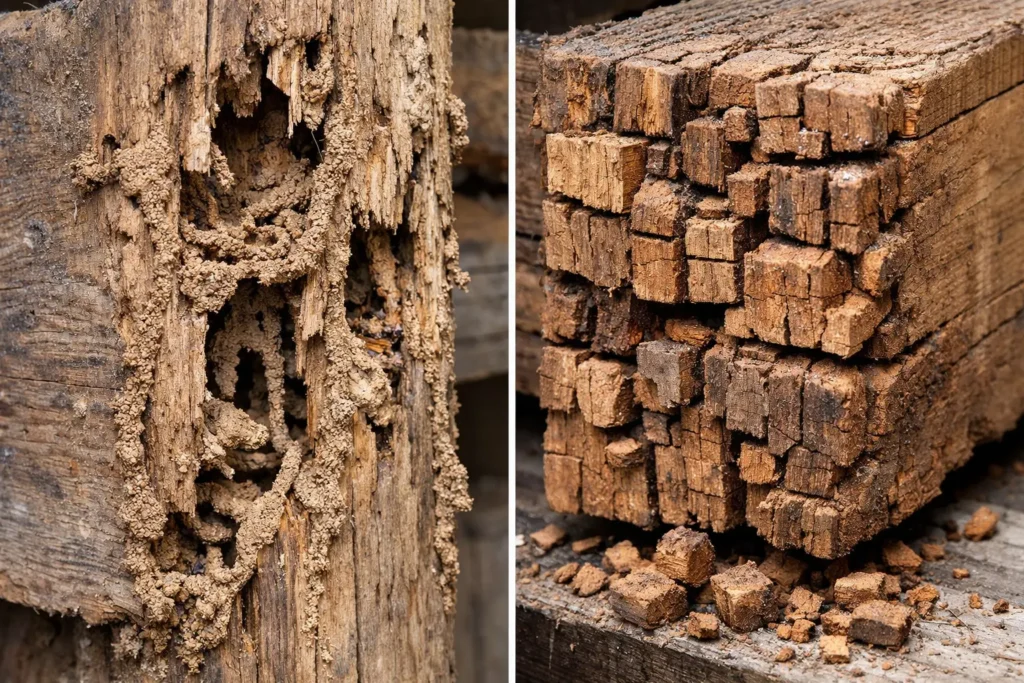
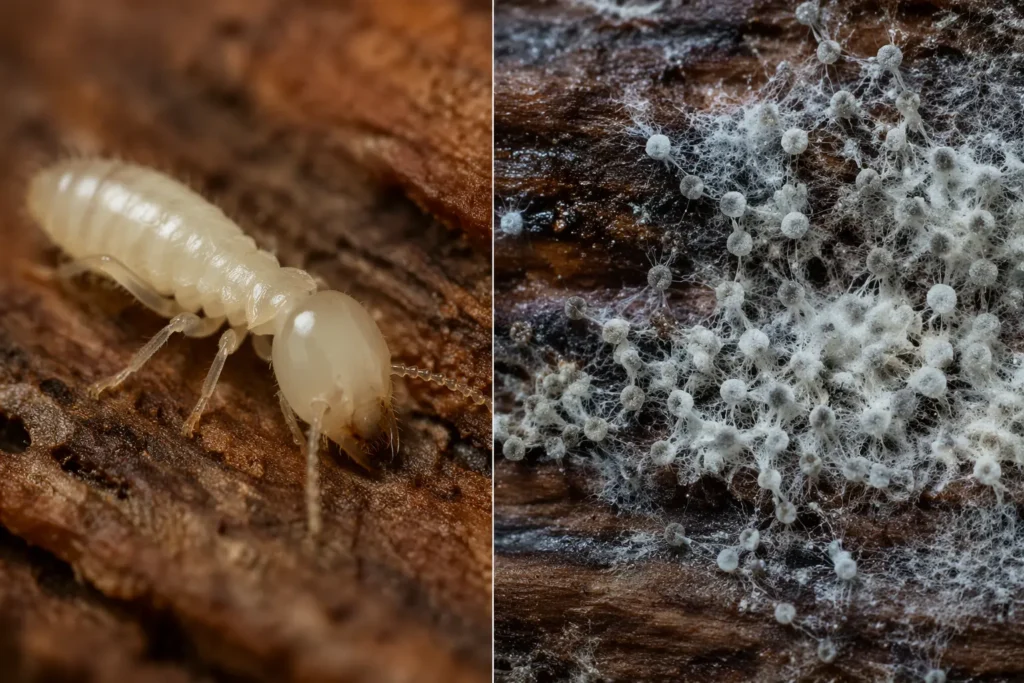
The fastest way to tell termite damage vs wood rot is by inspecting the wood’s texture and structure. Termites eat the soft wood along the grain, leaving behind hollow, layered galleries filled with soil or mud. Wood rot breaks down the wood entirely, causing it to crack in a blocky, cuboidal pattern or turn into a soft, spongy mush.
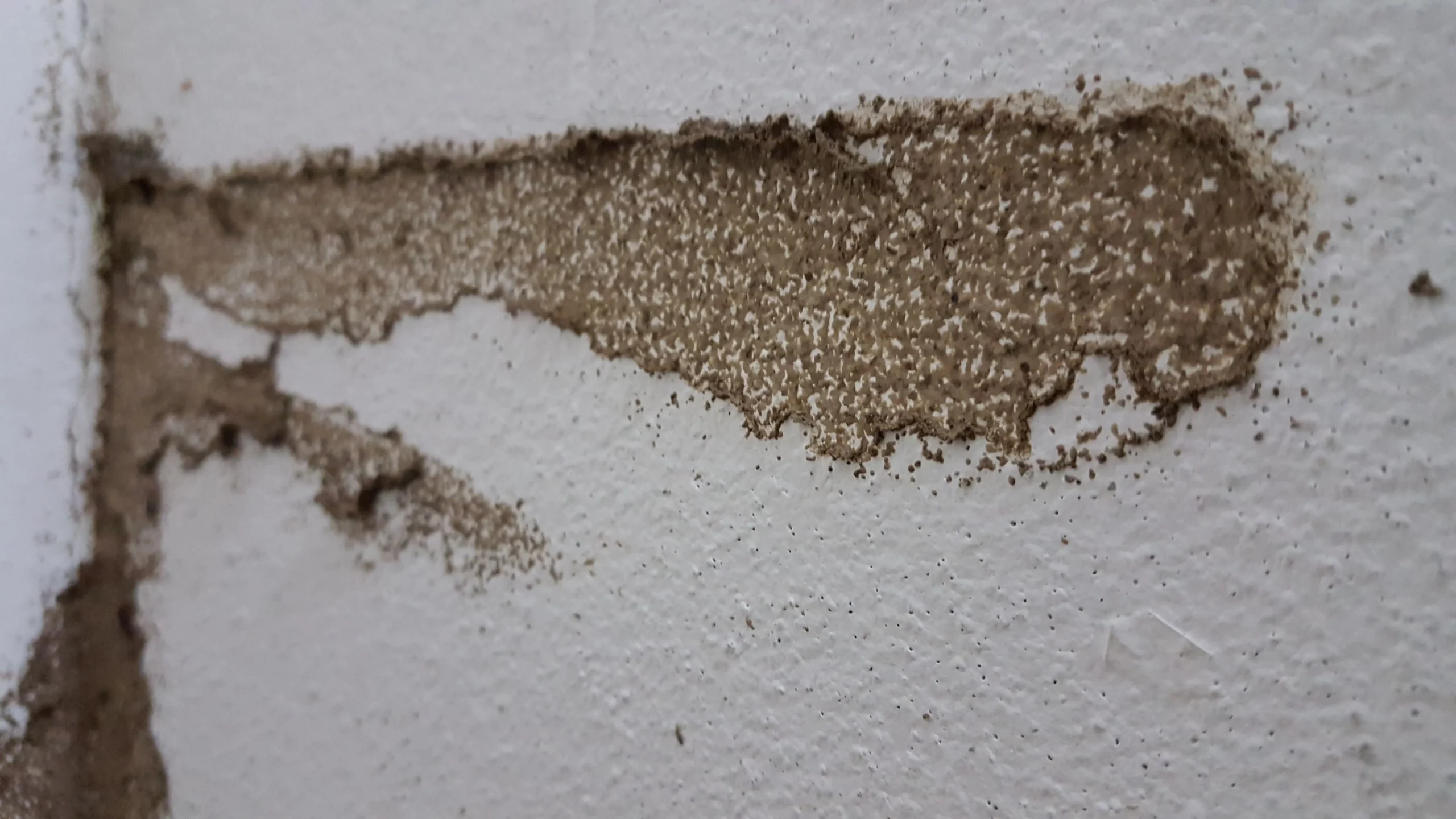
Mistaking one for the other can cost you thousands in structural repairs. Both destroy the timber framing of US homes, but they require entirely different chemical treatments and prevention strategies.
Key Symptoms to Identify the Problem
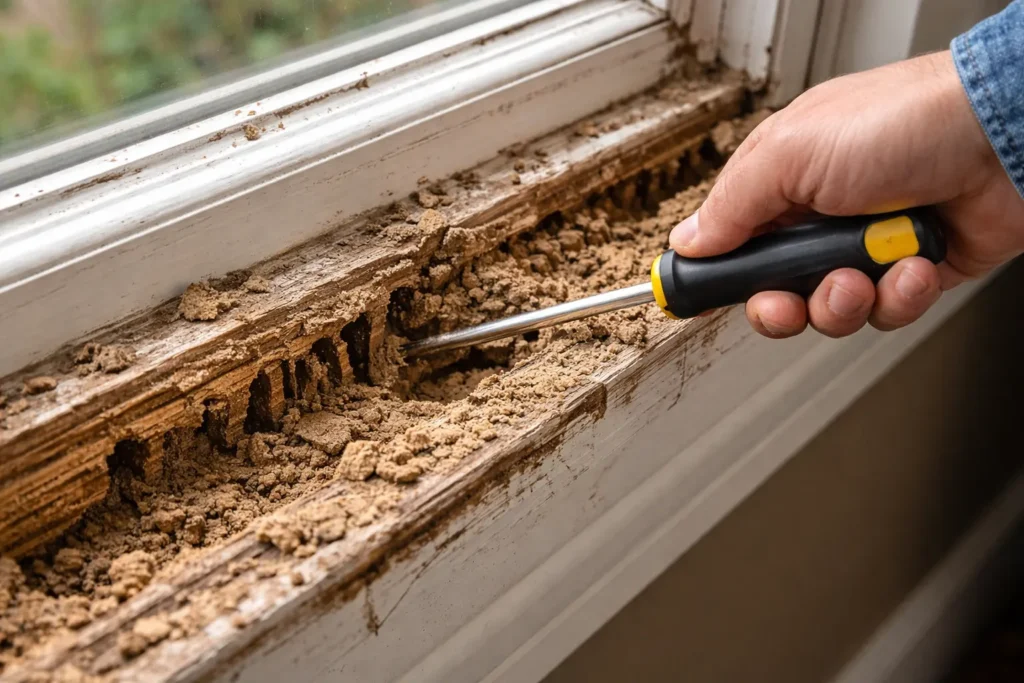
Before you buy expensive chemicals or call a contractor, grab a flathead screwdriver and perform a poke test. Press the tool into the damaged wood with moderate pressure. How the wood gives way will immediately tell you what you are dealing with.
If you suspect an active infestation or fungal infection, look closely for these unmistakable signs:
- Termite Signs: You will find pencil-sized mud tubes running up foundation walls to reach the wood.
- Termite Galleries: Inside the wood, you will see hollowed-out channels running parallel to the wood grain.
- Termite Frass: Drywood termites leave behind tiny, six-sided fecal pellets that look like small piles of sawdust or coffee grounds.
- Wood Rot Signs: The wood feels damp, spongy, or crumbles easily in your hand without applying much pressure.
- Fungal Growth: You may see white, yellow, or brown fungal spores or mushroom-like growths emerging from the wood surface.
- Cuboidal Cracking: Brown rot (often mistakenly called dry rot) causes the wood to shrink and split into distinct rectangular chunks.
Root Causes of Structural Wood Damage
Wood-destroying insects and decay fungi both thrive in specific microclimates within your home. Subterranean termites, the most destructive species in the US, live underground and constantly seek moisture. They build mud tubes to travel safely from the soil to your home’s framing, subfloors, and floor joists.
Drywood termites, common in warmer southern states like Florida and California, don’t need soil contact. They fly directly into your attic or exterior siding, thriving on the ambient humidity found in coastal climates.
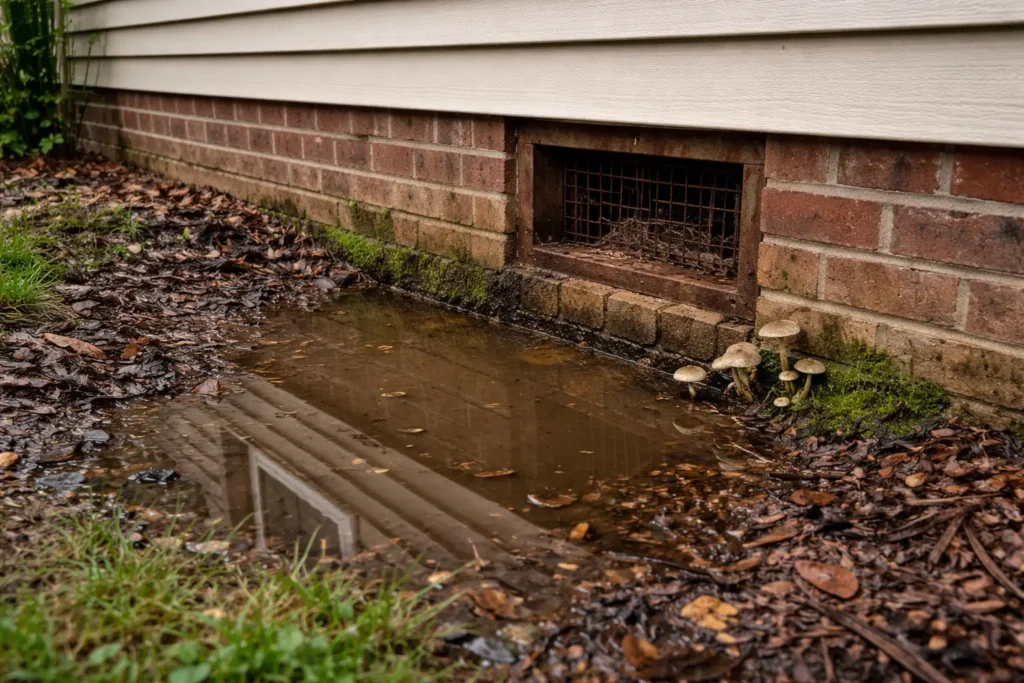
Wood rot, on the other hand, is purely a moisture control failure. Wood-decay fungi require the moisture content of the wood to sit consistently above 20%. This is almost always caused by a secondary issue on your property.
- Leaking gutters dumping water directly next to the foundation wall.
- Improper yard grading allowing water to pool around crawlspace vents.
- Plumbing leaks hiding inside wall voids or under bathroom subfloors.
- Sprinkler heads hitting exterior wood siding on a daily basis.
Termite Damage vs Wood Rot: The Ultimate Comparison
When comparing these two destructive forces, the primary distinction is biological versus environmental. Termites are living colonies that actively consume the cellulose in your wood for nutrition. They will bridge gaps and build tunnels to find food, even if the wood is perfectly sound and dry (in the case of drywood termites).
Wood rot is an environmental decay process. Fungi cannot travel or build tubes to find food; they require the environment to change to suit their needs. If you eliminate the moisture source, the fungus stops growing and the rot halts entirely.
If you eliminate the moisture source near a subterranean termite colony, they will simply retreat to the soil and bring their own moisture up through their mud tubes. This means drying out a crawlspace fixes rot, but it will not eliminate an active termite colony.
Step-by-Step Solutions and Treatments
You must tackle the specific threat with the correct commercial-grade products. Do not rely on home remedies or hardware store bug sprays to protect your home’s structural integrity.
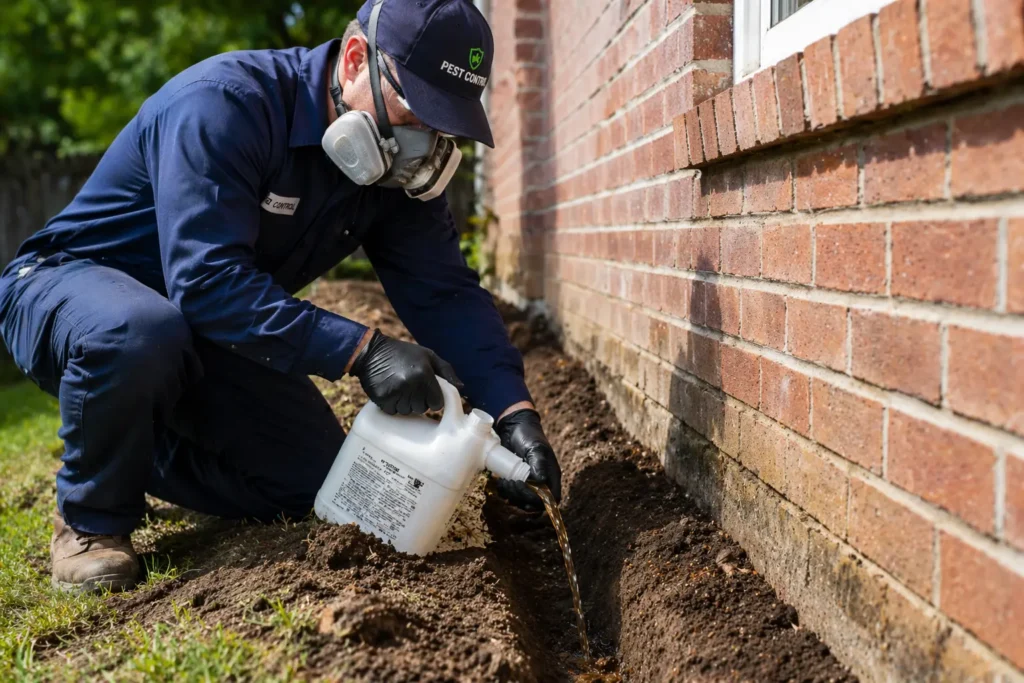
For Subterranean Termites, you need to establish a continuous chemical barrier in the soil around your foundation.
- Dig a trench 6 inches wide by 6 inches deep directly against the foundation wall.
- Mix Termidor SC (fipronil) or Taurus SC at a rate of 0.8 fl oz per gallon of water.
- Apply exactly 4 gallons of the finished solution per 10 linear feet of trench.
- Alternatively, install Sentricon or Advance Termite Bait Stations every 10 to 15 feet around the perimeter of the yard.
For Wood Rot and fungal decay, your first priority is stopping the water source. Once the leak is fixed, you must treat the surrounding healthy wood and replace the damaged sections.
- Apply a borate-based wood preservative like Bora-Care or Tim-bor to all exposed, unfinished wood.
- Mix Bora-Care at a 1:1 ratio with warm water for active fungal infections.
- Spray the solution directly onto the wood until it is dripping wet to ensure deep penetration.
- For minor cosmetic rot, scrape out the soft wood and fill the void with Bondo Wood Filler or Abatron LiquidWood epoxy.
People Also Ask (FAQ)
Can wood rot attract termites?
Yes. Subterranean termites are highly attracted to the moisture and softened cellulose found in rotting wood. Fungal decay actually breaks down the wood fibers, making it significantly easier for termites to chew through and digest the timber. If you have wood rot near the ground, a termite infestation is highly likely to follow.
How fast do termites destroy a 1000 sq ft house?
A mature colony of 60,000 subterranean termites can consume about 1 foot of a standard 2×4 pine board in roughly six months. While they won’t destroy a 1000 sq ft house overnight, undetected colonies can cause severe, localized structural damage to load-bearing joists and sill plates within three to five years.
Is it safe to paint over dry rot?
No, you should never paint over dry rot. Paint only traps the moisture inside the wood, accelerating the fungal decay and ensuring the wood will completely disintegrate beneath the painted surface. You must remove the moisture source, treat the area with a fungicide like Bora-Care, and replace or patch the structural timber before applying primer and paint.
I actually love your providing these details for folks aiming
to get more information on issues similar to this.
Your blog page was well crafted and very well researched, that is certainly significantly valued.
I actually am constantly searching for new websites to follow and read on a regular basis.