
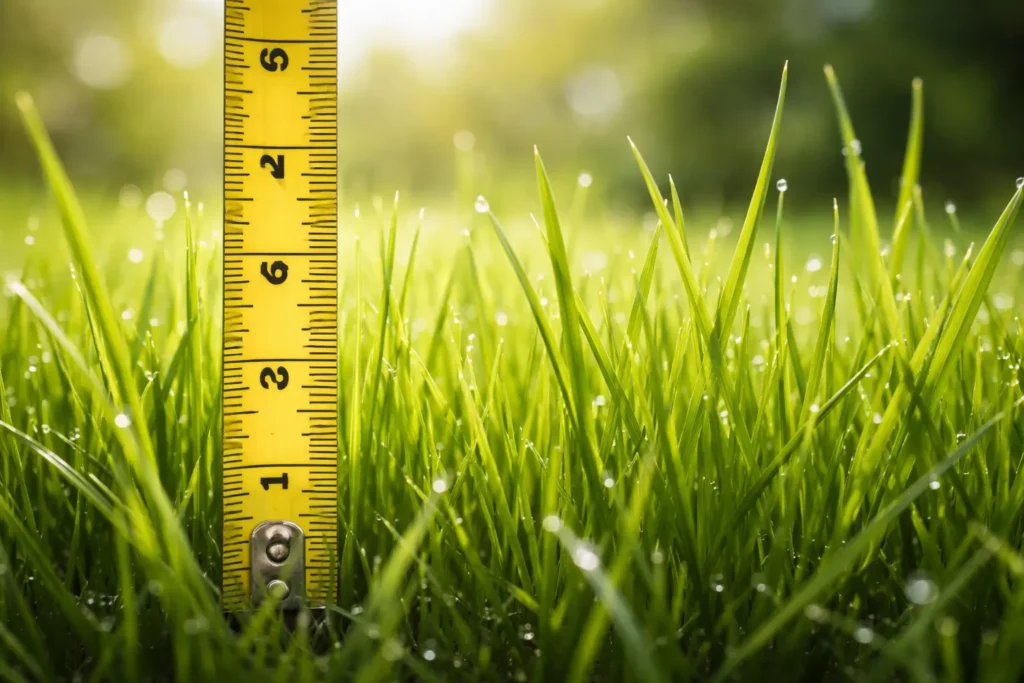
You should start mowing your yard when the grass reaches 2 to 3 inches tall and the soil temperature consistently hits 50°F. Cutting too early damages fragile new roots, while waiting too long invites pests and disease.
3 Clear Signs It is Time for the First Cut
Don’t rely on the calendar to schedule your first mow. Weather fluctuates wildly across the US, so you must observe your specific yard’s conditions. Look for these exact indicators:
- Height benchmark: The turf has actively grown to at least 2.5 to 3 inches.
- Temperature check: Daytime temperatures stay above 50°F for a full week.
- Active greening: You notice a distinct color shift and visible new blades pushing through the winter thatch.
Cool-Season vs. Warm-Season Grass Rules
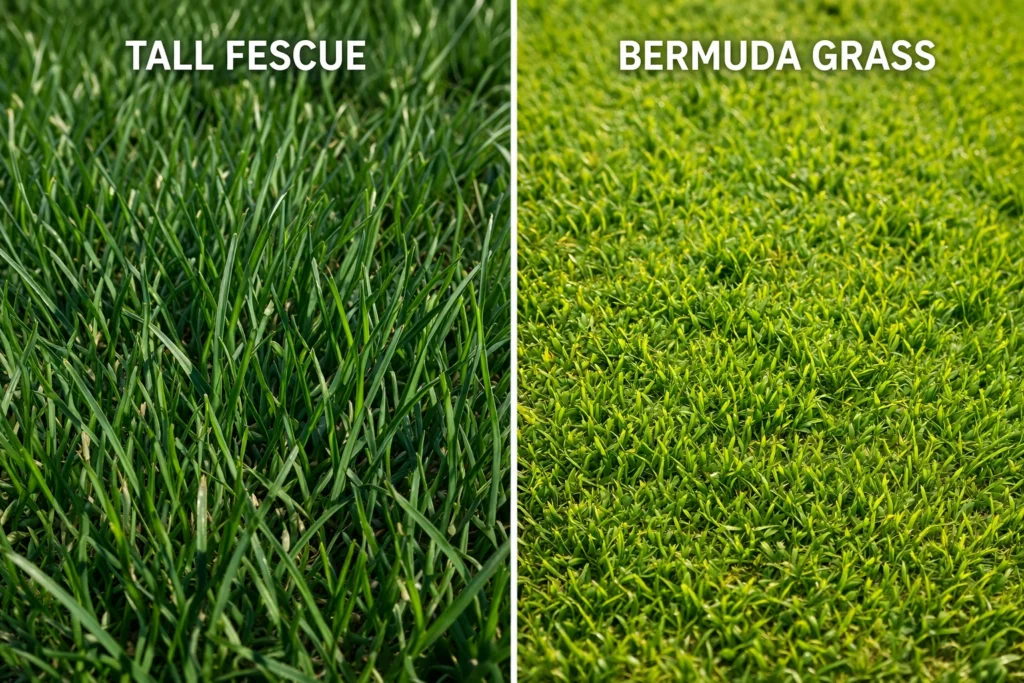
Northern states grow cool-season turf like Kentucky Bluegrass and Tall Fescue. These wake up early when soil temperatures hit 50°F to 55°F. Your first cut will usually be around late March or April.
Southern states rely on warm-season varieties like Bermuda, Zoysia, and St. Augustine. These remain dormant longer and require soil temperatures above 65°F. Expect to fire up the mower in late April or early May.
Mowing Too Early vs. Waiting Too Long
Jumping the gun is a common, damaging mistake. Mowing before the ground fully thaws compacts the damp soil and tears fragile grass crowns. It also creates a breeding ground for early-season fungal diseases.
Waiting too long creates a jungle that blocks sunlight from reaching the lower blades. If you let the grass exceed 4 inches, cutting it back all at once will shock the plant. Never remove more than 1/3 of the grass blade in a single session.
Step-by-Step: Preparing for the First Spring Mow
Before your wheels touch the turf, your equipment and yard need to be prepped. Follow these steps to ensure a clean, healthy cut that promotes growth:
- Clear the yard: Rake up twigs, acorns, and winter debris that block sunlight and dull mower blades.
- Apply pre-emergent: If using Scotts Halts Crabgrass Preventer or Spectracide, apply it early, but wait at least 2 days before mowing.
- Sharpen blades: A dull blade tears grass, inviting disease. Ensure your Toro, Honda, or EGO mower has a freshly sharpened blade.
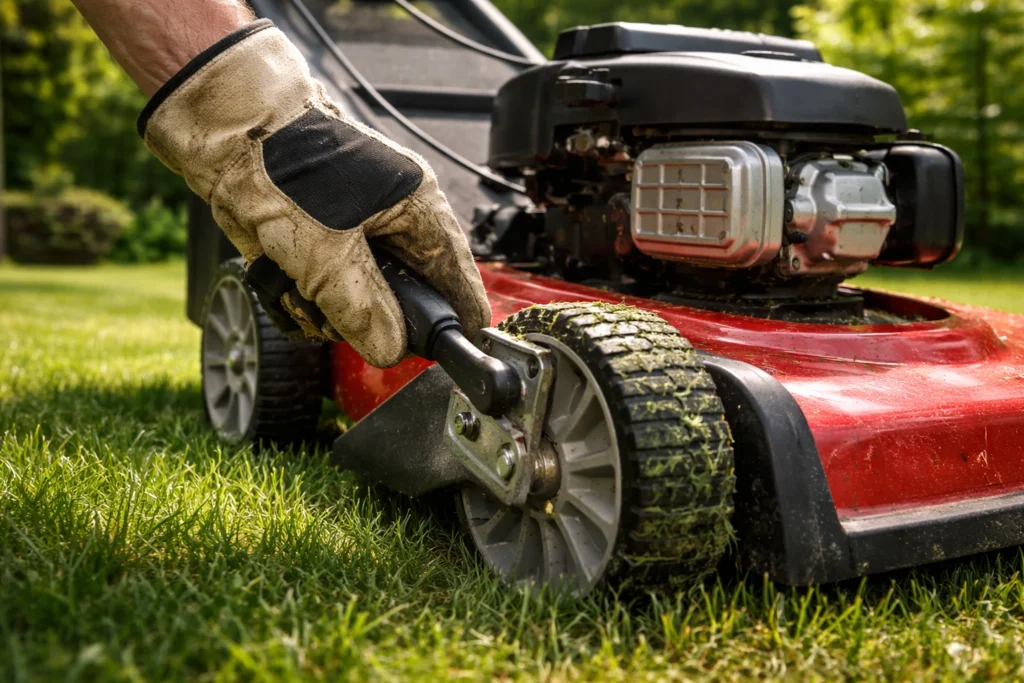
- Set the deck high: Adjust your mower deck to 2.5 or 3 inches for the first few cuts to encourage deep root development.
What to Read Next
Once you’ve mastered your spring mowing schedule, ensure your turf stays healthy by learning when should you aerate your lawn to relieve soil compaction. If you notice your lawn mower leaves uncut grass after the first trim, check our troubleshooting guide to fix common blade and deck issues.
People Also Ask (FAQ)
Should I scalp my lawn for the first mow?
No, you should never scalp cool-season grasses. However, for warm-season grasses like Bermuda, a slight drop to 1.5 inches on the first cut can help remove dead winter tissue and allow the sun to warm the soil faster.
Can I mow my lawn when it’s wet?
Mowing wet grass is highly discouraged. It clogs the mower deck, spreads fungal diseases, and results in an uneven cut because the heavy, wet wheels compact the soggy soil.
How short should I cut the grass in early spring?
Set your mower to cut at 2.5 to 3 inches for most grass types. Leaving the turf slightly taller in the spring helps it develop deeper roots and physically crowds out early spring weeds like dandelions.