
Immediate Action: Natural Poison Ivy Elimination Strategies
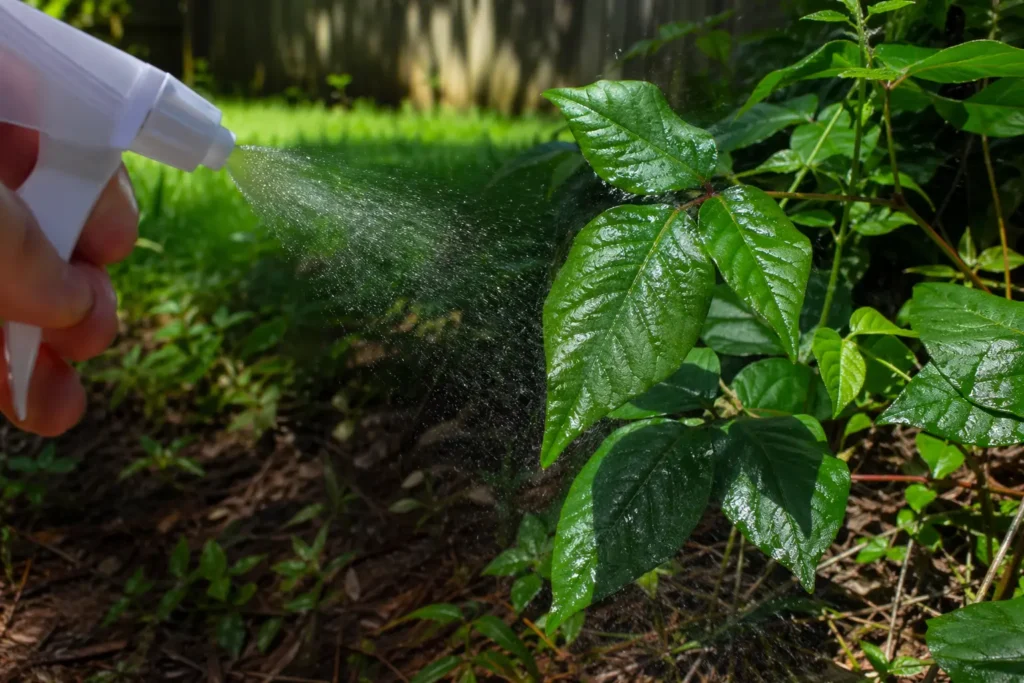
You can kill poison ivy fast using a potent mixture of 1 gallon of white vinegar, 1 cup of table salt, and 1 tablespoon of Dawn liquid dish soap. This poison ivy killer natural solution destroys the plant’s protective cell walls rapidly.
Apply this homemade herbicide on a sunny day when ambient temperatures exceed 75°F for maximum foliage desiccation. Spray the mixture directly onto the leaves until completely saturated, being careful to avoid your surrounding lawn.
Identifying the Threat: Signs You Have Poison Ivy in Your Yard
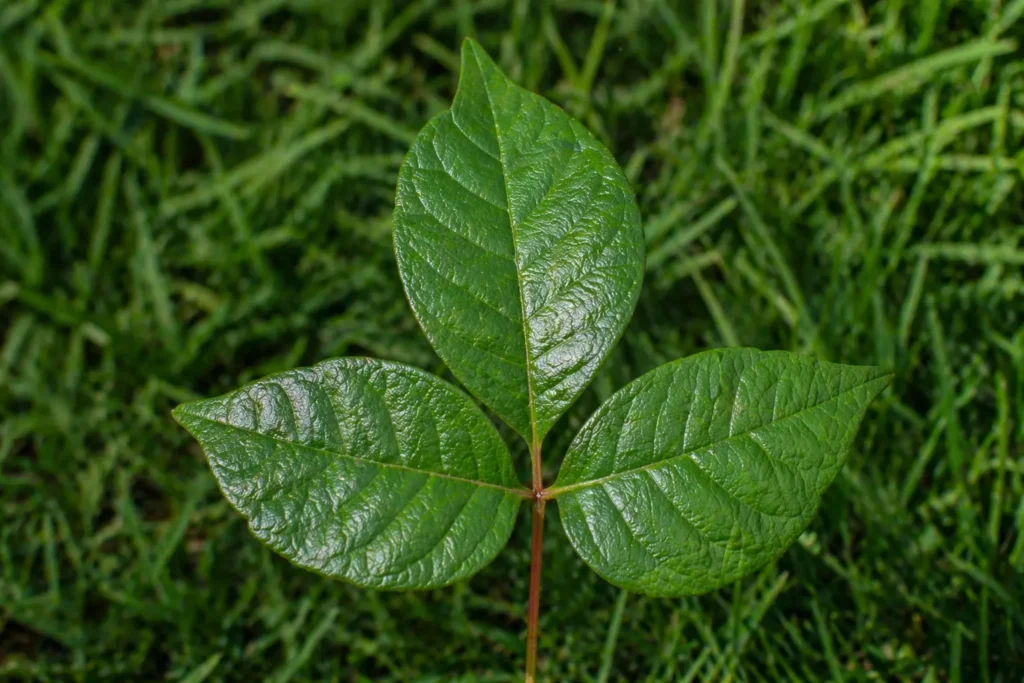
Before mixing and spraying, confirm you are targeting the correct invasive weed. Poison ivy (Toxicodendron radicans) thrives aggressively across both cool-season Northern lawns and warm-season Southern yards.
Look for these unmistakable botanical characteristics:
- Clusters of exactly three almond-shaped leaflets.
- The middle leaflet features a slightly longer stem than the two side leaflets.
- Leaves alternate along the vine (they never grow directly opposite each other on the stem).
- Fuzzy or hairy aerial roots attaching firmly to trees, fences, or brick walls.
- Foliage that turns a brilliant red or orange during the fall months.
Root Causes: Why Poison Ivy Invades Your Lawn
Poison ivy thrives in disturbed soils and areas with partial shade, frequently creeping into your yard from adjacent wooded edges. Birds actively consume the plant’s white berries and drop seeds randomly across your property.
It aggressively colonizes bare, unseeded patches in your landscape. Maintaining a thick, healthy turfgrass canopy is your absolute best first line of defense against new toxic vine germination.
Furthermore, neglected fence lines and overgrown brush piles create the perfect humid microclimate for these vines. Clearing organic debris removes the exact habitat where poison ivy roots prefer to establish themselves.
Step-by-Step Guide: Applying Your Poison Ivy Killer Natural Formula
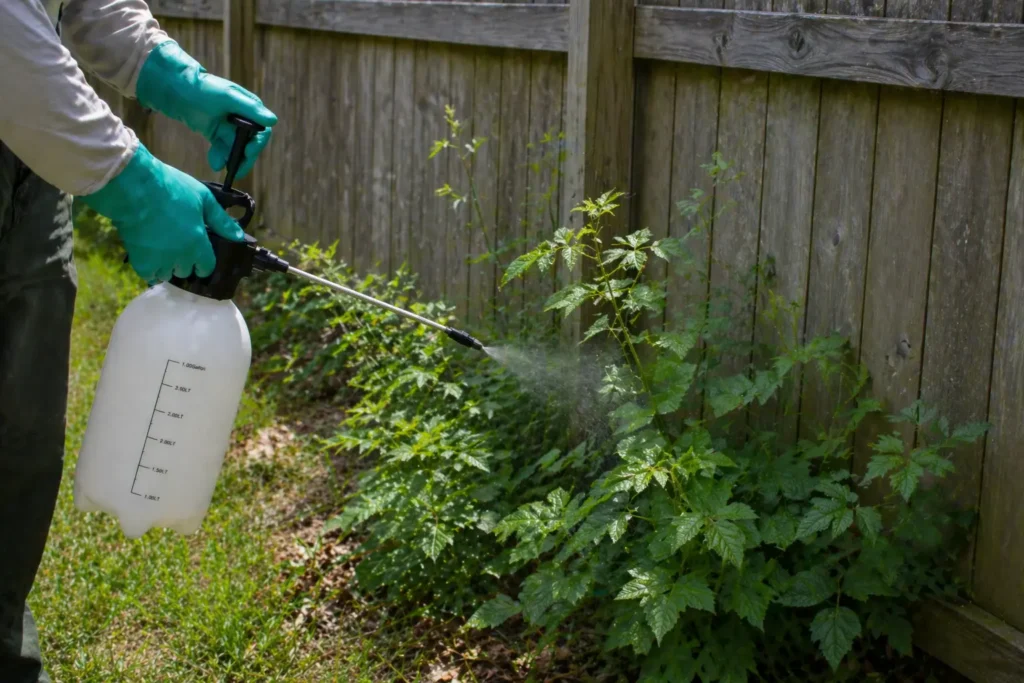
Protective gear is absolutely non-negotiable when dealing with urushiol oil. Wear heavy rubber gloves, a long-sleeved shirt, thick pants, and safety goggles before you begin mixing your natural herbicides.
Follow these precise steps for maximum eradication:
- Boil 1 gallon of water and dissolve 1 cup of table salt completely to create a strong, dehydrating saline base.
- Mix in 1 gallon of horticultural vinegar (20% to 30% acetic acid) for a commercial-grade natural foliage burn.
- Add 1 oz of liquid dish soap to act as a chemical surfactant, helping the liquid stick to the waxy leaf coating.
- Pour the formula into a heavy-duty pump sprayer.
- Thoroughly drench the toxic foliage from a safe distance of at least 2 feet.
Reapply this solution every 48 hours until the plant collapses. Established vines with thick, mature root systems may require up to three heavy applications to completely wither to the soil level.
Safe Disposal: Handling Dead Poison Ivy
Do not assume a dead plant is a safe plant. The highly reactive urushiol oil remains potent on dead vines, decaying leaves, and exposed roots for several years.
Use long-handled tongs or a shovel to transfer the dead vegetation into heavy-duty plastic trash bags. Seal the bags tightly and dispose of them with your regular household municipal trash.
Never compost dead poison ivy, as the oils will contaminate your entire compost bin. Most importantly, never burn the dead vines, as the resulting smoke carries vaporized urushiol directly into your lungs.
Commercial Alternatives: Top Natural Urushiol Eradicators
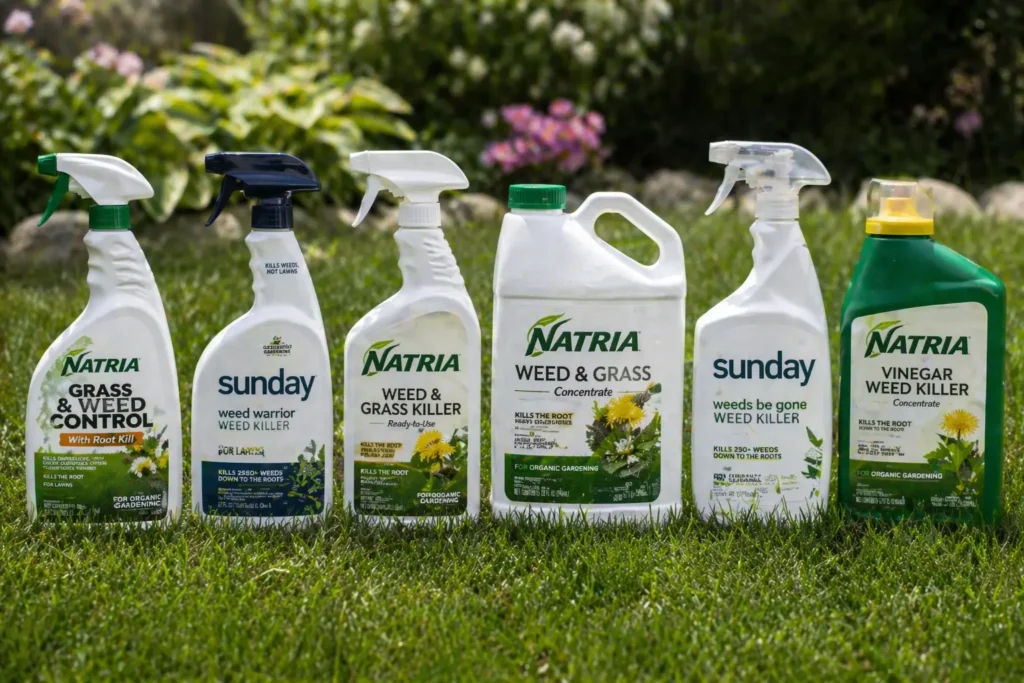
If DIY chemical mixing isn’t your preference, several top-tier US lawn care brands offer highly effective organic alternatives. Look for commercial yard products containing active ingredients like clove oil, citric acid, or ammonium nonanoate.
Top natural commercial options include:
- Natria Grass & Weed Control With Root Kill: Uses an ammoniated soap of fatty acids to burn down invasive foliage fast.
- Sunday Weed Warrior: An organic, fast-acting herbicidal soap perfect for spot-treating vines near your patio or deck.
- EcoLogic Weed & Grass Killer: Relies heavily on rosemary oil and cinnamon oil to naturally destroy invasive broadleaf weeds.
- Captain Jack’s Deadweed Brew: Utilizes caprylic acid derived from palm oil to quickly dehydrate toxic plants.
Comparison: Poison Ivy vs. Common Lookalike Vines
Misidentification wastes valuable time and expensive natural weed killers. Always verify the exact plant structure before aggressively spraying your property boundaries or tree trunks.
Keep these critical differences in mind:
- Poison Ivy vs. Virginia Creeper: Virginia Creeper features five leaves per cluster, whereas poison ivy strictly has three.
- Poison Ivy vs. Boxelder: Boxelder tree sapling leaves sit opposite each other on the main stem; poison ivy leaves alternate.
- Poison Ivy vs. Poison Oak: Poison oak leaves are deeply lobed (resembling real oak leaves) and are predominantly found in Western or Southern US regions.
- Poison Ivy vs. Blackberry Vines: Blackberry vines possess thick, sharp thorns along the stems, while poison ivy stems are completely thornless.
Next Steps
Once you’ve safely eradicated those toxic vines, it’s time to focus on reviving your healthy turfgrass. Learn exactly when to start mowing your lawn this season to encourage thick growth, and discover how to quickly fix any yellow spots on your grass caused by accidental vinegar overspray.
People Also Ask (FAQ)
Will boiling water kill poison ivy?
Yes, pouring 1 to 2 gallons of rapidly boiling water directly over the crown of the plant will cook the upper roots and kill the foliage. However, this method requires extreme caution to avoid severe splash burns and will instantly kill any surrounding turfgrass or ornamental plants it touches.
Does salt and dish soap kill poison ivy permanently?
While table salt aggressively desiccates the foliage and dish soap breaks down the urushiol oils, mature vines may eventually resprout from deep underground taproots. Repeated applications combined with manually digging out the dead root ball (while wearing thick rubber gloves) ensure permanent removal from your yard.
How long does urushiol stay active on dead poison ivy?
The toxic, rash-inducing resin known as urushiol can remain dangerously active on dead vines, roots, garden tools, and contaminated clothing for up to 5 years. You must wash all landscaping tools and garments in hot water with strong degreasing detergents immediately after treating your lawn.