
To figure out how to get rid of spiders permanently, you must eliminate their primary food source (other insects), seal structural entry points, and apply a professional-grade residual perimeter barrier using active ingredients like Bifenthrin or Deltamethrin. A cheap can of contact spray will not provide long-term results; you need a comprehensive, multi-step approach.
Store-bought foggers and natural remedies often fail because they lack residual power. Spiders do not groom themselves like ants or roaches, meaning they must physically drag their bodies across the chemical barrier for it to work.
You need heavy-duty solutions and environmental modifications to keep your home spider-free year-round.
Identification Guide: Are You Dealing with a Spider Infestation?
Before spraying chemicals, confirm that you actually have an active spider problem and not just a few stragglers blowing in from the yard. Look for these undeniable signs:
- Active Webbing: Fresh, sticky webs in ceiling corners, basements, or along the eaves of your roof.
- Egg Sacs: Small, silken spheres often hidden in dark, undisturbed areas. Each sac can contain hundreds of spiderlings.
- Excessive Insect Activity: A high population of flies, gnats, or mosquitoes in your home acts as an all-you-can-eat buffet for spiders.
- Shed Molts: As spiders grow, they shed their exoskeletons. Finding these translucent shells indicates a growing, established population indoors.
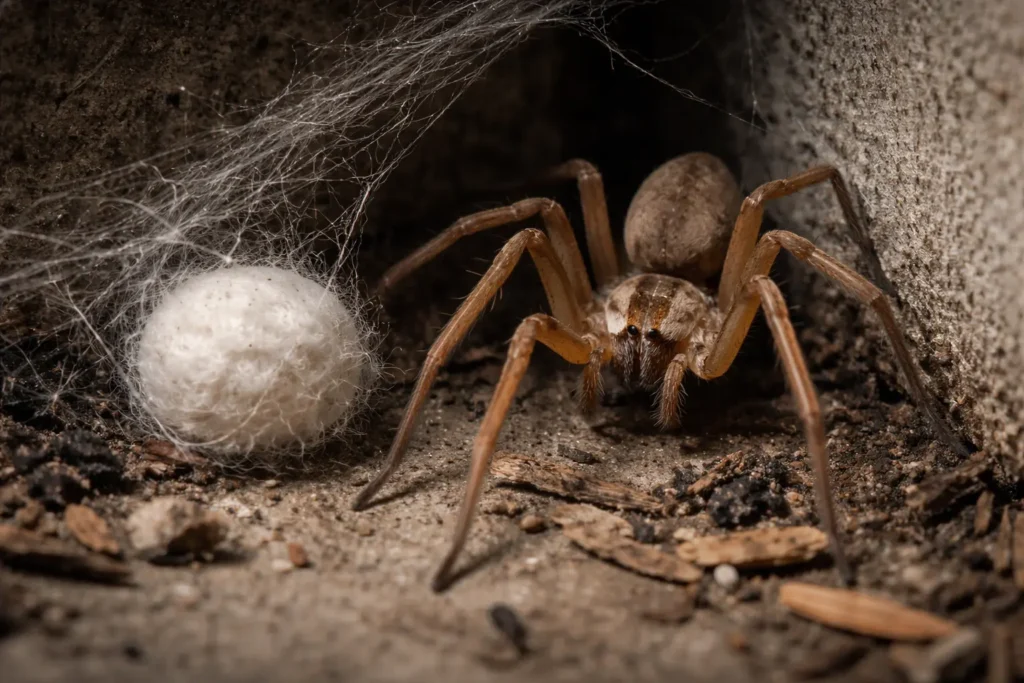
Root Causes: Why Spiders Keep Invading Your Home
Spiders do not invade homes to steal your food or damage your property; they follow their prey. If your property is heavily infested with other bugs, spiders will naturally set up camp to hunt them.
Outdoor lighting is a massive contributor. Standard white porch lights attract moths, beetles, and mosquitoes by the hundreds. Spiders will build webs directly over these light fixtures to catch the incoming feast.
Environmental conditions also play a role. Heavy moisture in crawlspaces, overgrown shrubs touching your siding, and accumulated leaf litter in the yard create perfect microclimates for spiders to breed before moving indoors.
Step-by-Step Solution for Permanent Removal
- Step 1: Physical Exclusion
You cannot achieve permanent control if spiders have an open door. Inspect your foundation, windows, and doors. Spiders can squeeze through gaps as small as 1/16 of an inch.
Use high-quality exterior silicone caulk to seal cracks around plumbing penetrations and window frames. Install tight-fitting door sweeps and replace any damaged weather stripping. Ensure all window screens are free of tears.
- Step 2: Habitat Modification in the Yard
Push the spider population away from your foundation. Trim back all tree branches and ornamental shrubs so they are at least 2 feet away from your siding and roofline.
Rake up leaf litter, remove firewood piles stacked against the house, and clear out debris. Keep your lawn mowed strictly between 2.5 to 3 inches to reduce moisture retention at the soil level, which harbors the insects spiders feed on.
- Step 3: Professional-Grade Chemical Barrier
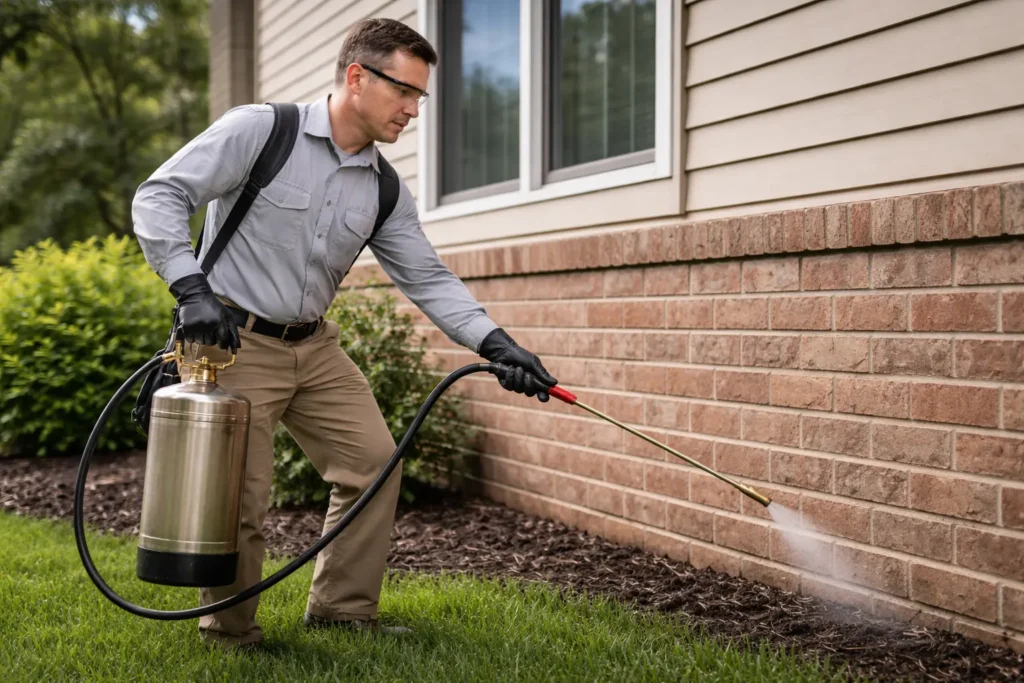
Forget the weak hardware store sprays. You need a micro-encapsulated concentrate that lasts for months. We recommend using Suspend SC (active ingredient: Deltamethrin) or Demand CS (active ingredient: Lambda-cyhalothrin).
Mix 0.8 to 1.5 fluid ounces of the concentrate per 1 gallon of water in a pump sprayer. Apply a continuous band 3 feet up the foundation wall and 3 feet out onto the soil or concrete. Spray around all window frames, doors, and eaves.
Expert Comparison: Brown Recluse vs. Common Wolf Spider
Homeowners frequently panic, confusing harmless outdoor hunters with medically significant pests. Knowing the difference dictates your treatment urgency.
- Brown Recluse: Prefers dark, undisturbed indoor areas like attics and closets. Look for the distinct dark violin shape on its cephalothorax. They have six eyes arranged in pairs and build messy, irregular webs near ground level.
- Wolf Spider: A robust, hairy outdoor hunter that occasionally wanders inside. They do not build webs to catch prey; they actively hunt on foot. They are generally harmless and prefer the yard, hiding under rocks and mulch.
Pro-Tips Box:
Pro-Tip: Switch all exterior lighting to yellow bug light bulbs. Yellow light falls outside the visible spectrum of most flying insects. Fewer bugs attracted to your porch means fewer spiders building webs around your front door. Additionally, place flat glue boards flush against baseboards in dark corners to passively monitor and trap roaming spiders.
What to Read Next
Spiders often infiltrate homes through structural gaps caused by wood-destroying pests, and they will gladly stick around to feed on the swarming insects responsible for the damage. If you suspect your home has underlying insect or moisture issues attracting these predators, tackle the root cause by reading our guide on how to use boric acid for carpenter ants. Furthermore, understanding the structural vulnerabilities that let pests inside in the first place is crucial, so check out our breakdown on identifying termite damage vs. wood rot to ensure your home remains completely secure, sealed, and pest-free.
People Also Ask (FAQ)
Do ultrasonic pest repellers work on spiders?
No. There is zero scientific evidence proving that ultrasonic sound devices effectively repel spiders or any other household pests. Save your money and invest in exclusion materials and proven chemical residuals instead.
What scent keeps spiders away?
Strong essential oils like peppermint oil, tea tree oil, and eucalyptus can act as a temporary deterrent. However, these natural repellents break down rapidly and evaporate within days, making them useless for permanent spider control.
How long do residual spider sprays last?
High-quality, micro-encapsulated professional concentrates like Demand CS can last up to 90 days outdoors, depending on rainfall and UV exposure. Indoor applications protected from the weather can remain highly effective for 4 to 6 months.