
Yes, you can put top soil on top of grass, a professional practice known as topdressing. When applied correctly at a depth of 1/4 to 1/2 inch, adding high-quality soil directly over your turf smooths out uneven terrain, improves soil structure, and encourages deeper root growth without smothering your existing lawn.
Dumping heavy layers of dirt on your yard is a rookie mistake that will suffocate the grass blades. To get professional results, you must combine the right soil mix with proper aeration and leveling techniques. This ensures the material reaches the root zone where it belongs.
Identification Guide: When Does Your Lawn Need Topdressing?
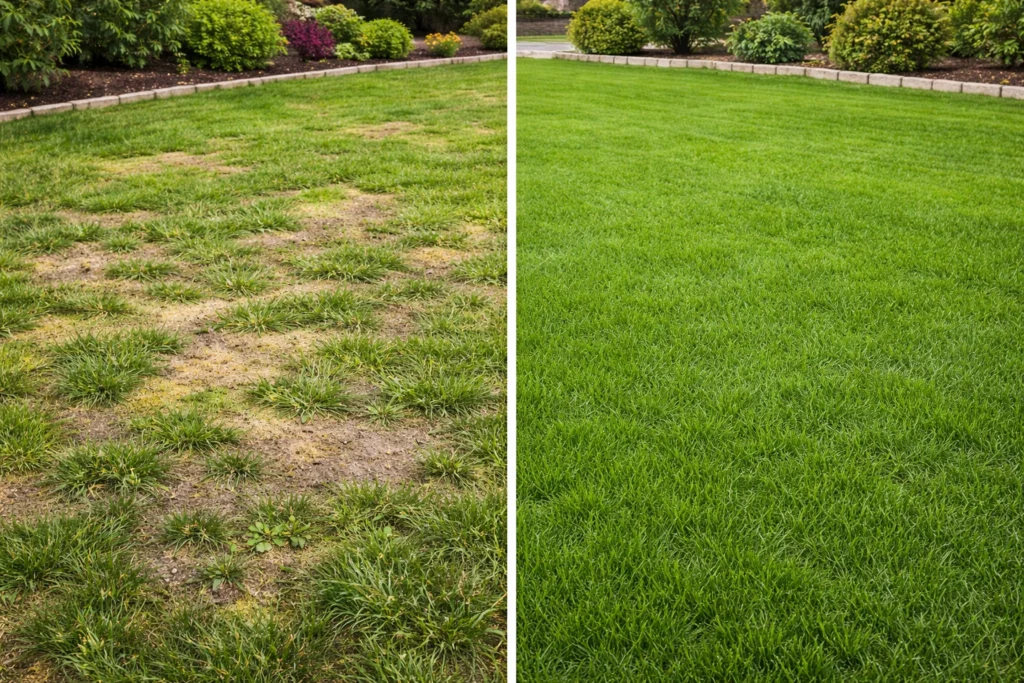
Not every yard needs topsoil added every season. You should consider adding top soil on top of grass if you notice any of these specific turf issues:
- Uneven Terrain: You feel dips, ruts, or ankle-rolling bumps when pushing the mower across the yard.
- Exposed Tree Roots: Small surface roots are starting to poke through the turf canopy.
- Heavy Thatch Buildup: Your lawn has more than 1/2 inch of dead, spongy organic matter at the soil line.
- Poor Soil Quality: Your native soil is heavily compacted clay or pure, nutrient-deficient sand.
- Patchy Growth: Certain areas struggle to maintain density despite regular applications of Scotts Turf Builder or similar fertilizers.
Root Causes: Why Your Yard Gets Uneven and Degraded
Lawns do not stay perfectly flat forever. The ground shifts due to natural freezing and thawing cycles (especially in Northern states with cool-season grasses like Kentucky Bluegrass).
Heavy foot traffic, pets, and heavy riding mowers compact the soil over time, creating ruts. Additionally, as organic matter naturally decomposes in the soil profile, it can leave localized depressions across your lawn.
The Step-by-Step Solution: How to Apply Top Soil Correctly
If you want to level your yard and improve turf health, follow this professional procedure. Never apply topsoil to dormant or heat-stressed grass.
- Step 1: Mow Low and Bag. Set your mower deck to 1.5 to 2 inches and bag the clippings. You want the grass as short as safely possible so the soil can reach the ground.
- Step 2: Core Aerate. Rent a mechanical core aerator. Punching 2-inch to 3-inch holes in the lawn allows the new topsoil to integrate directly with the existing root zone.
- Step 3: Choose Your Mix. For leveling warm-season grasses (Bermuda, Zoysia), use a 70/30 sand-to-soil mix. For improving soil in cool-season lawns (Fescue, Ryegrass), use a 50/50 mix of screened topsoil and high-quality compost.
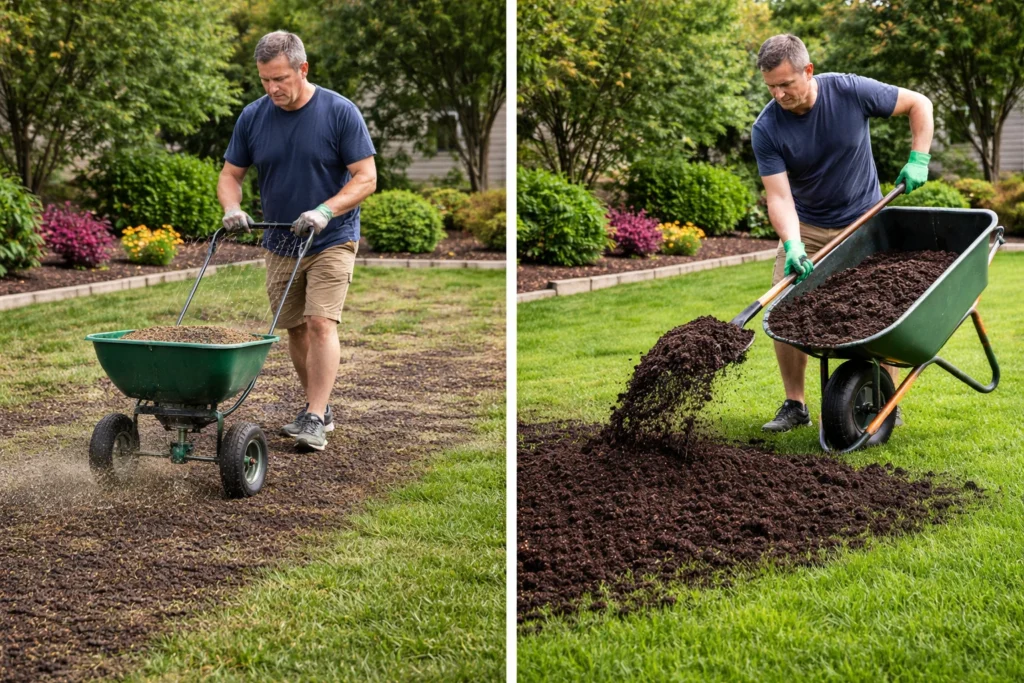
- Step 4: Distribute in Piles. Drop small piles of your soil mix across the yard using a wheelbarrow. Aim for an application rate of about 1 cubic yard per 1,000 sq ft of lawn.
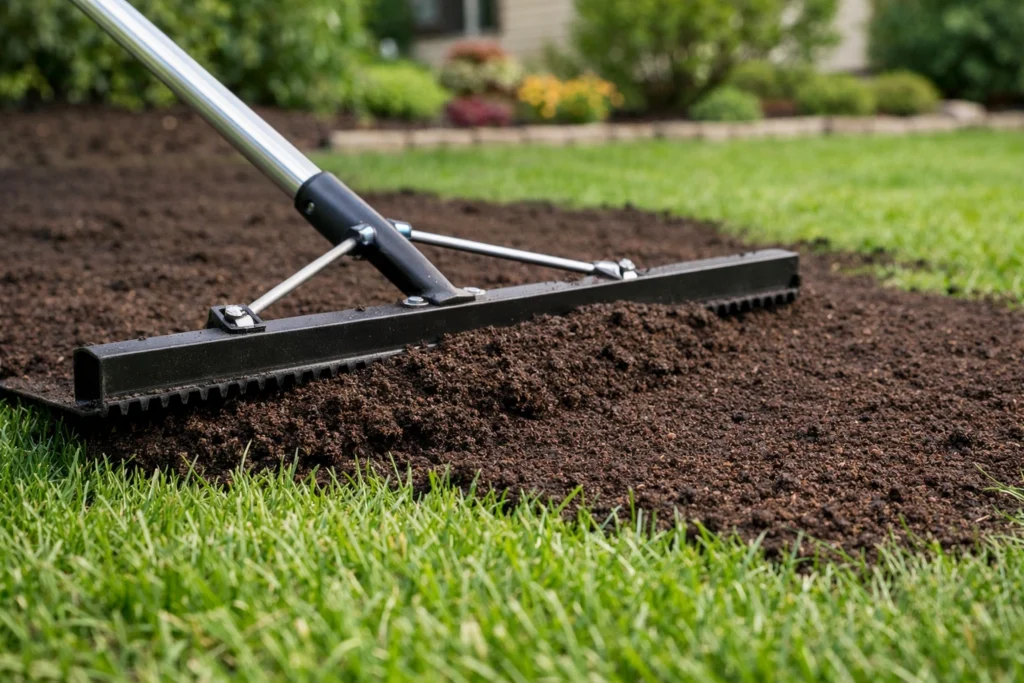
- Step 5: Level and Work it In. Use a heavy-duty leveling rake (not a leaf rake) to push the soil. Work it back and forth until the depth is no more than 1/4 to 1/2 inch and the tips of the grass blades are clearly visible.
- Step 6: Water Deeply. Run your sprinklers to deliver 1/2 inch of water. This washes the soil off the grass blades and settles it into the aeration holes.
Expert Comparison: Topdressing vs. Overseeding
Homeowners frequently confuse topdressing with overseeding, though the two are highly complementary.
Topdressing is strictly the act of adding structural material (soil, compost, or sand) to level the yard and improve the physical soil profile. Overseeding is the act of spreading new grass seed over an existing lawn to fill in bare patches and increase turf density.
Professionals almost always do both simultaneously during the Fall. Spreading premium seed, followed immediately by a 1/4 inch layer of topsoil, creates the perfect seed-to-soil contact required for maximum germination.
PRO-TIPS BOX Never use cheap, bagged “potting soil” or untreated topsoil full of wood chips from big-box stores to level your yard. These often contain weed seeds or lack the necessary structure. Source screened, pulverized topsoil from a local landscape supply yard. If treating localized ruts deeper than 1 inch, fill the hole completely, but you must reseed that specific spot, as the existing grass underneath will die.
What to Read Next
Once your topdressing project is complete and the new soil is settled, adjusting your maintenance routine is critical to protect the fresh growth. Learn exactly when to start mowing your lawn again without disturbing the new topsoil layer or damaging delicate blades. Furthermore, if the bare, uneven spots you just leveled were originally caused by deeper turf issues, you must learn to correctly identify grub damage vs. fungus damage so those hidden problems don’t return to destroy your newly restored yard.
People Also Ask
Will topsoil kill my grass?
Yes, if applied too thickly. Adding more than 1/2 inch of soil at one time blocks sunlight and oxygen, effectively suffocating the turf. Always ensure the top half of the grass blades remains visible after leveling.
Can I use peat moss instead of topsoil?
Peat moss is excellent for retaining moisture over newly planted grass seed, but it holds zero structural weight. It will not level an uneven yard. For leveling, you must use a sand or topsoil mixture.
What is the best time of year to topdress?
For cool-season grasses (North), topdress in early Fall when temperatures drop below 80°F. For warm-season grasses (South), the best time is late Spring to early Summer when the turf is actively growing and can easily push through the new soil layer.