
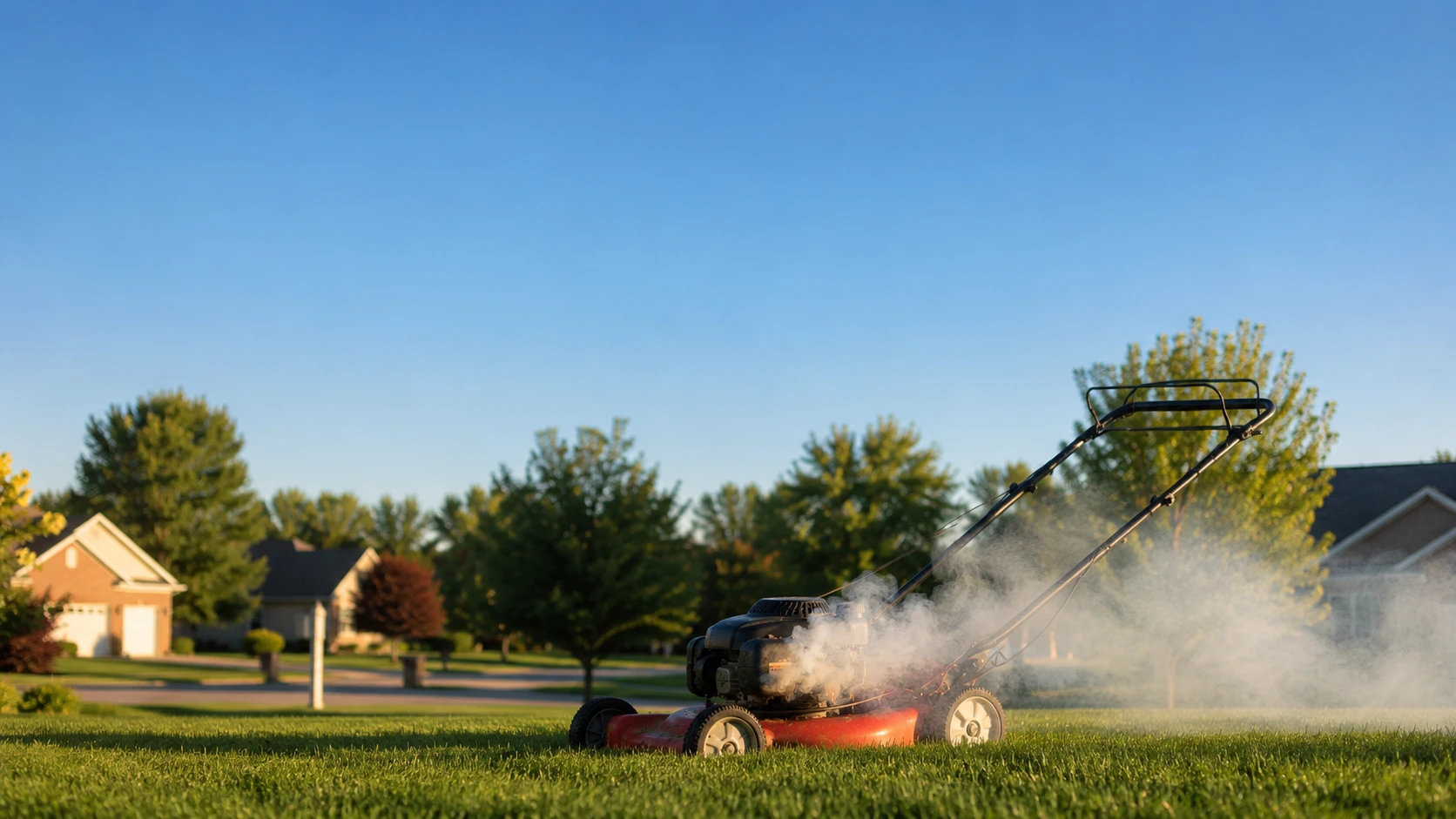
Your lawn mower is blowing white smoke because engine oil has entered the cylinder or muffler and is actively burning off. This almost always happens when you overfill the oil reservoir or tilt the mower incorrectly while cleaning the deck. In most common cases, the smoke will clear on its own after running the engine outside for 5 to 10 minutes.
Identification Guide
Diagnosing an engine issue starts with looking at the exhaust. Before you tear the machine apart, verify these specific visual cues in your yard.
- The smoke color is distinct: It appears thick white or slightly blue-white, clearly indicating burning oil. Black smoke points to a completely different problem with the fuel mixture.
- The smell is acrid and heavy: Burning motor oil has a foul, almost synthetic odor that lingers heavily in the air, very different from standard exhaust gas.
- The engine might sputter initially: As the oil coats and burns off the spark plug electrode, the engine rpm may surge, stall, or sound incredibly rough before stabilizing.
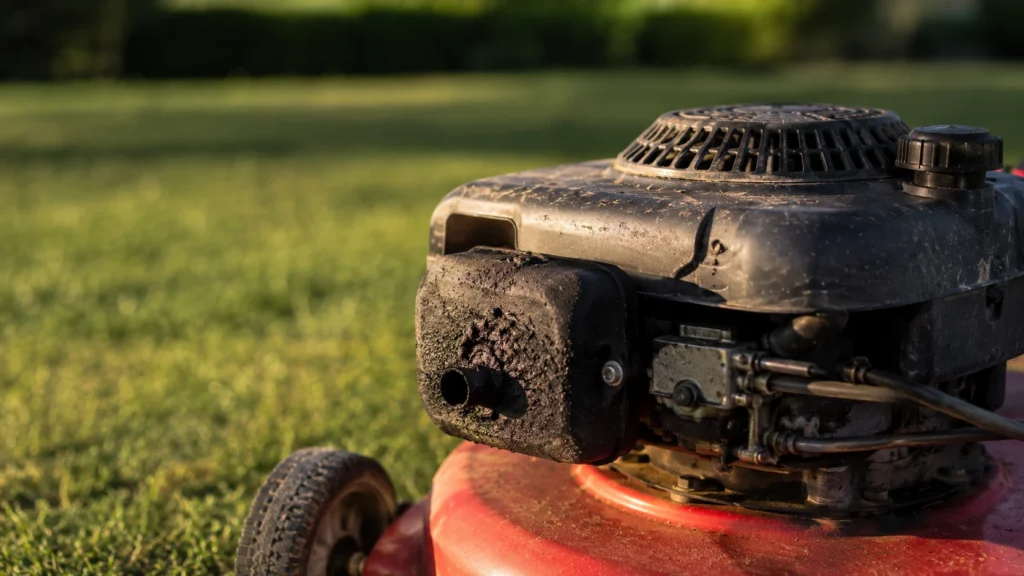
- Oil residue covers the housing: Check the side of the engine block near the exhaust manifold or air filter box. You will often see fresh oil drips, dark streaking, or a greasy film.
- The dipstick reads excessively high: Pull the oil cap. Wipe it and test it. The fluid level will be noticeably past the highest “Full” crosshatch mark, indicating dangerous internal pressure.
Root Causes
Oil belongs exclusively in the crankcase, not the combustion chamber. When it travels where it shouldn’t, internal heat instantly turns it into that embarrassing smoke cloud.
The most frequent culprit is basic gravity. Tilting your mower with the spark plug facing downward to scrape wet clippings lets oil bypass the piston rings straight into the cylinder head or muffler. I see this happen constantly during the wet spring mowing season.
Overfilling is the second major trigger. If you just performed routine maintenance, pouring in more than the standard 15 to 18 oz of SAE 30 oil builds massive crankcase pressure. That pressure has to escape somewhere, forcing raw oil up the breather tube and directly out the exhaust port.
Internal wear is less common but highly destructive. A blown head gasket on older engines will pull oil into the combustion chamber on every single power stroke. Worn piston rings allow the same catastrophic blow-by. If the smoke never clears after several minutes of running, you are facing a severe mechanical failure, not just a careless spill.
Step-by-Step Solution
Don’t rush out to the repair shop or throw the machine away just yet. Follow these exact steps to clear the engine system safely.
- Check and Correct the Oil LevelPark the mower on a flat, level driveway. Remove the dipstick, wipe it completely clean, and re-insert it. If the oil sits above the top fill mark, you must drain the excess. Use an oil extractor syringe or tip the mower slightly to pour the excess fluid from the fill tube into a designated catch pan. Keep testing until the oil rests perfectly between the indicator dots.
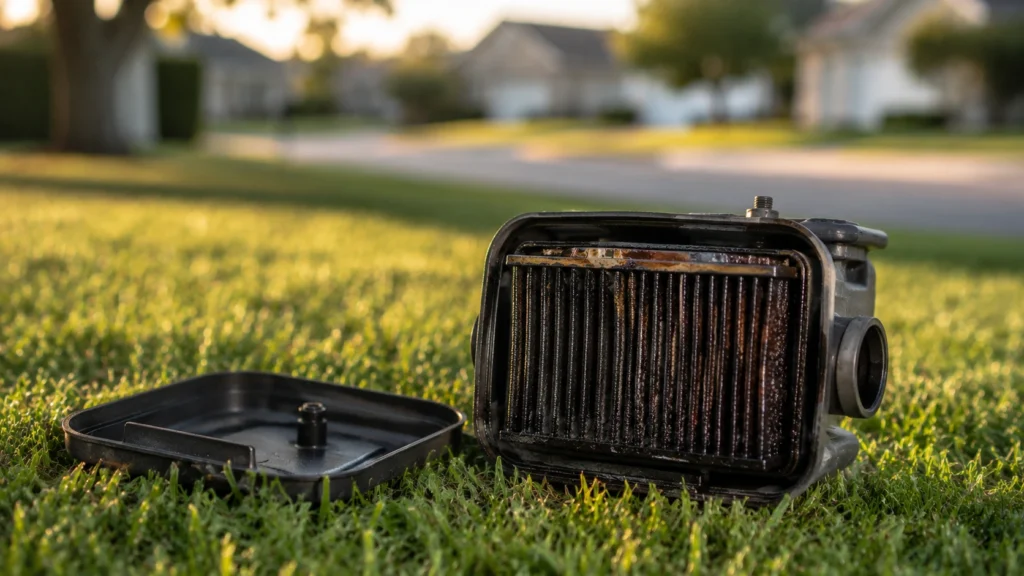
- Inspect the Air Filter ElementOpen the plastic air filter housing on the side of the engine. If you tilted the mower wrong recently, oil likely saturated the paper element. A severely oiled paper filter starves the engine of oxygen and draws in more dirt. Replace it immediately with a dry, exact-fit replacement. If your mower uses a foam filter, wash it out thoroughly with dish soap, squeeze it completely dry, and apply a few drops of fresh engine oil before reinstalling it.
- Clean the Spark PlugRemove the rubber spark plug wire, then use a standard 5/8-inch deep socket to extract the plug. If the bottom tip is coated in black, wet, oily sludge, spray it heavily with carburetor cleaner and scrub the threads with a wire brush. If the porcelain insulator shows cracks or is fouled beyond saving, install a brand new Champion or NGK plug.
- Burn Off the Residual OilTake the mower to an open, well-ventilated area of your yard. Start the engine. It will billow white smoke heavily at first, which is completely normal at this stage. Let it run at full throttle for 5 to 10 solid minutes. The extreme exhaust heat will literally bake the residual oil out of the muffler interior. The smoke cloud should gradually thin out and disappear entirely.
- Monitor for Ongoing IssuesIf the mower runs clean for the rest of your cut, you solved the problem. If the engine continues puffing thick white smoke continuously after 15 minutes, shut it down immediately to avoid ruining the internal components.
Professional vs. DIY
Most white smoke issues take 10 minutes of DIY effort to resolve right in your driveway.
| Factor | DIY | Professional |
| Cost | $5 – $10 | $80 – $150 |
| Speed | 10 minutes | 1 to 2 weeks |
| Effectiveness | High (for spills) | High (for rebuilds) |
| Risk | Low | Low |
If you dumped out the excess oil, swapped the filter, and ran it for 10 minutes but it’s still smoking like a freight train, stop. You need a small engine mechanic to replace the rings or head gasket. Pushing a failing engine further will score the cylinder wall and turn a basic repair bill into a total mower replacement.
Common Misdiagnosis
Homeowners constantly confuse white smoke with black smoke. Black smoke means your engine is running extremely rich—burning too much gasoline and not enough air. This is almost always caused by a severely clogged air filter, a stuck carburetor float, or a choke that refuses to open fully.
White or blue-white smoke is entirely different; it is always engine oil. Listen closely to the engine sound to help verify. If your engine constantly hunts and surges up and down while puffing black smoke, you need to clean the carburetor jets. If it runs smoothly but looks exactly like a concert fog machine producing white clouds, ignore the fuel system entirely. Focus your efforts strictly on the crankcase oil level and mower orientation.
Prevention Tips
Never tilt your mower the wrong way. When you need to scrape the deck or change the blades, always tip the mower backward onto its rear wheels, or tilt it sideways with the spark plug and carburetor pointing up toward the sky.
When adding oil, do not eyeball it. Most walk-behind mowers take exactly 18 oz of oil from empty. Buying a 32 oz bottle and pouring until it looks full will overflow the crankcase every single time. Add 12 oz, wait two minutes for it to settle into the pan, check the dipstick, and add small amounts until it sits perfectly between the dots. And keep an eye on your blade sharpness—a dull blade forces the engine to work harder, which can mask other performance issues (if you’ve noticed uncut patches in your yard, dull blades or engine lag might be to blame).
Pro Tips Box
Pro-Tips Box: I see guys tip their Toro recycler carb-side-down to scrape wet grass, flip it back, pull the cord, and fog out the whole neighborhood. If you accidentally tilted the mower wrong, don’t pull the starter cord right away. Pull the spark plug first and slowly pull the starter cord 3 or 4 times. This clears the liquid oil out of the cylinder head without creating hydraulic lock. You’ll spray a bit of oil out the spark plug hole, but you’ll save your engine’s connecting rod from snapping.
People Also Ask (FAQ)
Can a mower catch fire if it’s smoking?
While rare, heavy oil accumulation on the exterior of a hot muffler can ignite. However, the white smoke blowing out of the exhaust itself is just vaporized oil and will not catch fire. Always wipe external oil spills off the engine block before starting.
Is it safe to breathe mower smoke?
No. Burnt motor oil fumes contain harmful hydrocarbons and carbon monoxide. Always run a smoking mower in a well-ventilated, open outdoor space away from open windows, children, and pets until the smoke clears completely.
Will too much oil ruin my lawn mower?
Yes. Overfilling the oil increases crankcase pressure, which can blow out engine seals, push oil into the carburetor, and cause severe internal damage. Never run the engine if the oil level is significantly above the full mark on the dipstick.
What to Read Next
If your mower is back to running clean but your lawn still looks ragged and uneven after a pass, the issue might not be the engine at all, which is why checking out our guide on why your lawn mower leaves uncut grass is the best next step to get that clean, manicured look.