
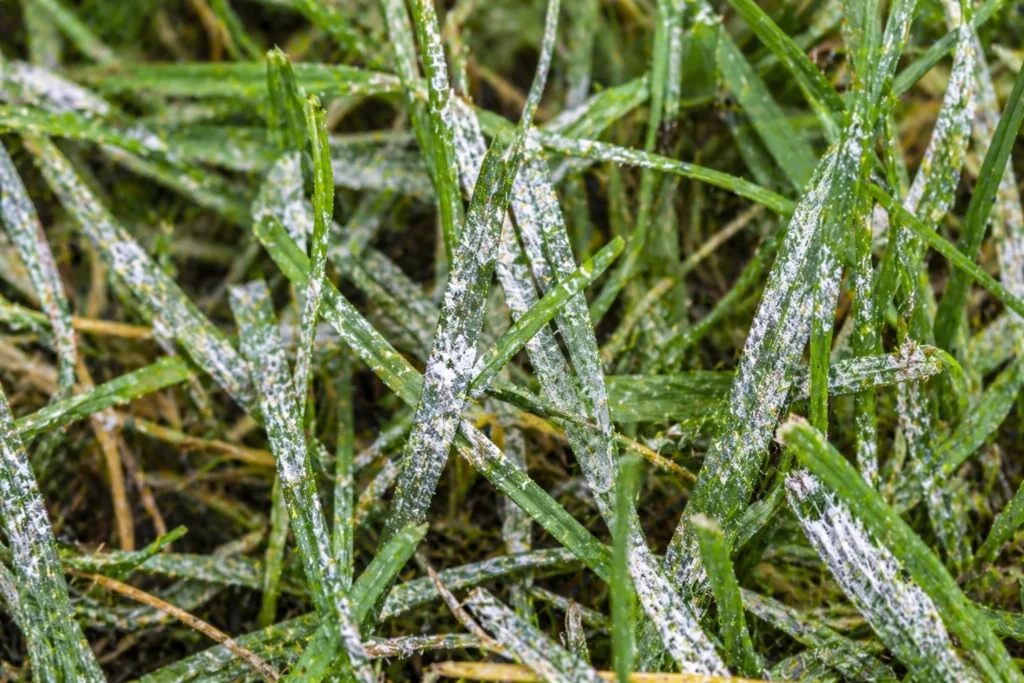
White patches on grass are typically caused by aggressive fungal diseases like powdery mildew, dollar spot, or snow mold. To fix your yard, you must identify the specific fungus, apply a targeted commercial fungicide, and correct underlying moisture or compaction issues. Ignoring these spots will lead to massive dead zones across your lawn.
Identification Guide: What is Attacking Your Lawn?
Proper treatment starts with accurate identification. Misdiagnosing the fungus means wasting money on the wrong chemicals. Look for these visual signs in your yard:
- Powdery Mildew: Looks like someone dusted baby powder or flour across the grass blades. It thrives in shaded areas with poor airflow, primarily attacking Kentucky Bluegrass.
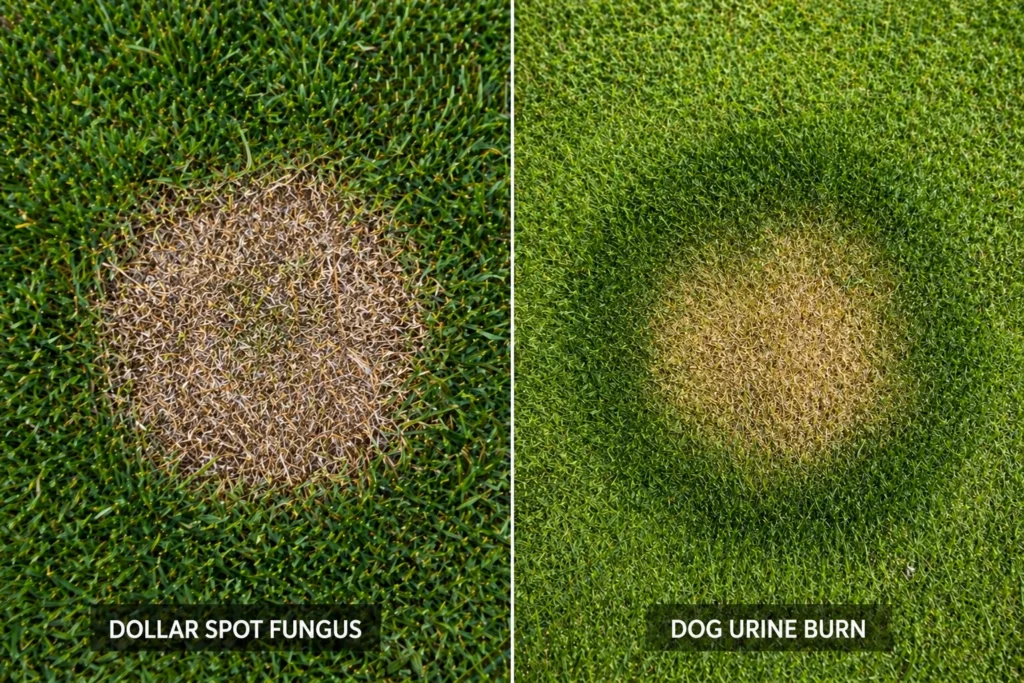
- Dollar Spot: Appears as bleached, white, or straw-colored sunken circles roughly 2 to 6 inches wide. You will often notice a reddish-brown band on individual infected blades.
- Snow Mold: Reveals itself in early spring as the snow melts. You will see matted, dead grass covered in a white or pinkish-gray cobweb-like crust.
- Pythium Blight: Forms greasy, dark spots that quickly develop white, cottony mycelium in the early morning dew. It destroys turf within 24 hours during hot, humid weather.
Root Causes of White Fungal Patches
Fungus does not just appear by accident. It exploits weak grass and poor environmental conditions. The most common trigger is improper watering practices. Watering your lawn late in the evening leaves the blades wet overnight, creating a breeding ground for spores.
Soil compaction is another major offender. When soil is compacted, water pools on the surface instead of penetrating deeply. Furthermore, applying too much quick-release nitrogen fertilizer in the spring pushes excessive, weak top growth that is highly susceptible to disease.
Step-by-Step Solution: Eradicating the Fungus
Stop guessing with DIY home remedies. If you want a green yard, you need to use professional-grade protocols. Follow these steps to eliminate the white patches on your grass.
- Step 1: Adjust Your Watering Schedule. Stop watering at night. Water your lawn deeply early in the morning, aiming for 1 to 1.5 inches of water per week. This allows the grass to dry before nightfall.
- Step 2: Bag Your Clippings. While dealing with an active outbreak, do not mulch your clippings. Bag them and dispose of them to prevent spreading fungal spores across the rest of the yard.
- Step 3: Apply a Curative Fungicide. Apply a broad-spectrum granular or liquid fungicide. Scotts DiseaseEx (containing Azoxystrobin) or BioAdvanced Fungus Control (containing Propiconazole) are highly effective.
- Step 4: Follow Dosage Rates. For active outbreaks, apply at the curative rate listed on the bag—often 2 to 3 lbs per 1,000 sq ft. Water it in gently if the label dictates.
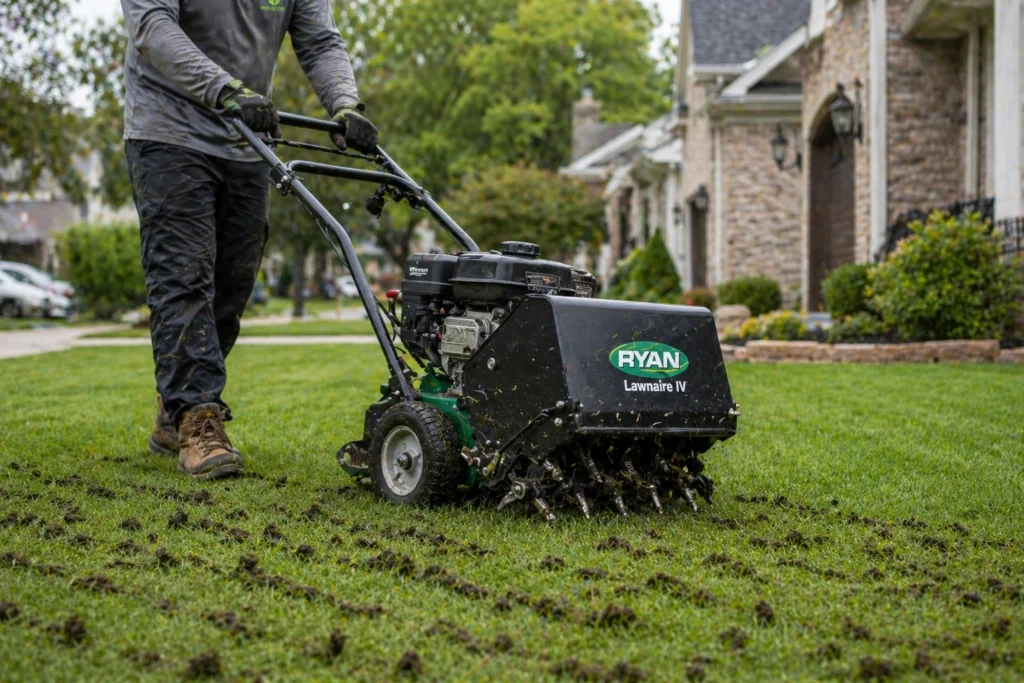
- Step 5: Re-evaluate and Aerate. Once the fungus is dead, plan to core aerate your yard in the fall to improve drainage and reduce thatch buildup.
Expert Comparison: Fungus vs. Dog Urine Burns
Homeowners often confuse dollar spot fungus with dog urine spots. Dog urine creates dead, straw-colored patches, but it is caused by nitrogen burn. Look at the edges of the spot. A dog urine burn typically has a ring of hyper-green, fast-growing grass around the dead center.
Fungal spots, on the other hand, do not have that dark green halo. Instead, you will see mycelium (fuzz) in the morning dew or lesions on the individual grass blades. If you see spots near fire hydrants or mailboxes, it is likely dog damage, not a lawn disease.
PRO-TIPS BOX Keep your mower blades razor-sharp. Dull blades tear the grass, creating jagged wounds that invite fungal infections. For cool-season grasses, raise your mower deck and cut at a height of 3 to 4 inches during the summer to reduce stress.
What to Read Next
Lawn diseases and environmental stress can manifest in multiple ways across your yard, meaning accurate color identification is critical before applying any chemicals. If you are noticing dark, sooty, or slimy patches instead of white fuzz, check out our professional guide on how to fix black mold on your lawn. On the other hand, if your turf is bleaching out or suffering from nitrogen burn, read our complete breakdown for diagnosing and treating yellow spots on grass.
People Also Ask (FAQ)
Will grass with white patches grow back?
It depends on the severity. If you treat powdery mildew or dollar spot early, the grass crowns will survive and recover within a few weeks. However, aggressive diseases like Pythium blight will kill the plant entirely, requiring you to reseed the bare patches in the fall.
Can I use vinegar to treat lawn fungus?
No. Vinegar is a non-selective herbicide. Spraying it on your lawn will burn and kill the surrounding healthy grass alongside the fungus. Stick to EPA-registered chemical fungicides designed specifically for turfgrass.
When is it safe for pets to return to the yard?
Always read the specific product label. Generally, liquid fungicides require you to keep pets and children off the lawn until the spray has completely dried. For granular products, wait until they have been watered in and the yard is dry.