
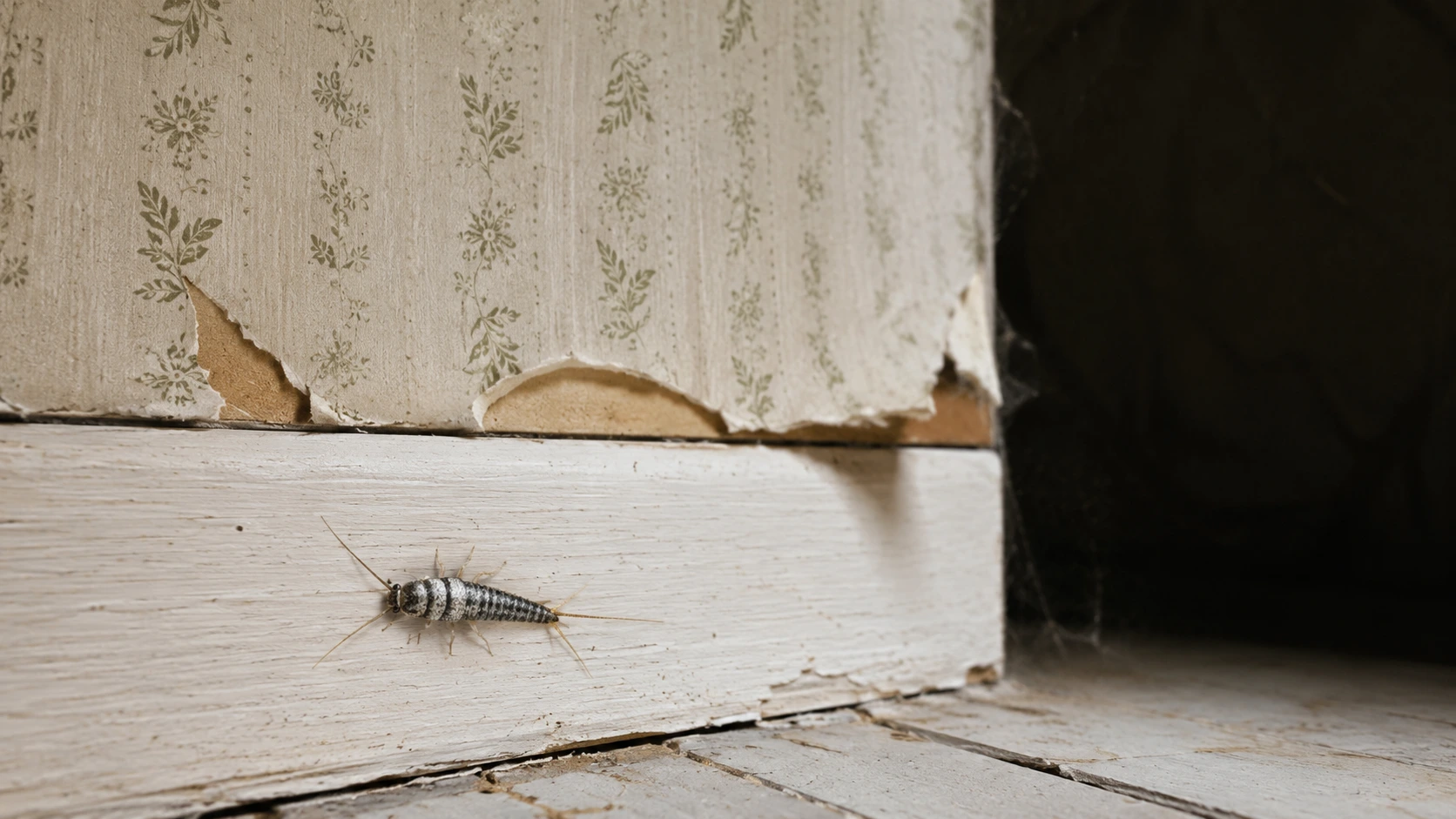
Silverfish are not directly harmful to humans or pets. They do not bite, sting, or carry infectious diseases. However, they are incredibly harmful to your property. These nocturnal pests feed on starches and carbohydrates, meaning they will permanently damage expensive books, family photographs, custom wallpaper, and natural clothing if left untreated in the damp areas of your home.
Identification Guide
- Teardrop shape and movement: They measure precisely 0.5 to 1 inch long. They are a metallic silver or light gray, covered in tiny scales. When disturbed, they move with a distinct rapid, fish-like wiggling motion across floors.
- Three tail appendages: Look closely at the rear end of the insect. They feature three straight, bristle-like appendages sticking out, alongside two long antennae at the head. This distinct profile separates them from common carpet beetles.
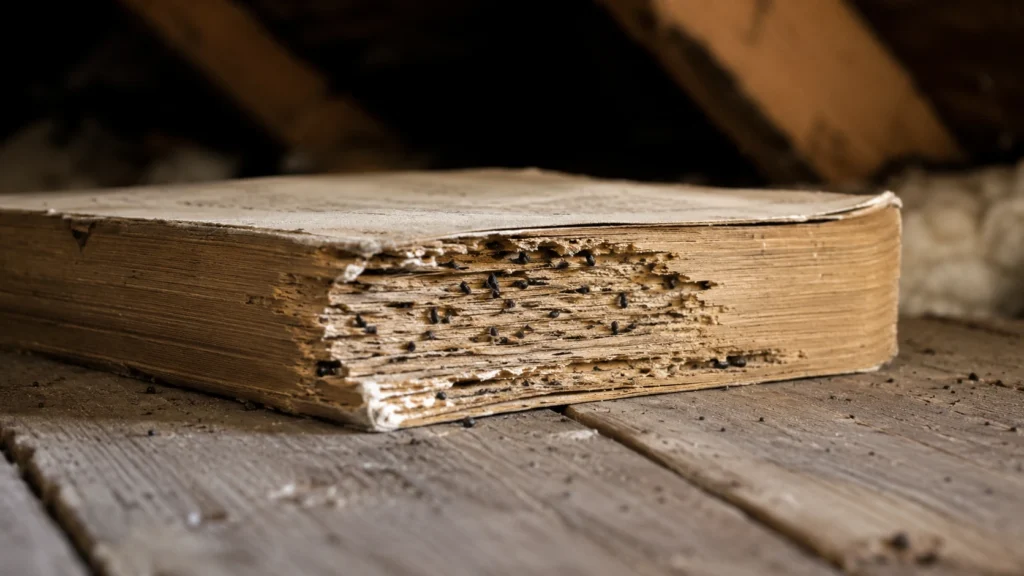
- Yellow stains on paper: As they feed on the starch-based glue in book bindings or photo albums, they leave behind yellowish-brown stains. You will also spot tiny, pepper-like black feces scattered across the damaged pages.
- Irregular chewing patterns: Unlike the clean, circular holes left by wood-boring pests, silverfish create uneven, surface-level scraping damage. You will see this primarily on corrugated cardboard boxes, peeling wallpaper seams, and natural fabrics stored in dark closets.
Root Causes
Silverfish enter your home seeking two specific things: extreme moisture and accessible starchy food sources. They physically require environments with relative humidity levels sitting above 70% to survive and reproduce. This biological need is why you almost always spot them trapped in slippery porcelain bathtubs, scurrying out of master bathroom drains in the morning, or hiding in poorly ventilated basements and humid attics.
A major, costly mistake homeowners make is storing old seasonal clothing and tax documents in standard corrugated cardboard boxes directly on concrete basement floors. The cardboard absorbs ground moisture, acting as both a protective, damp habitat and an endless buffet of glue and paper. Furthermore, standard residential construction often leaves tiny, unsealed gaps around plumbing penetrations beneath sinks. When exterior soil becomes completely saturated after heavy spring rain, silverfish simply follow the moisture gradient straight through these dark foundation gaps into your warm, humid interior wall voids.
Step-by-Step Solution
Eliminating silverfish requires stripping away their damp habitat while simultaneously laying down long-lasting residual chemical treatments. Spraying the one bug you see in the bathtub does absolutely nothing to the hundreds currently breeding undisturbed inside your dark walls.
- Drop the interior humidity: Before applying a single drop of product, place a high-capacity dehumidifier in the affected room. Bring the relative humidity below 50% and keep it there. Silverfish cannot survive extended periods of dry air; their bodies physically dry out.
- Swap cardboard for plastic: Immediately transfer all stored paper, family photographs, and cotton clothing from cardboard boxes into heavy-duty, airtight plastic storage totes. You have to cut off their food supply to halt the breeding cycle entirely.
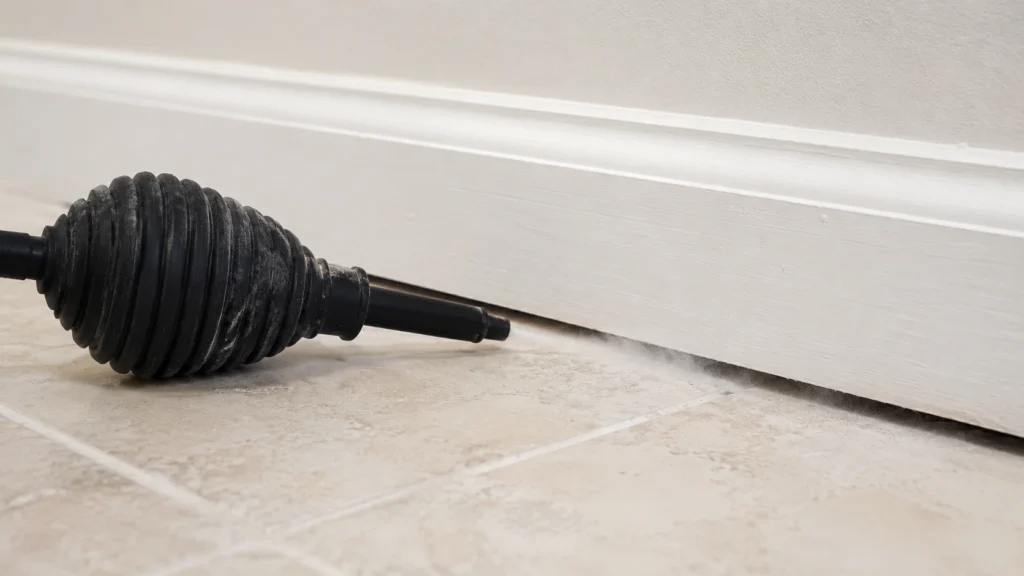
- Apply a desiccating dust to voids: You need a product that severely damages their waxy exoskeleton. Apply a fine layer of insecticidal dust containing Deltamethrin (like Delta Dust) directly into wall voids, behind baseboards, and under bathroom sinks. You can also use boric acid, a common remedy for carpenter ants, as it works exceptionally well on silverfish by poisoning them when they groom their antennae. Apply no more than a barely visible, whisper-thin dusting; heavy, thick piles will just cause the bugs to detour entirely around the poison.
- Spray a liquid residual barrier: Mix a liquid insecticide concentrate containing Bifenthrin (such as Talstar P) at a strict rate of 0.5 to 1.0 fl oz per gallon of water in a pump sprayer. Apply this mixture directly along the perimeter of the affected rooms, focusing exactly where the floor meets the baseboard. Keep kids and pets completely out of the treated room until the spray is 100% dry to the touch. Expect to see dead silverfish curling up on the floor within 3 to 5 days, though a complete colony collapse typically takes about three weeks of consistent environmental control.
Professional vs. DIY
| Factor | DIY | Professional |
| Cost | $ | $$$ |
| Speed | 3-4 Weeks | 1-2 Weeks |
| Effectiveness | Moderate to High | High |
| Risk | Moderate | Low |
Handling a localized silverfish issue in a single guest bathroom is entirely manageable with dedicated DIY methods and proper dehumidification. However, if you are finding silverfish on multiple floors of your home simultaneously, or if you spot them dropping from recessed ceiling lights, the infestation has established deep inside your wall voids. At that point, retail sprays won’t reach the main nest. You need a licensed pest control operator who has the commercial equipment to safely inject aerosolized insecticides directly into your framing and insulation.
Common Misdiagnosis
Homeowners frequently confuse silverfish with firebrats or house centipedes. Firebrats share the exact same teardrop shape and three-tail structure, but they are a mottled, speckled brown color. They prefer extreme heat, congregating in the areas immediately surrounding furnaces, hot water heaters, or attic flues, rather than damp, cool bathrooms.
House centipedes are entirely different but often trigger the same panic. They have dozens of long, delicate legs and look like feathered eyelashes darting rapidly across the wall. While terrifying to look at, centipedes are actually active, predatory hunters. If you have house centipedes, they are likely there actively feeding on your silverfish population. Do not confuse a beneficial predator for the primary structural pest.
Prevention Tips
Maintaining a strictly dry home is the absolute best defense against future pest invasions. Run your bathroom exhaust fans for at least 30 full minutes after taking a hot shower to aggressively pull the lingering steam out of the room. Inspect the exterior perimeter of your house seasonally and permanently seal any hairline cracks in the foundation block with high-grade silicone caulk. Pay special attention to the gaps where exterior plumbing pipes enter the home, as these are major, unblocked highways for pests. Understanding how water bugs get in your house often reveals the exact same entry points that silverfish consistently exploit. Finally, clear dead, wet leaves and decomposing wood mulch at least 12 inches away from your exterior foundation walls to remove their outdoor breeding grounds.
Pro-Tips Box: Most DIYers fail because they spray liquid pesticides directly on top of insecticidal dusts. The liquid renders the dust completely useless and cakes it into a solid block. If you treat an area, use your liquid residual sprays on the baseboard surfaces first, let them dry completely, and only then puff your Delta Dust or Boric Acid directly into the dry cracks and wall voids. Also, check your attic ridge vents; if slow roof leaks allow moisture to drip onto blown-in insulation, you will fight silverfish on your second floor forever.
People Also Ask
Do silverfish crawl in your bed or ears?
Silverfish have zero interest in humans and do not intentionally crawl into beds or ears. If you find one in your bed, it likely fell from the ceiling or was exploring damp, unwashed sheets. They do not bite or parasitize humans.
Are silverfish poisonous to cats or dogs?
No, silverfish are not toxic or poisonous. If your dog or cat eats one, they will not get sick. The real danger to pets comes from the chemical baits and toxic sprays you might use to eliminate the bugs. Always keep pets away from treated baseboards.
How fast do silverfish multiply?
They breed relatively slowly compared to other pests. A female silverfish lays up to 60 eggs at a time, hiding them in dark crevices. However, they can live for an astonishing 3 to 8 years, allowing small populations to compound silently over time into massive infestations.
What to Read Next
If you’re noticing an uptick in silverfish, excess moisture is almost certainly drawing other pests inside, which is why understanding how water bugs get in your house is the logical next step for securing your home’s vulnerable perimeter.