
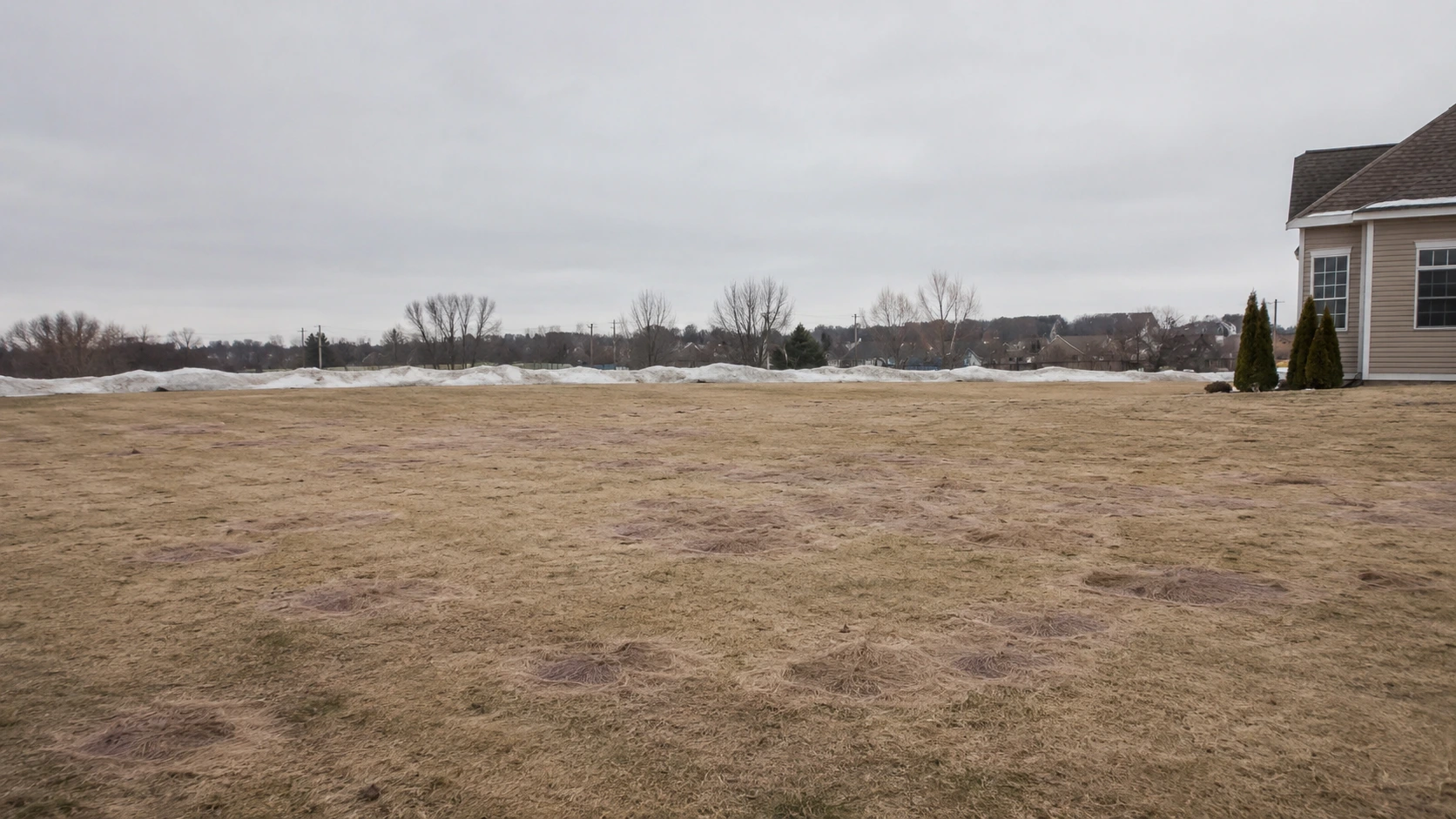
Snow mold is a cold-weather fungal disease that attacks turf under extended snow cover. It appears as matted, circular patches of white, gray, or pinkish webbing as the snow melts in late winter or early spring. Most cases are cosmetic and recover fully once the turf dries out, but severe infections can kill the grass down to the crown.
Identification Guide
Homeowners often panic when the snow clears, thinking their yard is dead. Before you plan to reseed, verify what you are looking at.
- Circular Patches: The damage shows up in distinct circles ranging from 3 inches to 2 feet in diameter. Patches can merge into larger, irregular dead zones.
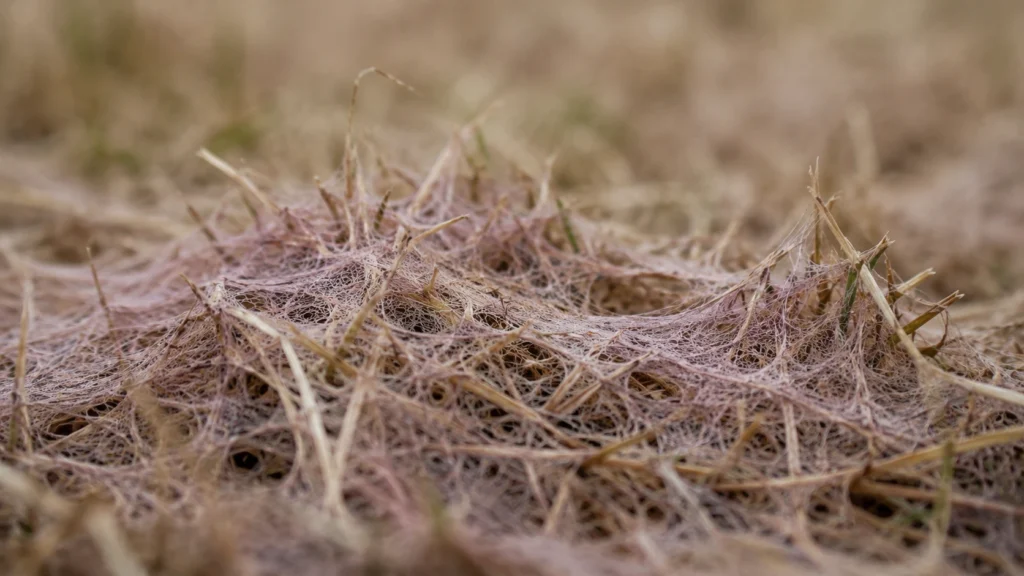
- Crusty, Matted Turf: The grass blades look flattened, bleached, and glued together. It feels stiff or crusty to the touch.
- Cobweb Mycelium: Early in the morning while the lawn is still wet, you will see a thin layer of fungal webbing over the patch.
- Color Differences: Gray snow mold (Typhula blight) leaves a white or grayish webbing. Pink snow mold (Microdochium patch) exhibits a distinct salmon or copper-pink hue on the outer edges of the circles.
- Black Sclerotia: If you inspect gray snow mold closely, you might see tiny, hard black specks (sclerotia) embedded in the dead leaves. These act as the fungus’s survival seeds.
I get dozens of calls every March in the Midwest from people swearing insects destroyed their yard overnight. If it emerges right after the melt, it is a fungus.
Root Causes
The pathogens responsible for snow mold live in your soil year-round. They just wait for the right environment. That environment requires three things: high moisture, temperatures between 32°F and 45°F, and trapped humidity.
Snow cover acting as an insulating blanket provides the perfect incubator. If the snow falls on unfrozen ground, the heat radiating from the soil gets trapped, melting the bottom layer of snow and keeping the grass soaking wet. The longer the snow cover lasts—especially beyond 60 days—the higher your risk.
Cultural practices heavily influence infection rates. Leaving your grass too long before winter gives the snow more surface area to mat down, creating a dense canopy that traps moisture. A thick layer of leaves left on the turf does the exact same thing. Compaction is another major factor. Water pools in compacted areas instead of draining, keeping the turf saturated. This is precisely when you should aerate your lawn to improve drainage and break up the thatch layer where the fungal spores lie dormant.
Applying high-nitrogen fertilizer late in the fall also fuels the disease. Nitrogen pushes tender, green top growth right before winter, giving the fungus a massive supply of fresh, soft plant tissue to consume under the snow.
Step-by-Step Solution
Most homeowners immediately reach for a liquid fungicide when they see matted patches. I tell them to put the bottle down. Applying fungicides in the spring to cure existing snow mold is a massive waste of money. The damage is already done, and the fungus stops actively spreading once temperatures rise and the yard dries. Your primary goal right now is recovery, not chemical warfare.
Here is the protocol to get your yard breathing again.
1. Let the Area Dry
Do not touch the grass while it is completely soaked. Walking on saturated turf causes severe soil compaction. Wait for a few dry, sunny days after the final melt to let the ground firm up.
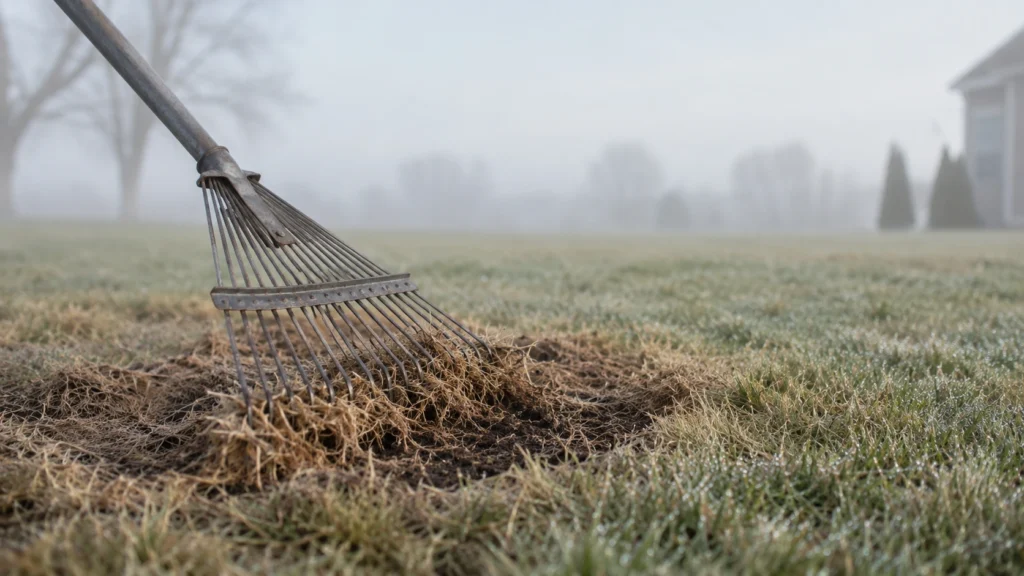
2. Gently Rake the Matted Patches
Grab a flexible tine leaf rake. Lightly rake over the affected circles. You are not trying to rip the grass out by the roots; your goal is to simply break the crust and lift the matted blades. Fluffing the grass exposes the soil to sunlight and allows wind to penetrate the canopy, immediately halting fungal growth.
3. Clear Debris
Bag up any dead grass, leftover autumn leaves, or thatch you rake up. Do not toss it in your compost pile. You want those fungal spores completely removed from the property.
4. Assess the Crown Health
Gray snow mold almost never kills the grass crown (the white-ish base where the roots meet the blades). Pink snow mold is more aggressive and occasionally kills the plant entirely. Part the grass and look at the soil level. If the base of the plant is still firm and white/green, it will push new blades in a few weeks. If the base is mushy and brown, that specific spot is dead.
5. Reseed (Only if Necessary)
If May rolls around and those patches are still bare dirt after the surrounding lawn has greened up, you will need to reseed. Rake the dead area until you hit bare soil, apply a starter fertilizer, and spread a high-quality seed blend that matches your existing yard.
6. The Fungicide Exception
If you manage high-end turf or live in an area with chronic, devastating pink snow mold, chemical intervention is strictly a preventative fall measure. Apply a granular fungicide like Scotts DiseaseEx (Azoxystrobin) or BioAdvanced Fungus Control (Propiconazole) right before the first major snowfall. The standard preventative rate for Azoxystrobin is roughly 2.0 to 4.0 lbs per 1,000 sq ft, depending on the exact formulation. Always water granular treatments in with about 0.2 inches of water so the chemical washes off the granule and coats the soil surface.
Professional vs. DIY
| Factor | DIY | Professional |
| Cost | $ ($20 for a rake) | $$$ ($75–$150 per treatment) |
| Speed | Immediate action | Depends on scheduling |
| Effectiveness | High (for spring recovery) | High (for fall prevention) |
| Risk | Low | Low |
You can handle spring recovery yourself. Raking is free and solves 95% of snow mold problems. The turf naturally regenerates as soil temperatures reach the 50s.
Bring in a professional turf care service if you lose huge sections of your yard to pink snow mold every winter. Professionals have access to commercial-grade active ingredients like Fludioxonil or Iprodione, which offer superior preventative control under deep snowpack compared to residential formulas.
Common Misdiagnosis
People frequently confuse snow mold with winter kill or other early-spring fungal diseases.
Winter kill happens when extreme cold freezes the crown, or dry, freezing winds desiccate the grass blades. The turf turns brown and entirely dead, but it never has the crusty, matted texture or the cobweb mycelium. It just looks like normal, dry dormant grass that refuses to wake up.
As temperatures warm up into the 60s, you might also see Dollar Spot. It forms small, silver-dollar-sized circles. However, Dollar Spot requires warm days and cool, dewy nights. If the snow melted weeks ago and the weather is warming up, you are looking at an active fungal infection like Dollar Spot, not leftover damage from winter snowpack.
Prevention Tips
You dictate how bad your snow mold will be based on what you do in November.
Cut your grass progressively shorter during your last two mows of the season. Bring the deck height down to about 2 to 2.5 inches. This leaves less leaf tissue to mat down under the ice. Keep mowing until the yard absolutely stops growing. One of the biggest mistakes is putting the mower away in October while the grass is still pushing half an inch of growth.
Clean up every single leaf before the first snow. Leaves trap moisture against the soil just as badly as a tarp would. Skip the late-fall nitrogen bombs. If you must fertilize late, use a winterizer formulation focused on potassium rather than pushing rapid top growth.
Pro-Tips Box: Stop throwing heavy snow from your driveway onto the same section of grass every time you shovel. Massive snowbanks take weeks longer to melt than the rest of the yard, creating an isolated incubator for fungal pathogens. Spread the snow out. If you are dealing with a known trouble spot that gets hit every year, apply a preventative spray of Propiconazole at 2 fl oz per gallon of water in late November before the snow flies. It acts as a shield over the dormant crowns.
People Also Ask
Will snow mold go away on its own?
Yes, in most cases. Once the snow melts and the sun dries out the turf, the fungus stops growing. The damaged blades will slough off, and the grass will push fresh green growth from the crown within a few weeks as spring temperatures rise.
Is snow mold dangerous to humans or pets?
It is not lethal, but the spores can cause severe respiratory irritation and trigger allergies or asthma attacks. Always wear a dust mask and protective glasses when raking dry, matted grass to prevent inhaling the airborne fungal dust.
Should I put fertilizer on snow mold?
Do not apply fertilizer immediately to push the grass out of it. Wait until the yard naturally wakes up and the soil temperatures hit 55°F. Applying heavy nitrogen too early can feed lingering fungal pathogens before the grass roots are active enough to use the nutrients.
What to Read Next
If you are dealing with fungal issues later in the season once the weather warms up, identifying the exact pathogen is critical for applying the right treatment. Understanding the visual differences between Brown Patch vs Dollar Spot will save you from buying the wrong fungicide and burning money on ineffective chemical applications.