
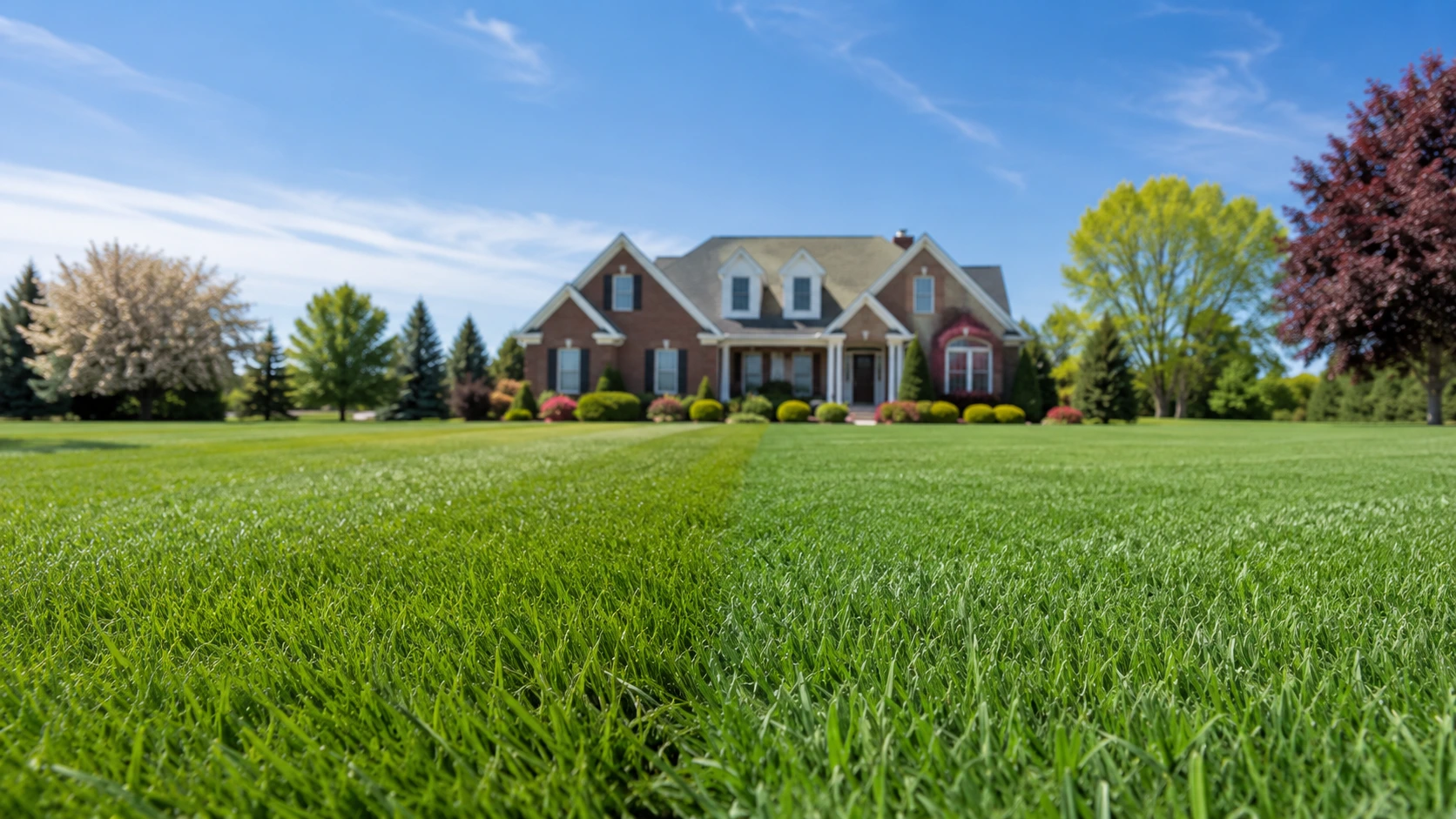
Kentucky Bluegrass (KBG) provides a dense, aggressive, self-repairing turf with a premium dark green color but demands heavy irrigation and frequent nitrogen applications. Turf Type Tall Fescue (TTTF) develops a deep root system reaching up to 3 feet into the soil, making it exceptionally heat and drought-tolerant for transition zones. Choose TTTF if your yard faces strict watering bans and high heat, and opt for KBG only if you have full sun, a dedicated irrigation system, and the budget for intensive seasonal feeding.
Seasonal Timing & Conditions
Cool-season grasses operate on a specific biological clock, and fighting it is the fastest way to waste expensive seed. Both Kentucky Bluegrass and Tall Fescue enter peak growth when daytime air temperatures hit the 60°F to 75°F range. However, their germination windows differ drastically, which dictates exactly when you need to put seed down in your yard.
Tall Fescue requires soil temperatures between 50°F and 65°F to germinate effectively. You will see sprouts in 7 to 14 days. KBG is notoriously slow. It needs the same 50°F to 65°F soil temperature but takes 14 to 30 days to germinate. In my 15 years running routes through the transition zone from Virginia to Missouri, I’ve seen countless yards fail because homeowners drop KBG seed in late spring. The summer heat hits in June, evaporating the shallow moisture the fragile KBG seedlings need, effectively frying the lawn.
Fall is the non-negotiable window for establishing either grass. Seeding between August 15 and October 1 (depending on your hardiness zone) gives the turf 6 to 8 weeks to develop root systems before the first hard freeze.
Required Tools & Materials
Your materials dictate the success of your lawn renovation. Skip the cheap contractor mixes filled with weed seeds and annual ryegrass.
- Premium Seed: Look for blue-tag certified Turf Type Tall Fescue (e.g., Jonathan Green Black Beauty) or elite KBG cultivars (e.g., Midnight, Blueberry).
- Starter Fertilizer: Scotts Turf Builder Starter Food for New Grass (24-25-4 N-P-K ratio).
- Soil Amendment: Sphagnum peat moss or a localized compost topdressing to retain seed moisture.
- Application Gear: Echo RB-60 or Earthway broadcast spreader.
- Pre-emergent (Optional but recommended): Tenacity (Mesotrione) – the only pre-emergent safe for seeding cool-season turf.
The Execution: Establishing Your Chosen Turf
Planting KBG and Fescue requires precise mechanical and chemical execution. Merely throwing seed on compacted clay will yield a 10% germination rate.
1. Site Preparation and Aeration
Rent a core aerator. Punch holes across the yard, making at least two passes in a checkerboard pattern. Fescue roots want to drive deep into the soil profile; if you have hardpan clay at 2 inches down, those roots will turn sideways, completely negating the drought-resistant benefits of the grass.
2. Seed Application Rates
Calibrate your broadcast spreader. For bare dirt, Tall Fescue goes down heavy: 8 to 10 lbs per 1,000 sq ft. Kentucky Bluegrass seed is physically tiny, yielding over a million seeds per pound, so the bare-ground rate is only 2 to 3 lbs per 1,000 sq ft. Expect to spend $120 to $180 on premium Fescue seed for a 5,000 sq ft yard, whereas KBG might cost $90 to $150 due to the lower volume required.
3. Nutrient Delivery
Apply your starter fertilizer at the bag rate immediately after dropping the seed. The high phosphorus content (the “25” in the 24-25-4 ratio) is critical for rapid root cell division. If you use a standard high-nitrogen summer fertilizer here, you will burn the newly sprouted crowns.
4. The Watering Protocol
Topdress the seed with a 1/4-inch layer of peat moss. Water the yard 3 to 4 times a day for just 5 to 7 minutes per zone. Keep the peat moss dark brown. If it turns light tan, the seed has dried out and died. Once the Fescue hits 2 inches tall (usually around week 3), or the KBG finally sprouts (week 4), reduce watering frequency to once a day, soaking it deeper.
Common Mistakes & Wasted Money
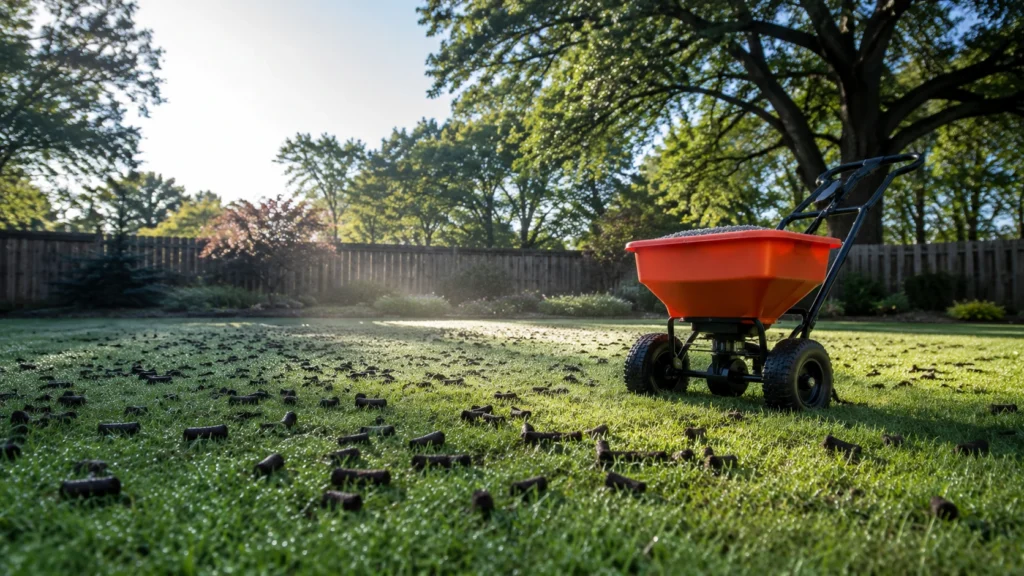
The most expensive mistake homeowners make is misunderstanding the spreading habit of these grasses. KBG spreads via underground rhizomes. If your dog digs a hole, KBG will slowly push new shoots to fill that bare patch over the season. Tall Fescue is a bunching grass. It grows in distinct clumps. If a fungal disease wipes out a 3-foot section of Fescue, it will remain bare dirt forever until you physically add more seed.
Another field observation: overseeding KBG directly into a mature, thick Fescue lawn rarely works. The established Fescue germinates faster and grows taller, completely shading out the slow-growing KBG seedlings before they can establish sunlight access. If you want a mixed yard (like a popular 90/10 Fescue/KBG blend), you must plant them together on bare dirt.
Pro-Tips Box: Stop bagging your clippings if you run Tall Fescue. Fescue uses immense energy to build those deep roots, and mulching your clippings returns about 1 lb of nitrogen per 1,000 sq ft back into the soil over the season. If you are growing KBG and notice a sudden plateau in spreading, push 0.5 lbs of fast-release nitrogen (like urea) per 1,000 sq ft in mid-October. The top growth stops in the cool weather, but those rhizomes will aggressively spread underground until the soil freezes, giving you a drastically thicker yard by spring.
Professional vs. DIY
| Factor | DIY Approach | Professional Service |
| Cost (5,000 sq ft) | $250 – $400 (Seed, fertilizer, rentals) | $700 – $1,200 |
| Speed | Full weekend of intense labor | 2-3 hours |
| Effectiveness | Highly variable based on your watering habits | High, utilizing commercial seed blends |
| Risk | Seed washout, incorrect spreader calibration | Low risk, though you still must handle the daily watering |
Tackling a lawn renovation yourself makes sense if you have an irrigation system and the physical stamina for core aeration. The primary situation where DIY fails is improper watering. Professionals can put down the best blue-tag seed on the market, but if you work a 12-hour shift and the seed dries out in the afternoon sun, you just wasted $1,000. Hire a pro like TruGreen or a local operator if your yard requires aggressive grading, soil amendment incorporation, or slit-seeding equipment that is difficult to rent.
Prevention Tips
- Mow High: Keep your mower deck set at 3.5 to 4 inches during the summer months. Fescue needs this blade height to shade its crown from heat stress. Cutting KBG below 2.5 inches invites crabgrass pressure.
- Deep and Infrequent Watering: Water your mature yard delivering 1 to 1.5 inches of water per week in one or two heavy sessions. Frequent, shallow 10-minute waterings teach the roots to stay at the surface, making both grasses highly vulnerable to July droughts.
- Sharpen Blades: Fescue has a tough, fibrous leaf structure. A dull mower blade will tear the tip instead of cutting it, leaving a white, jagged edge that turns the entire yard a dull brown hue and invites fungal pathogens.
People Also Ask
Can I mix Kentucky bluegrass and tall fescue?
Yes. A blend of 90% Turf Type Tall Fescue and 10% Kentucky Bluegrass by weight is a premium choice. The Fescue provides deep drought tolerance, while the KBG rhizomes spread to fill in the bare spots and clump gaps left by the Fescue.
Does Kentucky bluegrass require more maintenance than fescue?
Absolutely. KBG requires more nitrogen fertilizer annually (often 3-4 lbs per 1,000 sq ft) and significantly more summer irrigation to avoid going dormant. It is also more prone to heavy thatch buildup, requiring regular dethatching.
Which grass is more shade tolerant?
Tall Fescue handles partial shade far better than Kentucky Bluegrass. KBG requires at least 6 to 8 hours of direct, unfiltered sunlight daily to thrive, whereas TTTF can survive on 4 hours of filtered sunlight.
What to Read Next
If you are moving south out of the transition zone, cool-season grasses will quickly fail under the intense summer heat, which is why knowing the difference between st augustine vs zoysia grass will dictate how you establish and maintain a southern turf.