
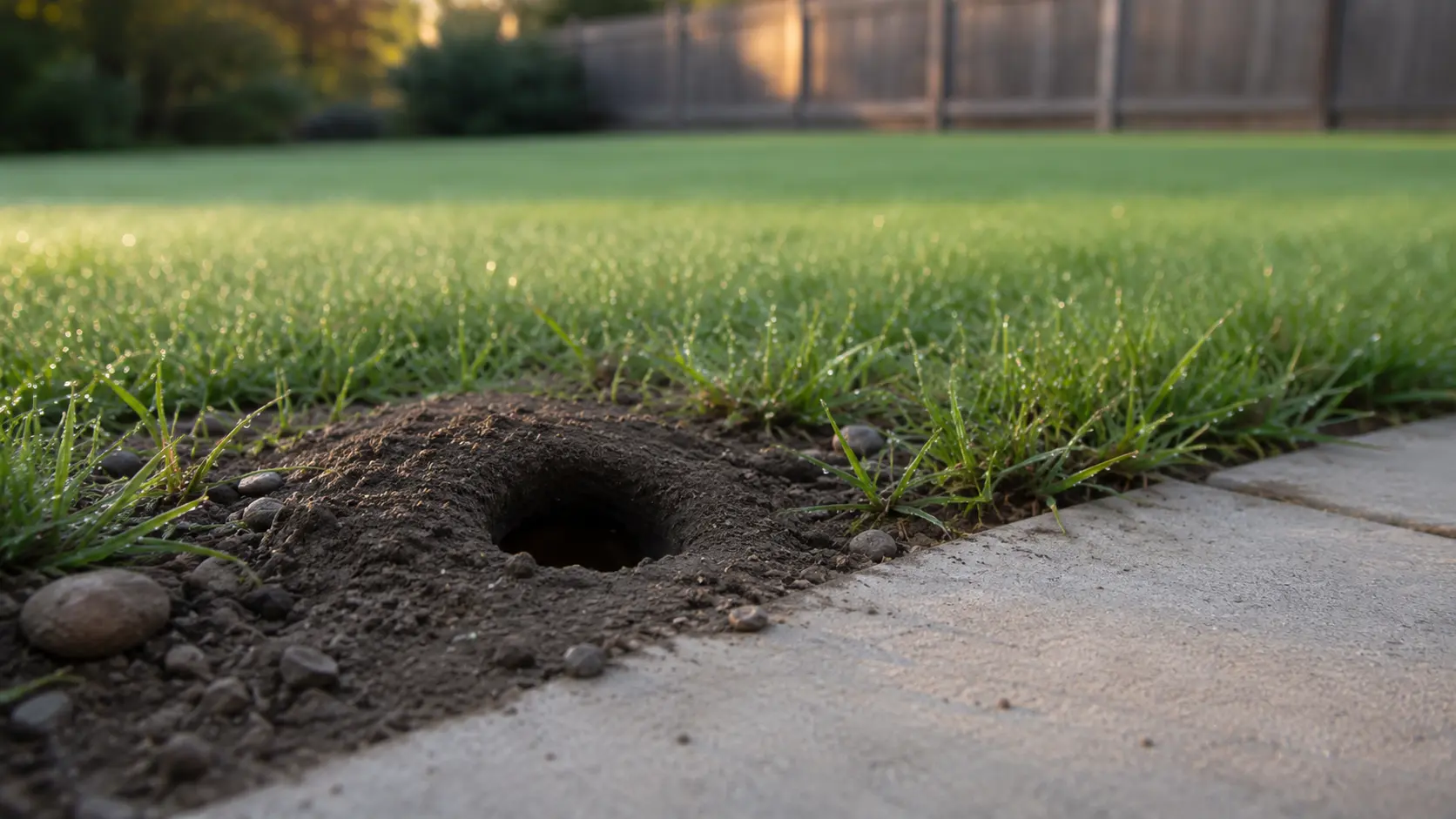
Chipmunk damage appears as clean, 2-inch-wide burrow holes with no dirt mounds around them, usually located near structural foundations, retaining walls, or tree roots. These rodents uproot flower bulbs, steal birdseed, and build complex underground tunnel systems that can ultimately compromise the structural integrity of patios and walkways over time.
Identification Guide
You need to know exactly what you are dealing with before buying traps or repellents. Chipmunks leave very specific signatures in a yard. Look for these visual cues:
- Clean entry holes: You will find perfectly round, 2-inch holes plunging straight down. Unlike other rodents, chipmunks scatter the excavated dirt away from the entrance, leaving no mounds behind.
- Targeted locations: They almost exclusively burrow next to hardscaping. Check along concrete patios, stone retaining walls, driveway edges, and under porches.
- Plant destruction: You will see dug-up flower bulbs, missing seeds, and chewed lower stems on low-hanging plants.
- Sinking hardscape: If you notice pavers sagging or retaining wall stones shifting, a tunnel system has likely compromised the crushed stone or sand base beneath them.
I’ve pulled up dozens of sinking pavers in Ohio and Pennsylvania where a single chipmunk completely hollowed out the sand base in under a month.
Root Causes
Chipmunks don’t choose your yard by accident. They move in because your property offers the perfect triad of survival: heavy cover, accessible food, and easily excavated soil.
Dense ground cover and overgrown shrubs planted directly against your house foundation create a predator-free highway for them to travel. If you have a bird feeder spilling black oil sunflower seeds onto the ground, you are essentially ringing a dinner bell.
They also gravitate toward areas with high insect activity in the loose topsoil. While they love seeds, chipmunks are omnivores that forage for grubs, worms, and beetles. If your lawn has an active pest population beneath the surface, you are offering them a high-protein buffet. Addressing the insect population often reduces wildlife foraging, which is why timing exactly when to put down grubex acts as an indirect perimeter defense against multiple digging pests.
Step-by-Step Solution
Most homeowners just kick loose dirt back into the hole and hope the problem goes away. The chipmunk simply digs it out again within an hour. You need a structured approach to evict them and seal the yard.
Step 1: Eliminate the Attractants
Remove all bird feeders for at least 30 days. Rake up any fallen seeds and nuts. Trim back ground-hugging shrubs like juniper or yew so there is at least an 18-inch gap between the foliage and your foundation.
Step 2: Trapping and Removal
Use a small Havahart catch-and-release trap (model 1025). Place the trap directly along the wall or foundation where you see active travel. Bait it with a mixture of peanut butter and rolled oats. Check the trap twice a day. If you catch one, local laws usually require you to release it on-site or euthanize it; relocating wildlife across county lines is illegal in many states.
Step 3: Apply Scent Repellents
Once the current residents are removed, spray a commercial liquid repellent like Liquid Fence around the perimeter of your patios, garden beds, and foundation. Look for formulas containing putrescent whole egg solids and capsaicin. Apply during dry weather above 50°F. Reapply every 30 days or immediately after heavy rain. If you are doing widespread yard treatments, review how long after fertilizing is it safe for dogs to ensure your pets aren’t exposed to fresh chemical applications.
Step 4: Exclusion
Seal the old burrows correctly. Dig down 12 inches around the hole. Insert 1/4-inch galvanized hardware cloth into the trench, bending it into an “L” shape facing outward. Backfill with crushed gravel, not loose topsoil. Chipmunks hate digging through sharp, crushed stone.
Professional vs. DIY
| Factor | DIY | Professional |
| Cost | $ | $$$ |
| Speed | Weeks | Days |
| Effectiveness | Moderate | High |
| Risk | Low | Low |
DIY trapping and exclusion work perfectly for a minor infestation of one or two chipmunks. However, if your patio is actively collapsing or a retaining wall is buckling, DIY is no longer an option. Wildlife control professionals carry specialized licensing to use lethal body-grip traps safely, and they understand how to evaluate the structural damage left behind by extensive tunnel systems. Call a pro immediately if you see foundational cracking near burrow sites.
Common Misdiagnosis
The biggest mistake you can make is confusing chipmunk holes with vole or mole activity. Treating for the wrong pest guarantees failure.
Moles leave distinct, volcano-shaped mounds of loose dirt on your lawn and create raised, squishy tunnels that kill the grass above them. Voles create shallow, surface-level runways through your turf, leaving dead grass paths that look like cracked spiderwebs across your yard. Chipmunks do neither. If you see a perfectly clean 2-inch hole next to a solid structure with zero dirt piled up around it, you have chipmunks. Don’t waste money on mole poison or spike traps; they will completely bypass them.
Prevention Tips
Stop the next generation from moving in. Establish a 2-foot border of crushed gravel or river rock between your foundation and your mulched flower beds. Chipmunks despise the feeling of jagged rocks and will avoid burrowing through it.
Switch from standard mulch to cedar chips around your most vulnerable plants; the heavy scent disrupts their foraging capabilities. Finally, if you refuse to give up your bird feeders, switch your seed to a safflower blend. Birds will eat it, but chipmunks and squirrels generally hate the bitter taste.
Pro-Tips Box: Never set the trigger on a live trap on the first day. Lock the doors open and place your peanut butter bait inside for three consecutive days. Let the chipmunks get used to walking in and out of the metal cage without fear. On day four, set the trigger mechanism. You’ll catch the most cautious adults on the very first strike. Also, push a few whole sunflower seeds into the peanut butter to give off a stronger scent profile.
People Also Ask (FAQ)
Do chipmunks ruin foundations?
Yes. While they cannot chew through concrete, their extensive burrowing removes the compacted soil and sand supporting patios, stairs, and retaining walls, eventually causing the structures to crack, sink, or collapse under their own weight.
Will coffee grounds keep chipmunks away?
Coffee grounds act as a mild, short-term deterrent due to their strong scent, but they are not effective for severe infestations. They wash away quickly in the rain and require daily reapplication to maintain any noticeable barrier.
What is the best bait for chipmunk traps?
A mixture of creamy peanut butter and black oil sunflower seeds is highly effective. The peanut butter sticks to the trap pan, forcing the chipmunk to actively lick and press down, which guarantees the trigger mechanism activates.
What to Read Next
If you are dealing with moisture issues attracting insects to your yard, you might inadvertently be dealing with fungal diseases weakening your grass base. Learn how to distinguish surface damage properly by checking our visual diagnostic guide on Brown Patch vs Dollar Spot.