
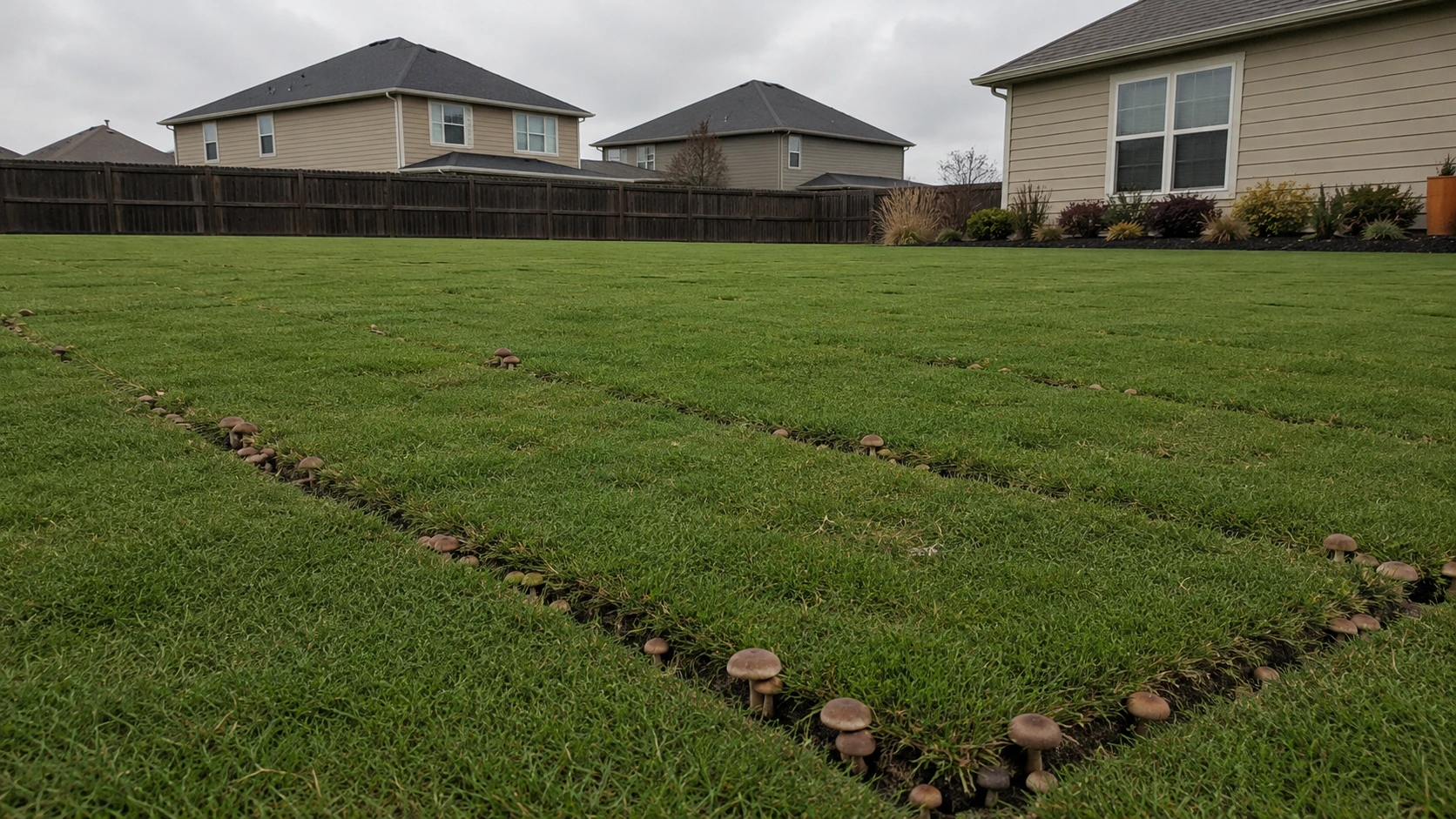
Mushrooms growing in new sod are harmless and actually signal a healthy, active soil ecosystem. Your new lawn requires heavy watering to establish roots, creating the perfect damp environment for the organic fungi already present in the sod’s compost layer to fruit. Do not apply fungicides. Simply kick them over, mow them, or let the sun dry them out as your watering schedule decreases.
Identification Guide
- Location of Growth: You will mostly see them sprouting directly from the seams where the sod rolls meet, or in slight yard depressions where irrigation water pools.
- Cap Appearance: Look for small, delicate, light brown or white umbrella-shaped caps that seem to appear overnight after a heavy watering cycle.
- Fragility: They shatter easily when kicked or brushed. They are soft and fleshy, not woody or tough.
- No Turf Damage: The grass blades immediately surrounding the mushrooms are bright green and healthy. Unlike actual lawn diseases, these mushrooms do not create dead, yellow, or brown rings in the grass itself.
- Short Lifespan: They typically shrivel up and disappear within 24 to 48 hours once exposed to direct sunlight and high afternoon temperatures.
Root Causes
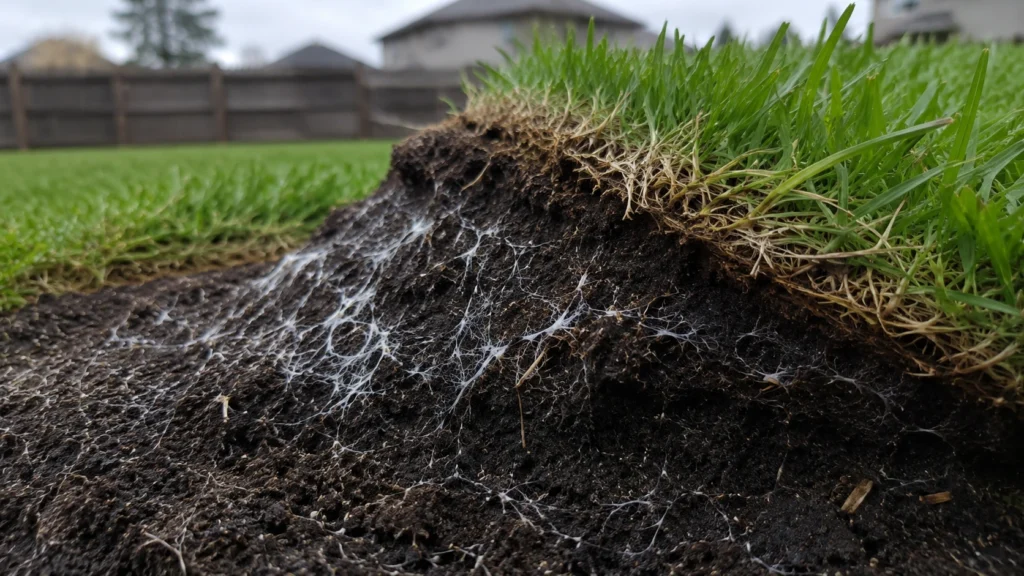
Sod farms grow their turf in rich soil loaded with organic matter like decaying wood, compost, and aged manure. This organic material is naturally full of dormant fungal spores and active mycelium networks. When those rolls are harvested by the sod cutter, transported on pallets, and laid in your yard, you are instructed to water them heavily—often requiring 1 to 2 inches of water per week—to quickly establish the root system in your native soil.
This specific combination of decaying organic matter beneath the sod and constant surface moisture triggers the mycelium to reproduce. The mushrooms you see are just the fruiting bodies of that underground network. It means the soil biology is actively breaking down nutrients, which will eventually feed your new grass as it matures. You are simply seeing nature do its job on an accelerated timeline because of your aggressive watering schedule. If you suspect actual grass blade damage alongside this moisture, you might need to check our diagnostic guide comparing Brown Patch vs Dollar Spot to rule out pathogenic activity that thrives in wet conditions.
Step-by-Step Solution
Panicking is the worst thing you can do right now. Reaching for a chemical fungicide will waste your money and could harm the beneficial microbes trying to establish your new turf. Treating saprophytic fungi (decaying fungi) requires mechanical action, not chemical intervention.
- Verify Soil Moisture Levels: Push a standard 6-inch screwdriver into the soil. If it slides in easily all the way to the handle, your soil is saturated. This level of moisture is absolutely necessary for the first two weeks of a new sod installation, but it confirms exactly why the mushrooms are fruiting.
- Mechanically Remove the Caps: You can physically remove the mushrooms to improve the look of the yard. Rake them lightly with a leaf rake or simply kick them over with your boot. Breaking the cap stops them from dropping airborne spores, though the underground mycelium remains entirely active.
- Adjust Your Watering Schedule (Week 3+): Once the sod has rooted (meaning you cannot easily pull up a corner of a roll with your hand), start tapering your watering. Switch from shallow, daily waterings to deep, infrequent waterings. Aim for about 1 inch of water per week spread over two sessions.
- Mow Safely: When the sod is firmly rooted enough to support heavy mower traffic (usually after 14 to 21 days), just mow right over the mushrooms. Bag the clippings for this specific mow if you want to pull the broken caps completely off the lawn surface.
- Let the Sun Work: As your watering decreases and the soil surface dries out completely between your irrigation cycles, the mushrooms will naturally stop fruiting.
You will see the mushroom population drop off drastically within a few weeks as the sod knits together and your irrigation habits normalize to standard maintenance levels. Cost of this treatment? Zero dollars.
Professional vs. DIY
| Factor | DIY | Professional |
| Cost | $ | |
| Speed | Weeks | Days |
| Effectiveness | High | High |
| Risk | Low | Low |
For standard mushrooms popping up in fresh sod, DIY is the only logical choice. A professional lawn care service will tell you exactly what I am telling you: leave them alone and adjust the water. However, if your sod starts turning yellow, thinning out rapidly, or developing large brown circles alongside the mushrooms, call a professional. That indicates a pathogenic turf disease like Pythium Blight or Rhizoctonia. Those require specialized systemic fungicides applied by a licensed technician.
Common Misdiagnosis
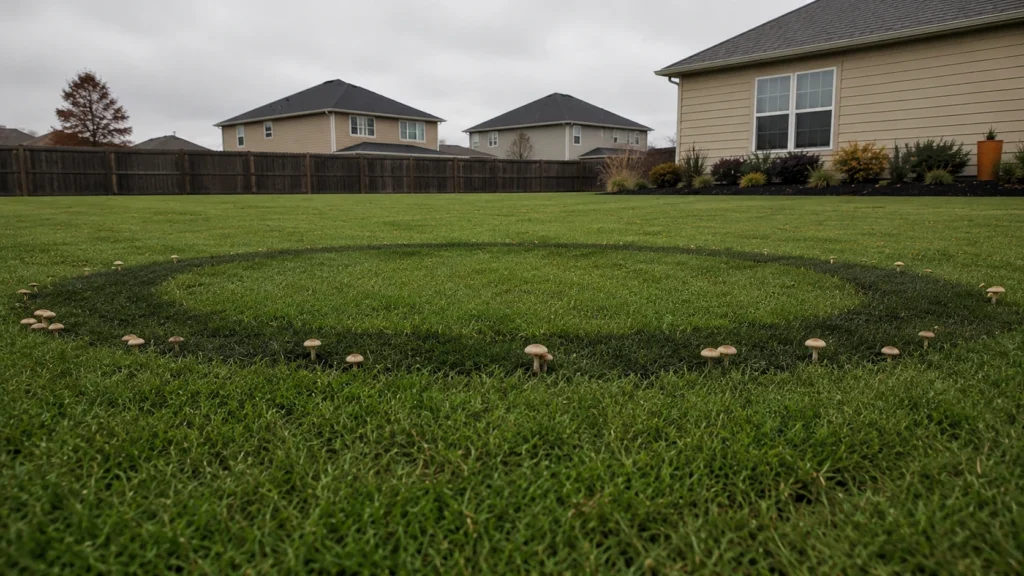
Homeowners frequently confuse harmless organic decay mushrooms with Fairy Ring disease. Fairy Ring also produces mushrooms, but it creates a distinct, dark green or brown circular outline in the turf that can easily span 3 to 10 feet in diameter. The soil inside a Fairy Ring becomes extremely hydrophobic, repelling water and actively killing the grass from dehydration. The mushrooms in your new sod are scattered randomly or tightly follow the linear seams of the sod rolls, and most importantly, they do not kill the surrounding grass blades. If the grass remains deep green and actively growing around the fungal caps, you do not have Fairy Ring.
Prevention Tips
You cannot entirely prevent mushrooms when laying new sod because the initial heavy watering phase is non-negotiable for survival. But you can stop them from becoming a long-term nuisance in established turf. Ensure your yard is properly graded before installation so water doesn’t pool in low spots, creating permanent mud zones. In the seasons following establishment, avoid excessive thatch buildup. If your soil eventually gets too tight and holds surface moisture too long, you will need to learn when you should aerate your lawn to mechanically pull soil plugs, improving drainage and air circulation down at the root level.
Pro-Tips Box: Never apply Propiconazole or Azoxystrobin (often found in granular products like Scotts DiseaseEx or BioAdvanced Fungus Control) to brand new sod just to kill organic mushrooms. These chemicals won’t eradicate the underground decay fungi anyway, and applying heavy chemical stressors to unrooted turf can severely stunt early root development. If the mushrooms are popping up thick and annoying you, just drag a stiff push broom across the yard in the late afternoon when it’s totally dry. It shatters the caps into dust in minutes without damaging the fragile new grass blades.
People Also Ask
Are mushrooms in new sod harmful to dogs?
While most common lawn mushrooms are not highly toxic, some species can cause severe gastrointestinal distress in dogs. Always remove them manually if your pets have access to the yard while the sod is establishing.
Does picking the mushrooms spread them faster?
Picking or kicking them over can release spores, but it doesn’t matter. The mycelium network is already established under the sod. Removing the caps just improves the visual appearance until the soil dries out.
When can I stop watering my new sod every day?
Check for rooting after 10 to 14 days by gently tugging on a sod roll. If it resists your pull, you can transition to watering deeply every other day, which will immediately reduce new mushroom growth.
What to Read Next
If you are seeing other strange spots or dying patches in your new turf, it might not be a watering issue, which is why understanding the visual differences in our Grub Damage vs Fungus diagnostic guide can save you from applying the wrong treatment when your lawn actually needs insecticide.