
Raccoons absolutely hate the sharp, burning scents of ammonia, peppermint oil, and cayenne pepper. Because they rely heavily on their sensitive noses to forage for food, these intense odors overwhelm their olfactory receptors. Placing ammonia-soaked rags near trash cans or spraying a concentrated peppermint oil solution around your deck creates an invisible, highly irritating barrier that forces them to look elsewhere for an easy meal.
Identification Guide
Before mixing any repellents, confirm you are actually dealing with a raccoon. These nocturnal bandits leave very specific calling cards around your yard:
- Hand-like tracks: Raccoon prints look remarkably like small human hands with five long fingers. You will usually spot these in soft mud near downspouts or garden beds.
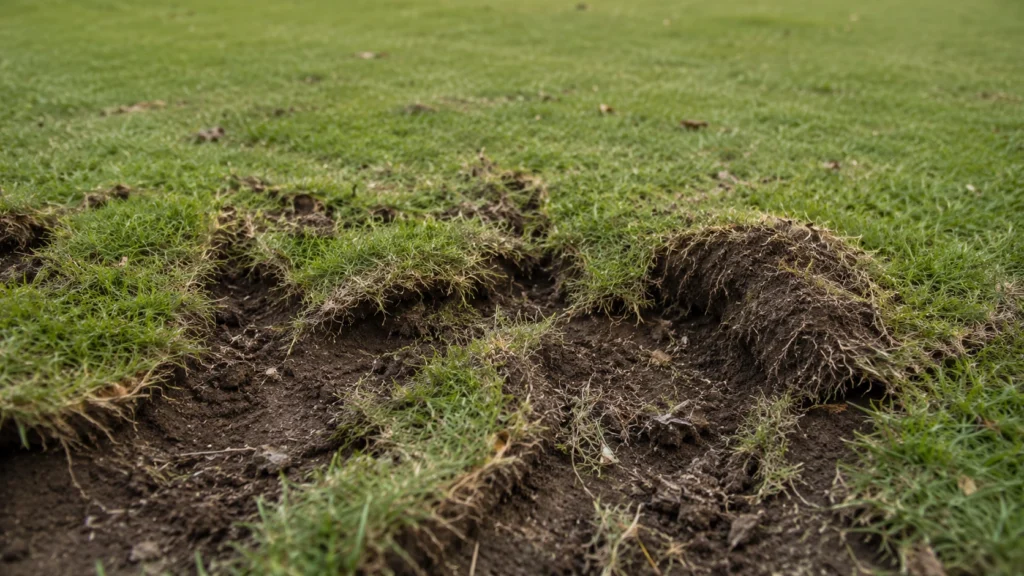
- Rolled-back sod: If chunks of your grass look like they have been peeled back in wide strips overnight, raccoons are flipping the turf to find grubs.
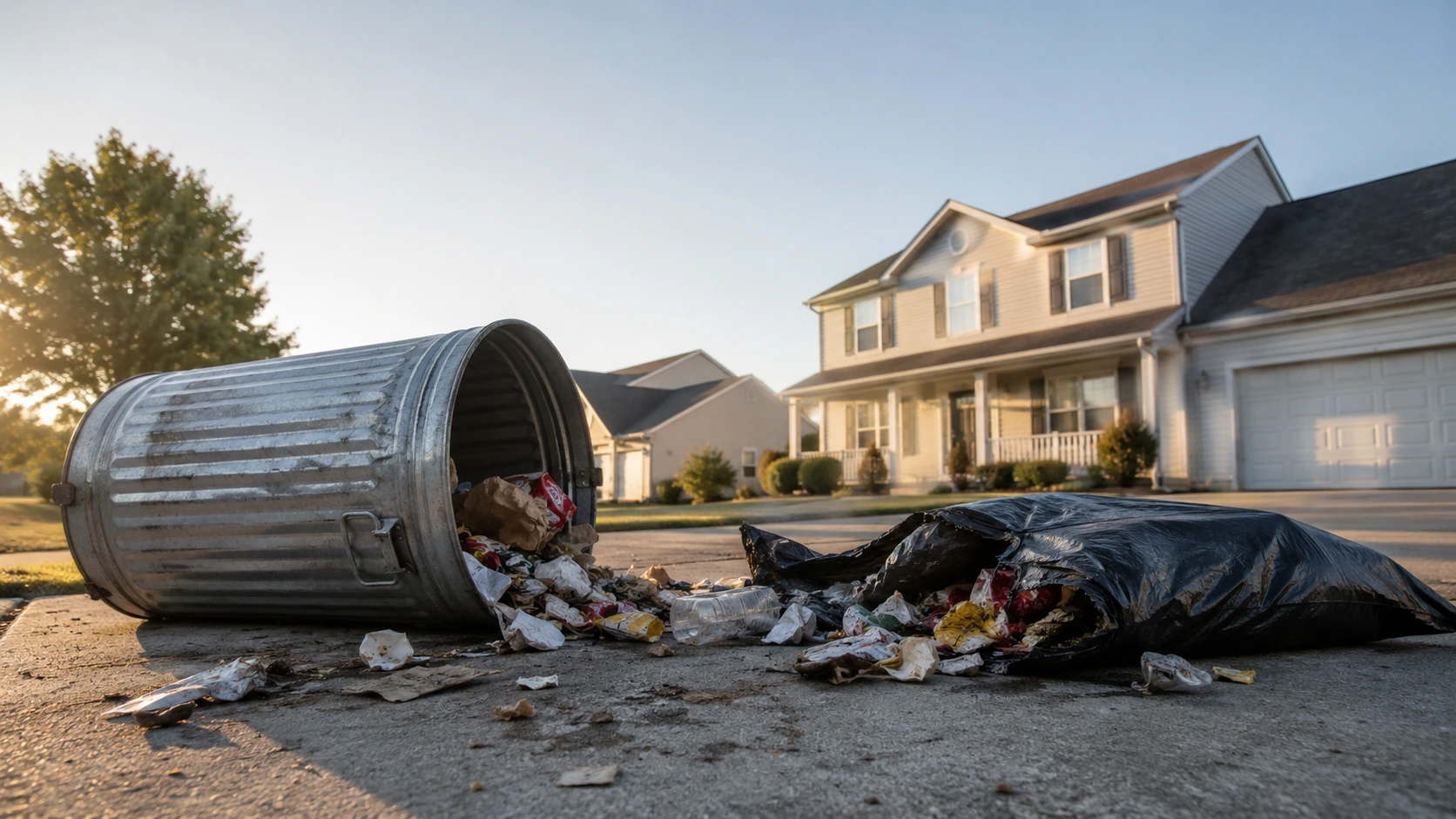
- Targeted trash destruction: Raccoons have the dexterity to undo bungee cords, unlatch gates, and open Tupperware. If your trash lid was unbuckled, not just knocked over, it is a raccoon.
- Latrine sites: They return to the same spot to defecate, often at the base of trees or on elevated surfaces like woodpiles. The droppings are dark, tubular, and often contain undigested seeds or berries.
Root Causes
Raccoons do not invade your yard just to annoy you; they are there because you are unknowingly providing a five-star buffet. The primary driver is always a highly accessible food source. In the spring and late summer, a lawn infested with white grubs acts like an all-you-can-eat diner.
Unsecured trash is the second biggest draw. Flimsy plastic lids keep rain out, but they do nothing to stop the scent of discarded meat packaging or sweet wrappers from drifting across the neighborhood. Leaving pet food out on the back porch overnight is another major trigger. Raccoons are incredibly opportunistic. If they find an easy meal once, they map your address in their memory and will return every single night until the food source is completely eliminated.
Step-by-Step Solution
You have two highly effective DIY routes for repelling raccoons based on scent: the ammonia method for trash areas, and the peppermint/cayenne method for living spaces like decks or porches.
Method 1: The Ammonia Station (Best for Trash & Sheds)
- Gather materials: You need regular unscented household ammonia, heavy-duty ziplock bags, a drill, and old tennis balls or heavy cotton rags. Wear safety goggles and gloves when handling pure ammonia.
- Create the scent station: Drill a dozen small holes into a plastic Tupperware container.
- Soak the core: Saturate a tennis ball or rag in 3 to 4 oz of ammonia. Place it inside the ventilated container and snap the lid shut.
- Positioning: Place these stations directly inside your outdoor trash bins or under the shed where they are trying to dig. The container prevents the ammonia from leaching into the soil while letting the pungent vapor escape. Refresh the ammonia every two weeks.
Method 2: Peppermint & Cayenne Spray (Best for Decks & Gardens)
- Mix the base: In a 1-gallon pump sprayer, mix 1 gallon of water with a heavy squirt of Dawn dish soap (about 1 oz). The soap acts as a surfactant so the active oils stick to wood and concrete surfaces.
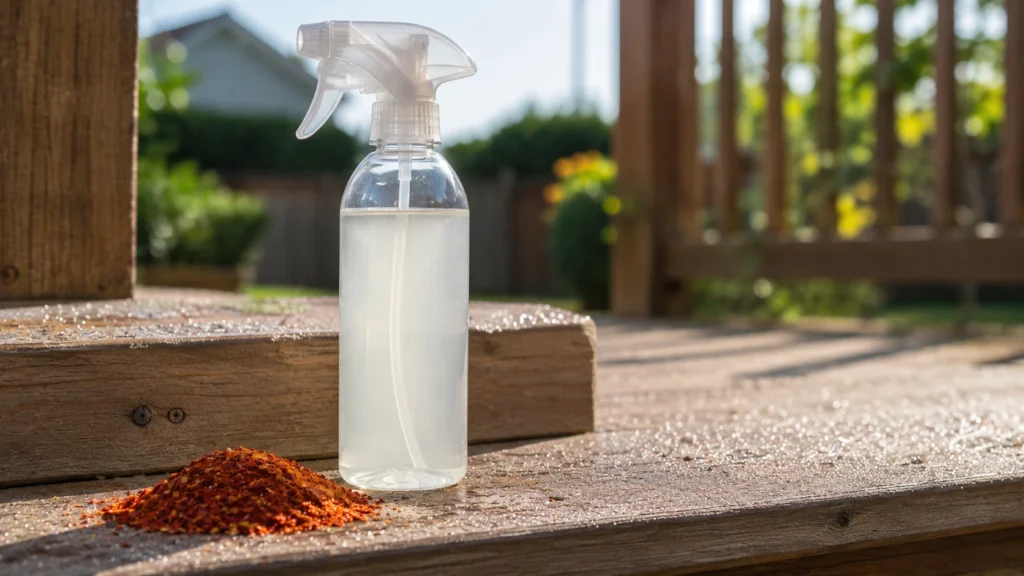
- Add the active ingredients: Add 20 drops of pure peppermint essential oil and 2 tablespoons of cayenne pepper powder (the active heat component is Capsaicin). Shake the tank vigorously.
- Application: Spray this mixture heavily along the baseboards of your deck, around lattice work, and near the bottom of your fence line.
- Maintenance: You must reapply this mixture every 3 to 4 days and immediately after any rainfall.
Most homeowners apply a scent repellent once, see the raccoon return after a rainstorm, and assume the method failed. Consistency is your actual weapon here.
Professional vs. DIY
| Factor | DIY Odor Repellents | Professional Wildlife Removal |
| Cost | $ ($10 – $25) | ($300 – $600+) |
| Speed | Immediate deterrence | 3 to 7 days (trapping) |
| Effectiveness | Moderate (requires upkeep) | High (permanent removal) |
| Best For | Trash raiders, yard foragers | Attic nesting, persistent damage |
You can easily handle transient raccoons knocking over trash cans with odor deterrents. However, if a female raccoon has torn off a soffit and nested inside your attic or chimney to have babies, DIY smells will not work. Mothers will endure terrible odors to protect their young. You need a licensed wildlife control operator to physically trap and relocate the family safely.
Common Misdiagnosis
Homeowners constantly confuse raccoon yard damage with skunk activity. Both animals destroy lawns looking for grubs, but their physical techniques are completely different.
Raccoons use their highly dexterous, hand-like paws to physically grab the grass and roll it back in large, messy chunks, exposing wide swaths of dirt. Skunks, on the other hand, have long, fixed digging claws. They press their noses to the dirt and dig precise, cone-shaped holes about 2 to 3 inches deep directly over the grub. If your yard looks like it was hit by a tiny rototiller, it is a raccoon. If it looks like someone took a core aerator and punched random, neat holes in the turf, you have a skunk problem.
Prevention Tips
Scent repellents are only a temporary bandage if you do not remove the primary attractant. First, upgrade your trash cans. Buy cans with heavy-duty locking lids or secure your current lids with thick bungee cords threaded tightly through the handles. Second, never leave pet food or water bowls outside overnight. Pick them up right at dusk.
Finally, treat the root cause in your lawn. If raccoons are ripping up your grass, they are eating white grubs. Applying a preventative systemic insecticide like Chlorantraniliprole in late spring kills the grubs before they mature. No food means no raccoons, which is exactly why knowing when to put down GrubEx makes all the difference in keeping destructive wildlife completely out of your yard.
Pro-Tips Box: In my years of field work, the biggest mistake I see homeowners make is throwing mothballs all over their yard to repel wildlife. Not only is it a federal violation of the label to broadcast naphthalene outdoors, but raccoons literally just kick them out of the way. If you want a heavy-duty, weather-resistant barrier, buy coyote urine granules (brands like Shake-Away). Sprinkle 2 oz per linear foot around the perimeter of your shed or deck. Because coyotes are apex predators, this taps into the raccoon’s biological fear of being eaten, which is far more powerful than just a bad smell.
People Also Ask
Does vinegar keep raccoons away?
Yes, apple cider or white vinegar can deter raccoons due to its strong acetic acid scent. Soaking rags in vinegar and placing them near trash cans works temporarily, but the smell dissipates very quickly outdoors, requiring almost daily reapplication to remain effective.
Will bleach repel raccoons?
Bleach has a strong odor that raccoons dislike, but you should never use it as an outdoor repellent. Bleach is highly toxic to pets, damages surrounding vegetation, and degrades rapidly in sunlight. Stick to ammonia in a ventilated container for a safer, longer-lasting chemical scent.
Do ultrasonic pest repellers work on raccoons?
No. While ultrasonic devices emit high-frequency sounds that animals can hear, raccoons quickly habituate to the noise. Within a few days, they realize the sound poses no physical threat and will ignore it entirely to access a reliable food source.
What to Read Next
If you are waking up to freshly dug holes but aren’t totally sure raccoons are the culprit, your first step is identifying the exact track and damage pattern. Check out our detailed guide on what animal digs holes in my yard to accurately diagnose the invader before you start mixing chemical repellents.
Hello, after reading this amazing article i am also happy to share my familiarity here
with colleagues.