
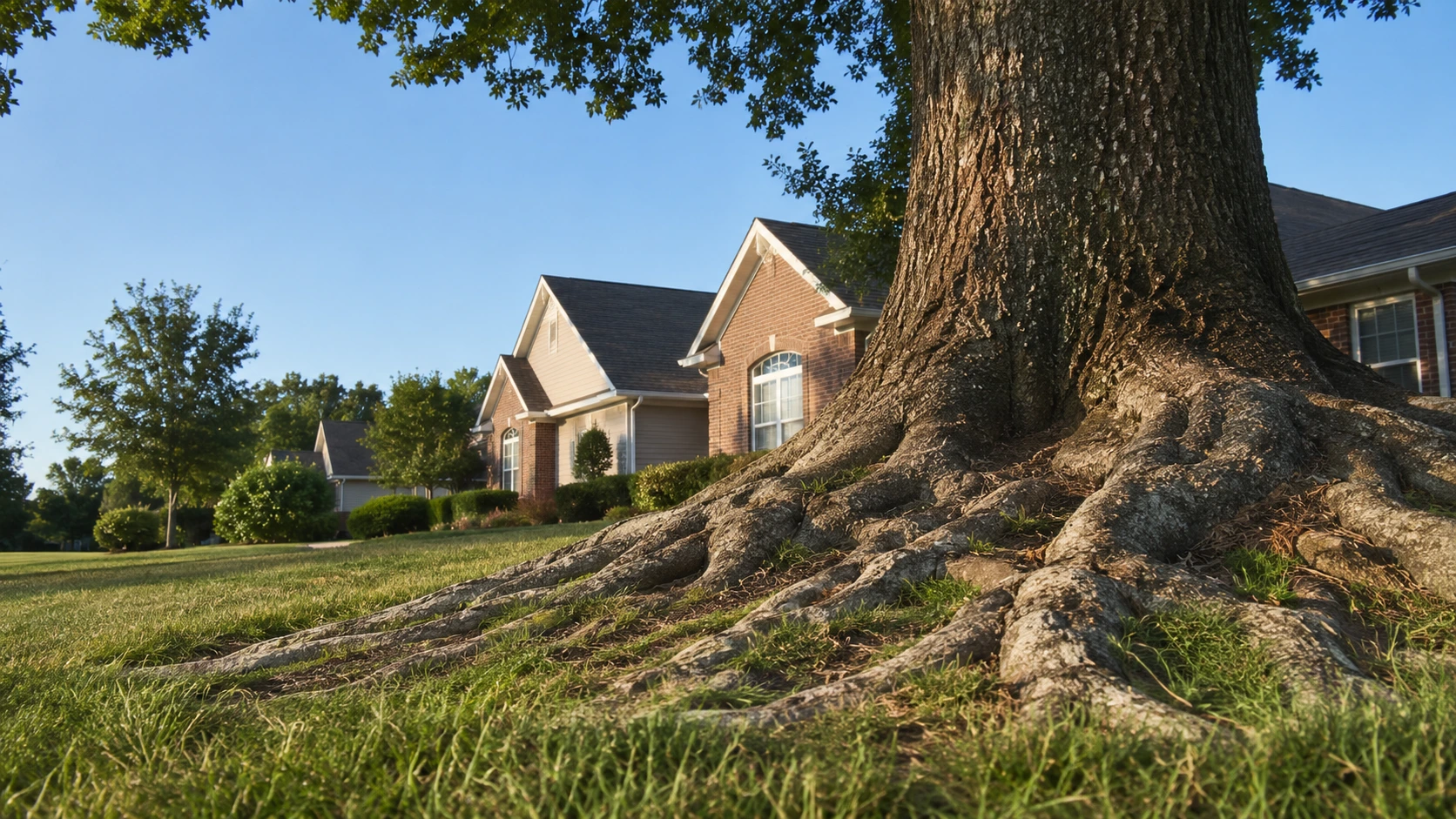
Covering exposed tree roots with 2 to 3 inches of organic mulch is the safest and most effective solution. Cutting surface roots destabilizes mature trees and creates entry points for disease. If you cannot use mulch, planting shade-tolerant ground cover is the best alternative. Never bury exposed roots under thick layers of topsoil.
Identification Guide
You need to assess the severity of the root exposure before planning any landscaping changes. Look closely at the base of the tree and the surrounding yard for these specific signs:
- Woody ridges above the soil line: These are structural roots, typically 2 to 6 inches in diameter, winding away from the trunk.
- Mower blade scarring: Look for fresh, yellow-white gouges or old, calloused grey wounds on the top of the roots where your mower deck or blades have struck them.
- Bare dirt patches: Grass naturally thins out and dies around surface roots due to fierce competition for water and intense shade from the canopy above.
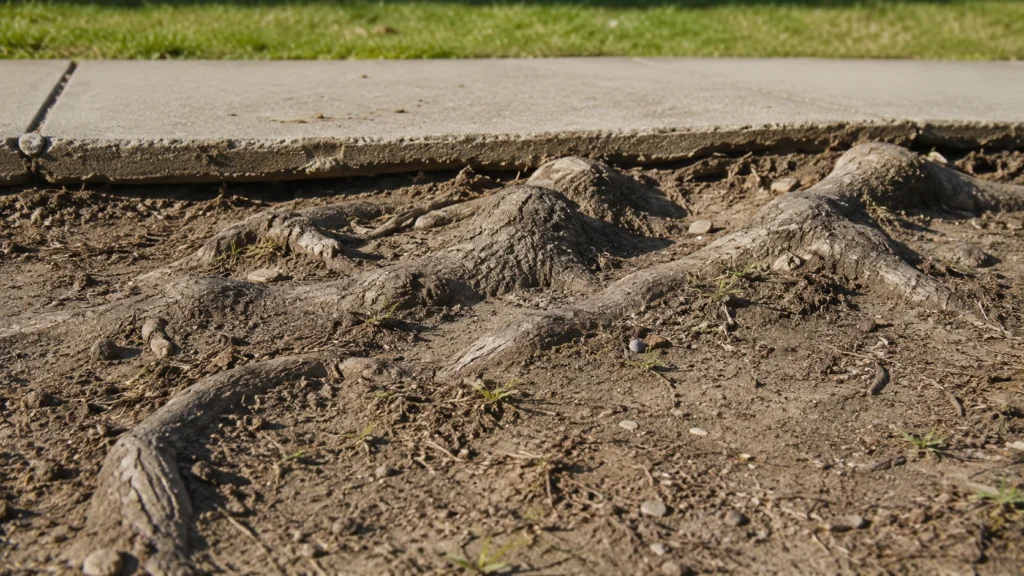
- Lifting hardscapes: Check adjacent concrete. If sidewalks or driveway panels are lifting, buckling, or cracking, the root system is actively expanding upward and outward.
Root Causes
Tree roots don’t surface just to ruin your lawn mower blades; they surface because they are starving for oxygen and moisture. Most homeowners assume roots grow deep, but 80% of a tree’s root system lives in the top 18 inches of soil.
Soil compaction is the leading driver of surface roots. In heavy clay soils or high-traffic yards, the ground becomes dense like brick. Roots cannot push downward, so they grow upward toward the surface where oxygen and rainwater sit. This is exactly why knowing when should you aerate your lawn is critical for deep root development, both for your turf and your trees.
Erosion also plays a massive role. Years of heavy rainfall and irrigation runoff wash away the top layer of soil, slowly revealing the root flare and structural roots. Furthermore, certain species are notorious for shallow root systems. Silver maples, weeping willows, and sweetgums are genetically wired to produce aggressive, surface-level roots regardless of how pristine your soil conditions are.
Step-by-Step Solution
Fixing this problem without killing your tree requires abandoning the idea of growing grass right up to the trunk. The most permanent, tree-healthy fix is creating a mulch bed.
Step 1: Define the bed boundary
Trace a perimeter around the tree. Ideally, this should extend to the tree’s drip line (the outer edge of the branch canopy), but at a minimum, go 3 to 4 feet out from the trunk. Mark the edge with marking paint or a garden hose.
Step 2: Remove existing vegetation
Do not use a rototiller or a heavy shovel, as this will severely damage the shallow feeder roots. Use a string trimmer (like an Echo or Husqvarna) to scalp the remaining grass and weeds down to the dirt. If necessary, apply a non-selective herbicide like Glyphosate carefully to the weeds, shielding the tree bark from any drift. Wait 48 hours.
Step 3: Edge the perimeter
Dig a shallow trench (2 inches deep) along your marked boundary using a half-moon edger. Dig away from the tree, pointing the blade outward to avoid slicing unseen roots.
Step 4: Apply the mulch bed
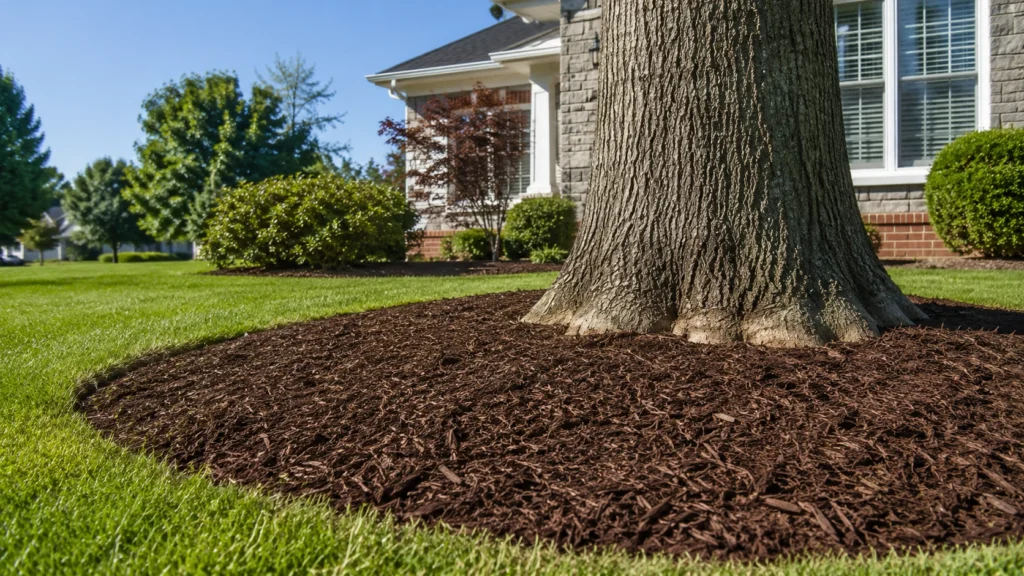
Dump bags of high-quality organic mulch—hardwood, cedar, or pine bark work best. Spread it evenly using a rake. The mulch layer must be exactly 2 to 3 inches deep. Anything thicker suffocates the root system and blocks rainfall.
Step 5: Clear the root flare
Pull the mulch completely away from the actual trunk of the tree. Leave a 2- to 3-inch gap of bare soil directly around the base. Bark buried in moist mulch rots quickly, inviting borers and fungal infections.
Professional vs. DIY
Tackling surface roots with mulch or ground cover is a standard weekend DIY project that costs less than $50 in materials. However, if the roots are threatening your foundation, plumbing, or lifting your driveway, the situation escalates.
| Factor | DIY (Mulching) | Professional (Arborist) |
| Cost | $ ($30–$80) | ($500–$2,000+) |
| Speed | Hours | Days (Scheduling/Permits) |
| Effectiveness | High (for lawn health) | High (for structural safety) |
| Risk | Low | Low (if certified) |
Never attempt to prune roots larger than 1.5 inches in diameter yourself. Severing structural anchor roots can cause a mature tree to fall during the next major storm. Hire an ISA-certified arborist; they use air spades to expose the root system safely and determine which roots can be cut without compromising the tree’s stability.
Common Misdiagnosis
Homeowners frequently confuse normal surface roots with stem-girdling roots. While surface roots spread outward from the tree into the yard, a girdling root wraps tightly around the base of the trunk itself.
A normal surface root is structural and completely healthy. A girdling root acts like a tourniquet, slowly choking off the flow of water and nutrients as the trunk expands. If you see a root circling the trunk and burying itself back into the base, creating a pinched or flat look on the bark, do not cover it with mulch. This requires immediate intervention from an arborist to carefully chisel or saw the strangling root away.
Prevention Tips
Preventing roots from breaching the surface starts when the tree is a sapling. Deep, infrequent watering forces roots to dive deep into the soil profile searching for moisture. If you run your irrigation system for 10 minutes every single day, you are training the tree to keep its roots at the surface where the water sits. Switch to watering heavily once a week, providing 1 to 1.5 inches of water.
Keep heavy machinery, parked cars, and intense foot traffic away from the soil beneath your tree’s canopy. Soil compaction ruins the macropores in the dirt, forcing roots up for air. Core aeration outside the drip line helps relieve this pressure, keeping the surrounding yard hospitable for deep growth.
Pro-Tips Box: I see homeowners make the exact same mistake every spring: they dump 6 inches of rich topsoil directly over exposed oak roots and plant fresh grass seed. Within three weeks, the tree’s feeder roots sense the new soil, grow straight up into it, and you’re back to square one, but now the root system is suffocating. If you absolutely insist on adding soil to level a tripping hazard, never add more than 2 inches of a 50/50 sand and compost mix in a single season. Let the tree adapt for a full year before adding another inch.
People Also Ask
Can I put dirt over exposed tree roots?
Adding more than 2 inches of topsoil over exposed roots suffocates the tree by cutting off oxygen. The roots will simply grow upward through the new dirt to reach the air, recreating the exact same problem while compromising the tree’s health.
Will cutting exposed tree roots kill the tree?
Yes, cutting large structural roots (over 1.5 inches thick) or removing more than 20% of the surface roots can destabilize the tree and cause fatal decline. It also creates open wounds that invite wood-decaying fungi and pests.
Can I grow grass over tree roots?
Growing grass over established surface roots is extremely difficult. The tree canopy blocks sunlight, and the aggressive tree roots outcompete the grass for water and nutrients. You will constantly battle bare patches. Mulch or shade-tolerant ground cover is much more sustainable.
What to Read Next
If you’re dealing with bare dirt patches around your tree and plan to reseed areas just outside the new mulch ring, you need to ensure the soil holds enough moisture during germination, which is where understanding how to use peat moss on top of grass seed properly becomes your best tool for success.