
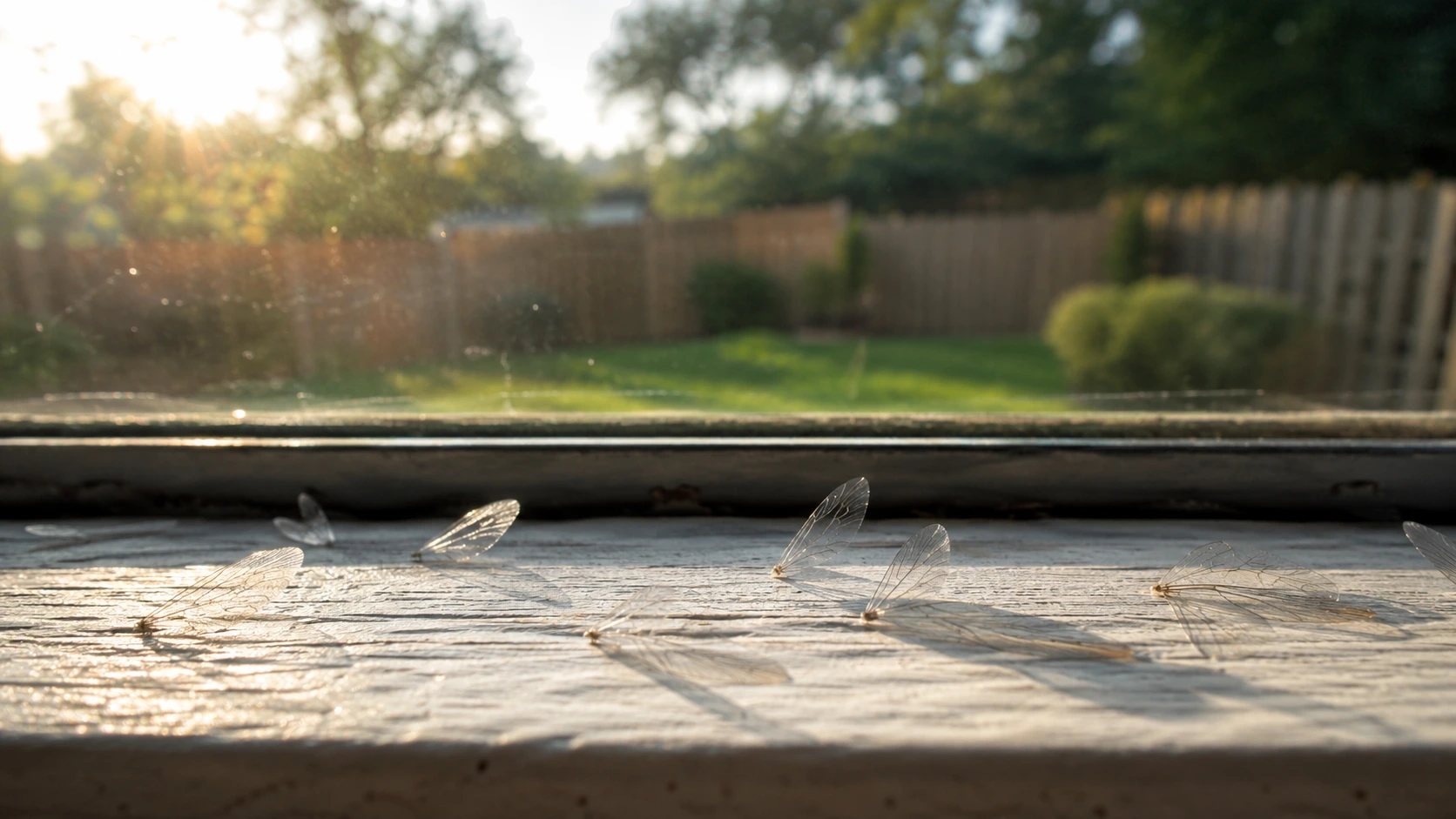
Yes, termites have wings at a specific stage in their life cycle. These flying termites, called swarmers or alates, emerge from mature colonies to mate and start new nests. Finding flying termites or their discarded wings inside your house means an active, mature colony of at least three to five years old is already feeding somewhere within your walls or foundation.
Identification Guide
You need to know exactly what you are looking at before you panic. Homeowners constantly mistake flying ants for termite swarmers, leading to unnecessary stress or the wrong chemical application.
- Four wings of equal length: Termite swarmers have two pairs of translucent wings that are exactly the same size. They fold flat over their back.
- Straight antennae: Look closely at the head. Termite antennae look like tiny, straight strings of beads.
- Thick waistline: A termite has a broad, straight body with no distinct waist separating the thorax from the abdomen.
- Shed wings on windowsills: Termites are weak fliers and shed their wings shortly after landing. Finding piles of silver, papery wings near glass doors, window tracks, or light fixtures is a dead giveaway.
- Color variations: Depending on the species, swarmers can be pale yellow, solid black, or dark brown. Subterranean swarmers are typically dark, while drywood swarmers lean toward reddish-brown.
Root Causes
Termites develop wings for one simple reason: reproduction. A subterranean or drywood colony spends years quietly eating through your framing. Once that colony reaches capacity—usually hundreds of thousands of workers—the queen produces winged reproductives.
Nature triggers this mass exodus. For Eastern Subterranean termites, this happens on the first warm, sunny day following a heavy spring rain. The sudden spike in humidity and temperature tells the alates it is time to fly out, find a mate, drop their wings, and burrow into moist soil or wood to crown themselves king and queen of a new nest.
If you are seeing them inside, they didn’t fly in from outside. They emerged from a mud tube or damaged baseboard right in your living room. The drywall might look perfectly fine on the surface, which is why signs of termites in drywall are often missed until the swarm happens.
Step-by-Step Solution
Killing the flying termites you see buzzing around your living room does not solve your problem. The swarmers themselves do not bite, sting, or eat wood. The workers hidden in your walls do the damage. If you have a confirmed indoor swarm, you need professional intervention. However, if you are treating the exterior perimeter of your home to stop an incoming subterranean invasion, a liquid barrier treatment is the industry standard.
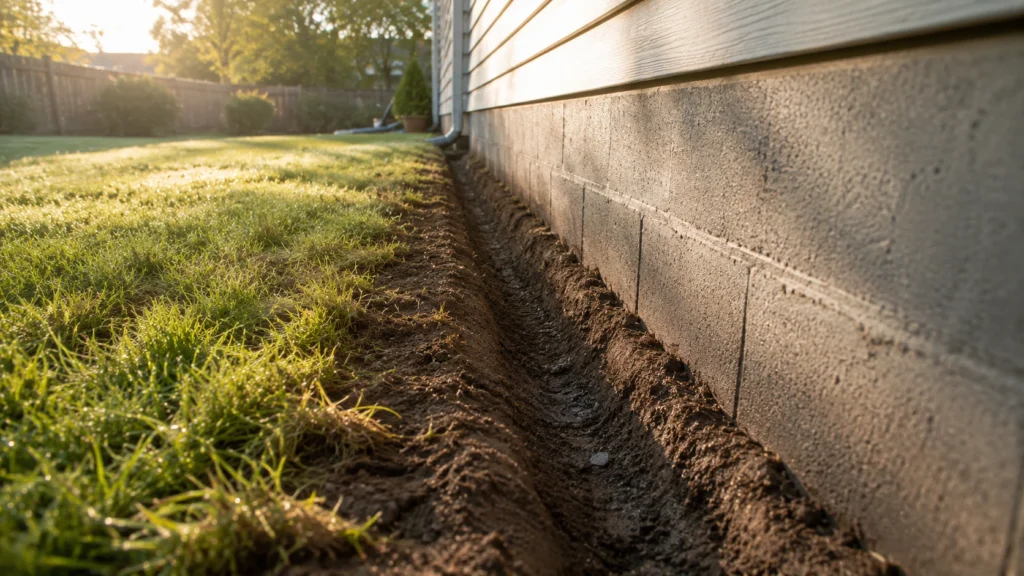
- Dig the trench: Grab a shovel and dig a trench directly against your home’s exterior foundation. Make it exactly 6 inches deep and 6 inches wide. Do not skip this step. Surface spraying does nothing against subterranean termites.
- Mix the non-repellent termiticide: You need a professional-grade product containing Fipronil, such as Termidor SC or Taurus SC. Mix 0.8 oz of the concentrate per 1 gallon of water in a pump sprayer or bucket.
- Apply the liquid barrier: Pour the mixture into the trench at a rate of 4 gallons per 10 linear feet. Let the soil completely absorb the liquid. I have seen homeowners try to rush this by dumping the whole bucket at once—most of it just runs off into the yard, rendering the treatment useless.
- Treat the backfill: As you shovel the dirt back into the trench, spray the loose soil with the same mixture. You are creating an unbroken, treated soil barrier that the termites cannot detect.
- Monitor for activity: Fipronil is a slow-acting chemical. Termites pass through the barrier, carry the active ingredient back to the colony, and transfer it to the others. Complete colony elimination usually takes between 30 and 90 days.
Always wear waterproof gloves and long sleeves when handling Fipronil. Keep pets off the treated soil until it is completely dry.
Professional vs. DIY
Tackling a termite problem on your own carries massive financial risk. Treating the soil around a detached shed is one thing, but protecting a primary residence often requires specialized equipment.
| Factor | DIY | Professional |
| Cost | $ ($100 – $250) | ($1,000 – $3,000) |
| Speed | Days to apply | 1 to 2 days |
| Effectiveness | Moderate (if done perfectly) | High (Guaranteed) |
| Risk | High (Missed spots lead to damage) | Low |
If you find swarmers indoors, DIY is simply not enough. Professionals use hammer drills to inject termiticide directly into concrete slabs and void spaces you cannot reach.
Common Misdiagnosis
The biggest mistake you can make is confusing a flying termite with a flying carpenter ant. Carpenter ant swarmers also emerge in the spring, but they look drastically different.
Flying ants have a pinched, narrow waist, just like a standard worker ant. Their antennae have a distinct “elbow” or bend in the middle. Most importantly, while they also have four wings, the front pair is significantly larger than the back pair. Look at the damage, too. If you find wood shavings piled up below a baseboard, you are dealing with ants. If you want a quick visual check, comparing termite frass vs carpenter ant frass is the fastest way to confirm your enemy.
Prevention Tips
Subterranean termites require moisture to survive. If your yard has drainage issues, you are rolling out the red carpet for them. Direct your downspouts to empty at least 4 feet away from your foundation.
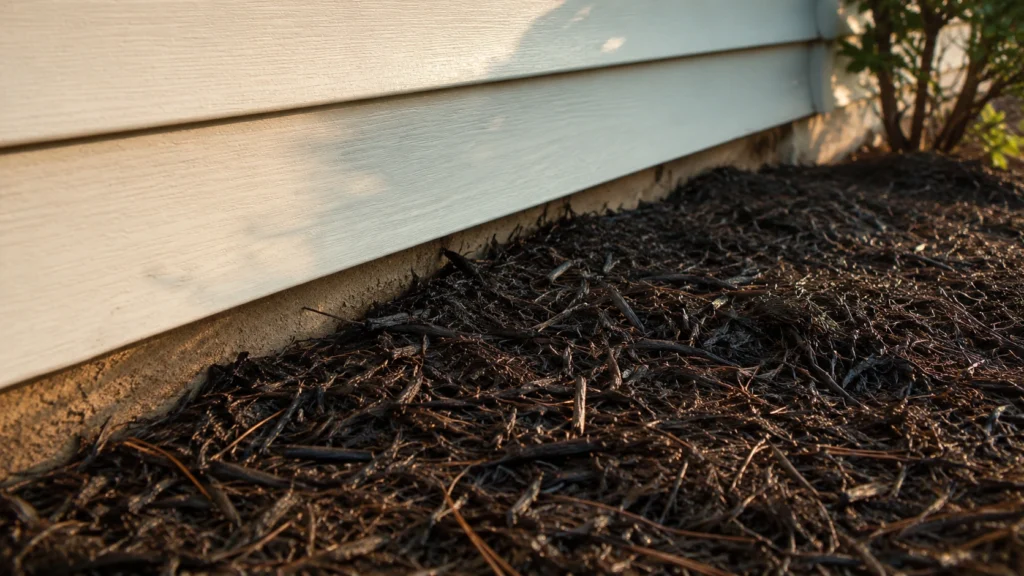
Stop piling wood chips against your siding. Leaving less than a 6-inch gap between the soil and the bottom of your siding gives termites a hidden highway straight into your framing. You can still use wood mulch, but keep it pulled back from the foundation line. Signs of termites in mulch usually appear just below the surface, so rake it back periodically and check the ground underneath for white, slow-moving workers. Store all firewood raised off the ground and at least 20 feet away from the house.
Pro-Tips Box: Most homeowners spot termite swarmers inside and immediately grab a can of Raid. Don’t do this. Spraying repellent aerosols on a swarm only kills the few bugs you see and alerts the thousands still in the wall to shift their foraging path elsewhere, making them much harder to locate later. Vacuum up the live swarmers and the discarded wings, then save a few in a Ziploc bag for your pest control technician to officially identify. If you are doing perimeter trenching with Taurus SC outside, make sure you dig all the way down to the top of the foundation footing. If you leave untreated soil near the footing, they will just tunnel under your barrier.
People Also Ask
Do flying termites bite humans?
No. Termite swarmers do not have biting mouthparts designed for attack or defense. Their sole biological purpose is to fly, mate, and start a new colony. They cannot bite you, sting you, or even eat the wood in your home.
How long does a termite swarm last?
An active swarm usually lasts between 30 and 40 minutes. If the swarmers cannot find soil, they will die of dehydration within a few hours. Finding dead swarmers by a window means the swarm happened while you were not looking.
Should I kill flying termites?
Killing the flying termites you see will not stop the infestation. The workers causing the actual structural damage never leave the wood or soil. Vacuum the swarmers up, but focus your treatment efforts on locating and destroying the main colony.
What to Read Next
If you are seeing signs of wood damage but aren’t totally sure what’s eating your framing, distinguishing the problem early is your best defense, which is why understanding the difference between termite damage vs wood rot will dictate your next repair steps.