
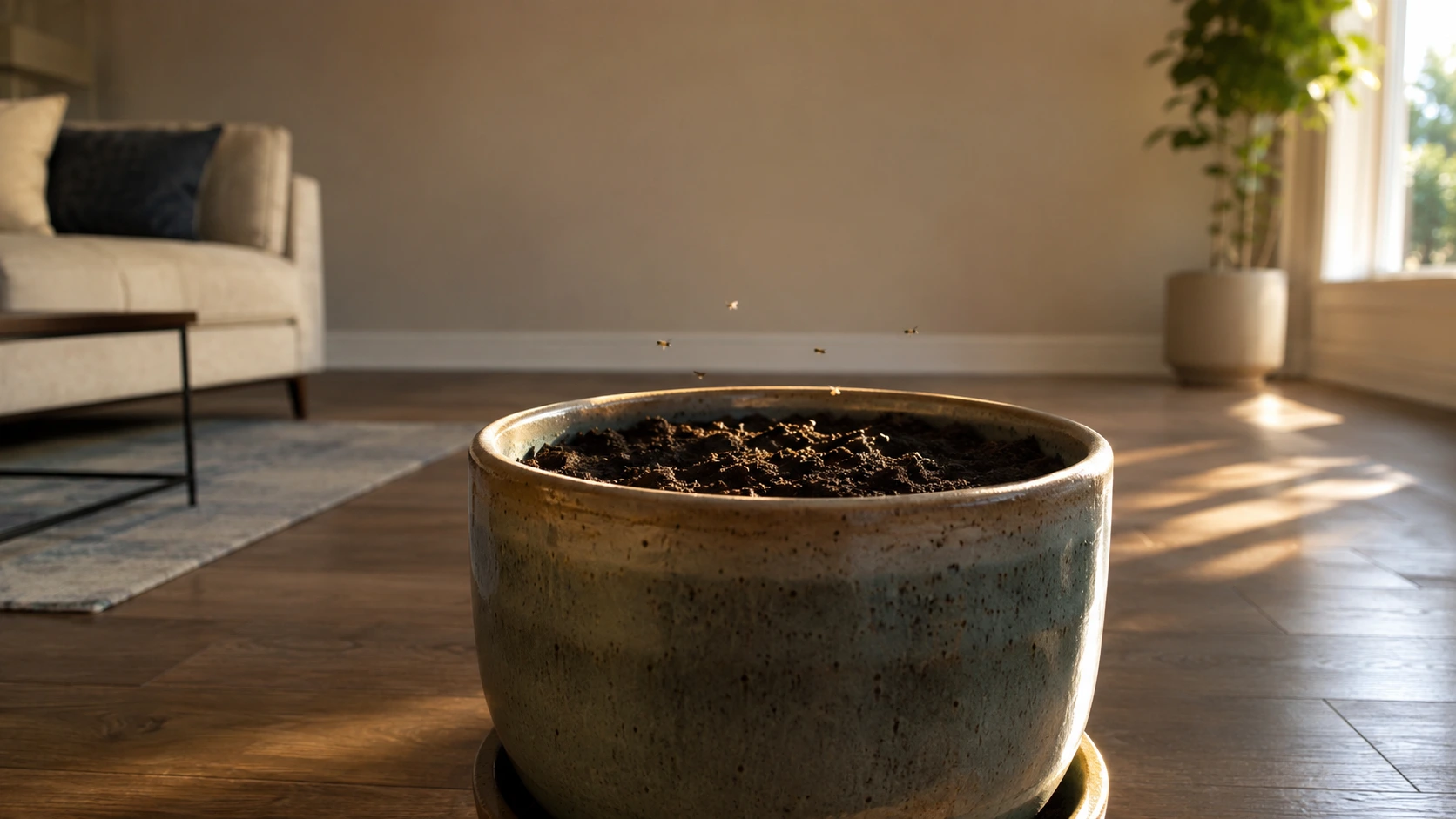
Fungus gnats and shore flies both swarm around overwatered houseplants, but they require entirely different eradication methods. Fungus gnats damage plant roots and are highly susceptible to Bacillus thuringiensis israelensis (Bti) treatments, while shore flies feed exclusively on algae and ignore Bti completely. You need to dry out the top two inches of your potting mix and apply a targeted larvicide to break their respective breeding cycles.
Identification & Misdiagnosis
Most homeowners assume every tiny black fly in their house is a fungus gnat, leading to wasted time and chemical misapplications. Treating for the wrong insect means the infestation will persist indefinitely.
- Fungus Gnats (The Root Destroyers): These look like miniature mosquitoes. They have long legs, distinct Y-shaped wing veins, and fly erratically, often running across the soil surface rather than taking flight. Their transparent, black-headed larvae aggressively feed on root hairs, stunting plant growth.
- Shore Flies (The Algae Eaters): These resemble tiny house flies or fruit flies. They have robust bodies, short legs, and five distinct white spots on their wings. They are strong fliers. Shore fly larvae do not damage plant roots; they exclusively graze on algae growing on the soil surface or the sides of damp pots.
Field observation: I frequently walk into homes where the owner has poured gallons of expensive insecticidal drench into their pots, only to find the flies are still swarming. If you look closely at the soil surface and see a faint green sheen of algae, you almost certainly have shore flies, and standard gnat treatments won’t touch them.
Root Causes & Attractants
Both pests invade your home for one specific reason: excessive, sustained moisture in your potting media.
- Peat-Heavy Soils: Bagged potting mixes retain water like a sponge. When the top two inches never dry out, organic matter begins to decay, creating the perfect breeding ground for fungus gnats.
- Algae Blooms: Shore flies do not care about decaying peat. They are drawn to the microscopic algae that blooms on constantly wet soil or algae buildup inside clear plastic drip trays.
- Imported Infestations: You usually bring these pests inside yourself. Nursery plants frequently carry dormant larvae. The moment you bring the plant into a warm, 72°F living room and overwater it, the population explodes.
Pro-Tips Box: Place a raw potato slice flat against the soil surface of your troubled plant. Leave it overnight. Fungus gnat larvae are drawn to the starches and moisture. Lift the slice the next morning; if you have a gnat problem, the bottom of the potato will be crawling with clear, black-headed larvae. If the potato is clean but flies are still swarming, you are likely dealing with shore flies feeding on surface algae.

Eradication Plan (Step-by-Step)
Targeting Fungus Gnat Larvae (Bti Drench)
Adult flies only live for a few days; the larvae in the soil are the real problem. You must break the life cycle using an organic biological larvicide.
- Use a product like Summit Mosquito Bits (active ingredient: Bacillus thuringiensis israelensis).
- Mix 4 tablespoons of granules per 1 gallon of water.
- Let the mixture steep for 30 to 60 minutes.
- Strain out the bits and drench the soil until water runs out the drainage holes.
- Repeat this exact drench every 7 days for three consecutive weeks. It takes 5–7 days to see a noticeable drop in the adult population. Cost: $10–$15.
Targeting Shore Fly Larvae (Algae Elimination)
Bti does absolutely nothing to shore flies. To starve shore fly larvae, you must destroy their food source: algae.
- Mix 1 part standard 3% hydrogen peroxide with 4 parts water.
- Spray the soil surface heavily. The mixture will fizz and bubble, killing surface algae and shore fly larvae on contact.
- Scrub all plastic drip trays with hot water and dish soap to remove the microscopic algae film. Cost: $3.
Eliminating Flying Adults
While the soil treatments work on the next generation, you need to knock down the active adults.
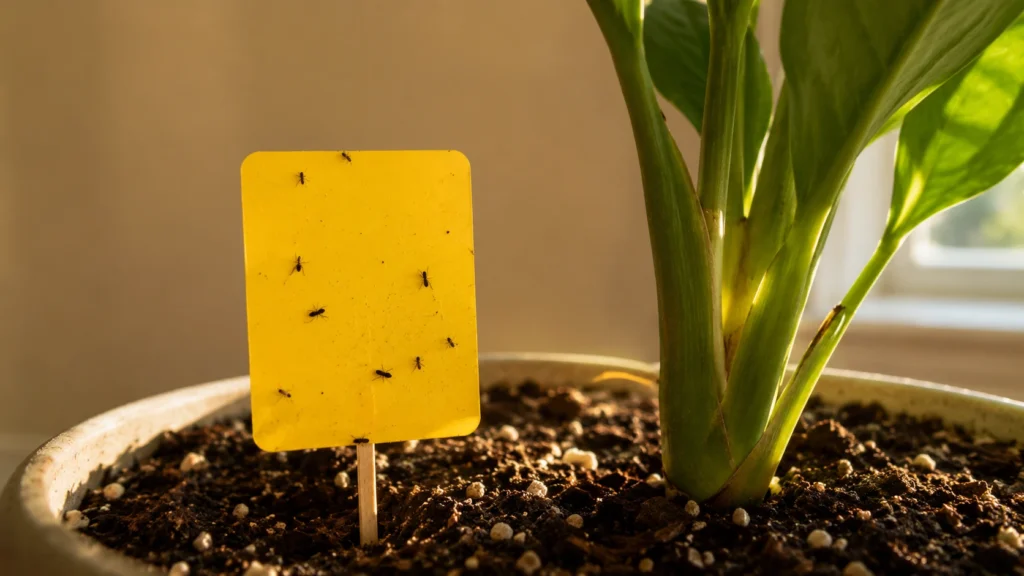
- Place yellow sticky traps directly into the soil. Both species are highly attracted to the color yellow.
- Position one trap per severely infested plant.
- For extreme infestations flying around living spaces, a localized burst of a pyrethrin-based aerosol (like PT 565 Plus XLO) kills adults on contact. This does not replace soil treatment.
Pet & Child Safety Warnings
Bti is highly targeted to dipteran larvae and poses virtually zero risk to mammals, making it exceptionally safe for homes with pets. If you apply a pyrethrin aerosol for adult knockdown, clear all pets and children from the room. The Re-Entry Interval (REI) requires the room to remain empty and well-ventilated until the spray has completely settled and dried—typically 1 to 2 hours. Keep cats away from plants treated with a hydrogen peroxide drench until the fizzing stops completely.
Professional vs. DIY
| Factor | DIY Approach | Professional Service |
| Cost | $15 – $30 | $150 – $250 |
| Speed | 1 – 3 Weeks | 1 – 2 Weeks |
| Effectiveness | High | High |
| Risk | Low | Low |
Hiring a pest control company for indoor plant flies is almost always a waste of money. Most technicians will simply spray a generic pyrethroid on the soil surface, which barely penetrates the potting mix and completely fails to kill the deep-dwelling larvae. You only need a professional if the flies are breeding inside your actual plumbing lines (drain flies, which are often confused with shore flies) or if the infestation is centralized in a massive, enclosed structural greenhouse where commercial-grade chemical rotation is legally regulated.
Prevention Tips
- Implement Bottom Watering: Place your plastic nursery pots in a shallow tray of water for 20 minutes, allowing the soil to wick moisture upward. This leaves the top two inches of soil bone-dry, eliminating the breeding zone for both pests.
- Cap the Soil: Add a half-inch layer of coarse sand or decorative gravel over your potting mix. This physical barrier prevents adults from reaching the moist soil to lay eggs.
- Increase Air Circulation: Run a small oscillating fan near your indoor plants. The constant breeze dries out the soil surface rapidly and prevents weak-flying gnats from navigating toward the pots.
People Also Ask
Do fungus gnats or shore flies bite humans?
No, neither species possesses biting mouthparts. They are completely harmless to humans and pets, acting strictly as an indoor nuisance and a threat to plant root systems.
How long do adult fungus gnats live?
Adult fungus gnats only live for about 7 to 10 days. Their sole purpose during this brief window is to mate and lay up to 200 eggs in damp potting soil.
Will cinnamon kill fungus gnats in houseplants?
Cinnamon acts as a mild fungicide that can suppress the soil fungi gnats feed on, but it will not kill an active larvae infestation. You must use targeted larvicides for total eradication.
What to Read Next
Since the root cause of these indoor pests is excess moisture creating fungal and algal growth, this often mirrors outdoor turf issues. If your watering habits are causing fungal outbreaks beyond your living room and out into your yard, understanding the difference between Brown Patch vs Dollar Spot will save your grass before summer heat sets in.