
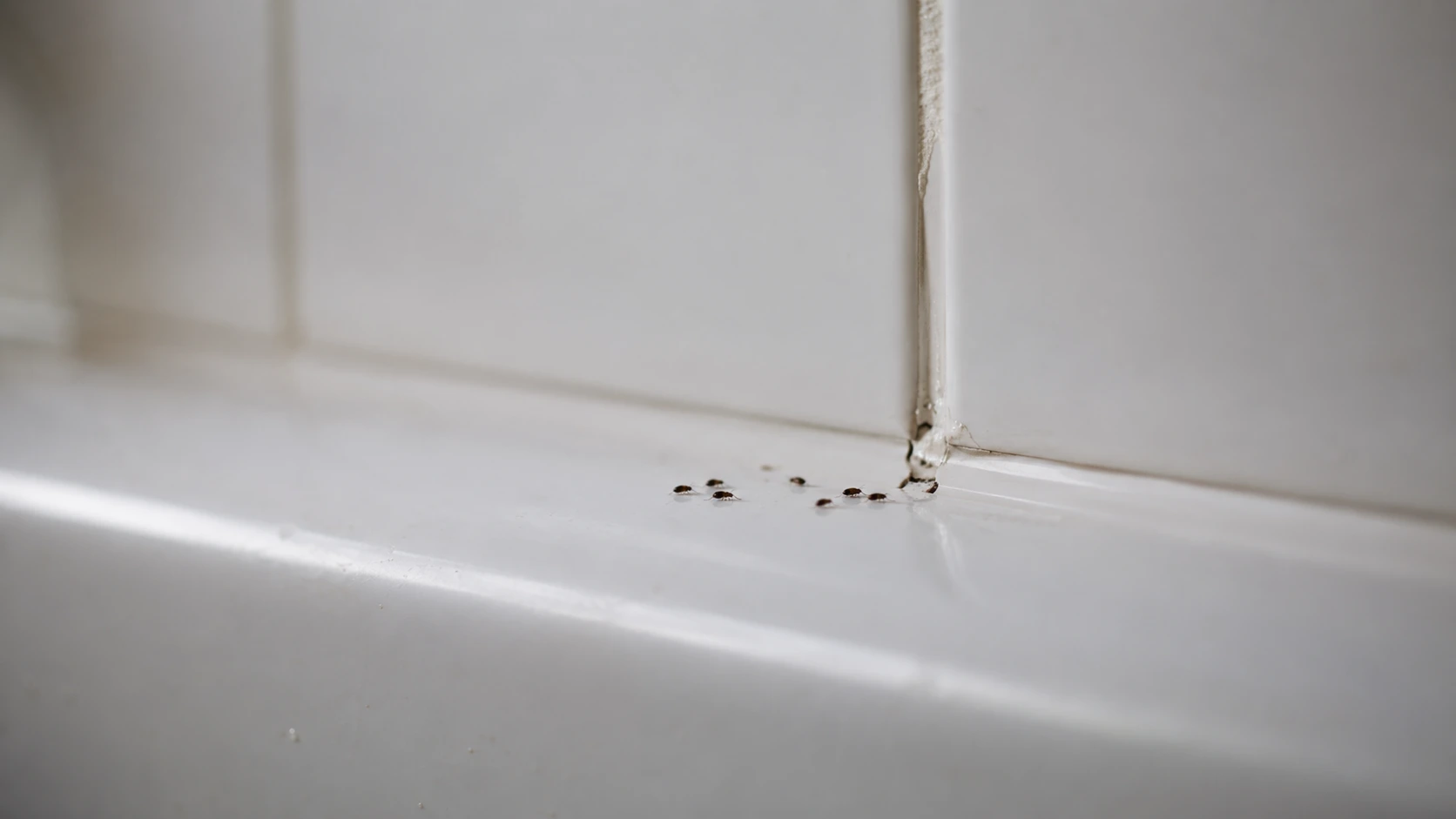
Those tiny black bugs in your bathroom with no wings are almost certainly springtails (Collembola). They measure about 1/16 of an inch long, look like flecks of black pepper, and jump when disturbed. They do not bite or carry diseases. Springtails invade bathrooms seeking high humidity and feed on microscopic mold growing in damp grout, under sinks, or around leaking fixtures.
Identification Guide
Don’t reach for the bug spray before confirming what you are looking at.
- The jump test: Bring your finger close to the bugs. If they instantly vanish or leap several inches, you have springtails. They use a tail-like appendage called a furcula to catapult themselves away.
- Size and color: They are roughly 1/16 to 1/8 inches long. Most indoor invaders appear dark gray or black against light-colored tiles.
- Location patterns: You will find them grouped around sink drains, along bathtub caulk lines, or clustering on damp bath mats left on the floor.
- Lack of flight: They crawl slowly and jump rapidly. They possess absolutely zero wings.
Root Causes
Springtails only survive in environments with excessive moisture. They do not eat your house; they eat the microscopic fungi and decaying organic matter that moisture produces.
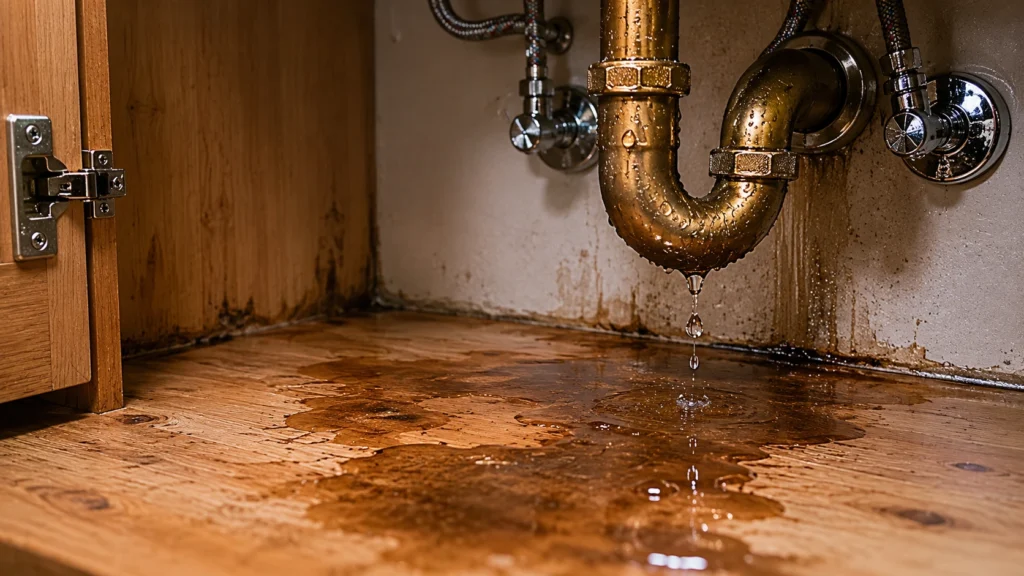
A major mistake is spraying chemicals on the bugs without fixing the water issue. They will just keep multiplying. In my years doing residential inspections, 90% of bathroom springtail infestations trace back to a slow, hidden plumbing leak under the vanity.
Other culprits include failing caulk around the bathtub, which allows water to seep behind the drywall. Poor ventilation also traps shower steam, keeping the walls damp enough to grow invisible mildew. If you notice a sudden spike in these bugs during the peak of summer, high outdoor humidity is driving them through foundation vents and into your home’s plumbing wall voids.
Step-by-Step Solution
Chemicals alone will not stop a moisture-driven pest. You must eliminate the environment they need to survive.
- Drop the humidity immediately. Place a portable dehumidifier in the bathroom and run it continuously until the relative humidity drops below 50%. Keep the bathroom exhaust fan running for at least 30 minutes after every single shower.
- Locate and dry the source. Open the vanity cabinet and check the P-trap and supply lines. Feel the drywall around the toilet base. If you find a leak, fix it. Set up a box fan pointing directly at the wet spot to dry the structural wood.
- Sanitize the breeding ground. Mix 1 part white vinegar with 1 part water. Scrub the grout lines, caulk, and drain edges to kill the microscopic mold the bugs are eating.
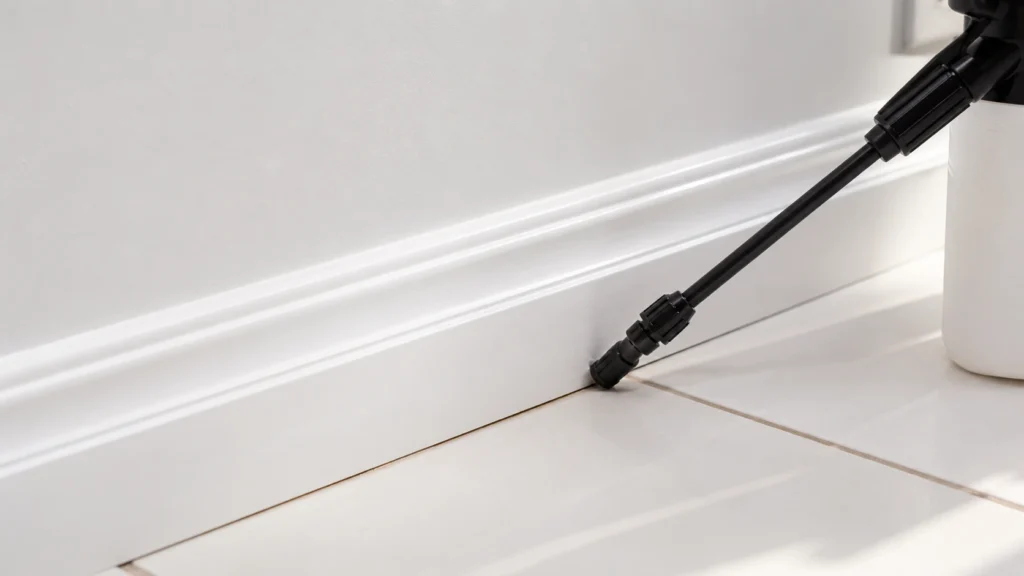
- Apply an indoor barrier treatment. Once the area is completely dry, apply Ortho Home Defense Max (Bifenthrin 0.05%) along the baseboards, under the vanity, and behind the toilet. Spray a continuous band, applying roughly 1 oz of product per linear foot of baseboard.
- Let the product dry. Keep pets and children out of the bathroom for at least 2 hours until the spray is completely dry to the touch.
You will see dead bugs within 24 hours of application. Don’t expect overnight eradication. Population control takes 5 to 7 days as hidden bugs emerge from wall voids and cross the chemical barrier.
Professional vs. DIY
Most springtail issues are easily handled on your own.
| Factor | DIY | Professional |
| Cost | $ | $$$ |
| Speed | Days | Days |
| Effectiveness | High (if leak fixed) | High |
| Risk | Low | Low |
Call a professional exterminator only if you fix the moisture issues, treat the baseboards, and still see thousands of bugs after a week. Massive, persistent infestations usually indicate major structural rot behind the drywall, requiring wall-void foaming treatments and potentially a contractor to replace damp framing.
Common Misdiagnosis
You might think you have drain flies or fungus gnats.
Drain flies have tiny, moth-like wings covered in fuzzy hairs. They hover in erratic patterns right above the sink drain. Fungus gnats also fly and look like tiny mosquitoes. If the bugs fly, hover, or have visible wings, they are not springtails.
Sometimes people confuse springtails with newly hatched bed bugs. Bed bugs are flat, oval-shaped, and reddish-brown. They hide in mattress seams and bed frames, rarely venturing into hard-surfaced, bright bathrooms. If you are exclusively finding wingless black bugs near a water source, you are dealing with moisture pests.
Prevention Tips
Controlling bathroom humidity is your primary defense. Leave the bathroom door cracked open after showering to allow steam to escape. Upgrade your exhaust fan if it fails to clear bathroom mirrors of fog within 10 minutes.
Inspect the silicone caulk around your bathtub and sink every six months. Many homeowners simply layer new caulk over the old, trapping moisture and creating a perfect breeding ground for springtails underneath the seal. If it peels, shrinks, or turns permanently black with mold, strip it out completely before re-caulking.
Pro-Tips Box: Do not pour bleach down your drains expecting it to kill a springtail infestation. Bleach passes right by the organic buildup where they breed. Instead, apply a light dusting of food-grade Diatomaceous Earth behind the vanity baseboards and under the bottom drawers. It mechanically destroys their exoskeletons and remains active forever as long as it stays dry. If the powder clumps, you still have a moisture problem to fix.
People Also Ask
Can springtails damage my house or bite me?
No. Springtails do not bite, sting, or carry diseases. They lack the mouthparts to chew wood or damage structural materials. Their presence is simply an indicator that excessive moisture and mold exist somewhere in the immediate area.
Why are they in my bathtub when there is no water?
They fall in and cannot climb out. Springtails enter the bathroom searching for moisture, hop into the smooth porcelain tub, and lack the grip to scale the slick vertical sides. The bathtub acts as a giant trap.
Will pouring boiling water down the drain kill them?
Boiling water kills adult bugs currently in the pipe, but it will not eliminate the eggs laid in the overflow drain or behind the sink grout. It provides temporary relief but does not solve the root moisture problem.
What to Read Next
Understanding how moisture attracts pests is half the battle. If your bathroom shares an exterior wall or sits above a crawlspace, you might want to learn how do water bugs get in your house to seal up external foundation gaps before more moisture-loving insects find their way inside.